avg —
Pork Carbonade in the Oven

Instructions
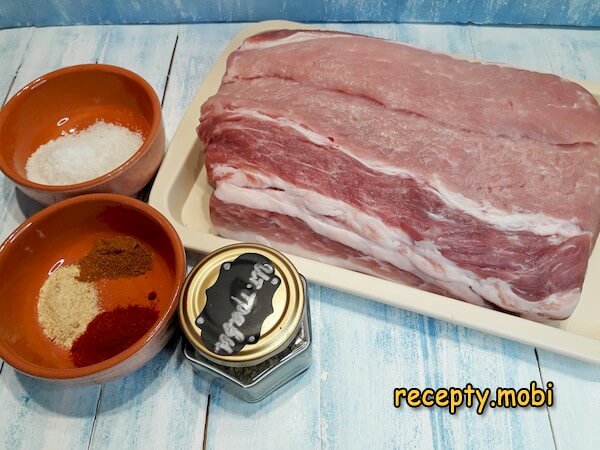
I prepare the ingredients. Rock salt is measured at 2.5% of the weight of the meat – that exact percentage gives a perfect cure without over-salting, so for this 1.5 kg piece you need exactly 37 g. I wipe the carbonade dry with paper towels: a wet surface does not absorb the curing mix well, and the meat ends up patchy.
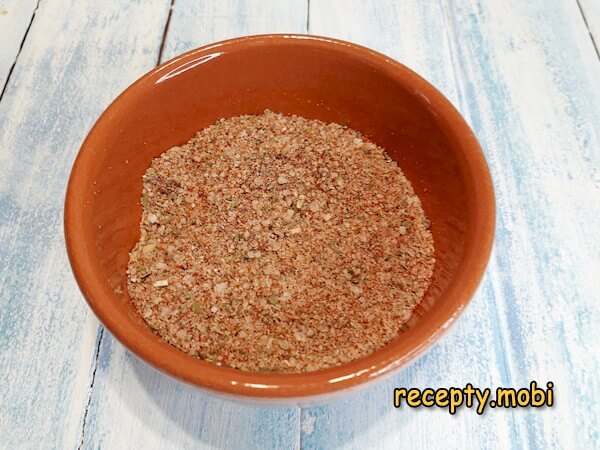
To make the curing mix, I combine all the dry ingredients from the list. The dried garlic and paprika should be distributed thoroughly through the salt, so you can grind the mixture in a mortar.
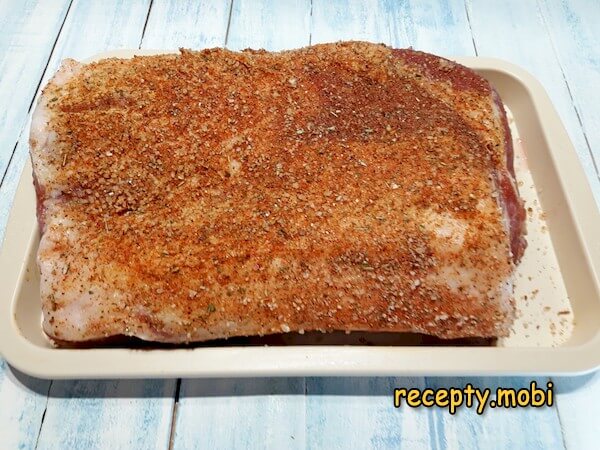
I rub the meat with this mixture on all sides except the cut ends – otherwise the end slices come out over-salted, because salt penetrates through a cut face faster than through the whole surface. I leave the piece on the counter for about 2 hours to marinate; in that time the salt begins to cure the surface and draws out a little moisture.
After that time, I move the piece into a roasting sleeve so that the side with more fat faces up – in the oven the fat renders down and bastes the main muscle with its richness. I pour the meat juices released during marinating into the sleeve too; they add moisture and aroma during baking. I tie the ends of the sleeve with twine, but not tightly, so the steam that forms can escape – without a vent the sleeve can burst. I place it on the middle rack of an oven preheated to 150 °C with top and bottom heat.

After an hour and a half, the carbonade is cooked all the way through. I take it out and cut open the top of the sleeve. The low temperature of 150 °C and the long time are the key to even cooking: at 200 °C and above, the top would char while the centre stayed raw.
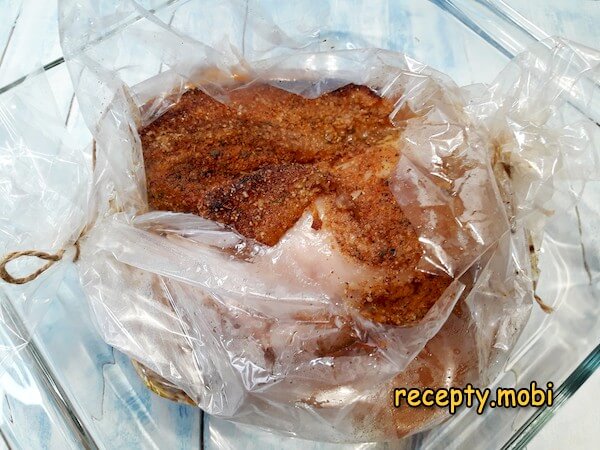
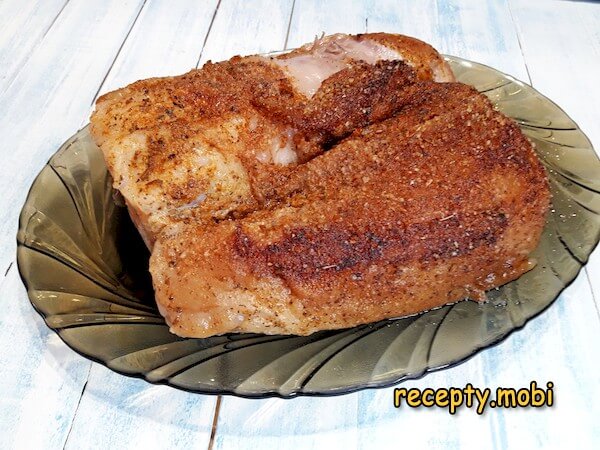
I transfer the meat to a dish and leave it to cool. Once it reaches room temperature, I move the carbonade to the fridge – chilling not only makes the meat easy to slice but also settles the juices within the fibres.
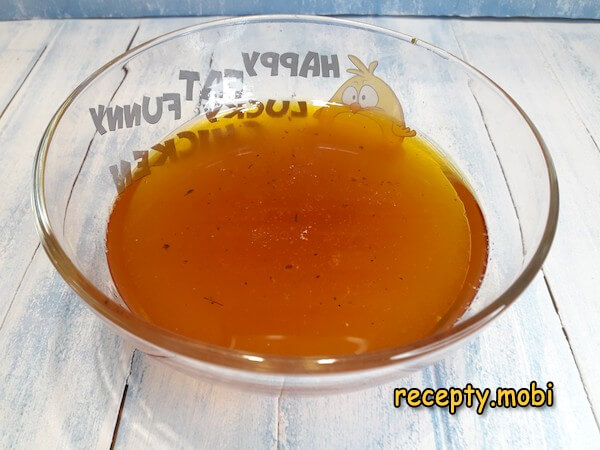
A good deal of rich, fatty meat juice is released during baking. If you like, you can pour it into a separate bowl and use it to dress pasta, make a gravy, or prepare various sauces. This juice is a concentrated meat broth, and it would be wasteful to throw it out.


Tips
- 1
Use 2.5% salt by weight of the meat – the secret to the right cure. Less than that, and the meat is under-salted, without the characteristic carbonade flavour. More, and it is over-salted: it gives up too much moisture and turns dense and dry. At 2.5% it is both properly cured and juicy at the same time.
- 2
Leave the cut ends unsalted – the secret to avoiding over-salted edges. Salt penetrates through the cut fibres three to four times faster than through the whole surface. Salt the ends and the outer slices of the finished carbonade will be unbearably salty. The same trick works in pork tongue in garlic sauce.
- 3
Choose 150 °C over 180 °C – the secret to juiciness. At 180 °C the surface quickly sets into a crust while the centre stays raw, and the overall result is dry meat. At 150 °C the heat builds slowly and evenly, the protein does not seize abruptly, and the meat stays pliable and juicy.
- 4
Bake it fat-side up – the secret to infusing the meat with fat. Fat left on the bottom just stays at the base of the sleeve while the meat gradually dries out on top. With the fat side up, the rendered fat runs down over the piece and infuses all the meat with its flavour. The same principle is used in boiled pork tongue for salads, aspic, and snacks.
FAQ
Which cut of pork is right for carbonade? +
The classic choice is pork carbonade weighing 1-1.5 kg with a thin cap of fat along the top. Other options: bone-in pork loin (premium, more succulent, but needs to be carved off the bone before slicing), lean leg with no sinew (a budget choice, a touch drier), and pork neck (fattier, but too soft in texture – not a classic carbonade). Do not use pork shoulder with a lot of sinew, which falls apart when sliced; tenderloin, which is too lean and dries out; or meat that has been frozen more than once, which has a loose texture after thawing. Fresh chilled meat is the star choice.
Can I use foil instead of a roasting sleeve? +
Yes, but the technique is a little different. Fold the foil into two layers, place the carbonade fat-side up, and wrap it tightly – every seam must be sealed, or the juices will leak out. The baking time is the same, 1.5 hours at 150 °C. For the last 15 minutes you can open the top to develop a golden crust, which is not possible with a sleeve, since the plastic would melt. The downside of foil is that the juices soak into it rather than collecting in the sleeve as ready-made broth. The upside is that you can get a crust. Both versions work.
How long does homemade carbonade keep? +
In the fridge, tightly wrapped in film or in a sealed container, up to 5-7 days. On the second or third day the flavour grows richer as the salt and spices distribute more deeply through the fibres. Beyond 7 days there is a risk of picking up off odours from the fridge. In the freezer, up to 3 months in a tightly sealed zip-lock bag; thaw in the fridge for 8-12 hours before slicing. Signs of spoilage are a sticky surface, a sour smell, and a colour shift to grey or greenish. A sandwich with homemade carbonade is usually eaten within 2-3 days, so it rarely gets anywhere near spoiling.
What do you serve with pork carbonade? +
On a sandwich: rye bread with butter and herbs, a white baguette with grainy mustard, or a warm garlic crouton. For dinner: with a vegetable salad, mashed potatoes, boiled beans, or braised sauerkraut. Sauces: mustard, honey-mustard, horseradish relish, tkemali, and sweet-and-sour cranberry all go well with cold carbonade. For drinks: dark beer, a dry red, or a shot of vodka with the cold appetiser. For a festive table: alongside pickled cucumbers, green and black olives, and cheese on a single meat platter. It is a versatile product.
- Comment
or post as a guest
Be the first to comment.