avg —
Aspic of Pike Perch with Gelatin

Instructions
I choose a fresh pike perch (1 kg) with undamaged, glossy skin and red gills – signs of freshness. I scale it with a special scraper knife, working from the tail towards the head. Then I rinse it under cold running water, removing any remaining scales. The freshness of the fish is crucial for the clarity and flavour of the broth.
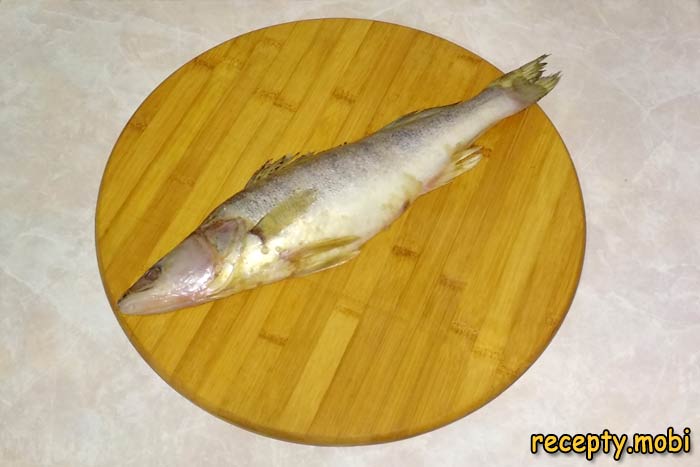
With a sharp knife I cut off the head, fins, and tail of the pike perch – they will go into the broth. I gut the fish carefully, removing the insides and the dark membrane from the belly cavity (it makes the broth bitter). I rinse it thoroughly inside and out – leftover blood and membranes would make the broth cloudy. Then I pat it dry with a paper towel.
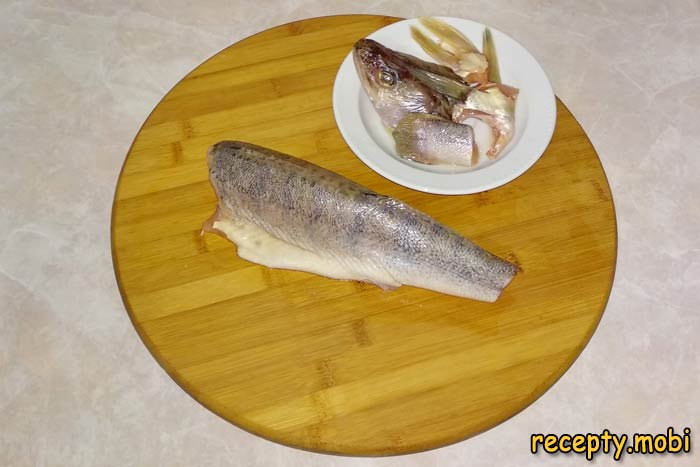
With a sharp thin knife I make a cut along the backbone of the pike perch from head to tail, carefully separating the fillet from both sides of the carcass. I remove the rib bones with tweezers or special fish-bone pullers. You should end up with 2 fillets of the same shape and weight – this way the aspic will portion out beautifully.
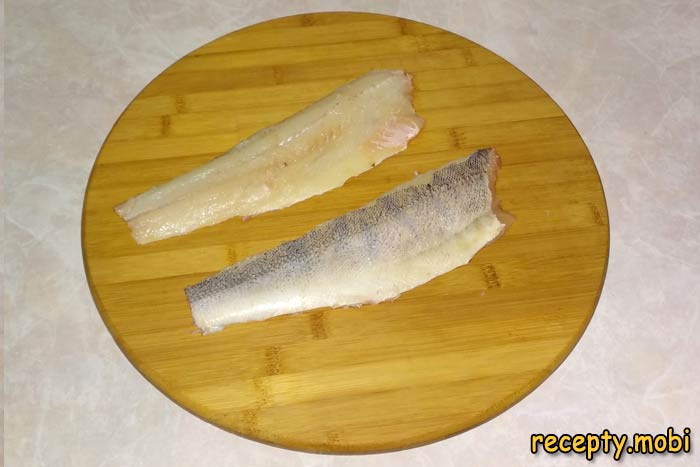
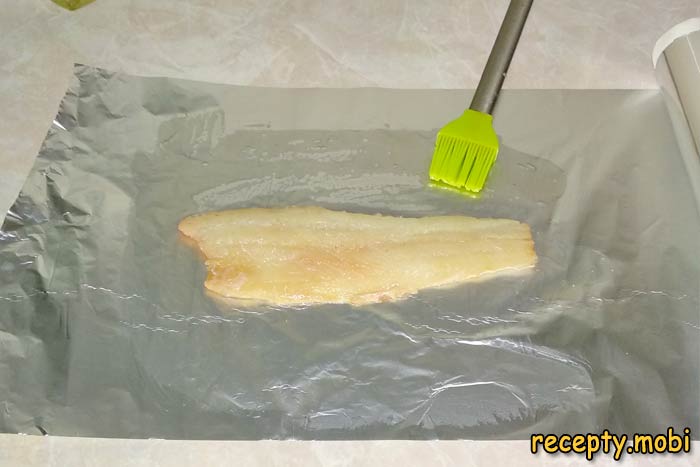
I lay the fillet skin-side down on a sheet of foil greased with vegetable oil – this stops the flesh sticking to the foil. Any small bones can be left in place; they pull out of the cooked fillet easily with tweezers. Using foil keeps the fish juicy as it bakes, without losing its shape.
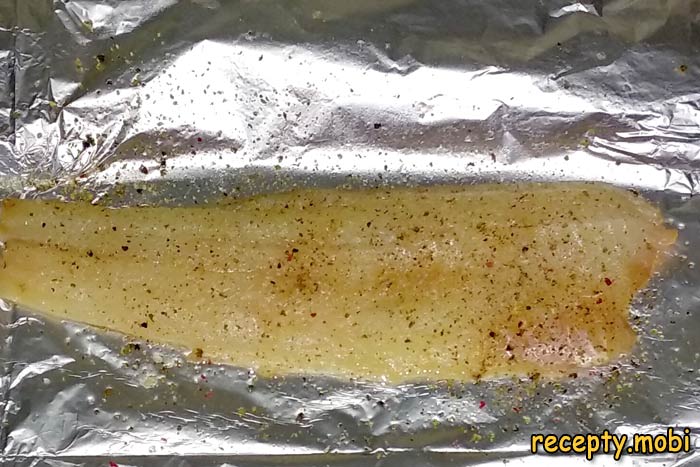
I season the pike perch fillet with salt and pepper on both sides. You can add a sprig of thyme or dill on top for aroma. Do not use strong spices (curry, paprika) – they will overpower the delicate flavour of the pike perch. Minimalism is the rule when making aspic.
I bring the edges of the foil together along the long side, twisting them gently like a sweet wrapper. This creates an envelope in which the fish bakes in its own juices, keeping it tender and moist. Without the envelope the fish would dry out in the oven and lose its signature tenderness.
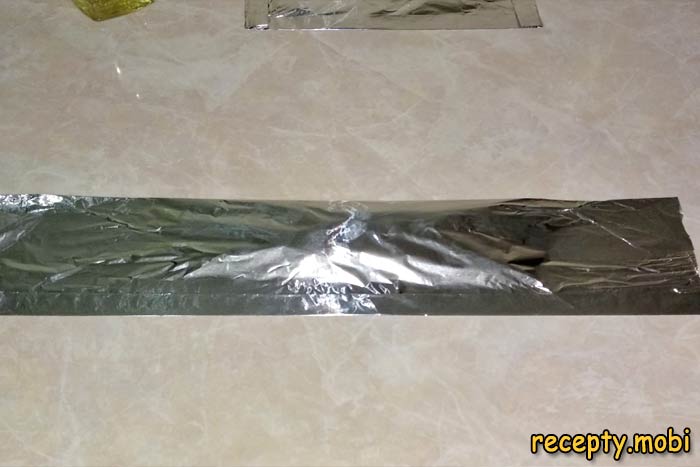
I fold the ends of the foil inwards, forming a tightly closed envelope with no gaps. The steam must not escape – otherwise the fish will dry out. The envelope should be snug but not tight against the fish – leave a little air space for the steam.
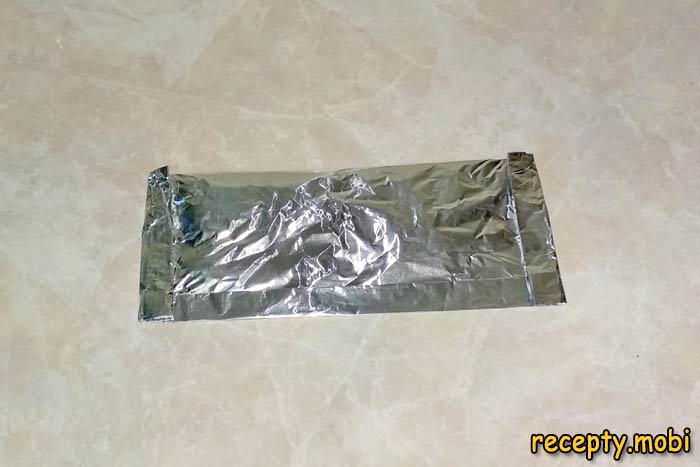
I pack the second fillet into a separate envelope in the same way. I place both envelopes on a baking tray and bake them in an oven preheated to 180°C for 25 minutes. The cooked fish should flake easily with a fork – check it through a slit in the foil. Do not overbake it, or it will dry out.
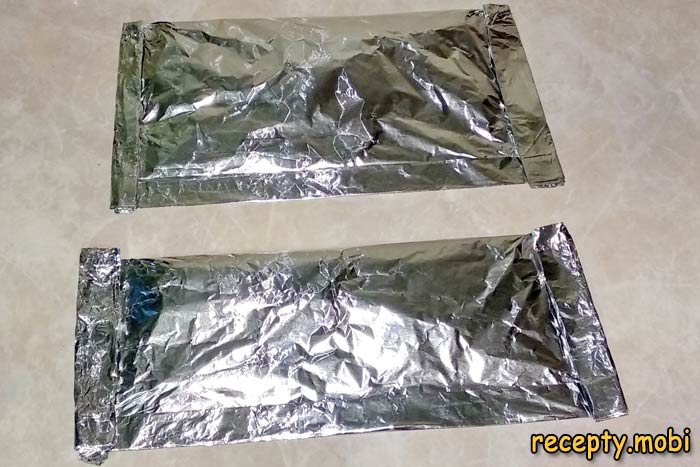
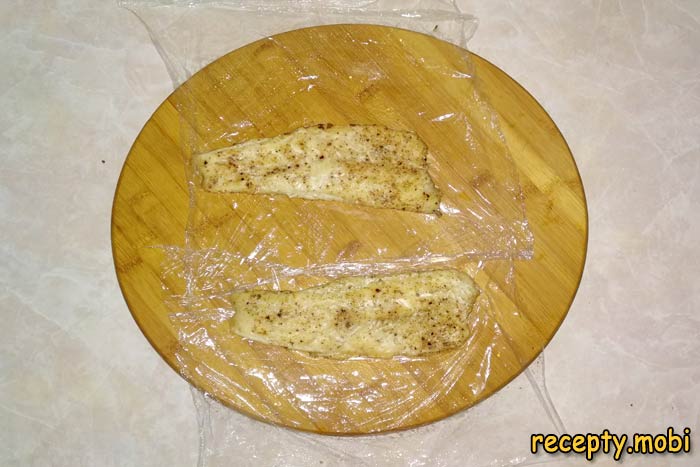
I take out the cooked fillet and let it cool in the foil for 15–20 minutes – the juices spread evenly through the fish. Then I unwrap it, wrap it in cling film, and put it in the fridge for 1 hour so it is easier to slice neatly. Cold fish cuts into even slices.
Meanwhile I cook the broth: I put the fish head, tail, and fins into a pan and pour in 0.5 l of cold water. I add the peeled onion (1 whole), carrot (1 whole), celery, bay leaf (2 pcs), black peppercorns (4 pcs), and salt. I bring it to the boil, carefully skim off the foam with a slotted spoon, and simmer for 10–15 minutes over low heat.
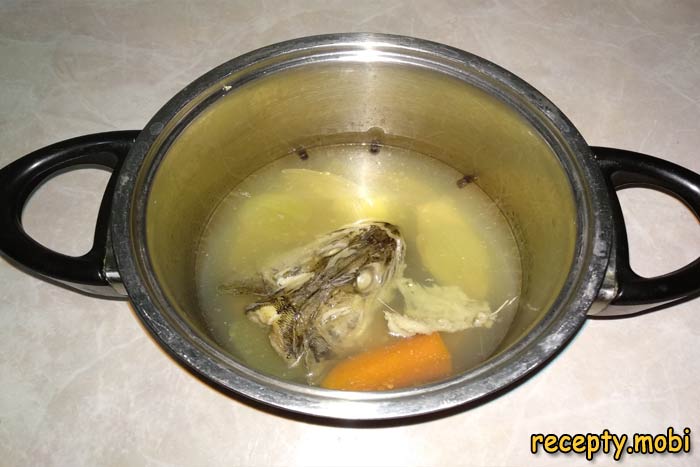
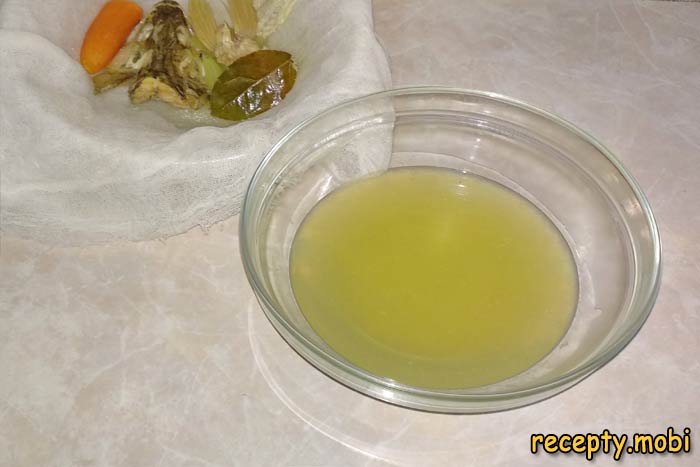
I strain the finished broth through 4–5 layers of muslin into a clean pan – this is the secret step for clarity. I keep the carrot – it will come in handy for a pretty decoration on the aspic. The head and fins I discard, or you can use them for fish soup another day.
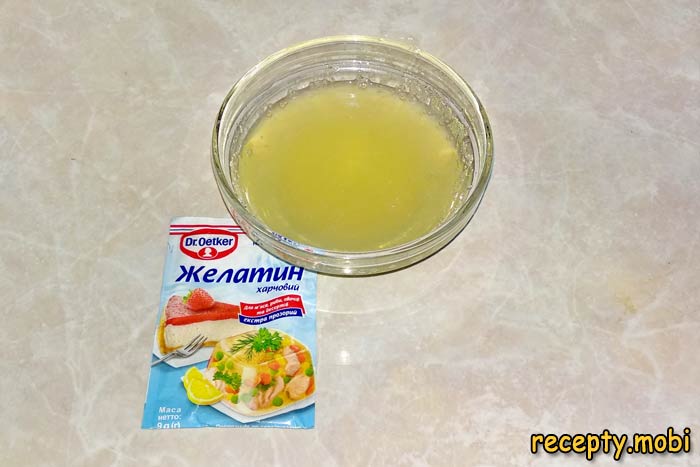
In a separate small bowl I pour a ladle of cooled broth over the gelatin (15 g), stir thoroughly, and leave it to swell for 30–40 minutes. The gelatin should dissolve completely in the broth with no lumps – otherwise there will be little granules in the finished aspic. Do not let the gelatin come to the boil, or it will lose its setting properties.
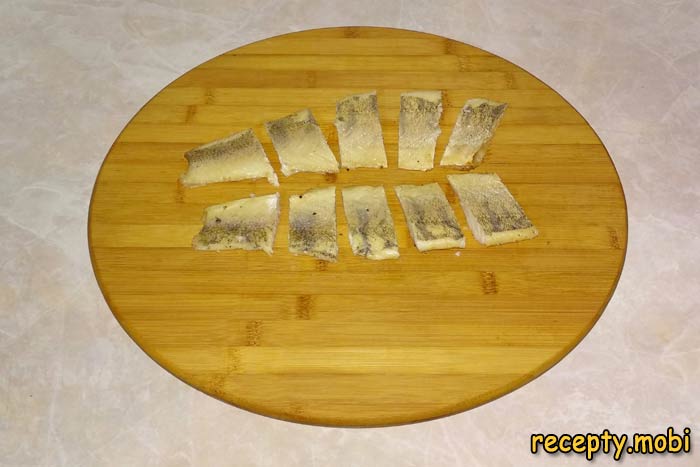
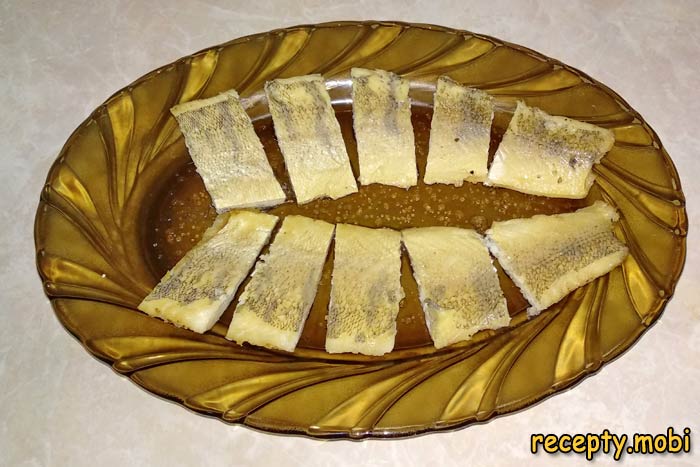
I take the chilled pike perch fillet out of the fridge and cut it with a sharp thin knife into portion-sized pieces 2–3 cm thick. Cold fish cuts neatly and evenly – warm fish would fall apart. The pieces should be the same size for an attractive presentation of the aspic.
I melt the swollen gelatin in a water bath until it has fully dissolved (do NOT boil it!). I dip each piece of fillet into the warm gelatin and lay it carefully on a serving dish or in a mould, building up an attractive arrangement. The gelatin "glaze" will fix the fish in place.
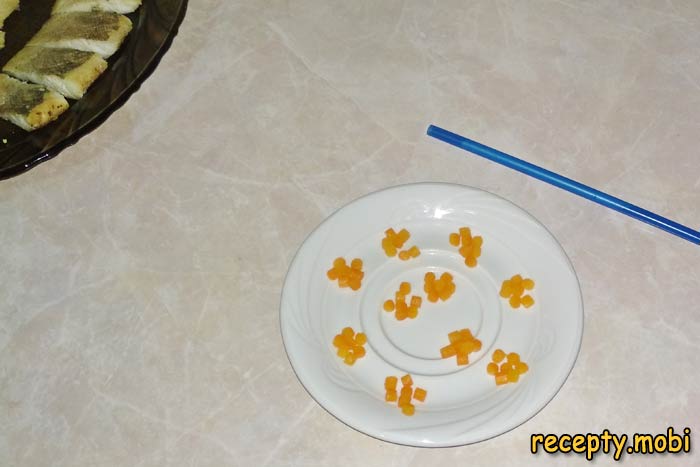
I make decorations from the boiled carrot – I cut out small flowers with a special knife, or simply slice it into decorative rounds. From the lemon (1/2) I cut thin half-rounds. The boiled egg I slice into rounds. The olives I cut in half. The parsley sprigs I leave whole.
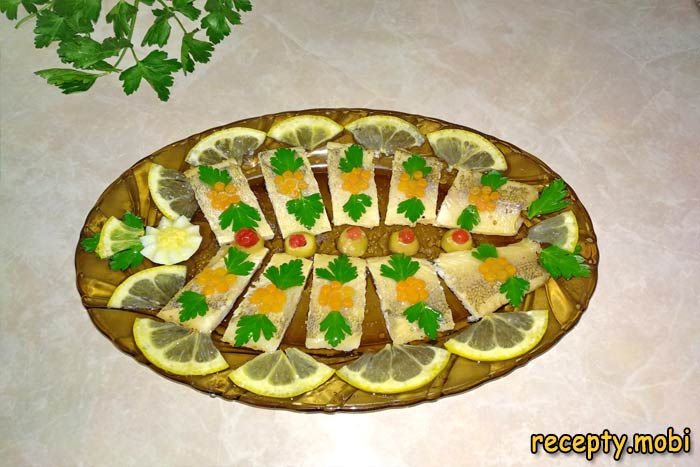
I fix the decorations onto the fish and in the gaps between the pieces with gelatin, dipping each one into warm gelatin before placing it. I chill the aspic in the fridge for 30 minutes so the decoration "sets". Then I thoroughly mix the remaining gelatin with clear broth and warm it slightly.
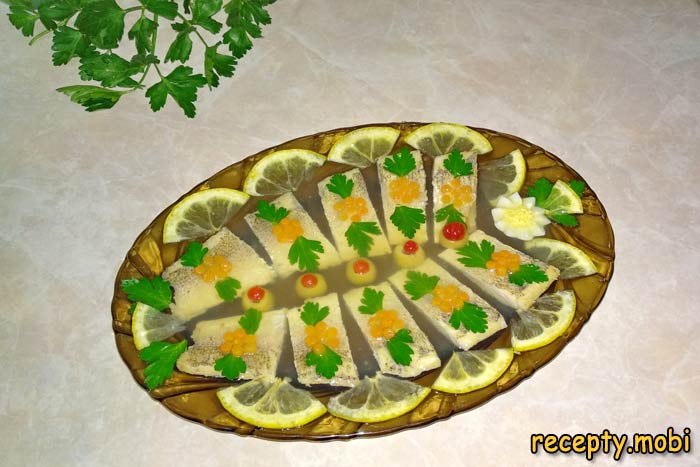
I pour over the finished gelatin broth in 2–3 stages, letting each layer set in the fridge for 20–30 minutes. Pouring in stages preserves the arrangement of the decoration – the garnishes will not float to the top. I chill the finished dish for 4–6 hours until it is completely set. The jellied pike perch with gelatin is ready!


Tips
- 1
Do NOT let the gelatin come to the boil – it loses its setting properties and the aspic may not set. Only warm it in a water bath until it has fully dissolved.
- 2
Pour the broth in 2–3 stages with chilling in between – this way the decorations keep their arrangement and do not float to the top.
- 3
Serve the aspic with mustard, horseradish, or horseradish relish – the classic Russian way. I use a similar approach to make jellied chicken.
- 4
You can decorate the dish with lemon, boiled egg, olives, cranberries, and sprigs of parsley and dill – feel free to be creative with the decoration.
FAQ
Why did the broth turn out cloudy? +
The main reason is straining it only through a sieve rather than through muslin (a sieve lets fine particles of protein through). Use 4–5 layers of muslin for perfect clarity. Another cause is boiling the broth too hard: simmer it gently over low heat without a vigorous boil. It also helps to skim off the foam at the start of cooking – coagulated proteins make the broth cloudy. If the broth is already cloudy, you can clarify it with egg white: whisk 1 egg white, add it to the hot broth, and bring it to the boil – the white will gather up the impurities.
What other fish can be used for aspic? +
Any firm-fleshed white fish will do: pike (the classic for aspic), carp (a tender, slightly sweet flavour), sturgeon (premium quality), catfish (rich and juicy), cod (a diet-friendly option), or silver carp (budget-friendly). Oily fish such as salmon and trout give an attractive pink colour but a richer aspic. I do not recommend mackerel or herring – their fishy aroma is too strong for aspic. The main thing is fresh fish with firm flesh that does not fall apart when sliced.
How long does the finished aspic keep? +
The finished aspic keeps in the fridge for up to 3 days under cling film or in an airtight container. After 3 days the fish may turn sour and spoil the dish. Do not move it from cold to warm too far in advance of serving – the jelly melts. Do not freeze the aspic – thawing destroys the gelatin structure and the fish loses its shape. Ideally, serve it the day after making it (the flavours fully come together by then); for a celebration, prepare it a day ahead. Serve it cold.
What to serve aspic with on the festive table? +
Classically with Dijon or wholegrain mustard, grated horseradish with vinegar, or homemade horseradish relish (horseradish with beetroot). For starters – with pickled gherkins, pattypan squash, or mushrooms. For a buffet table – in individual portions in small silicone moulds. For drinks – vodka (the classic with aspic), dry white wine (Riesling), or semi-sweet sparkling wine. On the New Year table – as part of a spread of other cold starters: salmon, caviar, cold cuts, and Olivier salad. A striking festive starter for a celebratory Russian table.
- Comment
or post as a guest
Be the first to comment.