avg —
Rolls without a mat and with a minimal set of ingredients

Instructions
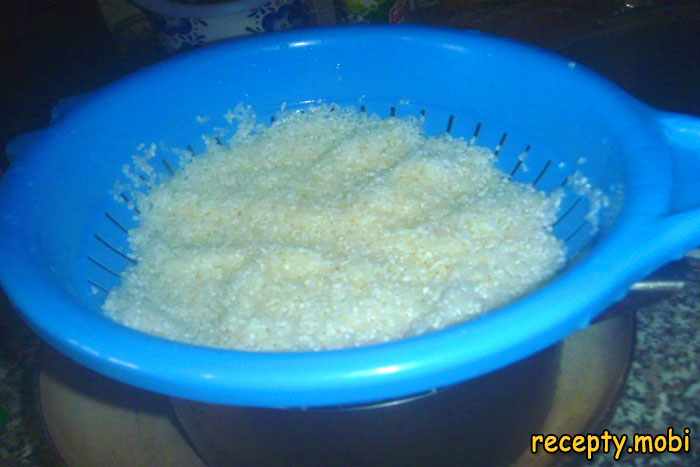
Rinse the rice in several changes of water until it runs clear: this removes excess starch and keeps the grains fluffy. Cover with cold water in a 1:1.5 ratio and set over medium heat.
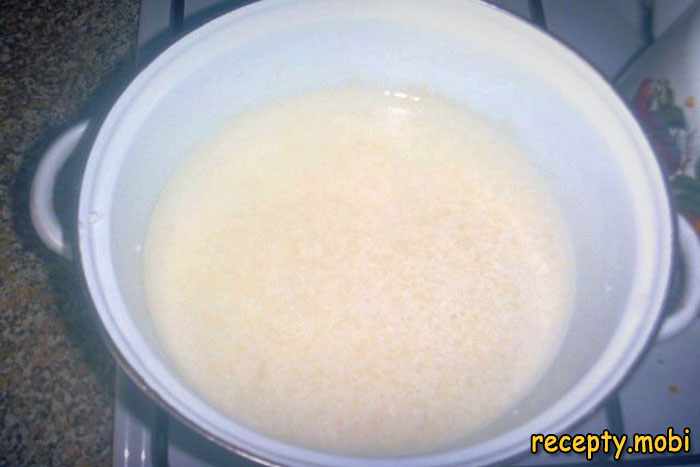
Once it comes to the boil, cover with a lid and cook over the lowest heat for 15 minutes without lifting the lid or stirring. All the water should be absorbed. Take it off the heat and leave it covered for another 10 minutes.
While the rice cools, make the dressing: stir the rice vinegar with the sugar and salt until they dissolve. Pour the dressing over the warm rice and fold it in gently with a wooden spatula, without crushing the grains.
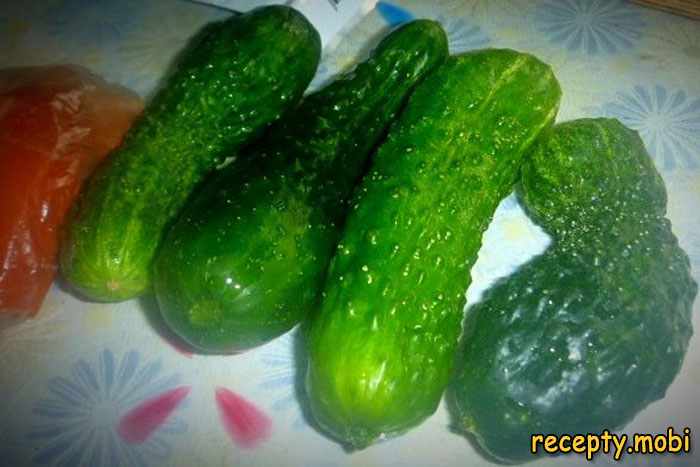
Cut the cucumber into thin, long strips and the fish into batons of the same size. If you are using crab sticks, split them lengthways into 2-3 pieces.
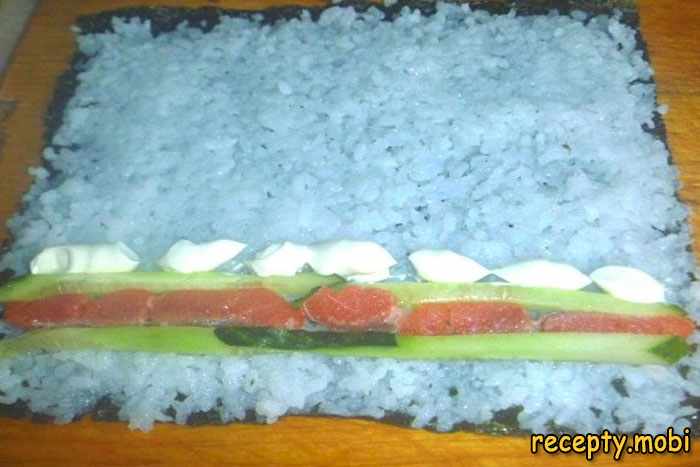
Place a nori sheet on the cling film, shiny side down. Wet your hands with water and spread the rice in a thin layer over the whole surface, leaving a 1-2 cm free edge for sealing. Do not press hard: the rice should sit light and airy.
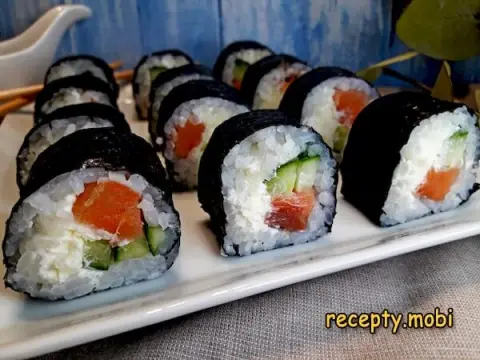
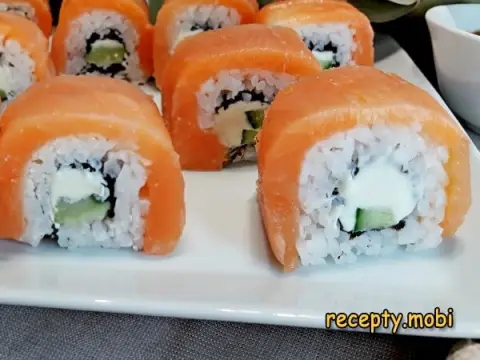
Along the near edge lay a strip of cream cheese, then the cucumber and fish on top. Start rolling away from you, holding the filling in place with your fingers. The film helps you shape a tight roll. Moisten the edge of the nori with water and press it to seal.
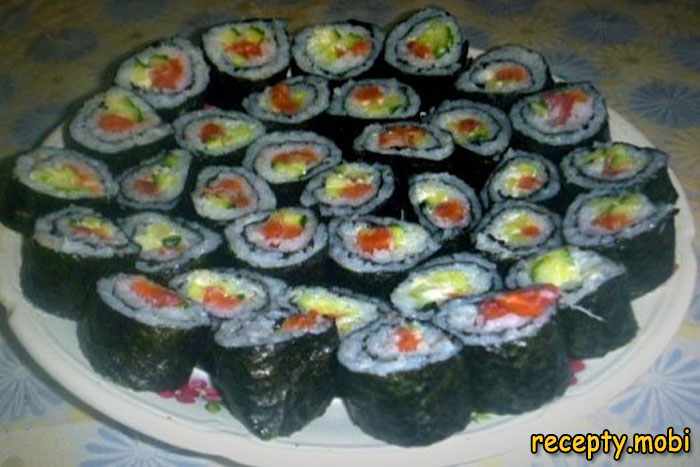
With a sharp, wet knife cut the roll in half first, then cut each half into 3 more pieces. This gives you 6 neat pieces. Arrange them on a plate cut side up and serve with soy sauce and pickled ginger.


Types of rolls that are easy to make without a mat
It is not only the classic salmon rolls that turn out well without a bamboo mat. By hand or on a towel it is easy to roll any version where the filling is not too wet and holds well in the rice.
- Philadelphia. Nori, rice, cream cheese and a strip of salmon. The easiest option for beginners: the cheese binds the filling, and the roll does not fall apart. See the full breakdown in the recipe for Philadelphia rolls at home.
- Vegetable rolls. Cucumber, avocado, bell pepper, lettuce leaves. A fish-free, lean option that is the easiest of all to roll by hand.
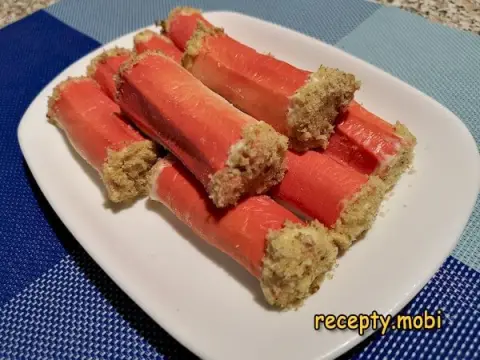
- With crab sticks. A budget-friendly swap for fish; the filling is dry and firm and holds its shape even under strong pressure.
- With smoked chicken or fish. A ready-cooked product needs no heat treatment and waits happily in the fridge until its turn.
- Warm baked rolls. The rolled sushi is topped with a cap of cheese and mayonnaise and baked for 5-7 minutes: the hot filling binds the layers together even more.
If you would rather not roll at all, you can layer the same filling in a salad bowl and get a starter with the taste of sushi rolls without a single rolling motion.
What to use instead of a bamboo mat
A mat is needed for one thing only: to press the rice and filling evenly as the roll takes shape. Almost any flexible, clean object in your kitchen can do the job.
- Cling film. Lay down two layers of film, a nori sheet on top, and the rice above that. The film stops the rice sticking to your hands and helps you pull the edge in.
- Kitchen towel. Fold a thick waffle-weave towel in half and wrap it in cling film so it does not get wet. It is essentially a homemade mat that bends the same way.
- Silicone baking mat. Flexible, easy to wash and rolls up almost like a bamboo one.
- Sturdy paper or parchment. Handy when nothing else is to hand, but they only last for one or two rolls.
- Just your hands. If the rice has the right stickiness, the roll shapes up in your palms with no backing at all, like an ordinary roulade.
The general rule for every method: keep the backing and your hands slightly damp, and the rice will not cling while the seam stays even.
Common mistakes and how to avoid them
Most failures with homemade rolls come not from the lack of a mat but from the rice and the amount of filling. Let us look at what most often goes wrong.
- Over- or undercooked rice. Rice that is too soft turns to mush, rice that is too firm will not stick together. The exact ratios and timing are covered separately: how long to cook rice for sushi.
- Too much rice. A thick layer makes the roll hard to close and tears the nori. A thin layer, one the sheet just shows through, is enough.
- Too much filling. One, at most two strips of each ingredient: any more and the roll will not close at the seam.
- Hot rice. Nori goes soggy on hot rice. Let the rice cool until warm, just above room temperature.
- A blunt or dry knife. The rolls get crushed as you slice. The knife should be sharp, and the blade wetted with water before every cut.
Choosing and preparing the ingredients
The minimal set of ingredients for rolls is small, so the quality of each one has a noticeable effect on the result.
- Rice. Choose short-grain: it is the stickiest. Long-grain crumbles apart and is no good for rolls.
- Nori. Lay the sheet shiny side out, rough side to the rice: that way the rice grips better. Keep nori in an airtight pack, as it soon takes on moisture in the open air.
- Cream cheese. Any soft curd cheese will do. If you like, it is easy enough to make your own; see the recipe for Philadelphia cheese at home.
- Fish. For raw fish use only fresh, or sushi-grade fish that has been frozen first. Peel the cucumber and avocado and cut them into thin, long batons.
What to serve with sushi rolls
The classic accompaniments to rolls are soy sauce, pickled ginger and wasabi. The ginger refreshes the palate between different rolls, and wasabi is added to taste, literally on the tip of the chopsticks.
To set a fuller table, serve light starters in the same style alongside the rolls. A sushi salad works well: it is the same roll filling served in a bowl, so the flavour combinations feel familiar. Finished rolls are sprinkled with sesame seeds or tobiko roe for looks and a light crunch.
What to use instead of a sushi mat
| Tool | How to use it | Notes |
|---|---|---|
| Cling film | Laid in two layers under the nori sheet | Rice does not stick, easy to pull the edge in |
| Kitchen towel | Folded in half and wrapped in film | The closest substitute for a mat |
| Silicone mat | Rolled up like a bamboo one | Flexible, easy to wash |
| Parchment or paper | For one or two rolls when short on equipment | Single-use, tears under strong pressure |
| Bare hands | Rolled in the palms like a roulade | Needs properly cooked, sticky rice |
FAQ
Which rice is best for sushi rolls? +
Short-grain rice is ideal: it contains more starch and sticks together well. I use an ordinary Krasnodar variety or a Japanese sushi rice. Long-grain rice will not do, as it is far too crumbly.
Can rolls be made in advance? +
Rolls are best eaten fresh, within 2-3 hours of making. If you need to prepare ahead, keep the uncut rolls in cling film in the fridge for up to 4 hours. Slice them right before serving.
What can replace raw fish? +
Instead of raw fish I use lightly salted salmon, smoked eel, crab sticks, prawns or even a tamago omelette. For vegetarian rolls, avocado, cucumber, cream cheese and pickled radish work well.
How do you roll sushi without a mat using a towel? +
Fold a thick towel in half and wrap it in cling film, place the nori with the rice and filling on top, and roll it just as you would with a mat, pulling the edge towards you.
Why does the rice stick to my hands while shaping the rolls? +
Sticky rice always clings to dry palms. Wet your hands with water and a drop of rice vinegar before each roll, and the rice will stop sticking.
Do I need to wet the knife when slicing rolls? +
Yes, wet the blade with water before every cut. A damp, sharp knife slices the rice and nori cleanly without crushing the roll.
Which side of the nori goes down, shiny or rough? +
Shiny side down, against the table, with the rice spread over the rough side: that way it grips the sheet better.
Can rolls be made without nori? +
Yes, instead of nori the roll can be wrapped in a thin omelette, a lettuce leaf or soy paper. Film or a towel will help shape it just as with nori.
How many rolls come from one sheet of nori? +
A whole sheet makes one roll of 6-8 pieces. For thin rolls the sheet is cut in half to give two narrow rolls.
Why does the roll unravel and lose its shape? +
Most often because of too much rice or filling and weak pressure at the seam. Use a thin layer of rice, a little filling, and pull the edge in firmly with the backing.
- Comment
or post as a guest
Be the first to comment.