avg —
Fluffy Omelette in the Oven

Instructions
I get the ingredients ready. There is no need to take them out of the fridge in advance – the temperature of the products can be anything. I turn the oven on to 190 degrees straight away.

For the omelette to turn out fluffy, the weight of the eggs and the milk should be the same. So I crack the eggs into a bowl and weigh them. If you don't have scales, you can go by a rough formula – 50–55 ml of milk for 1 medium egg.
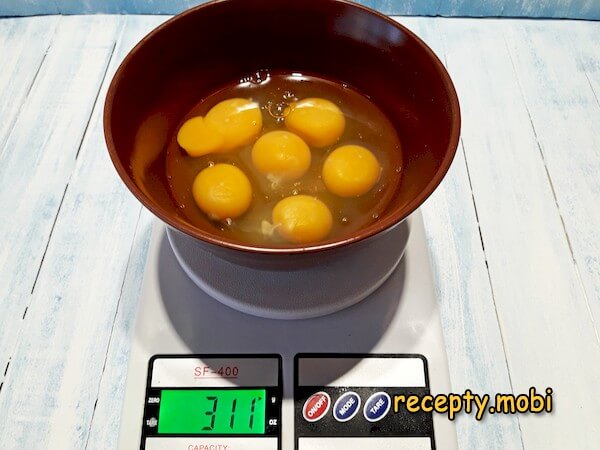
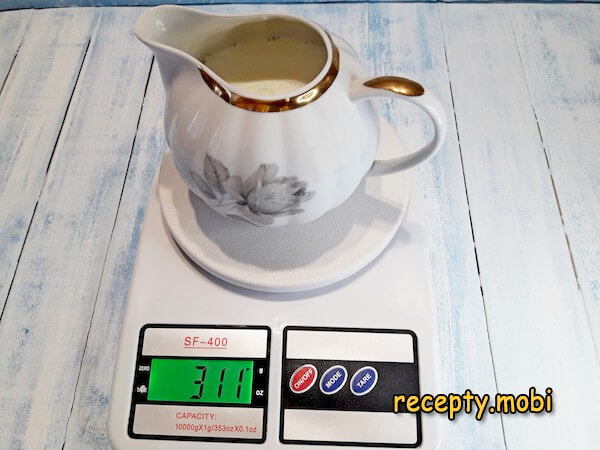
I weigh out the same amount of milk as the eggs.
I pour the eggs and milk into a mixing bowl and add salt.

Now you just need to stir the mixture with a whisk, but on no account beat it.

For the omelette to be tall, you need to choose the right baking dish. The egg mixture in it should sit 3–3.5 centimetres deep, and the shape of the dish doesn't matter – the base can be a circle, a rectangle, or even a triangle. I grease the bottom and sides of the dish with butter.

I pour the eggs and milk into it.

I place the dish on the middle level of the oven. During baking the omelette rises, but after cooling it settles a little.
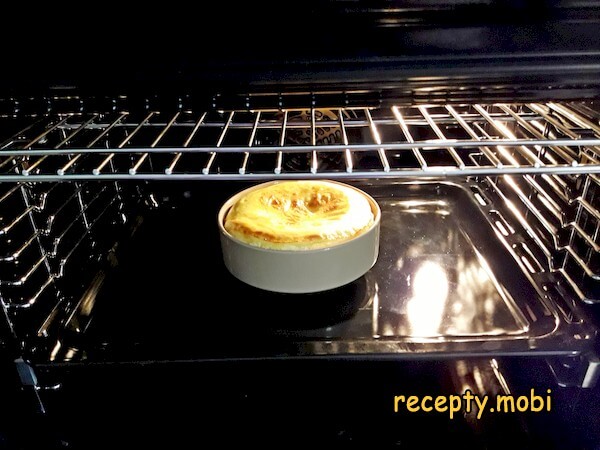
After 40 minutes I take out the dish and let it cool a little. Then the omelette can be cut into portions.



Tips
- 1
EQUAL WEIGHT is the secret to fluffiness. With less milk the omelette is dense and rubbery. With more it spreads out watery. A 1:1 ratio of eggs to milk by weight gives the ideal tall, springy result.
- 2
DON'T BEAT is the secret to the texture. Beaten eggs give a porous but airy omelette full of bubbles. Stirring with a whisk gives an even, dense structure without holes.
- 3
A DEPTH OF 3–3.5 CM is the secret to the rise. A thin layer of 1–2 cm won't rise. Too thick a layer of 5+ cm won't cook through inside. Only 3–3.5 cm gives a nicely tall omelette.
- 4
190 DEGREES is the secret to even cooking. At a low temperature the omelette dries out before it rises. At a high one it burns on top. 190 degrees for 40 minutes is the ideal balance. The same principle works for other kinds of omelettes and egg bakes.
FAQ
Which eggs should I choose? +
Fresh eggs of grade C1 are ideal (6 pieces). Quail eggs (18 pieces) make a lighter, dietary version. Don't use eggs that are close to their use-by date or eggs with thin, cracked shells. For the classic result, use fresh C1 eggs no more than 2 weeks old.
Can the milk be replaced? +
You can use 10% single cream (300 ml) for a richer, more delicate result, or 1% kefir (300 ml) for a more economical version with a slight tang. A 50/50 mix of milk and cream (300 ml) also works well. Don't use condensed milk (the omelette will be sweet). For the classic result, use milk with 2.5–3.2% fat.
How long does the omelette keep? +
In the fridge in a tightly closed container, 2 days. On the second day the flavour holds up, but the texture turns rubbery. Before serving, reheat it in the microwave for 1 minute or in the oven for 5 minutes at 150 °C under foil. I don't recommend freezing it – the egg mixture breaks down completely on thawing and becomes watery. Don't leave it at room temperature for longer than 2 hours. It is best made for a single breakfast, to be eaten straight away.
What to serve the fluffy omelette with? +
A breakfast classic: with fresh cucumber and tomato slices. With bacon fried until crisp, thin slices of ham, or fried sausages. With boiled chicken breast. With fresh dill and parsley, or grated cheese on top. With rye toast, or a buttered croissant. With a cup of freshly brewed coffee, cocoa, or green tea, or with freshly squeezed orange juice. With a slice of avocado, sautéed mushrooms, or fried cherry tomatoes. It is a versatile choice for a healthy breakfast.
- Comment
or post as a guest
Be the first to comment.