avg —
Tartlets with Red Caviar
Instructions
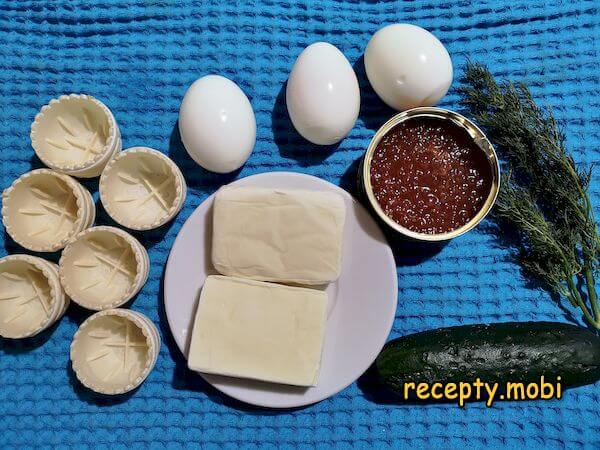
Lay out every ingredient before starting the assembly. Slip the shells off the three boiled eggs and have them ready on the work surface. Make sure the tartlet shells are fully cooled if you baked them yourself, or open the package straight from the supermarket if you bought pre-made ones for convenience.
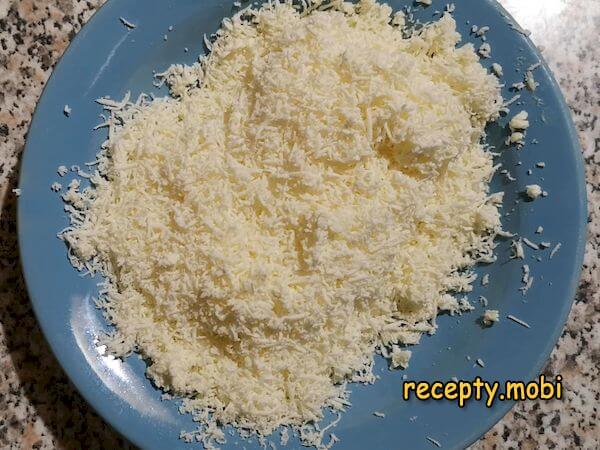
Grate the two processed cheese pieces on the fine side of a vegetable grater. Freezing the cheese for thirty minutes beforehand makes the grating much easier and produces neat fine strands rather than a sticky paste; warm processed cheese smears across the grater holes and refuses to break into clean pieces.
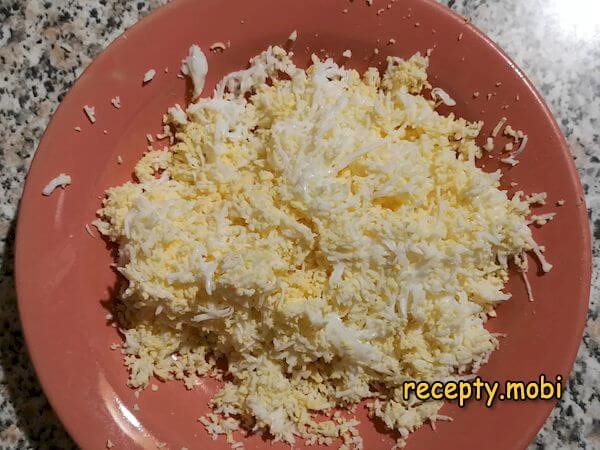
Grate the three boiled chicken eggs on the same fine grater. Cold eggs straight from the refrigerator grate cleanly into fluffy strands; warm eggs gum up the grater and produce a sticky paste that does not blend properly with the cheese in the next step.
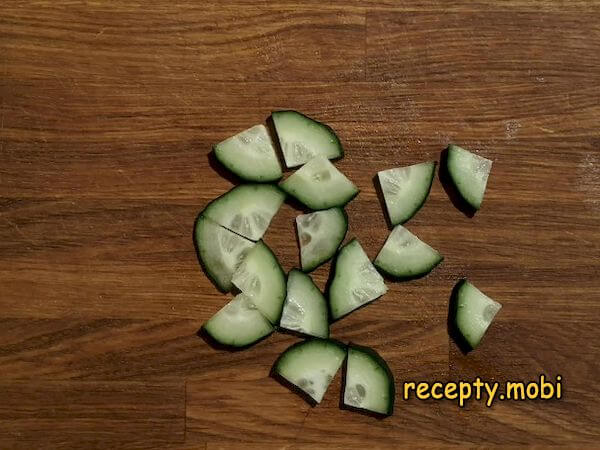
Cut the cucumber into thin slices, half-moons, or small cubes for decoration; any clean cut works. Choose a firm cucumber with small seeds for the cleanest cut and the freshest crunch when guests bite into the finished tartlet at the festive table.
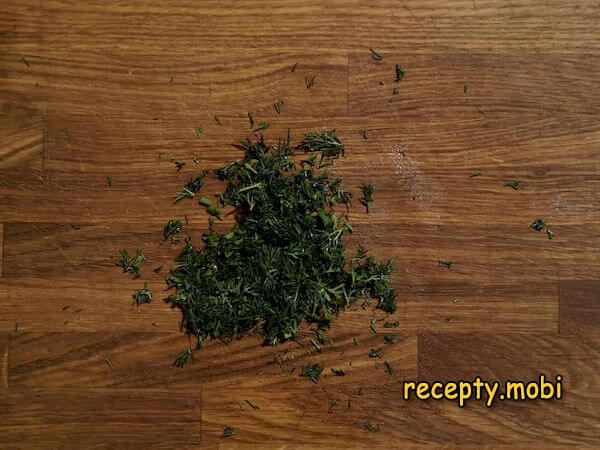
Finely chop the five grams of fresh dill, working through the leaves with a sharp knife in small steady strokes. Reserve a few intact sprigs for garnishing each tartlet at the very end; chopped dill goes inside the filling, whole sprigs sit on top.
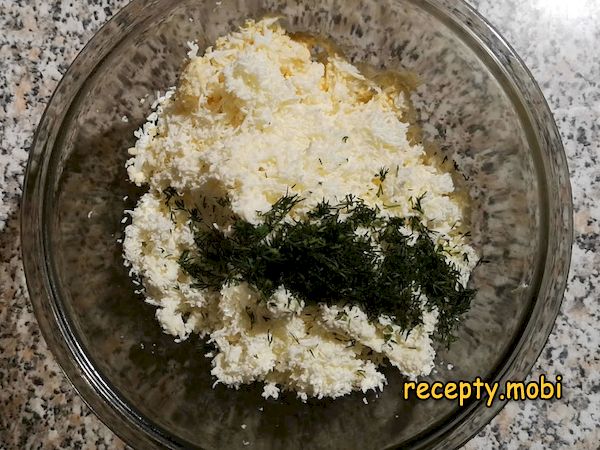
Combine the grated processed cheese, the grated eggs, and the chopped dill in a roomy mixing bowl. Have all three components at the same temperature for the smoothest blending; warm components combined with cold ones produce uneven texture in the finished filling.
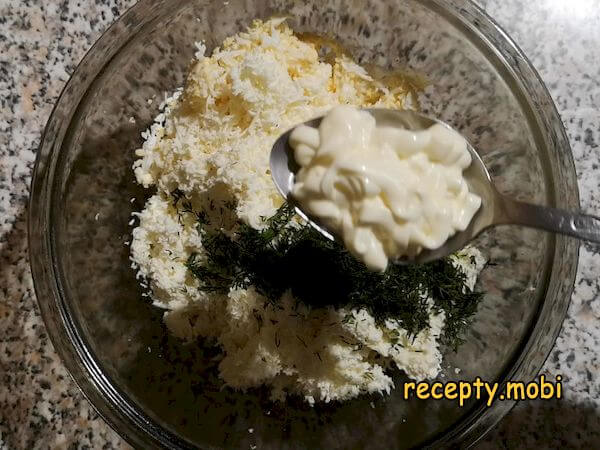
Spoon in the tablespoon of mayonnaise to bind the dry components together. The mayonnaise serves as the glue that holds the filling together inside the tartlet shell during eating; without it, the cheese and egg crumbs would fall out at the first bite.
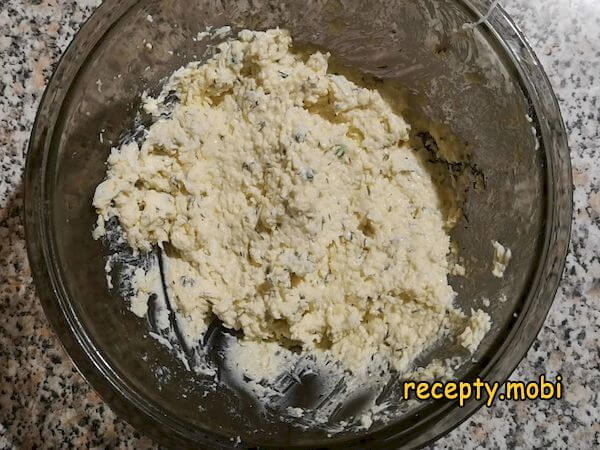
Mix everything thoroughly until the mass turns completely homogeneous in color and texture. The finished filling should hold its shape on a spoon without crumbling apart; if too dry, add another teaspoon of mayonnaise; if too wet, refrigerate for ten minutes before filling the tartlets in the next step.
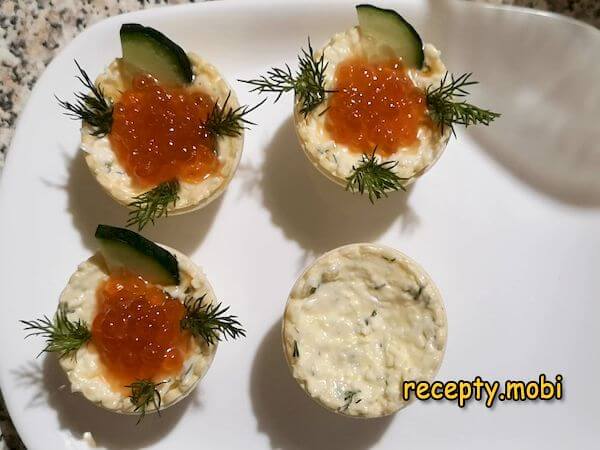
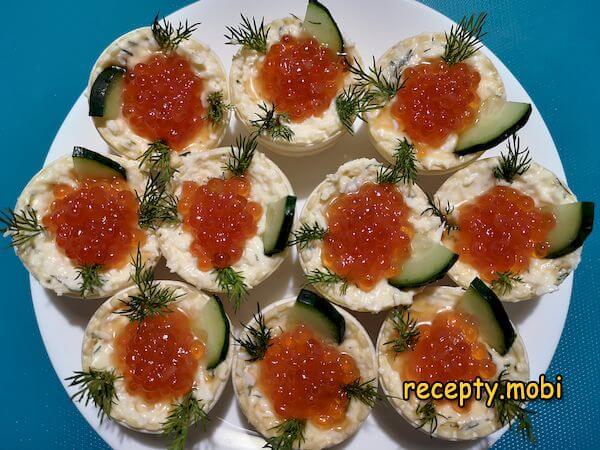
Spoon the prepared filling into each tartlet shell, mounding it slightly above the rim for the most attractive presentation. Top each one with a generous spoonful of red caviar, making sure the orange pearls cover most of the white filling underneath. Decorate with a small dill sprig and a slice of cucumber tucked artfully against the side.
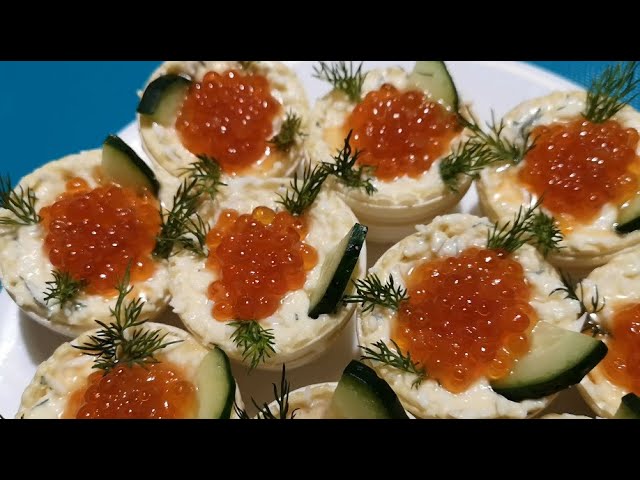
The tartlets with red caviar are ready to take the spotlight on the festive table. Arrange them on a flat platter with extra dill sprigs scattered between for a fresh green backdrop, and bring them out just before the toast for the most dramatic entrance. Serve chilled for the freshest flavor and watch them disappear within minutes of arriving at the table.
Tips
- 1
Freeze the processed cheese for thirty minutes before grating for the cleanest fine strands. Cold processed cheese cuts neatly through the grater holes; room-temperature cheese smears across the metal and refuses to release into proper shreds. The same trick works for any soft cheese that resists the grater. The brief chill makes the difference between a smooth filling and a lumpy frustrating mess that no amount of mayonnaise can save in the bowl.
- 2
Fill the tartlets close to serving time rather than hours in advance. Pre-filled tartlets sitting too long develop a soggy bottom as moisture from the filling leaches into the pastry shell, ruining the crucial textural contrast that makes this appetizer so satisfying. If you need to prep ahead, store the filling and the tartlet shells separately and assemble at the very last minute. Pair them with a creamy dollop of homemade mayonnaise for an extra flavor lift.
- 3
Choose a high-quality red caviar from a reputable producer for the best flavor and visual impact. Cheaper caviar tends to have small, dull-colored pearls that lack the satisfying pop of premium varieties. Look for caviar with bright orange or red color, individual large pearls that resist crushing under gentle finger pressure, and a clean briny aroma without any fishy smell. The investment in better caviar pays off the moment guests bite into the tartlets and taste the difference.
- 4
Vary the decoration with each tartlet for visual interest on the platter. Some can carry a single dill sprig and cucumber slice, others a quail egg half, others a tiny ribbon of lemon zest. The variety transforms a uniform row of tartlets into a colorful festive spread that guests admire before reaching for a piece. For another celebratory holiday classic with a similar elegant presentation, see the festive snack "Tangerines".
FAQ
Can I substitute the red caviar with another topping for a budget-friendly version? +
Yes, several toppings work beautifully and let you create equally elegant tartlets without the caviar premium. Smoked salmon cut into small ribbons gives the same orange-pink color and luxurious flavor at a fraction of the cost. Black olives sliced into rings provide a salty Mediterranean alternative. Slices of pickled herring add the same briny note as caviar with a heartier texture. For a vegetarian version, top each tartlet with a small spoonful of caramelized onion or roasted red pepper. Each variation creates a distinct dish while keeping the core technique of the recipe intact.
Can I make my own tartlet shells from scratch? +
Yes, homemade shells deliver superior flavor and texture compared to most store-bought options. Prepare a basic shortcrust pastry from flour, butter, salt, and a splash of cold water. Roll the dough thin, cut into circles, press into mini muffin tins, and blind-bake at one hundred and eighty degrees for fifteen minutes until golden and crisp. Cool completely before filling. The homemade shells stay crisp longer than store-bought ones because they can be properly dried during baking, and the buttery flavor complements the caviar beautifully on the festive table.
How long can the assembled tartlets sit before serving? +
Filled tartlets are at their best within thirty minutes of assembly because the moisture from the filling slowly softens the pastry shell underneath. After an hour, the bottom of each tartlet starts to lose its crispness, and after two hours the whole appetizer turns soggy and unappetizing. For a long buffet, prepare twice as many tartlet shells as you plan to serve and refresh the platter every thirty minutes with newly assembled ones. Keep the filling and shells separate in the refrigerator and combine in batches throughout the event.
Can I make a vegan version of these tartlets? +
Yes, with a few simple ingredient swaps the entire recipe adapts beautifully for vegan diets. Replace the boiled eggs with finely mashed firm tofu seasoned with a pinch of black salt for the eggy flavor. Use vegan cream cheese in place of the processed cheese. Substitute the mayonnaise with a vegan version made from aquafaba or commercial brand. For the topping, replace the red caviar with vegan alternatives like seaweed pearls, finely diced sun-dried tomatoes, or roasted red pepper strips. The visual impact stays nearly identical, and the flavor profile remains festive and satisfying for everyone at the table.
- Comment
or post as a guest
Be the first to comment.