avg —
Fermented Cabbage with Cranberries

Instructions
I prepare the ingredients. First I pay attention to the appearance: the head you choose should be flattened, and when cut it should reveal thick, snow-white leaves with a sweet taste.
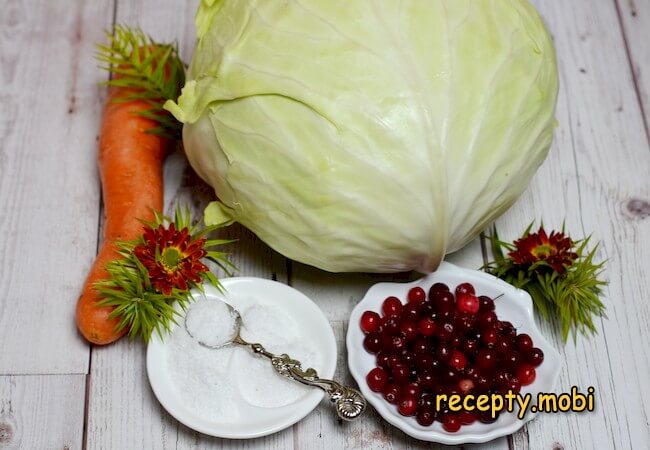
I peel a small carrot – too much grated carrot in the dish prevents the proper cabbage flavour from forming. I cut the head in half, remove the core and the thin greenish outer leaves. I weigh the cabbage. I wash the prepared vegetables in cold water.
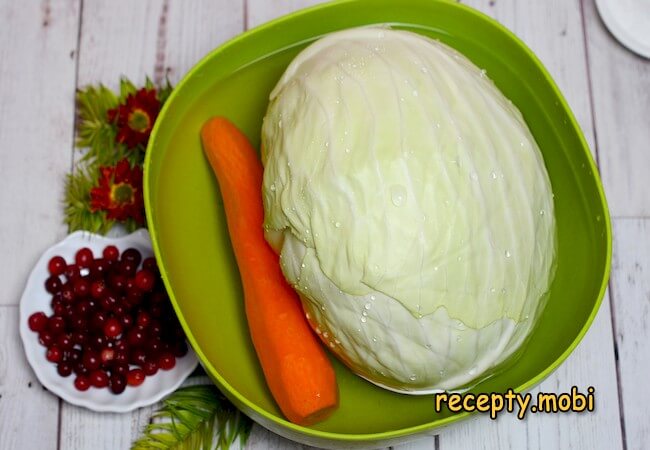
I shred the cabbage or run it across a special grater. The general rule: the cabbage shavings should be long and more or less thin.
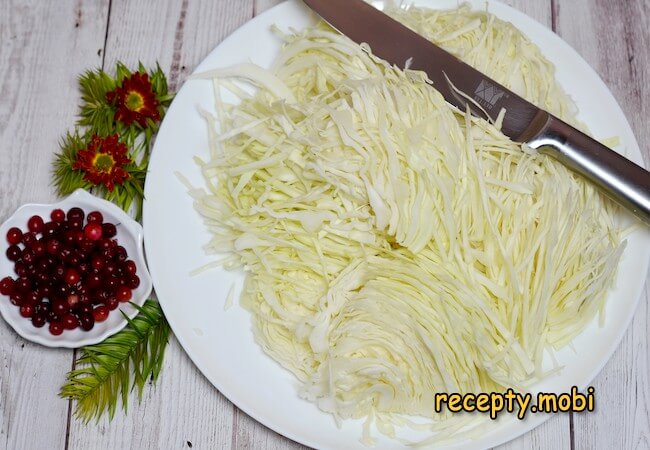
I salt the cabbage and rub it with my hands until the juice appears.
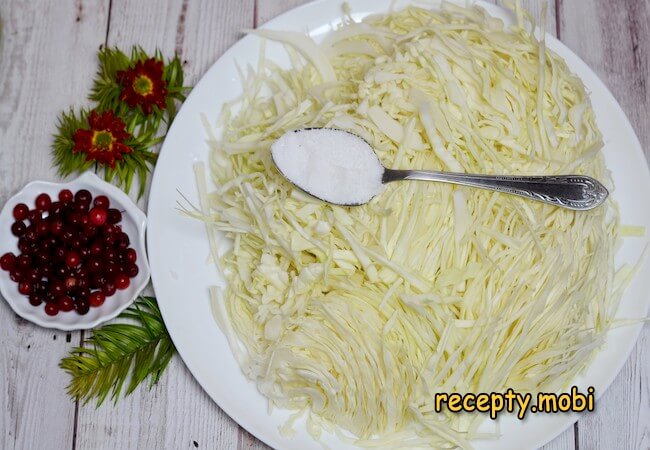
I grate the carrot on the coarse side of a grater – it should not be kneaded together with the cabbage.
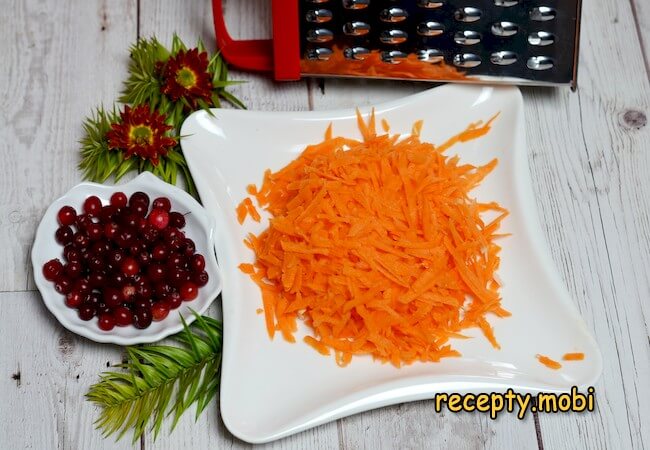
In a convenient bowl I mix the carrot and the cabbage.
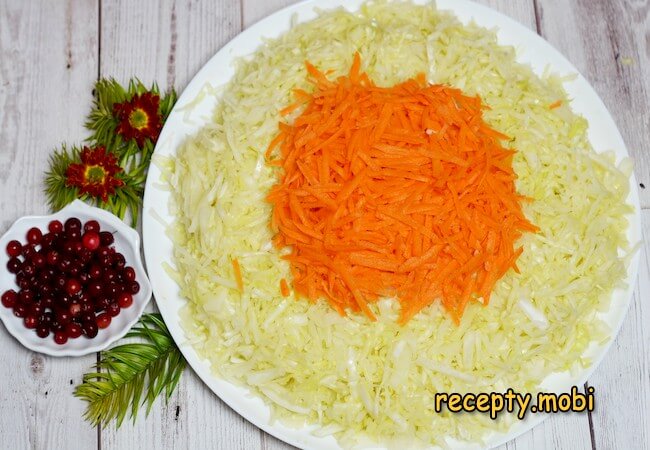
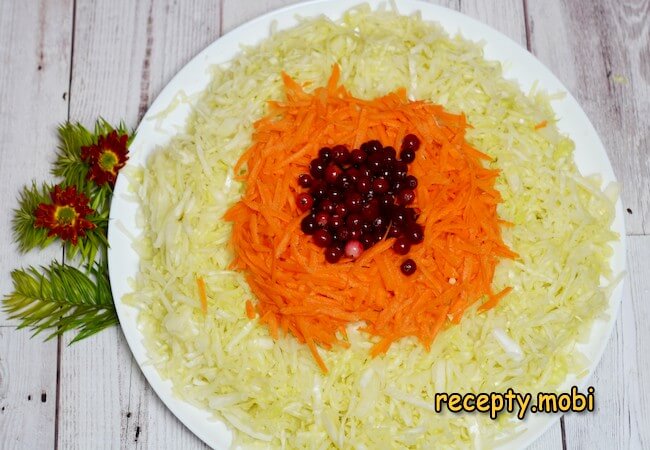
I add the fresh cranberries.
Cabbage ferments well and quickly in large containers. The shredded mixture can be placed in a three-litre jar. In that case no weight is used – everything depends on packing it down tightly.
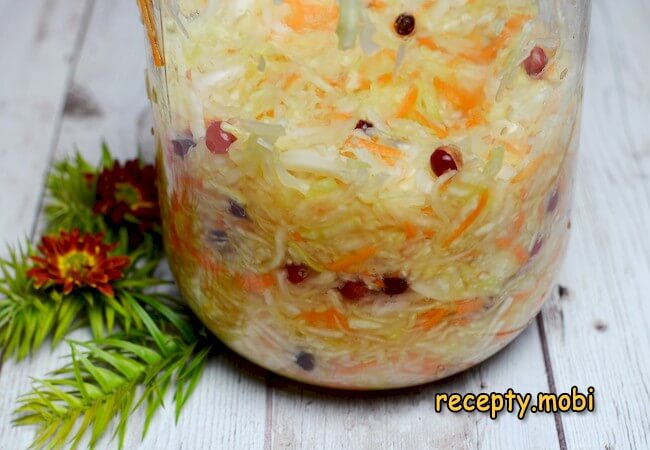
The best option is fermenting in deep glass dishes under a weight. I pour the cabbage, along with the juice released during rubbing, into a glass salad bowl. On top I place a flat plate and set a jar of water on it. Under the pressure of the weight the cabbage juice rises and covers all the shredded vegetables. The cabbage ferments at room temperature for 4–5 days.

Once a day I take off the weight and, with a wooden skewer, pierce the cabbage mass in several places right down to the bottom. After this I return the plate and the weight to their place.
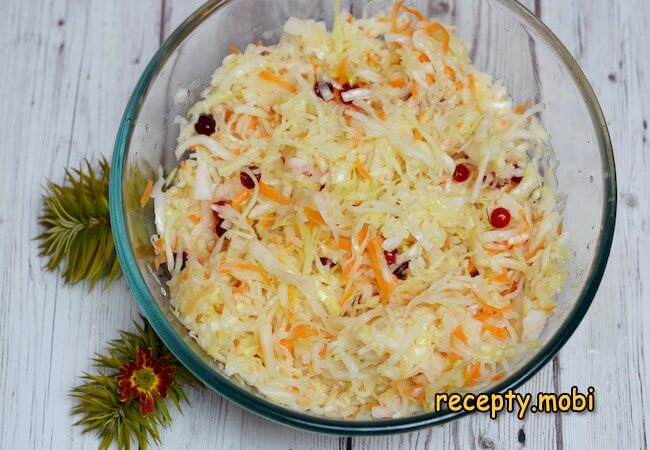
When the cabbage takes on its characteristic fermented taste, I remove the weight. I transfer the cabbage into litre jars, cover them with plastic lids and put them in the refrigerator. If the salad bowl fits in the fridge, you can leave the cabbage in it, covering the top with cling film.
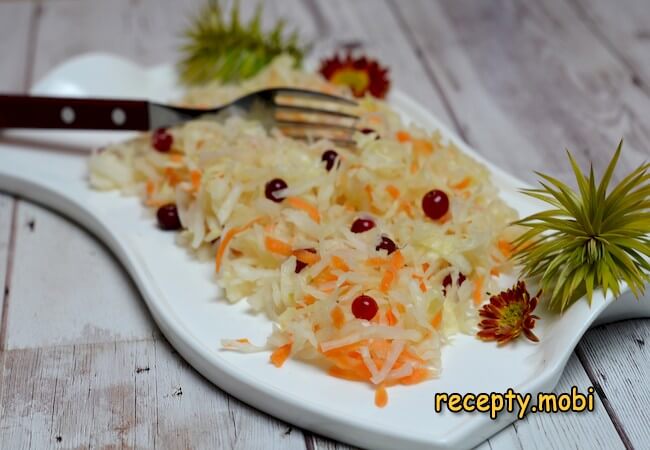
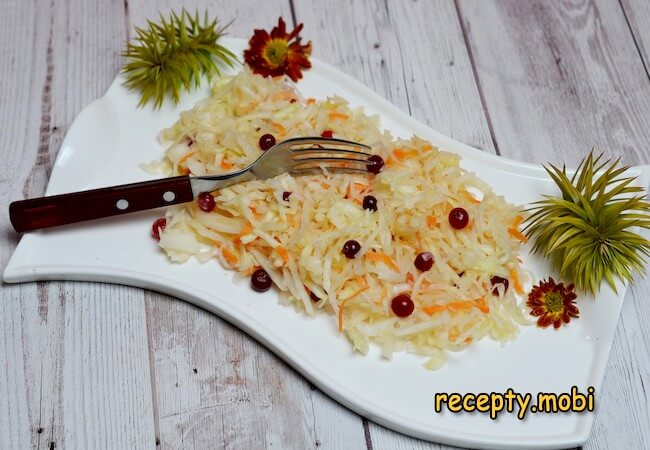
Sauerkraut with cranberries is the healthiest winter salad. I serve the dish chilled.


Tips
- 1
A FLATTENED HEAD with sweet white leaves is best for fermenting. Remove the thin green leaves, as they give bitterness.
- 2
DO NOT RUB THE CARROT together with the cabbage – add it grated. Too much carrot spoils the "cabbage" character of the dish.
- 3
PIERCE the mass with a skewer once a day – it releases the gases from fermentation, otherwise the cabbage will turn bitter.
- 4
4–5 DAYS UNDER A WEIGHT is a must. Readiness is judged by taste: the desired tartness has appeared. The same principle works for other fermented vegetables.
FAQ
Which cabbage should I choose for fermenting? +
The best choice is mid-late or late varieties: Slava, Podarok, Amager, Belorusskaya, Valentina. They have firm heads with thick, juicy leaves – ideal for fermenting. Early varieties (Iyunskaya, Zhemchug) are not suitable – too loose, they will not give crunchiness. The ideal head weight is 2–3 kg. The head should be heavy for its size, without cracks or rot. The autumn harvest (October–November) is the most suitable season.
What can I use instead of cranberries? +
Alternatives: lingonberries (similar taste, less sour), apples (cut into slices, add a handful), beetroot (for a red colour, less classic), grapes (white or black), rowan berries (an autumn accent). Cranberries in cabbage are a classic of northern Russian cuisine, giving an inimitable spicy-sour note. Frozen cranberries also work – use them without thawing. Cranberry juice does not replace the berries – the texture is different.
How long does the cabbage keep? +
In the refrigerator, in a glass jar under a plastic lid – 2–3 months. Top up the brine occasionally if the level drops. For long storage – seal it in sterilised jars: up to 6 months in a cool pantry. In the freezer – up to 6 months (for cooking; for salad it will lose its crunch). The longer it stands in the fridge, the brighter the taste, but the higher the acidity. It is best eaten within 1–2 months.
What to serve it with? +
A Russian classic: with boiled potatoes, fried meat, borscht, shchi. With vegetable oil and onion – a traditional salad for lunch. With hot dishes as a side. For a festive table – with kholodets, studen, saltison. With strong drinks (vodka, samogon). For a "children's" version – add honey and sugar to soften the taste. For healthy eating – as a dish on its own with black bread and butter.
- Comment
or post as a guest
Be the first to comment.