avg —
Quick Korean-style Tomatoes

Instructions
I prepare the ingredients and peel the garlic.
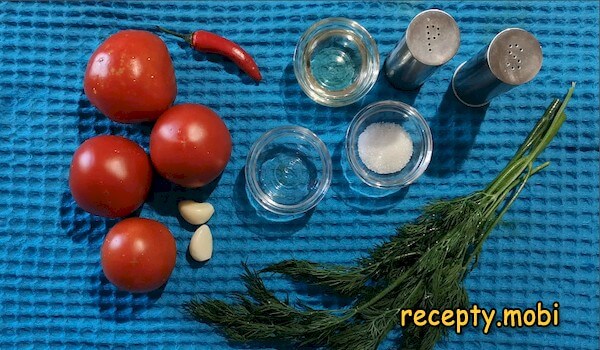
Cut the tomatoes in half and remove the stems, then slice them into wedges and transfer to a deep bowl.
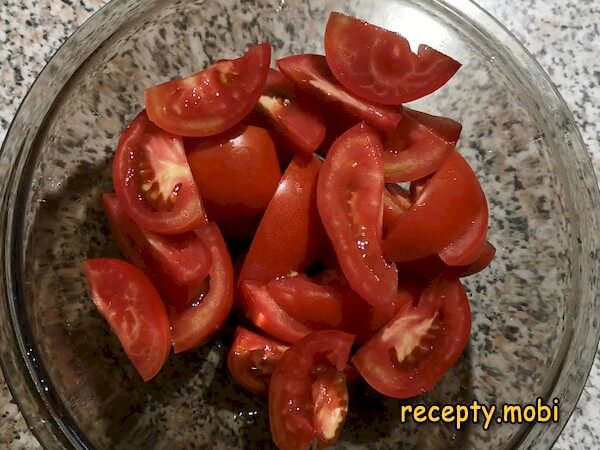
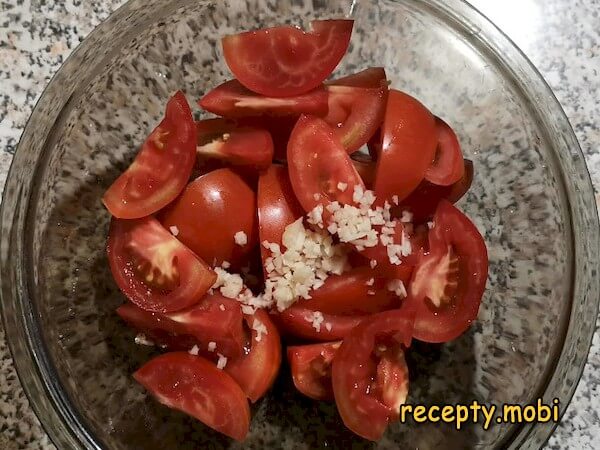
Chop the garlic finely and add it to the tomatoes.
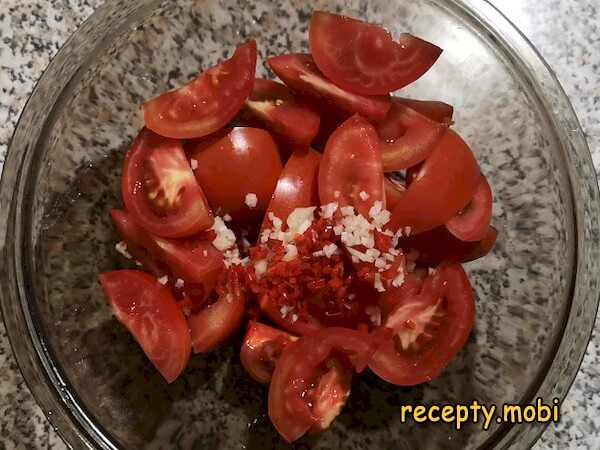
Cut the chilli in half and remove the seeds. As with the garlic, chop the chilli finely and add it to the other vegetables.
Remove the dill stems, chop the greens finely and add them to the tomatoes.
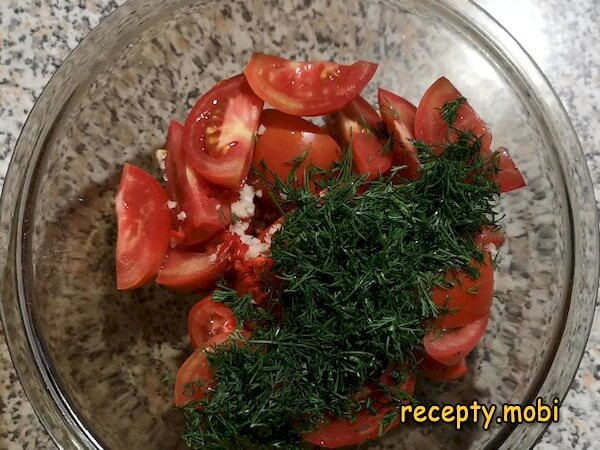
Add 1/2 tbsp of sugar to the vegetable mixture.
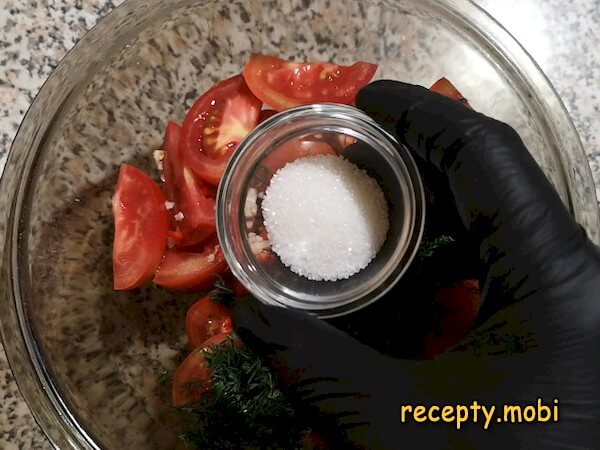
Pour 1/2 tbsp of 9% vinegar over the chopped vegetables.
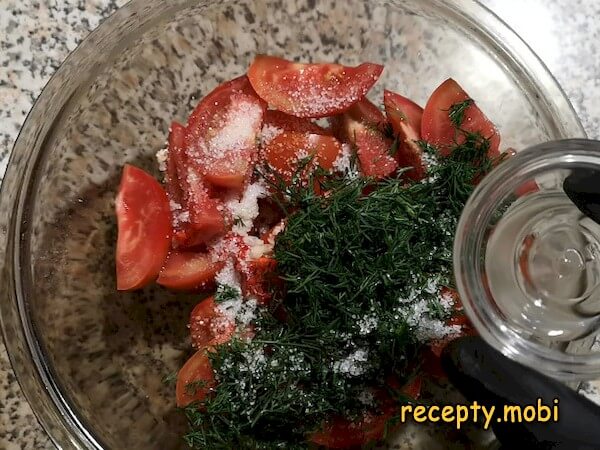
Add 2 tbsp of vegetable oil to the salad.
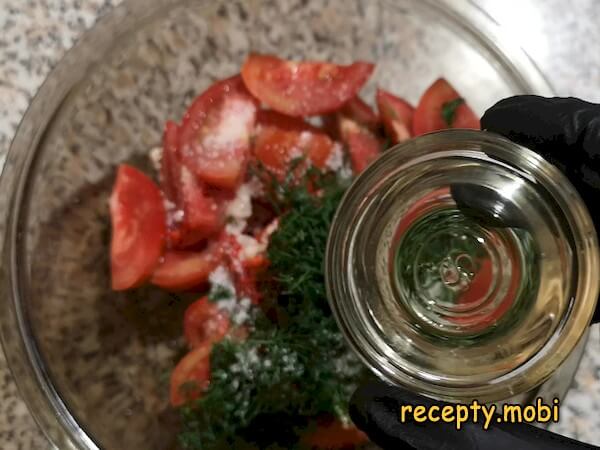
Season with salt and pepper to taste.
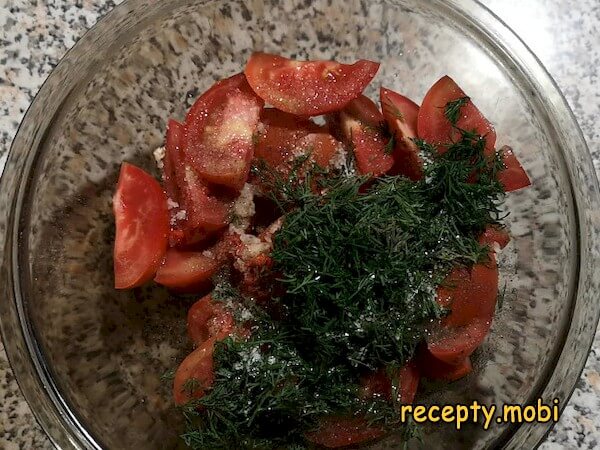
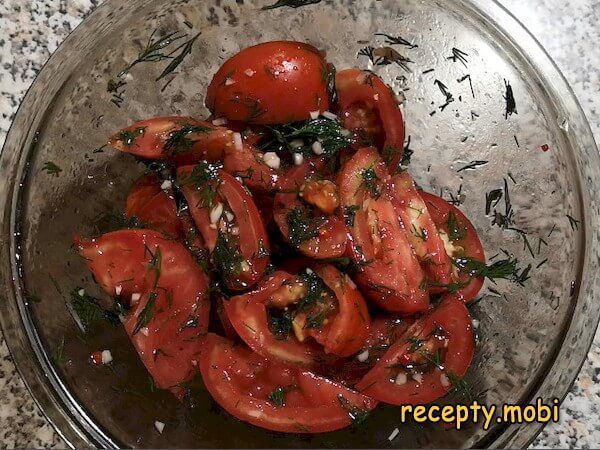
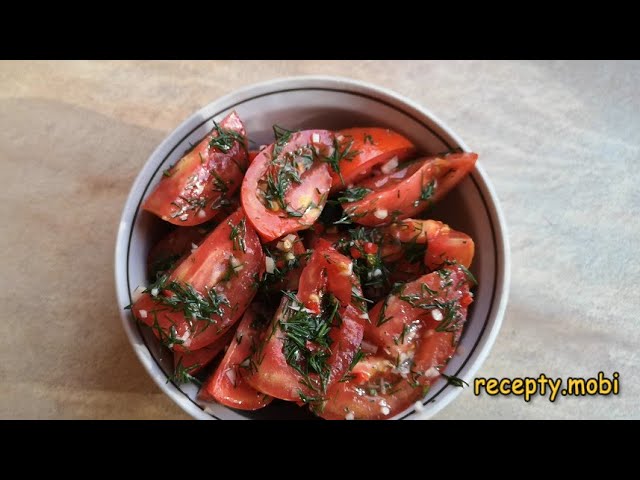
Mix everything together and the quick Korean-style tomatoes are ready. Let them rest for a few minutes, then serve.


Tips
- 1
Meaty tomatoes are the secret to the texture. Varieties such as Bull's heart or San Marzano have dense flesh, so the wedges keep their shape and do not turn to mush.
- 2
Removing the chilli seeds is the secret to avoiding excessive heat. The seeds give a fierce, knockout pungency; without them the dish is nicely piquant but not aggressive.
- 3
Letting the salad rest for a few minutes is the secret to the flavour. In 5–10 minutes the tomatoes release their juice, the marinade blends together and the taste opens up.
- 4
Chopping the garlic is the secret to the aroma. Garlic crushed in a press gives a sharp, harsh taste, while finely chopped garlic is milder and more fragrant. The same principle works in other Korean-style salads.
Video
FAQ
Which tomatoes should I choose? +
Meaty, sweet varieties are ideal (Bull's heart, Pink giant, San Marzano) – the wedges hold their shape and do not spread. Alternatives include plum tomatoes (elongated and meaty), Black Prince (an unusual colour) or Mikado (a premium option). Fresh tomatoes should be firm with no green patches; ripe ones should be soft and aromatic. Cherry tomatoes (too little juice), green tomatoes (too sour) and overripe or spoiled ones are not suitable. Ground-grown sweet tomatoes are best, as greenhouse tomatoes give less juice.
What can I use instead of chilli? +
Good substitutes include cayenne pepper (1/4 tsp, hotter), hot paprika (1 tsp, milder), pul biber chilli flakes (3 g, a Turkish option), pickled jalapeño (10 g, a Mexican note) or ground red pepper (1/2 tsp, the simplest choice). Fresh chilli is the best option, but dried chilli also works. Avoid Tabasco, which changes the flavour with its own vinegar, and sweet pepper, which adds no heat. For a spicier result keep the seeds in; for a milder one leave them out.
How long do the tomatoes keep? +
In a container in the fridge they keep for 1–2 days. Any longer and the tomatoes release a lot of juice and the wedges lose their shape. Take them out of the fridge 15–20 minutes before serving, as the cold dulls the flavours. Do not leave them at room temperature for longer than 4 hours, because in warm conditions they will turn sour. They are at their best 5–10 minutes after mixing; on the second day the flavour is deeper but the texture is softer. For a packed lunch they travel well in a small jar, and for a picnic it is best to make them just before you set off.
What should I serve them with? +
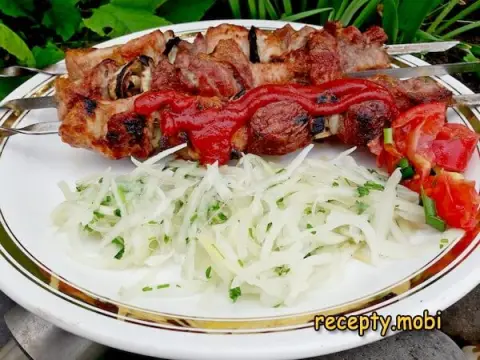
They make a fine standalone appetizer for hot meat dishes. Serve them with fried or boiled potatoes; with steak, shashlik or lamb ribs; or with grilled or baked fish. With lyulya kebab they are a classic pairing, and they also suit a rice side dish. They go well with light beer, with Uzbek or Kazakh pilaf, and with boiled chicken or turkey, as well as with fried fish. Add them to a Korean-style spread alongside other Korean salads, or serve them with a cup of green tea for a lighter meal. They even suit a glass of chilled vodka in true Russian style. All in all, this is a versatile spicy appetizer for summer meals.
- Comment
or post as a guest
Be the first to comment.