avg —
Quick Pickled Cabbage

Instructions
I prepare the ingredients for the quick pickled cabbage. You can replace the honey with ordinary sugar — you will need 3 tablespoons — but with honey the flavour is more interesting. The salt must be coarse rock salt.

I remove the top leaves from the cabbage head and cut out any misshapen spots. I cut the head in half and shred it thinly, using a special shredder for convenience.
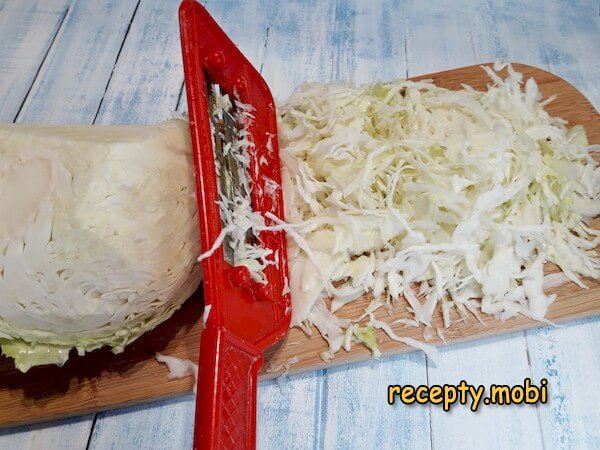
I transfer the shredded strips to a bowl and weigh them, so I can work out the exact amounts of the remaining ingredients.
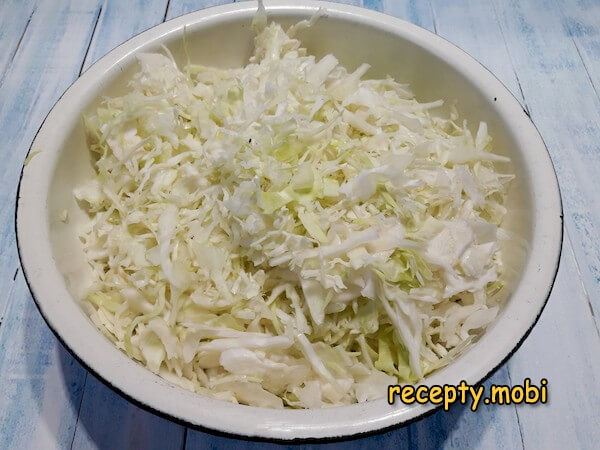
I grate the carrot into long strips (a Korean-carrot grater is good for this). If you don't have one, an ordinary coarse grater will do.

For convenience I move the cabbage and carrot into a roomy bowl and mix them, but never crush or knead the vegetables — after marinating the cabbage should keep its firmness.

I finely chop the garlic.
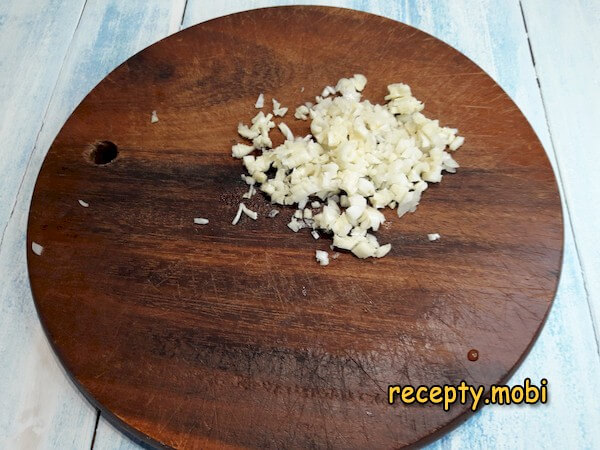
I add it to the bowl and again distribute it gently throughout.
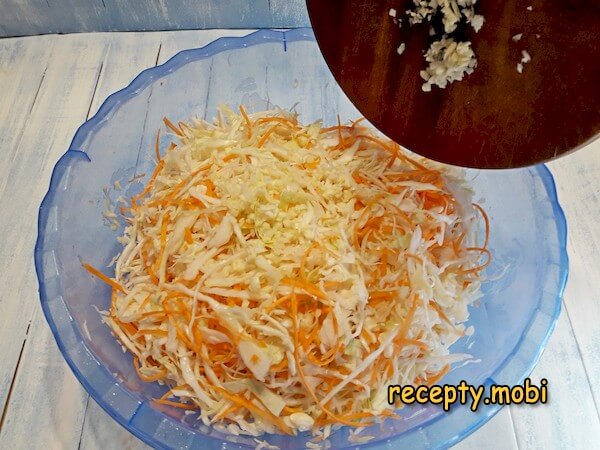
Now I transfer the mixture, ready for marinating, into a smaller bowl so that there is still room for the marinade.

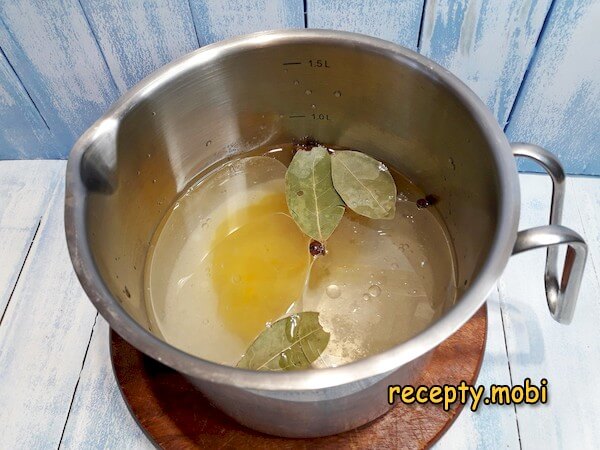
I pour water into a saucepan and add the salt, honey, oil, bay leaf, and allspice. I set the brine over the heat and stir until the salt and honey dissolve.
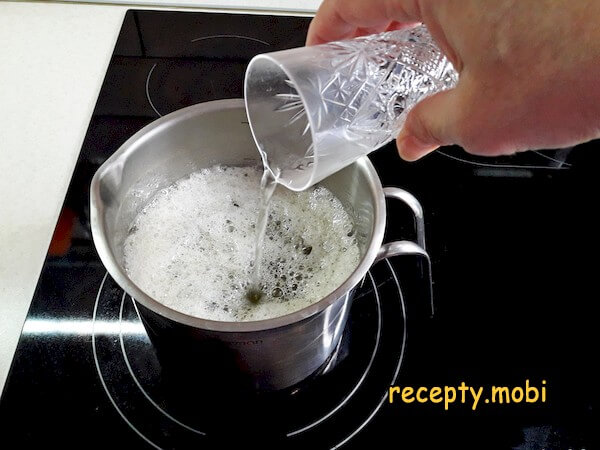
When the liquid comes to the boil (the honey will foam up a lot), I pour in the vinegar and turn off the heat.
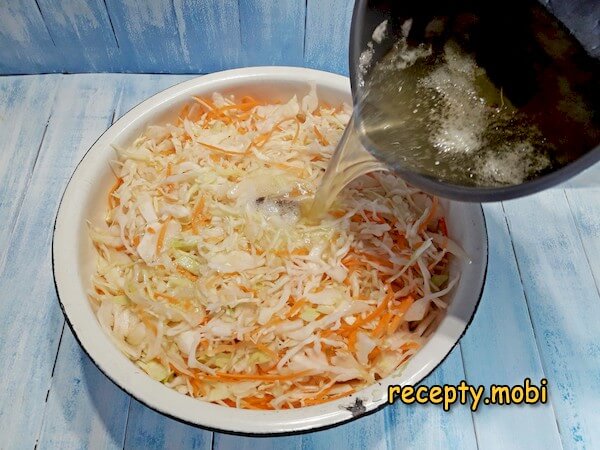
I pour the hot marinade over the cabbage.
I place a plate of a suitable diameter on top and add a weight, so that the brine rises above it. I leave the whole arrangement at room temperature for at least 4 hours.
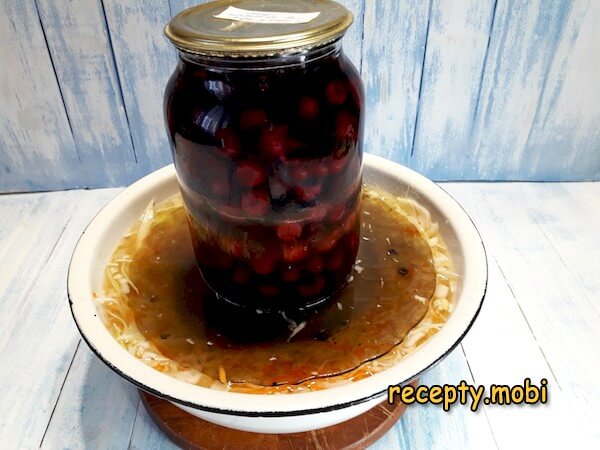
After the stated time, the quick pickled cabbage is ready.



Tips
- 1
DON'T KNEAD THE CABBAGE — the secret to crunch. Kneaded cabbage turns soft, as it does when salted the usual way. Gentle mixing keeps the strips firm and crisp.
- 2
HONEY INSTEAD OF SUGAR — the secret to flavour. Sugar gives a flat sweetness. Honey is more aromatic, with honeyed notes, and adds depth to the marinade.
- 3
VINEGAR AT THE END — the secret to its bite. Vinegar added at the start boils and loses its strength. Pouring it in right at the end keeps the sharpness and tang of the marinade.
- 4
A WEIGHT ON TOP — the secret to even results. Without a weight the top layers won't soak up the marinade and stay bland. A plate with a weight lets the marinade cover all the cabbage. The same principle works in other quick pickled vegetables.
FAQ
Which cabbage should I choose? +
The ideal choice is young or mid-late white cabbage (700 g is the classic option). Alternatives include red cabbage (700 g, for an attractive look), a mix of white and red cabbage (350 g of each), napa cabbage (700 g, more tender and quicker), savoy cabbage (700 g), young early cabbage (700 g, tender), cauliflower in florets (700 g, for a different flavour), or Brussels sprouts cut in half (500 g). Cabbage from your own garden is excellent. Don't use overripe heads with tough leaves, or limp ones with dark spots. For the classic version you need a firm head with juicy, crisp leaves.
What can replace 9% vinegar? +
Alternatives include 6% apple cider vinegar (75 ml), red or white wine vinegar at 6% (75 ml), rice vinegar (75 ml), balsamic vinegar (50 ml, dark), citric acid (1 tsp plus 50 ml water, the budget option), fresh lemon juice (100 ml, for a vinegar-free version), brine from sauerkraut (100 ml, classic and slightly sour), or 70% vinegar essence (8 ml plus 42 ml water). Don't use synthetic vinegar with added flavourings, or undiluted essence. For the classic version you need table vinegar at 9% or fruit vinegar at 6%.
How long does pickled cabbage keep? +
In the fridge, in a tightly closed glass jar, it keeps for 1 week. On the second day the flavour becomes richer, as the marinade soaks deeper into the cabbage. Before serving, chill it further or eat it straight from the jar. I don't recommend freezing it — the structure breaks down completely after thawing. Freshly marinated, after 4 hours, it is at its best (maximum crunch). By the third or fourth day it becomes softer and more sour. Don't leave it at room temperature for longer than 12 hours. It is ideal to make it for about a week.
What goes with pickled cabbage? +
A classic for the table: with boiled or fried whole potatoes, with mashed potatoes, with boiled potatoes and herring, with cutlets and meatballs, with pork or lamb shashlik, with chicken schnitzel, with pelmeni and vareniki, with manti and khinkali. It goes with a shot of cold vodka or a glass of light beer, with a slice of dark Borodinsky bread, with borscht or shchi, with sprat sandwiches, with herring under a fur coat, or with kholodets. It is universal for the family table — a crisp cabbage for everyday and festive menus alike.
- Comment
or post as a guest
Be the first to comment.