avg —
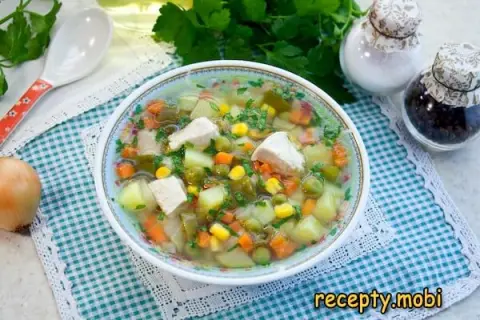
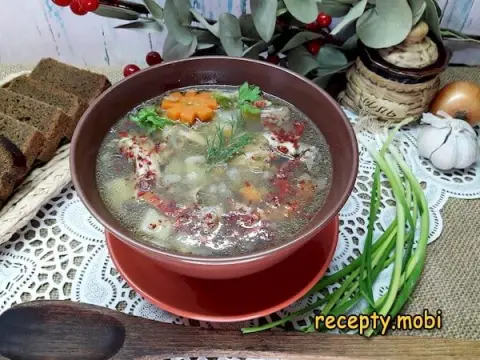
Green Sorrel Soup with Egg and Chicken

Instructions
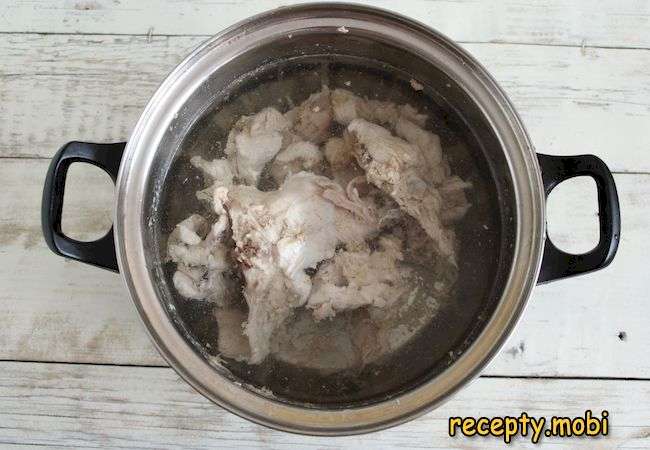
From the chicken I take only the flesh (the breast, for example) or any cut on the bone. I rinse the meat and boil it in salted water for about 20 minutes after it comes to the boil. I drain this first broth and pour in fresh water, or else I skim off the foam as it cooks, and for a perfectly clear broth I strain it through a fine sieve or cheesecloth. Many cooks use the second method, believing that draining the broth carries away all the goodness – including the protein.
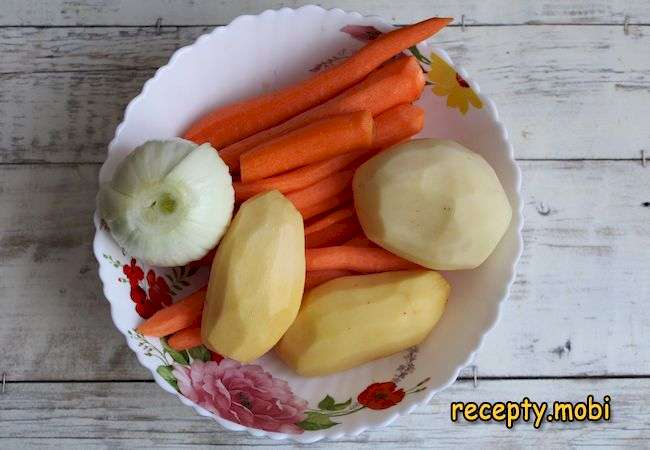
While the chicken cooks, I wash and peel the potatoes, onion and carrot. I try to cut them up straight away – that way the soup comes together faster.
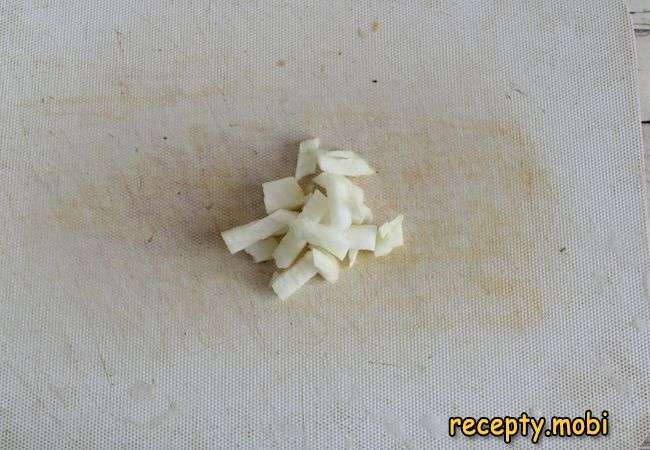
I chop the onion finely. A fine dice lets the onion "dissolve" into the broth, leaving no large pieces behind.
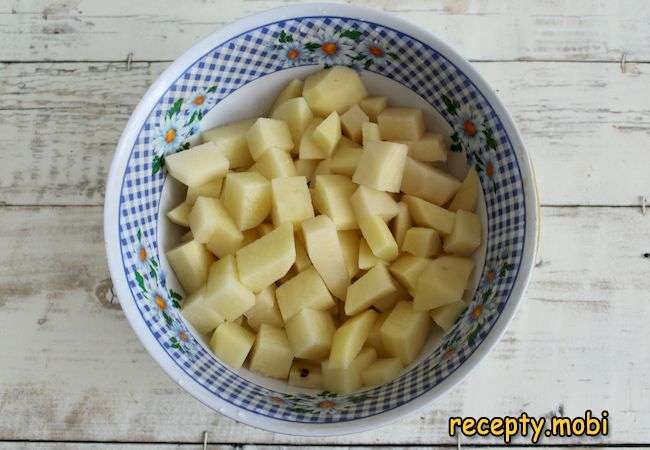
I cut the potatoes into small or large cubes – whichever I prefer. A small cube cooks faster, a large one gives a more "home-style" look.
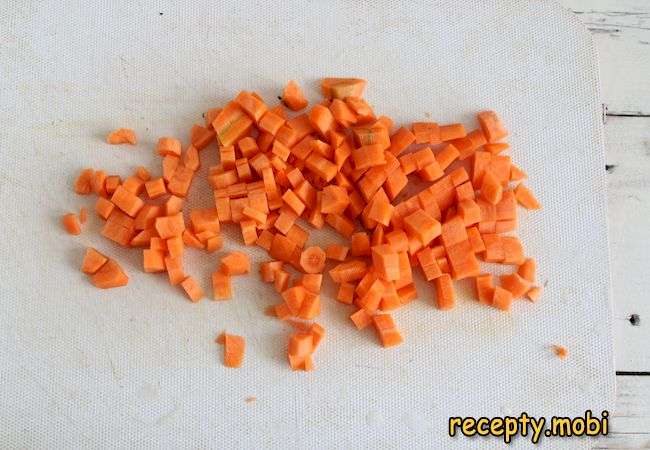
I cut the carrot into small cubes. Even pieces are the mark of a good-looking soup.
The boiled eggs are needed right at serving time, so I boil them alongside the soup – it saves time.

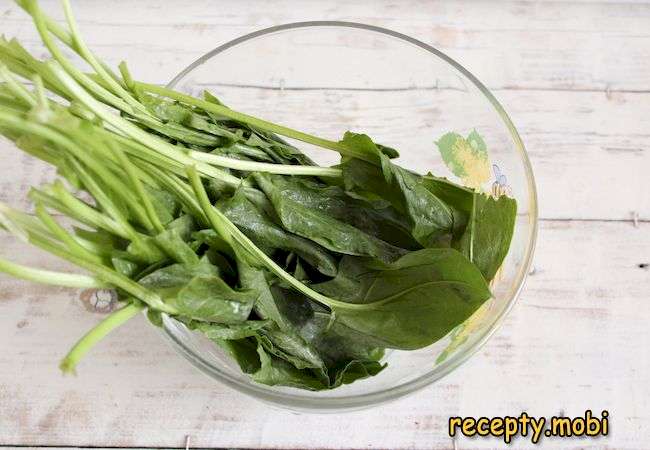
I wash the sorrel leaves well under running water to rinse away any remaining soil, dust and insects. I pat them dry with a clean cloth or paper towel and chop them finely. Sorrel has long stems – there is no need to throw them out; they behave very well after cooking and are not tough in the soup.
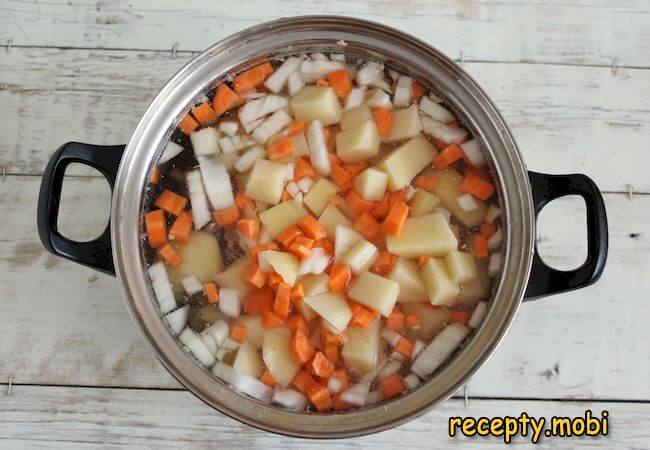
I add the potatoes, carrot and onion to the chicken and carry on cooking over medium heat for 15 minutes. Then I turn off the heat.
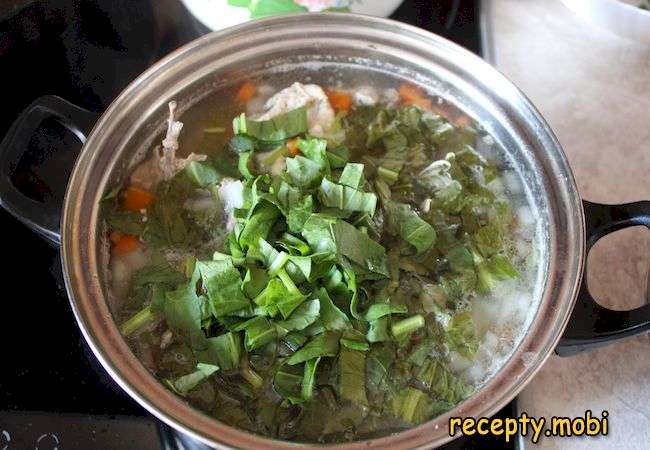
I add part of the greens and stir. Sorrel must not be added earlier during cooking – otherwise all its goodness and its very flavour will "vanish". I let the soup rest for 7 minutes under the lid and ladle it into bowls.
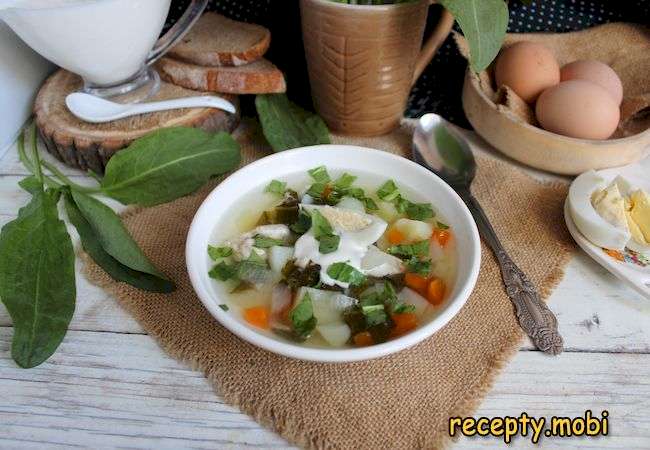
Into each bowl I put pieces of boiled egg, sour cream and the remaining greens, plus a pinch of freshly ground black pepper to balance the flavour. The mild sour cream harmoniously softens the tang of the sorrel.


Tips
- 1
ADD THE SORREL AT THE END, after the heat is off – boiling drives away its goodness and the sour tang itself.
- 2
DO NOT THROW AWAY the sorrel stems – after cooking they are soft and tasty. Discard only the hard "roots".
- 3
For a clear broth, SKIM OFF THE FOAM at the start of cooking, or drain the first broth. This is the "secret" of light shchi.
- 4
Sour cream in the bowl is A MUST. It softens the tang of the sorrel and makes the soup creamy and mild. A similar principle works in other sour soups (solyanka, borscht).
FAQ
What can replace sorrel? +
Alternatives: spinach (milder, without a pronounced tang – add lemon juice), young nettle (traditional for Russian shchi, gather it before flowering), beet greens (unusual, but tasty), a mix of greens (dill, parsley and spring onion in equal proportions). Sorrel gives the characteristic tang – without it this is no longer "green shchi" but "green soup with chicken". For the closest match to sorrel, use spinach plus the juice of half a lemon at the end of cooking. Frozen sorrel works too – add it straight from the freezer 2-3 minutes before the soup is done.
Can sorrel be frozen for the winter? +
Yes, an excellent way to enjoy "summer" shchi in winter. Methods: fresh – wash, dry and chop it, then divide it into portions in bags (15-20 g per serving of soup) and freeze. Or blanched – boil it for 1 minute, drain in a sieve, cool, squeeze out and freeze. The blanched sorrel keeps its colour better. In the freezer it lasts up to 12 months. There is no need to defrost it – add it straight to the soup. You can also salt it: 1 tablespoon of salt per 1 kg of sorrel, layered in a jar and pressed down, kept in the fridge – it stores for up to 6 months.
How long does cooked shchi keep? +
In the fridge in a covered pot – 2-3 days. On the second day the flavour is brighter, but the colour darkens (the sorrel oxidises). There is no need to reheat it to boiling – just warm it gently over a low heat, otherwise the last of the vitamins will be destroyed. I do not recommend freezing it – the texture of the vegetables goes soft. Add the sour cream and boiled egg only to the bowl, not to the whole pot – they spoil faster. Keep them separate and combine them when serving.
Can it be made without meat? +
Yes, you will get a lean version. Simply cook a broth on water with vegetables (a whole onion, carrot, celery) for 20 minutes, then strain it. The vegetables can be cut up again and returned to the soup. For heartiness, add: 50 g of rice or pearl barley (cook it with the potatoes), boiled mushrooms (soak and boil 20-30 g of dried porcini, then add them), or 100 g of tinned beans. The flavour will be different – more "vegetable", with the sorrel as the star. For vegans, replace the egg with cubes of tofu and the sour cream with coconut cream.
- Comment
or post as a guest
Be the first to comment.