avg —
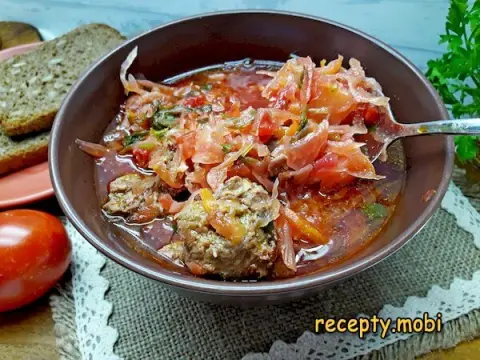
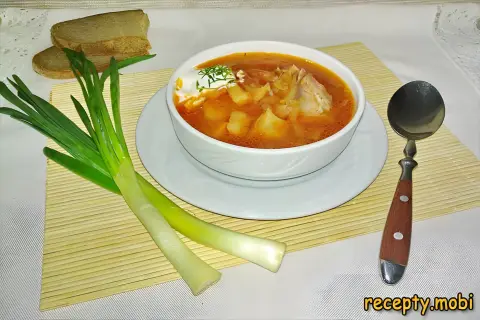
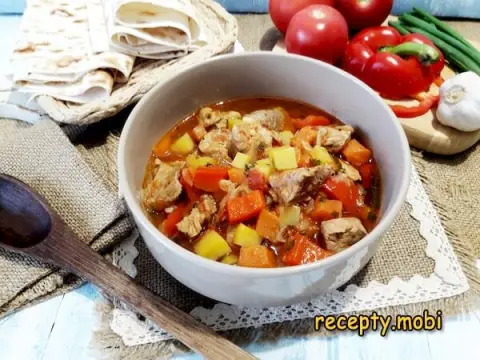
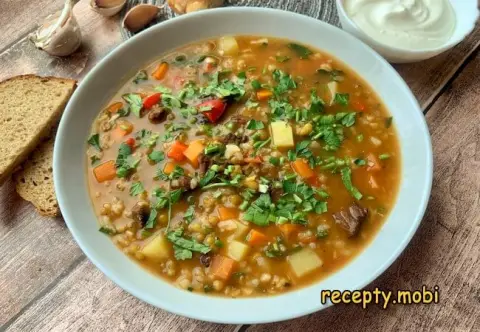
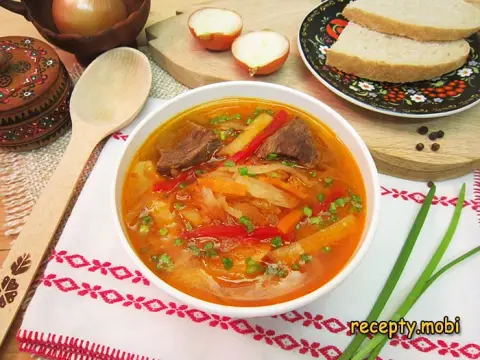
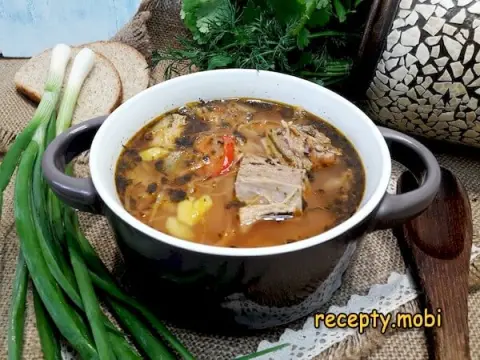
Borscht with Pork and Fresh Cabbage

Instructions
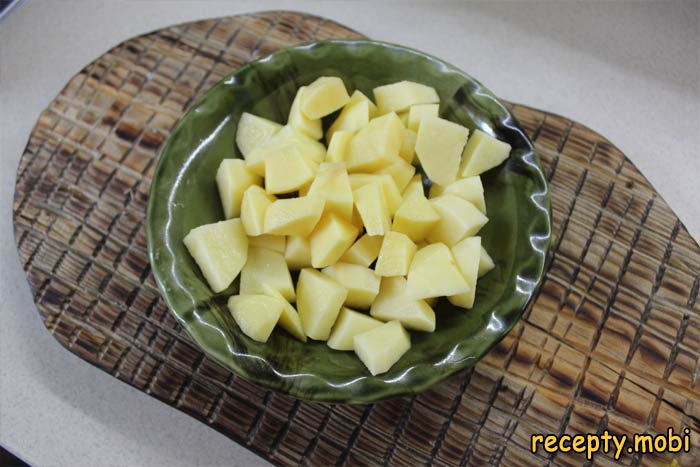
Add the potatoes and carrots to the ready broth, diced into 1.5–2 cm cubes. Cook until half done, 10–12 minutes – the potatoes should start to soften but keep their shape. If you add them after the cabbage they will not cook through; if before the other vegetables they will boil down to mush by the time everything is ready.
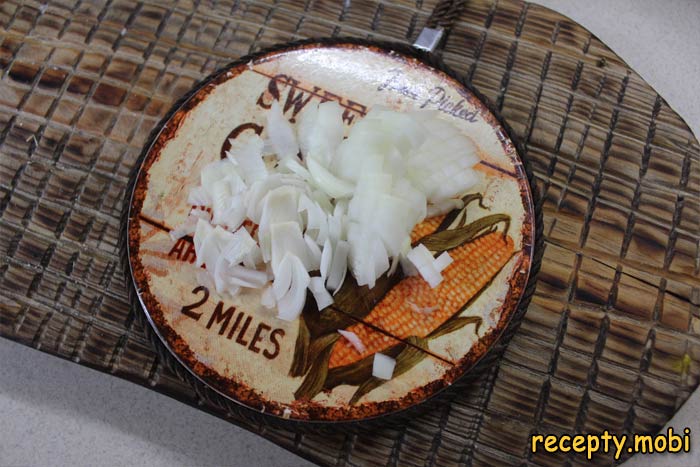
Add the finely chopped onion and the bell pepper in half-rings. Chop the onion finely, about 5 mm – it will dissolve into the broth and add sweetness; cut the pepper larger, over 1 cm – it will hold its shape and stay crisp in the finished dish. Use red or yellow pepper for a nice colour of borscht.
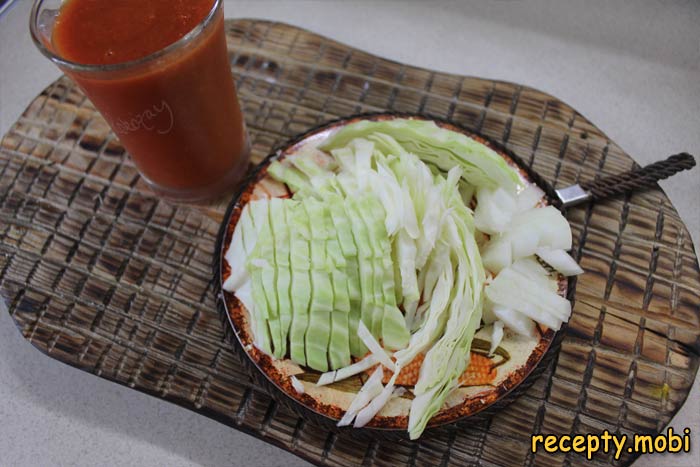
Finely shred the fresh cabbage into 3–4 mm strips and add it to the pot. Thin shredding matters: the cabbage cooks quickly and gives the right tender texture. A coarse, thick cut will be like a "stalk" in the finished borscht – unappealing both visually and in texture.
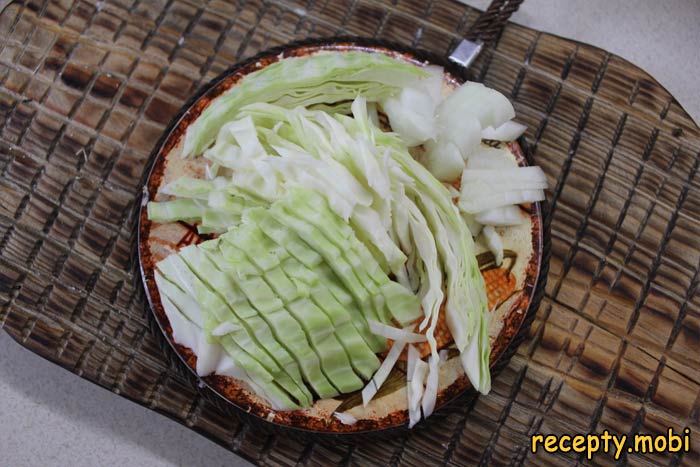
Pour in the tomato juice and add the tomato paste for depth of colour and richness of flavour. Cook for 10–15 minutes until the cabbage is tender. Season with salt and pepper to taste at the end of cooking – salt added early slows down the cooking of the vegetables. If the borscht turns out too sour from the tomatoes, add a pinch of sugar to balance it.
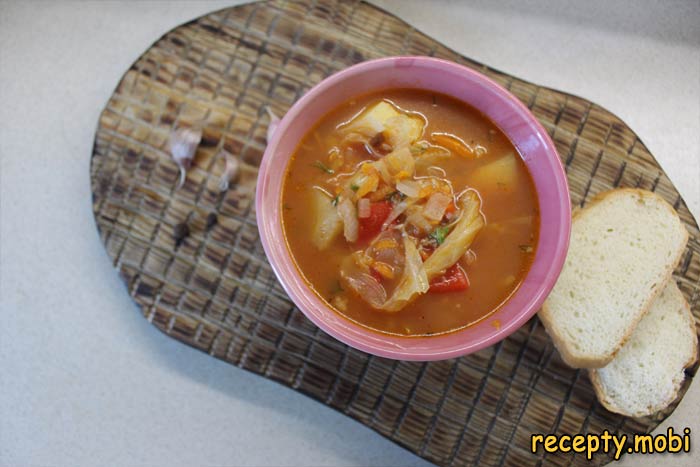
One minute before it is done, add the finely chopped or pressed garlic. Garlic right at the end is a must: with long cooking it loses its aroma and gives only bitterness. Cover with a lid and remove from the heat. Let it stand for 15–20 minutes – the borscht becomes even more aromatic. Serve with sour cream.


Tips
- 1
Serve it the classic way: with sour cream, a piece of salo with garlic, and homemade pampushky with garlic sauce – the traditional Ukrainian presentation.
- 2
Borscht is noticeably tastier on the second day – the flavours blend and open up fully. Make it ahead, enough for 2–3 days.
- 3
For the classic red colour, add grated boiled beetroot 5 minutes before the end of cooking. I cook borscht with meat and beetroot on a similar principle.
- 4
If the borscht turns out too sour, add a pinch of sugar – this is a classic cook's trick for balancing the acidity of the tomato.
FAQ
Why did the borscht come out pale instead of a deep red? +
The main reasons: you used too little tomato juice or paste, did not add beetroot (the classic ingredient of red borscht), or overcooked the beetroot (it loses its colour). For a bright colour, add 1–2 extra spoonfuls of tomato paste or grated boiled beetroot 5 minutes before the end of cooking. You can use beetroot kvass for a deep wine-coloured shade. Do not cook beetroot in the broth for long – it releases its colour quickly but then fades with prolonged heating.
Can I make borscht with chicken broth instead of pork? +
Yes, but the borscht will be less rich and not as filling. Chicken broth is light and neutral, ideal for a dietary version or for children. Use bone-in chicken thighs or drumsticks – they give a richer broth than the breast. The cooking time is reduced to 30–40 minutes. Beef also works (cook for 1.5–2 hours), as do turkey or rabbit. The most filling and classic borscht is still made on pork ribs.
How long does cooked borscht keep? +
In the refrigerator, in a tightly closed pot or container – up to 4 days without any loss of quality. On the second and third day the flavour becomes richer and deeper, which is what is considered "proper" borscht. Reheat it by the portion on the stove without bringing it to a hard boil – this preserves the vitamins and flavour. You can freeze it for up to a month in portion-sized containers. After freezing the texture changes a little, but the flavour keeps well.
What can you serve borscht with besides sour cream? +
The classic additions: pampushky with garlic sauce (a Ukrainian tradition), salo with black bread, homemade halushky, pickled cucumbers, homemade mustard. For more modern servings: garlic toasts, garlic croutons, slices of avocado for a creamy note. For a festive table, garnish with herbs and a drop of olive oil – a restaurant-style presentation. Borscht goes well with chilled vodka, dark craft beer or dry red wine.
- Comment
or post as a guest
Be the first to comment.