avg —
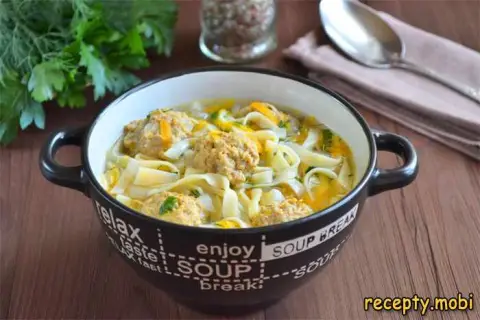
Dushbara in Azerbaijani Style

Instructions
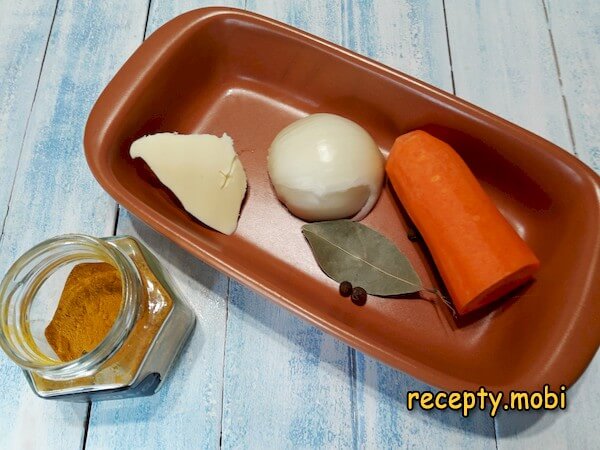
I prepare the ingredients for the broth. If possible, it is better to use a few saffron threads instead of turmeric – the soup turns out very aromatic. Saffron is an authentic Azerbaijani spice.
I gather the products for the dushbara. The filling should contain 30% tail fat – it is the tail fat that gives the true Azerbaijani flavour; without it the mini-dumplings will be "European".
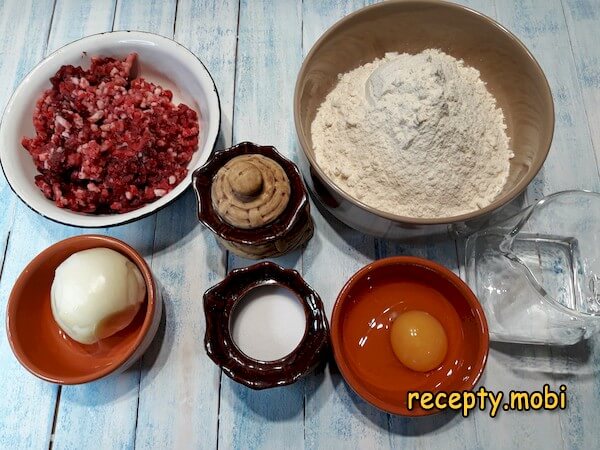
I grate the onion on a coarse grater straight into the mince – the grated onion is distributed through the filling like an "invisible" component that adds juiciness.
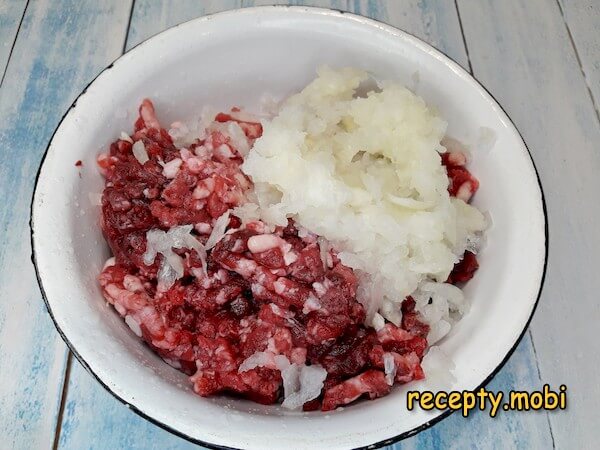
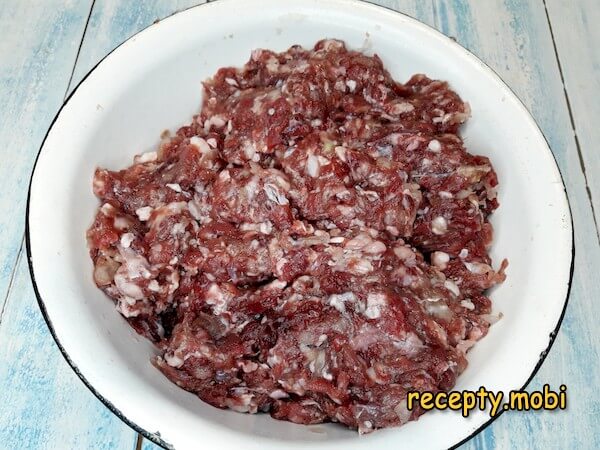
I add salt and pepper. I mix everything thoroughly. I put the mixture in the fridge for 15 minutes – chilling makes the filling firmer and easier to shape into tiny dushbara.
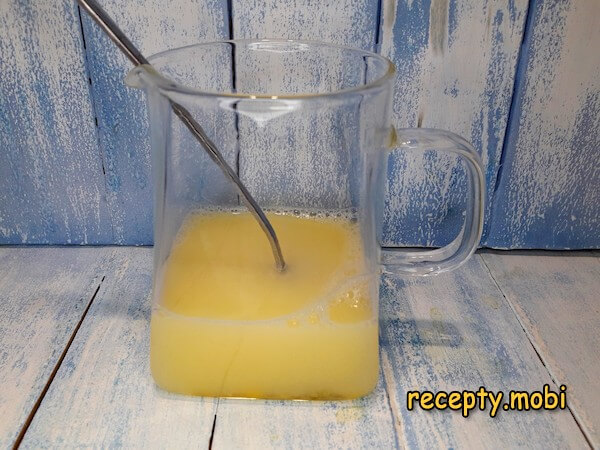
For the dough, I mix the egg and salt into the water – the egg goes into the water first, so that it later combines with the flour more easily, without lumps.
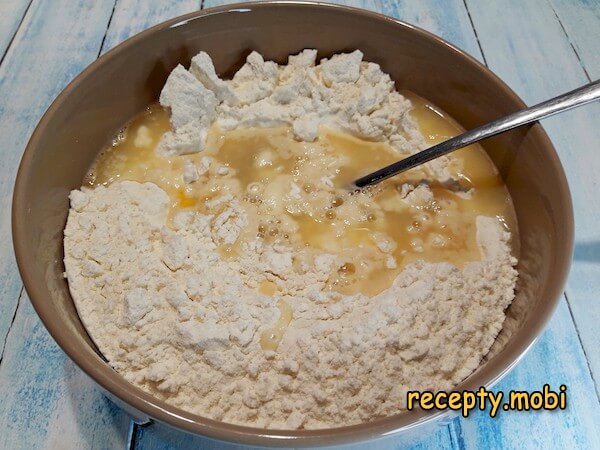
I pour the beaten egg mixture into the sifted flour. I start mixing the mixture in the bowl first – gradually working in the flour gives control over the thickness of the dough.
When the dry and liquid components have combined, I tip the contents of the bowl onto the table and knead the mass by hand until it becomes uniform in consistency. The dough should be stiff – it is dense, not soft at all. This is the "secret" of proper dushbara: springy dough rolls out well to 1.5 mm and does not tear when pinched.
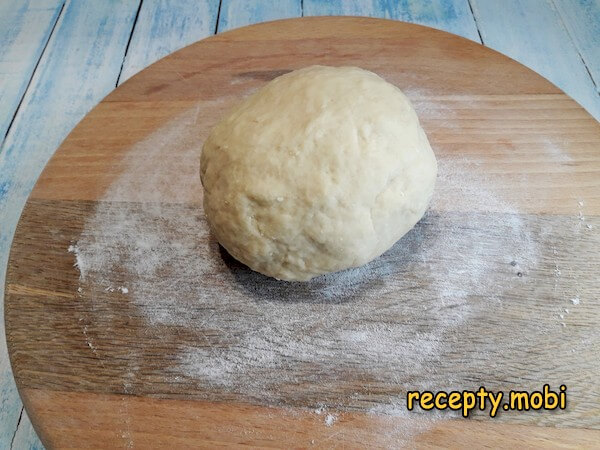
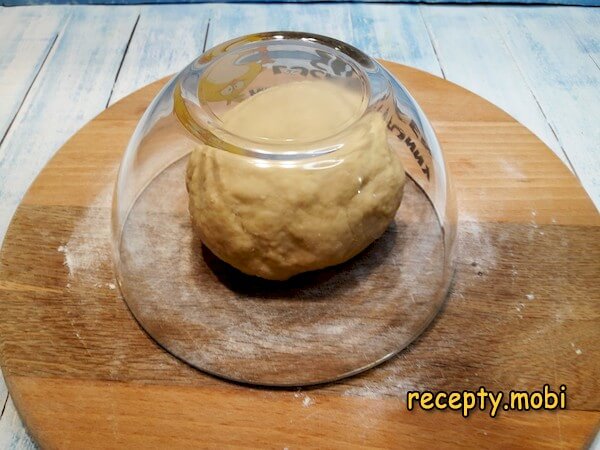
I cover the dough gathered into a ball with a bowl and leave it for 10 minutes to rest – the gluten relaxes and the dough becomes more pliable when rolling.
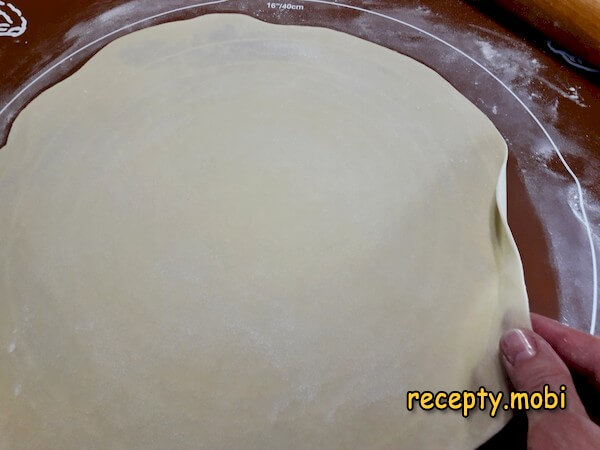
I divide the dough into 2 parts, one of which, after the dushbara are made, will go straight into the soup, and the other – into the freezer. I roll out a thin sheet (approximately 1.5 mm thick) – it is exactly this thickness that gives the finished mini-dumplings their translucent "silky" effect.
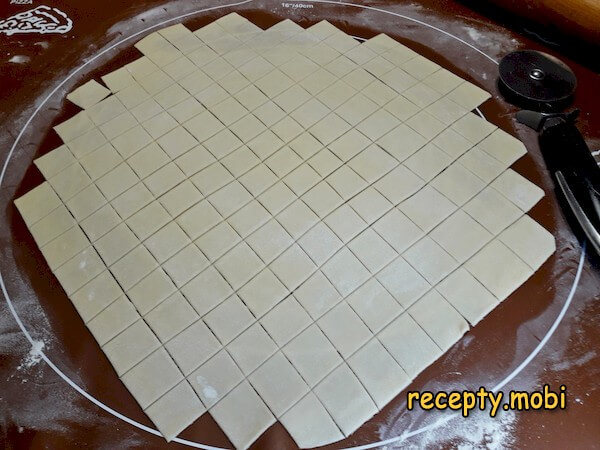
I cut it into squares with sides of 1.5 cm (you can increase this size up to 3 cm, but traditionally in Azerbaijan dushbara are made even from one-centimetre pieces) – this is the "secret" of authenticity: the smaller the dushbara, the higher the cook's level of skill.
I cover some of the squares with film so they do not dry out, and on the rest I place little beads of filling – just a little, the size of a black peppercorn.
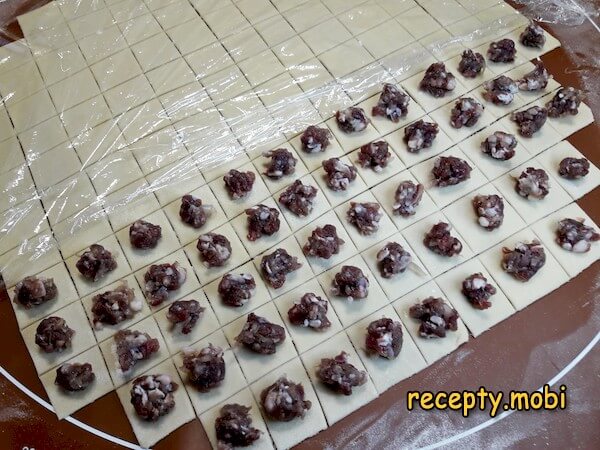
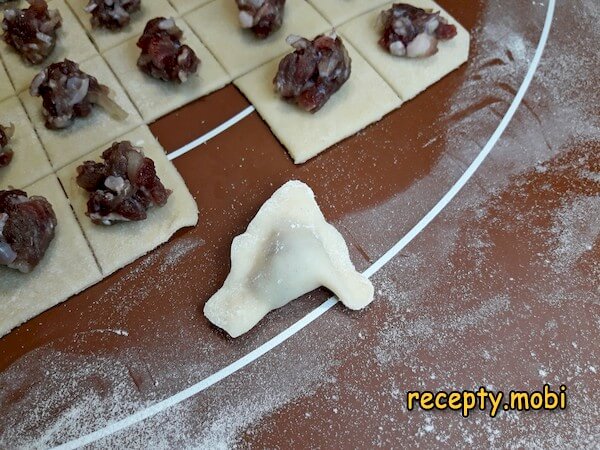
I fold the filled piece diagonally and pinch the edges, forming a triangle – I dip my fingers in flour each time so the dough does not stick to them.
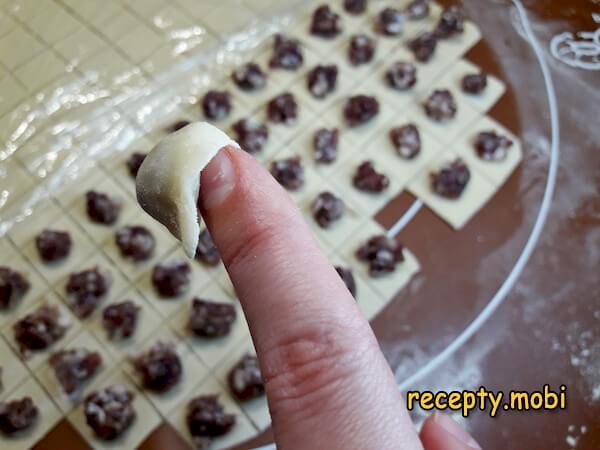
I join the corners of the triangle, wrapping it around a finger or a pencil into a little ring – this is the final classic dushbara shape, resembling a "little kerchief".
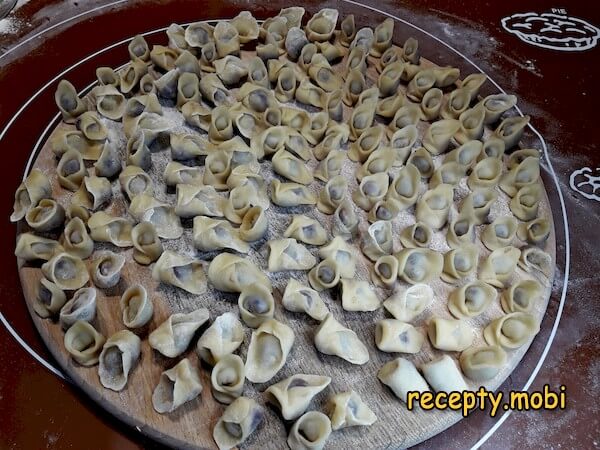
I place the resulting "little kerchiefs" on a flour-dusted board – the flour is needed so the dushbara do not stick to the board and lose their shape.
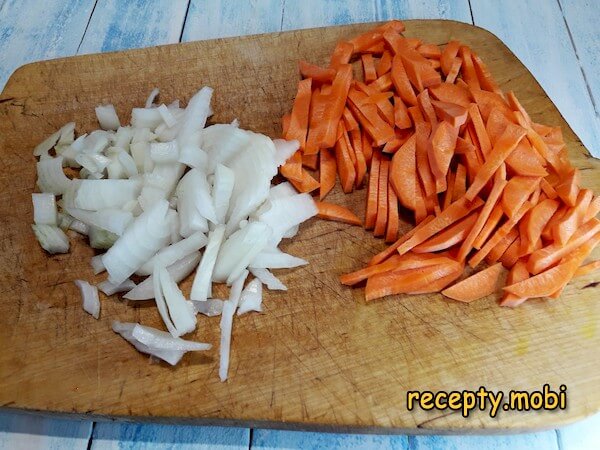
For the broth, I cut the onion and carrot into strips or small squares – fine cutting gives quick cooking and a tender texture of the vegetables in the finished soup.
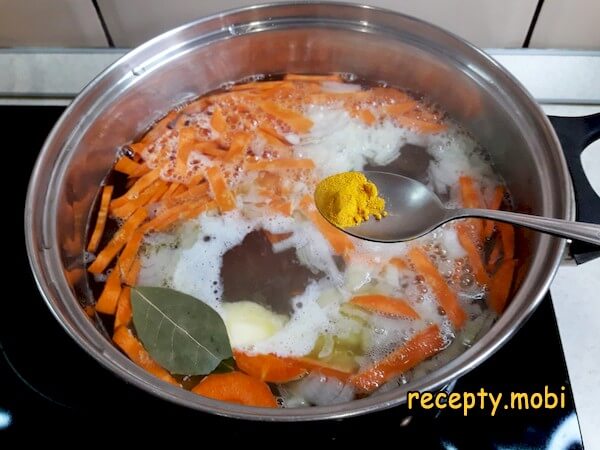
I add the cut vegetables to the boiling water. I salt the stock, then add the bay leaf, allspice, butter and turmeric, and ideally – saffron. I simmer the broth for about 7 minutes, until the carrot softens – the aromatic base for the dushbara is ready.
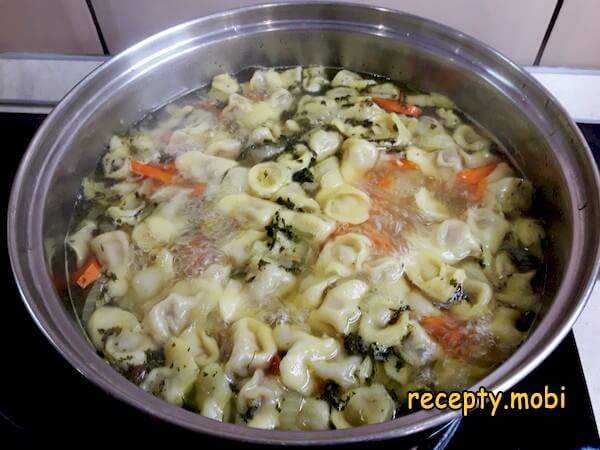
Next I add all the dushbara from the board into the pot – not thawed, straight from "freshly made".
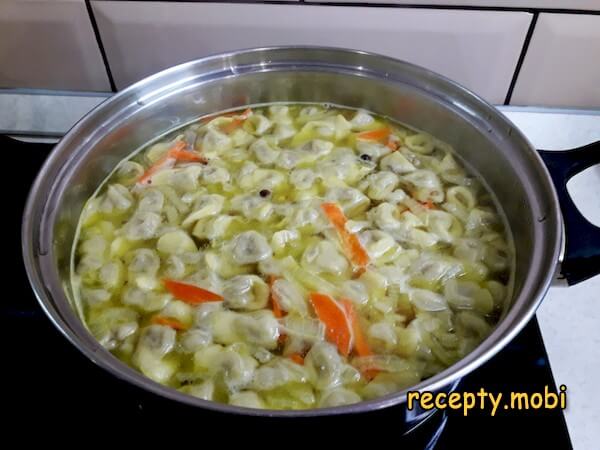
I stir the mixture with a slotted spoon so the miniature dumplings do not stick to the bottom of the pot – carefully, so as not to break the delicate "little kerchiefs".
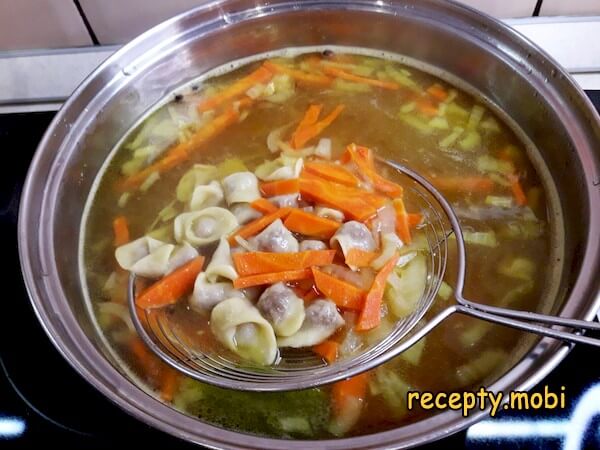
I cook the dushbara for 4–5 minutes after it comes back to the boil, adding the herbs a minute before the end – dushbara are very small, so they cook quickly.


Tips
- 1
THE MINIATURE SIZE is the "secret" of authentic dushbara. In Azerbaijan the size of the dushbara is a measure of the cook's skill – the smaller, the more prestigious. The standard is squares of 1.5 cm; among masters, 1 cm. From 1 kg of dough a traditional Azerbaijani cook makes 600–800 tiny dushbara. It is labour-intensive, but it is precisely the smallness that distinguishes real dushbara from ordinary dumplings.
- 2
SAFFRON INSTEAD OF TURMERIC is the "secret" of a royal aroma. Turmeric gives colour but not the characteristic fragrant note. A few saffron threads (5–7 per 2 litres of water) turn an ordinary broth into a royal one – with a deep, complex bouquet and a rich golden hue. This is the "premium" way to serve it for a festive table.
- 3
FREEZING AHEAD is the "secret" of being ready in advance. Half of the dough and filling always goes into the freezer. Frozen dushbara keep for up to 3 months and cook straight from the freezer in 5 minutes – it's a "quick supper" made from a festive dish. On the principle of quick soup with dumplings – mini-dumplings in ready broth in 10 minutes.
- 4
AN AZERBAIJANI PAIR is the "secret" of a complete table. Dushbara goes wonderfully with another Azerbaijani dish – kufta bozbash Azerbaijani style. Dushbara as the "light" first course, kufta bozbash as the "hearty" second – a classic Azerbaijani two-part dinner menu.
FAQ
What is dushbara and where is it eaten? +
Dushbara (Azerbaijani "düşbərə") is a national Azerbaijani dish, a soup with miniature lamb dumplings. It is widespread in Azerbaijan, among the Azerbaijani diaspora around the world, and partly in Iran (under the name "joshpara"). It is a dish of "high skill" – the cook's mastery is traditionally judged by the size of the dushbara. At weddings and large celebrations in Azerbaijan, "competitions" are still held among women for folding the smallest dushbara. It is served as a festive dish and at the same time as a home "remedy" for colds.
What can replace tail fat? +
Tail fat is an essential component of authentic dushbara: it gives the filling its characteristic "lamb" flavour and tenderness. Alternatives (worse, but possible): fatty pork at 30% (gives similar juiciness but a different flavour), fatty beef with lard (a more "European" character), or simply lamb with an extra 50 g of butter added to the filling. Without fat the filling will be dry and bland – some kind of fatty component is essential. You can find tail fat at the market from butchers who sell lamb – it is sold as a separate ingredient.
How long does ready dushbara keep? +
Raw, on a board under film at room temperature – no more than 2 hours. Raw in the freezer (spread out on a board and frozen, then put into a bag) – up to 3 months. Cooked, in the fridge in an airtight container – up to 2 days. Before serving, I reheat the ready soup gently, without bringing it to a vigorous boil – the miniature dumplings may fall apart. It is best to cook portions as needed from the frozen batch – the dushbara always turns out fresh.
What to serve dushbara with? +
The authentic Azerbaijani way to serve it is in a deep bowl with a large spoon. It is generously sprinkled on top with fresh coriander and parsley. At the table: lemon juice in a separate bowl for acidifying to taste, and homemade ayran in glasses. For appetisers: pickled vegetables, lavash or Azerbaijani flatbreads. For seasonings: salt and freshly ground black pepper on the table for individual adjustment. For a large table: it is served as a first course after the appetisers, before the meat main courses. For drinks: black tea with lemon (an Azerbaijani tradition).
- Comment
or post as a guest
Be the first to comment.