avg —
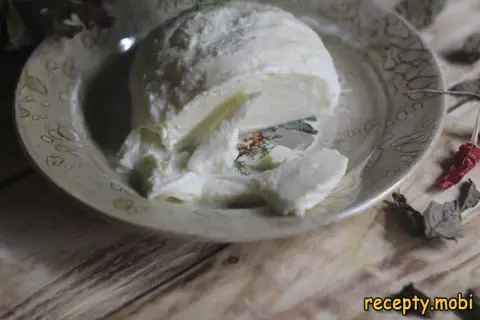
Philadelphia cheese at home from kefir

Instructions
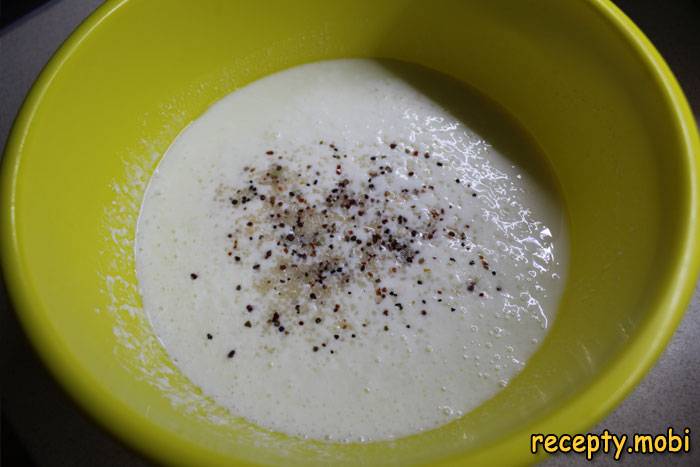
In a bowl, combine the fat kefir (at least 3.2%, ideally 9%) with the pepper mix and salt. Whisk the mixture thoroughly until the salt has fully dissolved. The fat content of the kefir is critically important – low-fat kefir will give you not cheese but a sour, watery mass. The fattier the kefir, the creamier the resulting cheese.
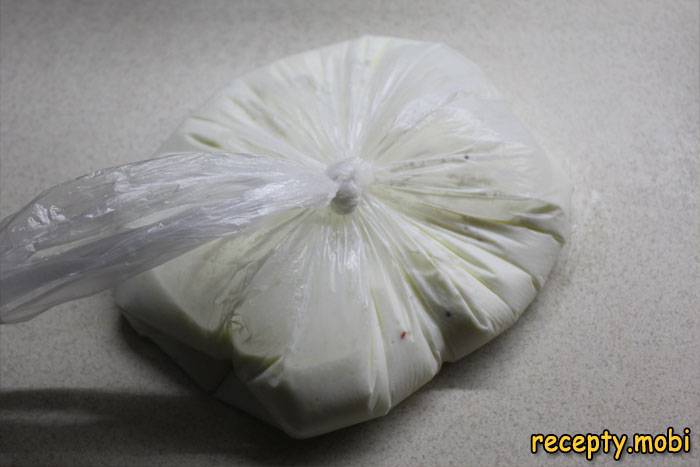
Place the kefir mixture into an ordinary zip-lock bag or a sturdy food bag. Tie it tightly so there are no leaks. Put it in the freezer for at least 8 hours, ideally overnight. The kefir must freeze completely into a solid block of ice – it is the ice that breaks down the protein structure and allows you to achieve the right consistency.
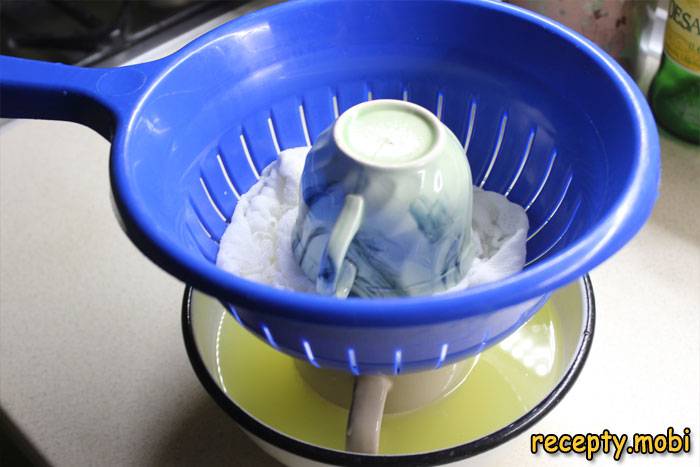
Take out the frozen kefir and place it in a colander lined with 4 layers of cheesecloth. Gather the edges of the cheesecloth into a knot and set a weight on top – a jar of water weighing 1–1.5 kg works well. Leave it in the refrigerator for 8–12 hours so that all the whey drains out completely. Set a bowl under the colander to collect the whey. Do not throw the whey away – it makes excellent pancake batter or okroshka.
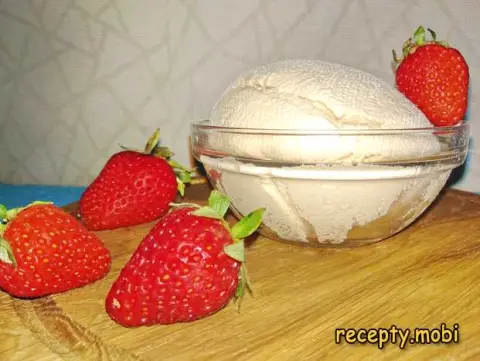
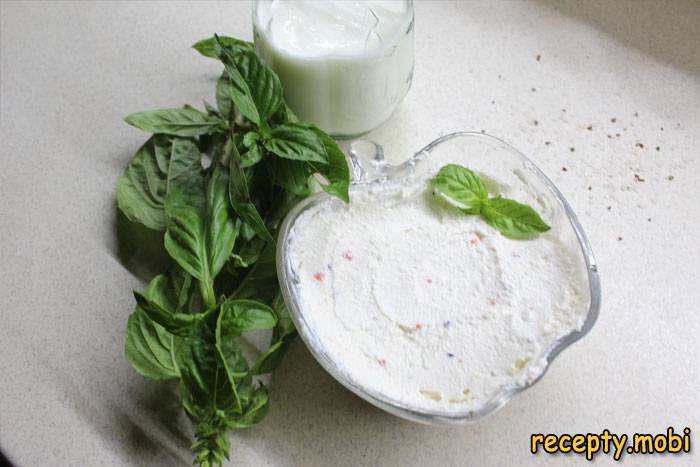
Transfer the finished cheese into a container and stir it with a silicone spatula until smooth. This homemade equivalent of Philadelphia fully matches the taste of the original product – creamy, tender, with a light tang. You can use it straight away or store it in the refrigerator.


Tips
- 1
Choose the fattest kefir you can find, 6% or higher – the creamy texture and rich flavour of the finished cheese depend directly on it.
- 2
For a classic version without spices, use only salt – this way the cheese will be versatile for both desserts and savoury snacks.
- 3
The weight should be heavy enough – a jar of water weighing 1–1.5 kg works well. Homemade mascarpone cheese is made on a similar principle.
- 4
Store the finished cheese in a tightly sealed container in the refrigerator for up to 5 days – it quickly absorbs other odours.
FAQ
Can I skip freezing the kefir to speed up the process? +
Technically yes, but without freezing the cheese will not be as creamy and uniform – ordinary whey draining will give a dense curd mass with a grainy texture rather than a delicate cream cheese. Freezing acts as a mechanical protein "splitter": as it thaws, the casein concentrates into a dense, creamy clot and the whey runs off clean. If you are really in a hurry, leave the kefir in cheesecloth over a bowl for 24–36 hours in the refrigerator – the result will be almost the same, but less airy.
What is homemade Philadelphia good for? +
It is a versatile product: classic New York cheesecakes and mousse cakes, creams for cakes and cupcakes, homemade sushi and California rolls, salmon sandwiches, dipping sauces for vegetables and crackers, fillings for pancakes and tartlets, and a base for cheese cream sauce for pasta. It is also used in baking (croissants, strudels, no-bake cheesecakes) and for making cream soups. In terms of function it fully replaces shop-bought Philadelphia or mascarpone in most recipes.
Why did my cheese turn out runny and won't hold its shape? +
Most likely not enough whey has drained – leave it under the weight for another 4–6 hours in the refrigerator. Another reason may be insufficient fat content of the kefir: you cannot make real cream cheese from 1% or 2.5% kefir, you need at least 3.2%, ideally 6–9%. A third possible reason is too thin a layer of cheesecloth, through which the casein also passes: use 4–6 layers of cheesecloth or special cheesemaking cloth. Too light a weight will also fail to give a result – you need at least 1 kg.
- Comment
or post as a guest
Be the first to comment.