avg —
Apple Jam in a Multicooker

Instructions
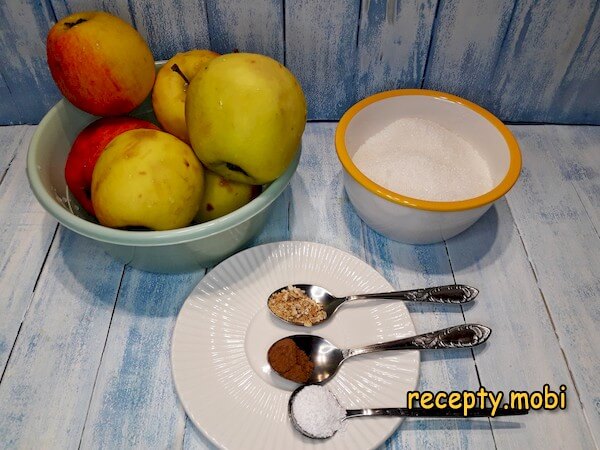
I prepare the ingredients for the apple jam in the multicooker. The weight of the apples is given already peeled and without the cores. Instead of citric acid you can use the juice of half a lemon – the result is identical, and the acidity stays at the right level for safe preserving.
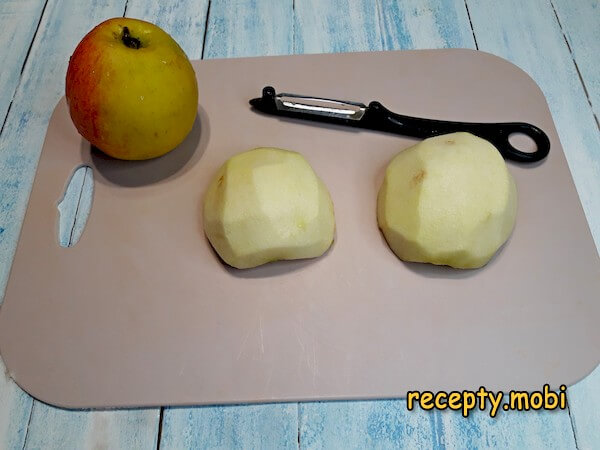
I peel a thin skin off the fruit – a "Y-shaped" vegetable peeler is very handy for this, as it takes off only the thin top layer and does not waste the aromatic flesh. The skin can give the finished jam an unwanted tough aftertaste.
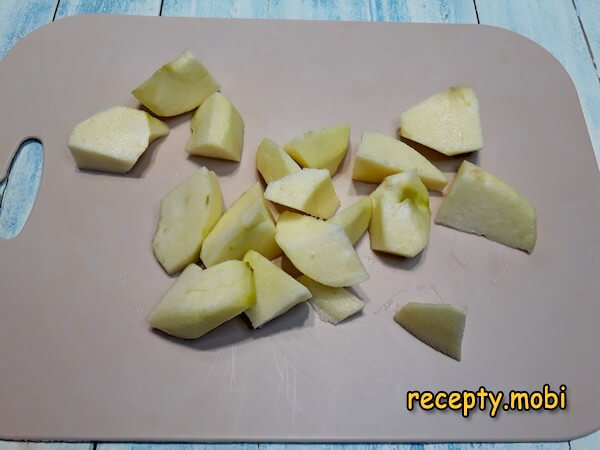
Next I cut the apples into medium pieces, cutting out the core – so that it does not get into the mixture together with the seeds. The seeds give a characteristic bitterness and do not break down well during cooking.
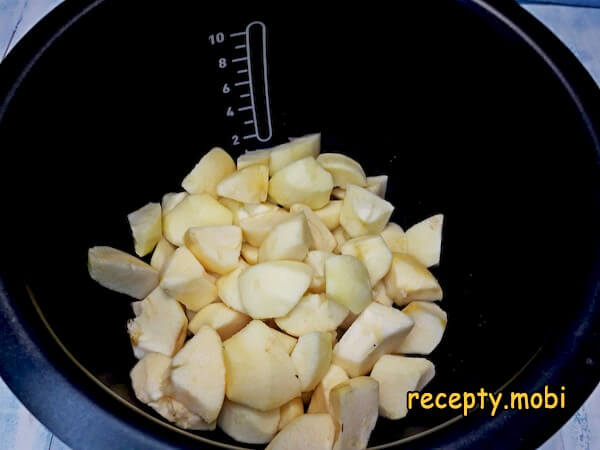
I put the chopped apples into the multicooker bowl – in an even layer over the bottom, so the pieces heat up evenly and release their juice without the need to add water.
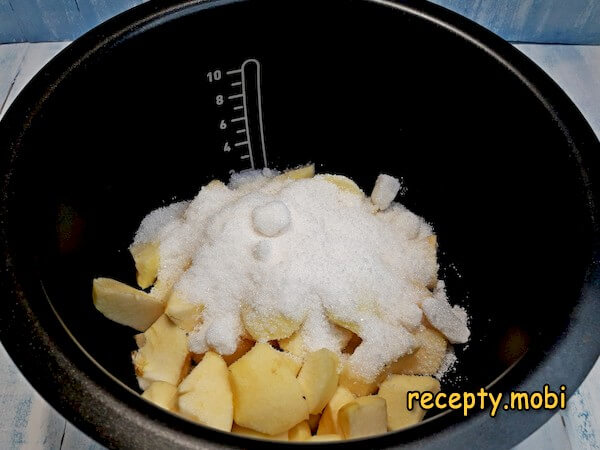
On top I sprinkle the sugar – it starts working straight away: drawing the juice out of the apples and dissolving in it at the same time, forming a natural syrup right during the heating.
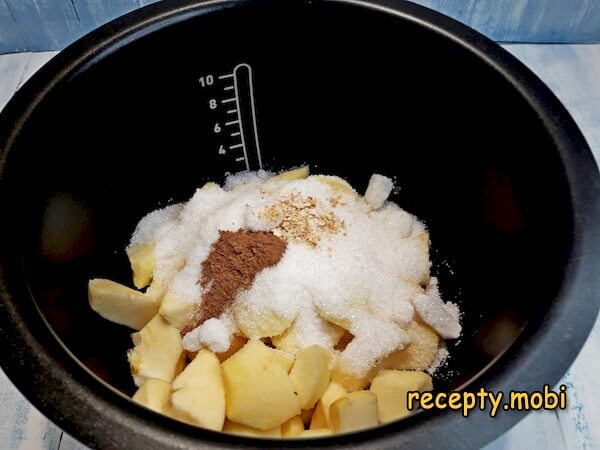
I add the cinnamon and citrus powder – I do not stir anything, the spices distribute themselves as the sugar melts. The dry aromatic seasonings give that very "wintry" scent with bright notes.
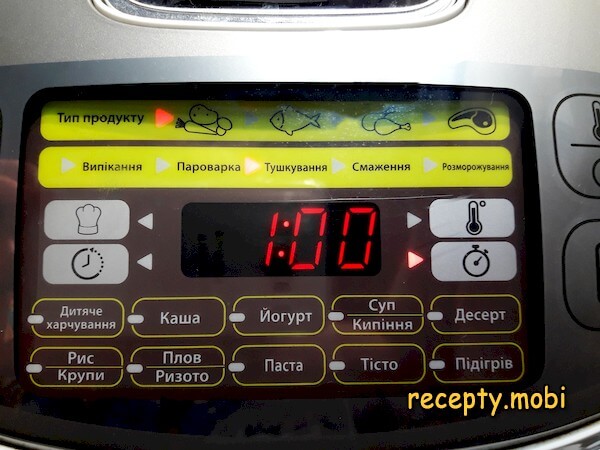
I click the lid of the appliance shut and set the programme, choosing the "Stewing" mode with the product type "Vegetables". The time is set automatically to 1 hour. My Tefal multicooker has this programme. Other brands work in a similar mode, where you may need to set the time manually. Some models do not have a "Stewing" button – then the "Soup" mode will do, and the cooking time stays the same – 1 hour.
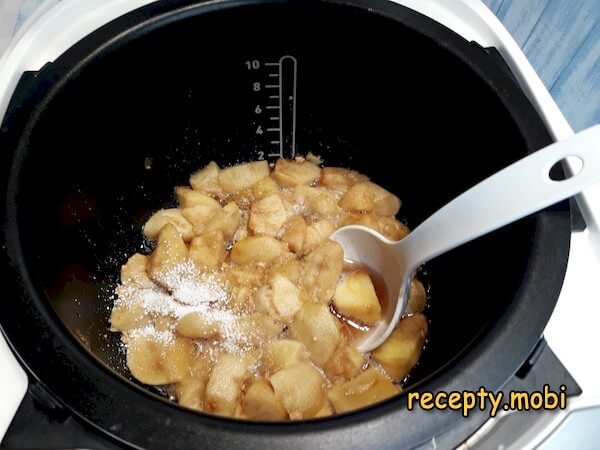
After 40 minutes I open the lid and add the citric acid. I stir the jam, click the lid shut and continue stewing – the acid is added at this point so that the vitamins are not destroyed during long cooking. During this time I sterilise the jars and lids.
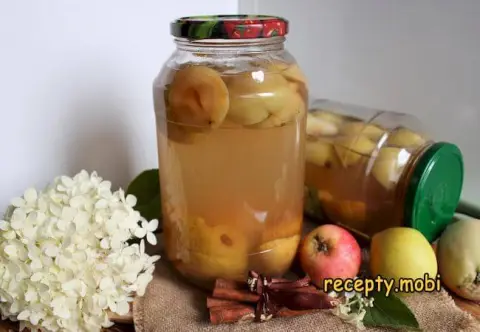
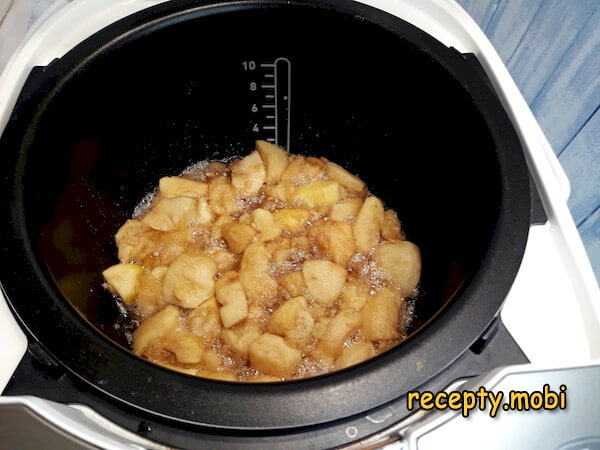
When the set time is over a beep sounds – that means the jam is ready. The apple pieces have softened and soaked up the syrup, while staying whole. The jam turned out neither runny nor too thick – not a drop of water was added during cooking, it is all on its own juice.
I fill the jar with the hot mixture right to the very top – a minimum air gap means the preserve will keep as well as possible all winter.
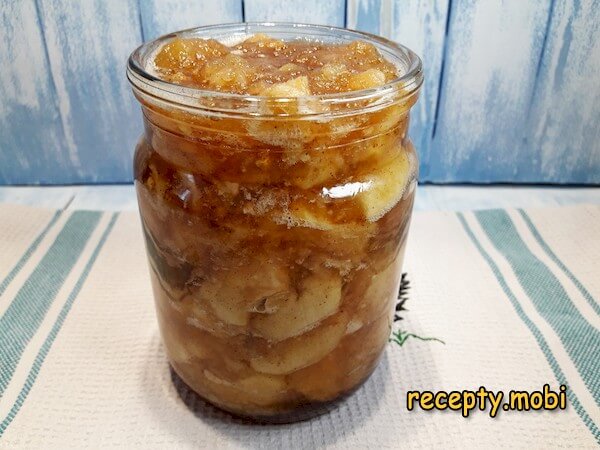
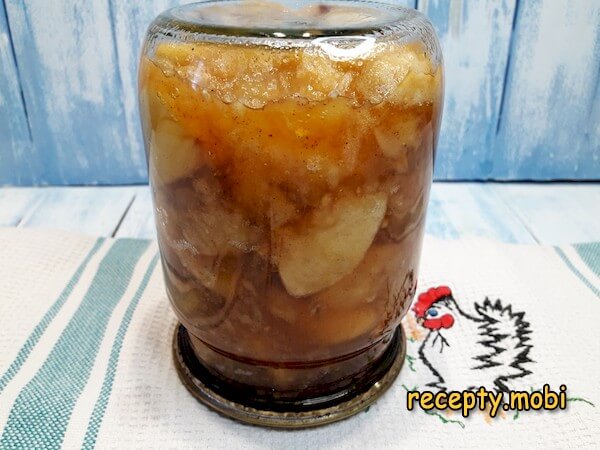
I screw the lid on and check how well it is sealed by turning the jar upside down. If everything is fine and nothing leaks from under the rim, I return it to its normal position and leave it to cool on the table at room temperature under a blanket.


Tips
- 1
NO WATER – the secret to concentrated flavour. Many people add water to avoid scorching – the multicooker solves this problem thanks to even heating from all sides. The apples themselves give off enough juice with the sugar, and the jam comes out rich rather than watery. The same approach works in apple jam in slices – put up on its own juice alone.
- 2
CITRIC ACID AT THE END – the secret to keeping vitamin C. Long cooking with acid destroys a significant part of the ascorbic acid. Adding the citric acid 20 minutes before the end of cooking lets the vitamin survive, and the finished jam takes on the classic "sweet-and-sour" balance.
- 3
CHOICE OF VARIETY – the secret to texture. For jam with slices you need firm autumn and winter varieties: Antonovka, Semerenko, Gala, Idared. They hold their shape and do not turn to mush. Soft summer varieties such as White Transparent overcook and are better suited to a thick apple jam for winter.
- 4
TURNING THE JAR OVER – the secret to checking the seal and pasteurising the lid. Straight after sealing I turn the jar upside down – the hot jam sterilises the lid from the inside, and if it leaks from under the rim the seal is unreliable and the jar needs re-sealing. Keeping it under a blanket for slow cooling gives extra pasteurisation.
FAQ
Which apples are suitable for jam with slices? +
Autumn and winter varieties with firm flesh hold their shape best: Antonovka, Semerenko, Gala, Idared, Golden. They do not turn into a purée during cooking, and the finished jam comes out with beautiful translucent slices in amber syrup. Summer varieties such as White Transparent or Papirovka cook down completely – they are better suited to a thick jam. Sour varieties give a bright flavour but will need a little more sugar.
How long does apple jam keep? +
In a cool pantry at 8–15°C – up to two years without loss of quality. In an ordinary kitchen cupboard at room temperature – up to 12–14 months. Once the jar is opened – up to three weeks in the fridge under the lid, provided a clean dry spoon is used to scoop it out. Signs of spoilage: a bulging lid, a film of mould on the surface, a sour or fermented smell – such a jar is best thrown away. Normal crystallisation of the sugar over time is not spoilage.
What should I do if the jam has crystallised? +
This is a normal process – after a few months of storage the sugar may start to crystallise, especially if a little more than the norm was added. Crystallised jam is perfectly edible and has not lost its flavour. To return it to a liquid state, I put the jar in a water bath and warm it, stirring, until the crystals dissolve completely. You can also add a little water and simmer for 5 minutes on the stove. After this the preserve will keep for about another six months.
Can I reduce the amount of sugar? +
You can, but with reservations – the sugar in jam acts not only as a sweetener but also as a preservative. Reducing its amount calls for compensation in the form of extra agar-agar or pectin for thickness, or more thorough sterilisation. The minimum safe proportion is 60% sugar to the weight of the apples; below this threshold the preserve may ferment. For people who need to limit sugar, a version with stevia or erythritol is suitable, with compulsory hot sealing and storage in the fridge.
- Comment
or post as a guest
Be the first to comment.