avg —
Pea Soup in a Multicooker-Pressure Cooker

Instructions
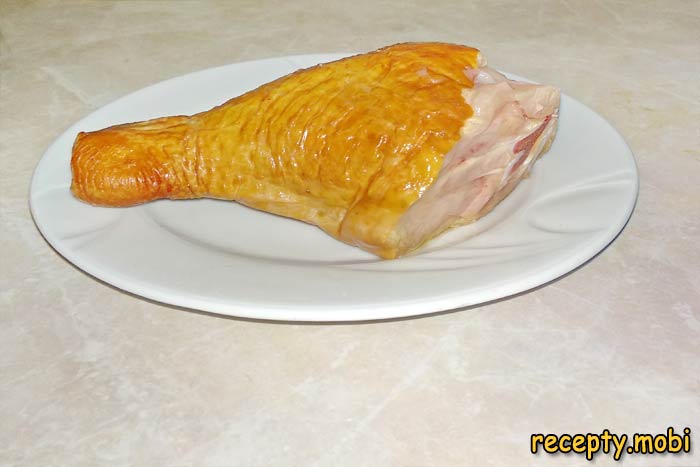
I prepare a smoked chicken drumstick for aroma – it gives the broth that characteristic smoky note. You can use any smoked products: ribs, brisket, bacon or sausages. Smoked meats are the secret ingredient behind the rich aroma of pea soup; without them the soup will be less full-flavoured.
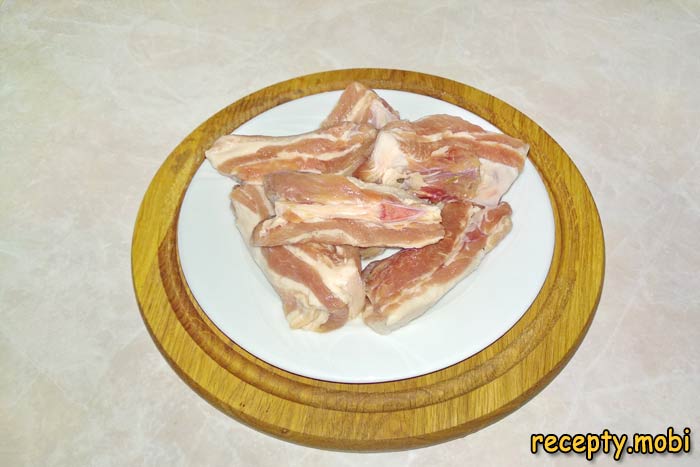
I cut the pork ribs (600 g) into portioned pieces between the bones with a sharp knife. I soak the ribs in cold water for 10 minutes to remove blood and bone fragments, then rinse them thoroughly under running water. Clean ribs give a clear broth without scum – important for a good-looking soup.
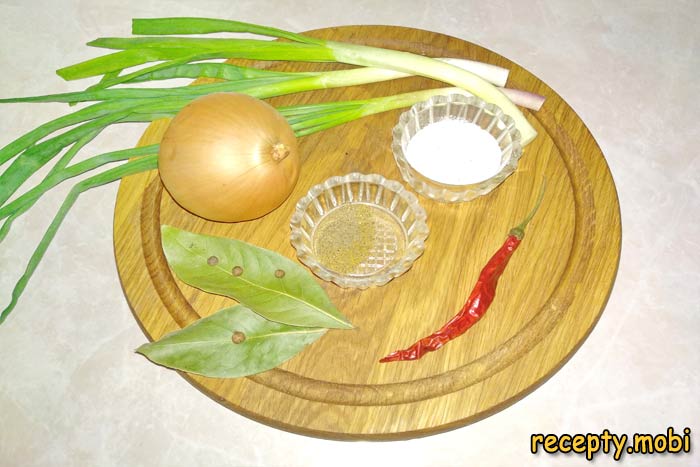
I prepare the spices for the soup: bay leaf (2 pieces), peppercorns (5–7 pieces) and salt to taste. Whole spices give a more delicate aroma than ground ones. The bay leaf is added at the end of cooking (ground bay leaf turns bitter during long cooking), while the peppercorns go in from the very start so their aroma releases gradually.
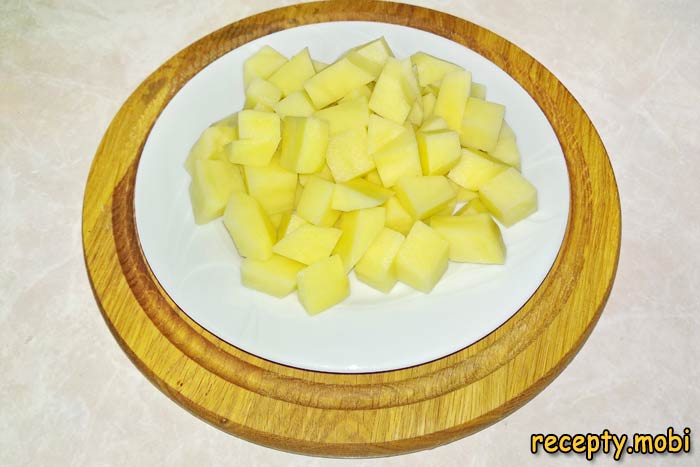
I peel the potatoes (3 pieces) and cut them into large cubes, about 2×2 cm – large pieces are needed for the long cook in the pressure cooker so the potatoes do not boil down into purée. Pieces that are too small would turn into a starchy mass and spoil the clarity of the soup.
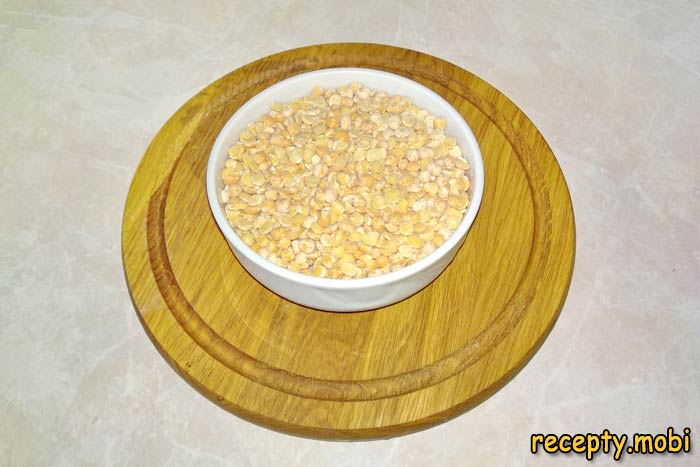
I rinse the split peas thoroughly in several changes of water until the water runs clear, washing away flour, dust and small impurities. There is no need to soak split peas – the halves cook quickly (40 minutes in the pressure cooker) even without soaking. Whole peas must be soaked overnight – otherwise they will take 2–3 hours to cook.
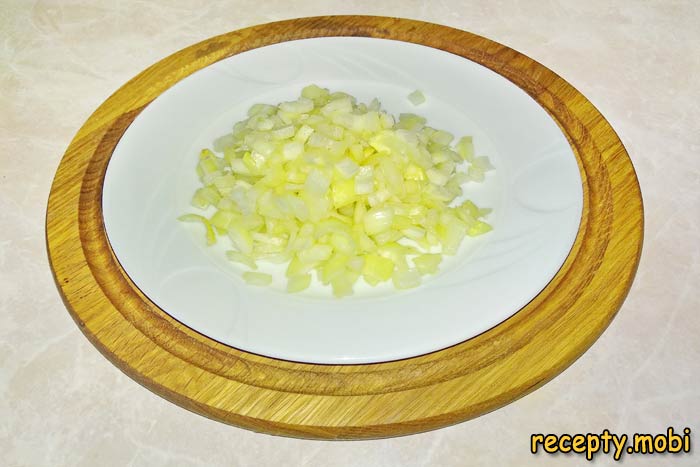
I cut the onion (1 piece) into medium cubes of 5–7 mm. I do not chop it too finely – the multicooker-pressure cooker would "eat up" small onion completely and you would not feel it in the soup. Medium cubes keep their shape and give a pleasant texture in the finished dish alongside the other vegetables.
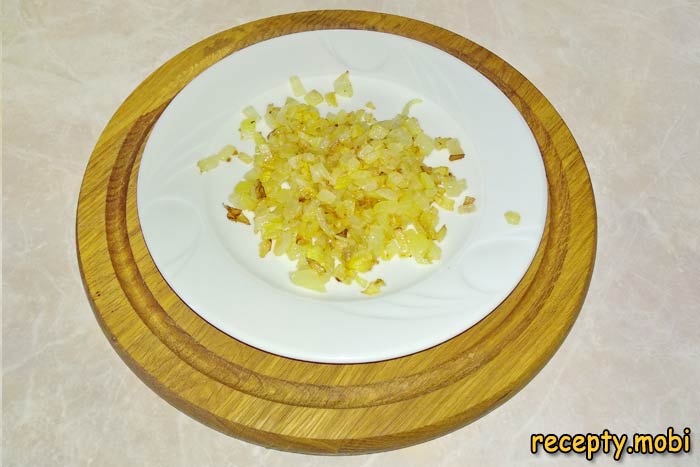
I lightly fry the onion in a pan with vegetable oil for 3–5 minutes until translucent and lightly golden – this gives the soup a beautiful amber tint and a richer taste. Without frying, the soup will be "pale" in colour and flavour. You can also add the carrot to the onion for the classic sautéed base.
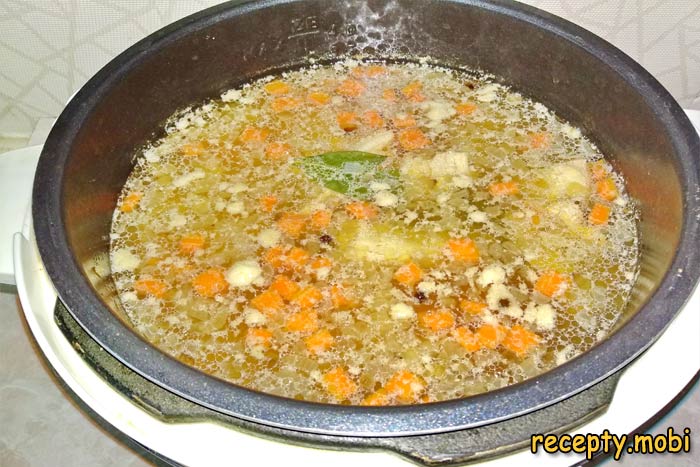
I put the pork ribs and the smoked drumstick into the bowl of the multicooker-pressure cooker and pour in the water (3 l). I switch on the "Boil" or "Soup" mode, bring it to the boil (5 minutes) and carefully skim off the foam with a slotted spoon – these are proteins and impurities that make the broth cloudy. I add the rinsed peas, the chopped vegetables (carrot, potatoes), the fried onion and the peppercorns. I close the lid, switch to the "Pressure" mode and cook for 40 minutes. After the signal I let it stand for 10 minutes under the lid, then add the bay leaf and salt to taste.
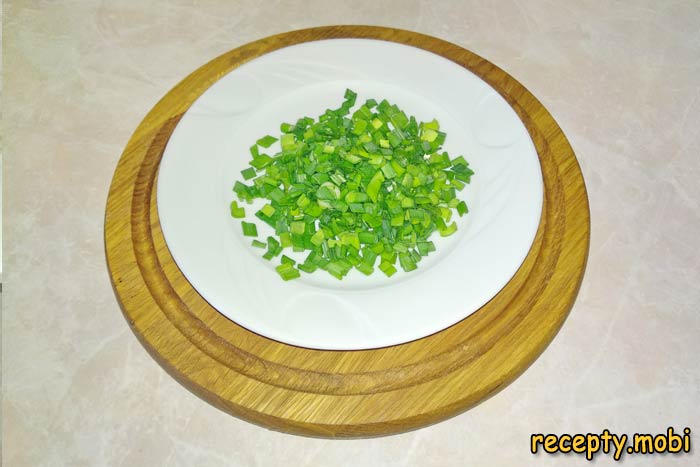
I finely chop the fresh green onion (4 stalks) into rings of 2–3 mm – for the final garnish and a fresh note of flavour. The greens are added only to the finished soup, straight into the bowls, to preserve the maximum of vitamins and aroma. During cooking, greens lose their colour and smell.
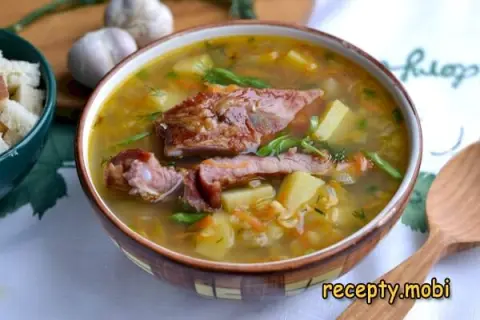
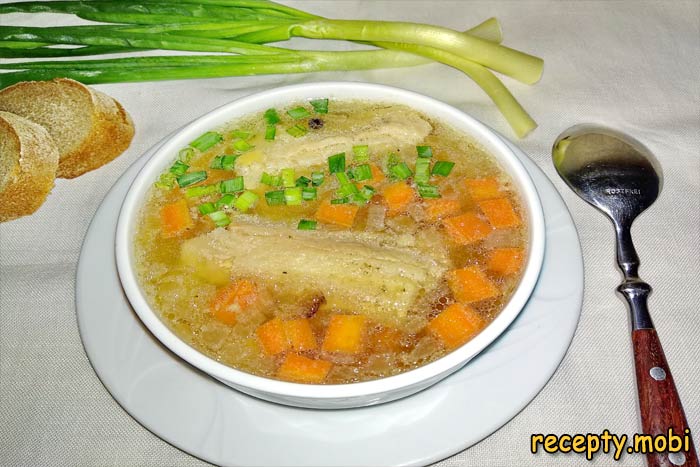
I pour the finished soup into bowls, adding fresh green onion to each. The pea soup in a multicooker-pressure cooker is ready! I serve it with homemade croutons or rusks made from dark bread for a crunchy contrast to the tender peas. On the second day the soup is even tastier – the peas break down further and give it more body.


Tips
- 1
Use split peas (halves) – they cook through twice as fast as whole peas and do not need overnight soaking.
- 2
Smoked meats (brisket, ribs, drumstick) add a characteristic smoky aroma – without them the soup will be less full-flavoured.
- 3
In an ordinary multicooker without a pressure function, cook on the "Soup" mode for 1.5–2 hours; in a pot, the same over low heat. I cook classic pea soup on a similar principle.
- 4
Serve with homemade croutons or rusks made from dark Borodinsky bread, fried in garlic butter – the classic accompaniment.
FAQ
Can it be made without a multicooker? +
Yes, cook the pea soup in an ordinary pot on the stove for 1.5–2 hours. First boil the ribs until half done (40–60 minutes), then add pre-soaked peas and cook for 40–60 minutes until they break down. At the end add the potatoes, carrot and onion and cook for 15–20 minutes. The only essential step is to soak whole peas overnight (8–10 hours) – otherwise they will take 3–4 hours to cook. With split peas, soaking is not needed. The multicooker-pressure cooker saves time and gives a thicker, more concentrated flavour.
Do the peas need to be soaked before cooking? +
It depends on the type of peas: split halves do NOT need soaking – they cook quickly, especially in a pressure cooker. Whole peas MUST be soaked for 8–10 hours (overnight) in cold water – otherwise they will take 3–4 hours to cook. Soaking also halves the cooking time and removes the substances that cause bloating. If you forgot to soak whole peas, use a "quick soak": cover them with boiling water and leave for 1 hour under a lid. This is a compromise option that speeds up cooking.
How long does the finished soup keep? +
Finished pea soup keeps in the fridge for up to 3 days in a tightly covered pot. On the second day the soup is even tastier – the peas break down further, the flavours come together completely and the broth becomes thicker. Reheat on the stove or in the microwave before serving. It can be frozen for 2 months – thaw it in the fridge before eating and bring it to the boil. During long storage the peas may release liquid – stir before eating and top up with broth if needed.
What to serve pea soup with? +
Classically with homemade croutons or rusks made from dark Borodinsky bread, fried in garlic butter – a crunchy contrast to the tender soup. Meat or cabbage pies, vatrushki and homemade baking also work well. For drinks – kvass, dried-fruit compote or tomato juice. For a lean table – with lean bread and sauerkraut as a starter. In winter – with mustard, horseradish or pickled onion as a piquant addition. It is ideal for a family lunch in the cold season – filling, warming and nourishing.
- Comment
or post as a guest
Be the first to comment.