avg —
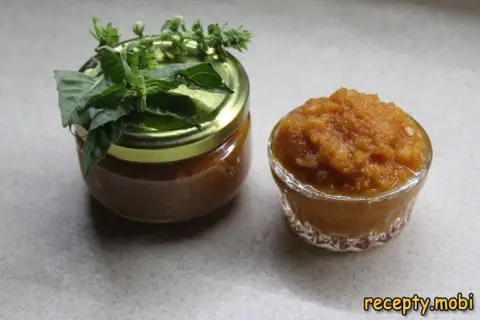
Cherry Sauce for Meat

Instructions
I get all the ingredients for the cherry sauce for meat ready.
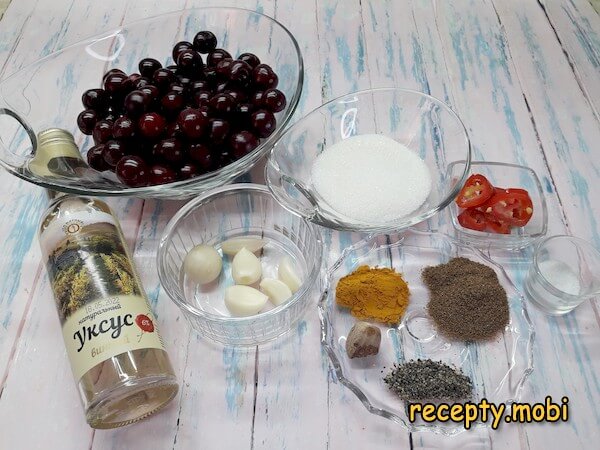
Remove the pits from the cherries, checking each one carefully. Later on there should be no unpleasant surprises while the blender is working, and certainly not when the sauce is served at the table.

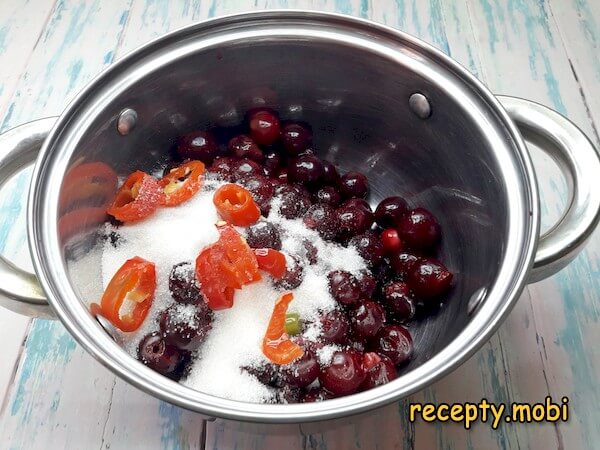
Transfer the berries to a small saucepan in which they will cook. Add the sugar, chilli pepper and salt here too.
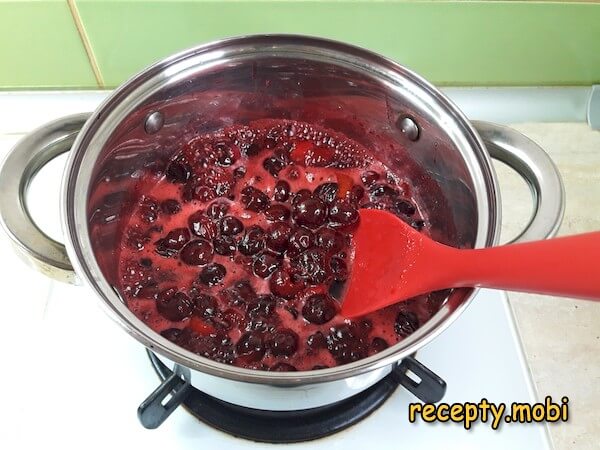
Put the saucepan on the heat and simmer for 15 minutes. The cherries will release enough juice to keep the mixture from burning.
Slice the garlic into thin pieces.

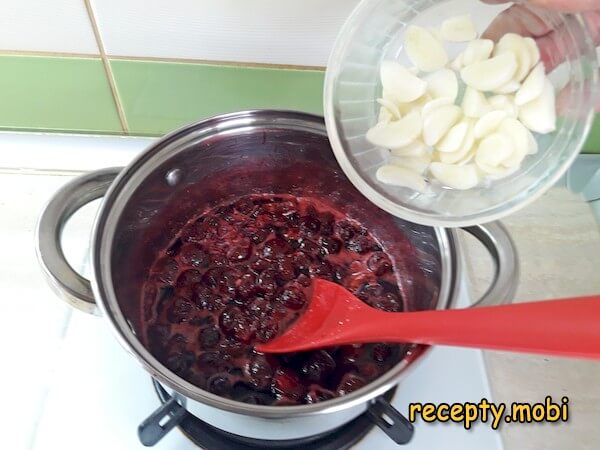
At the end of that time, add the garlic to the bubbling sauce.
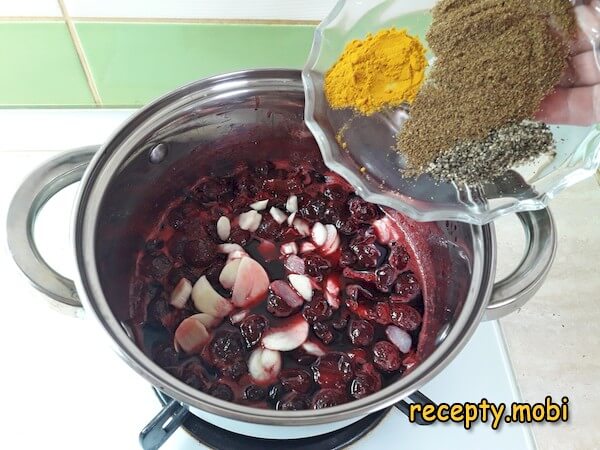
Next, add the spices.
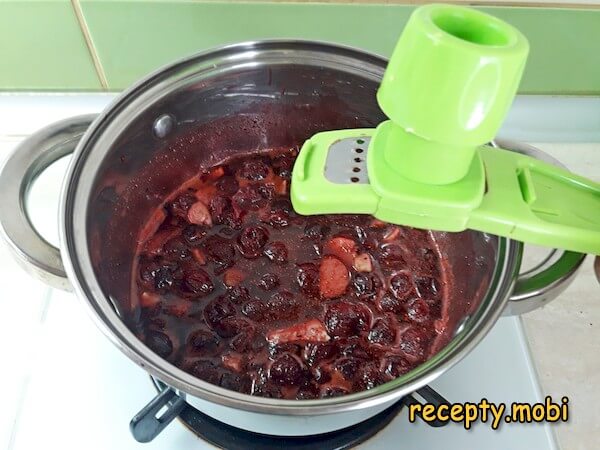
Grate in the nutmeg, then simmer the mixture for another 5 minutes.
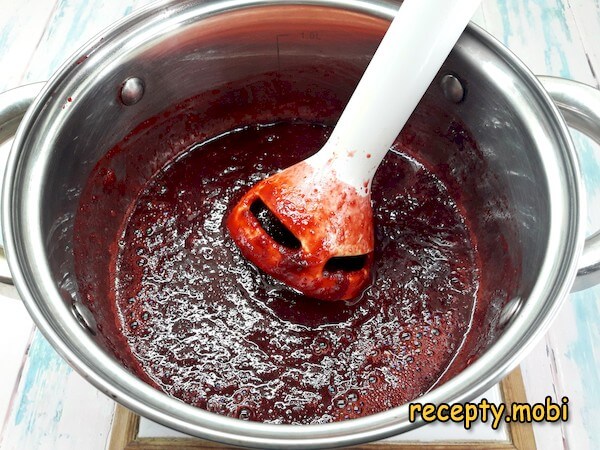
Now, very carefully so as not to get burned, blend the mixture with a blender.
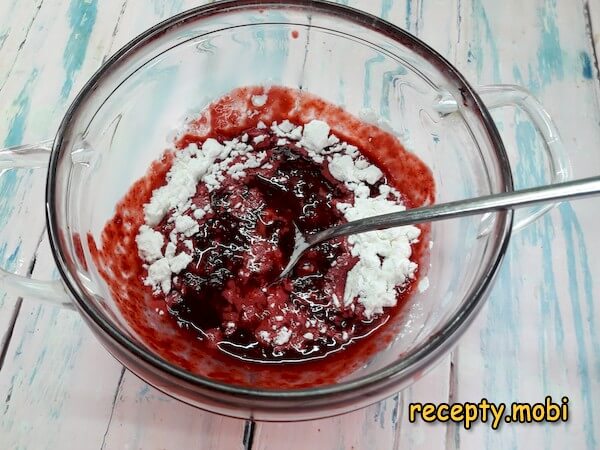
Since cherries contain little pectin, the sauce will be fairly thin. So it is best to use a thickener. To do this, set aside a couple of spoonfuls of the hot mixture in a separate bowl and prepare a teaspoon of starch.
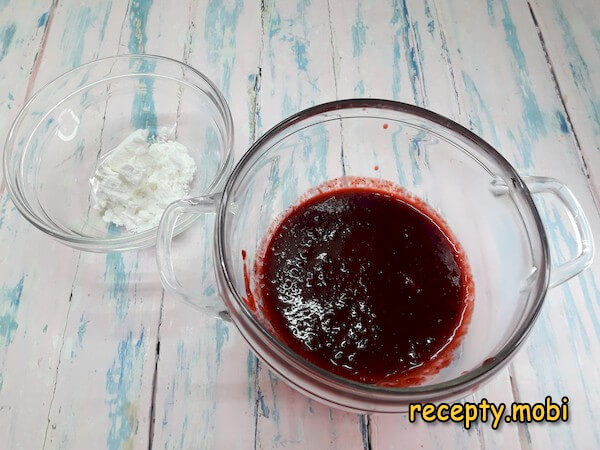
Mix the two together.
Return the sauce to the heat and pour in the vinegar. Simmer the mixture for 2 minutes.
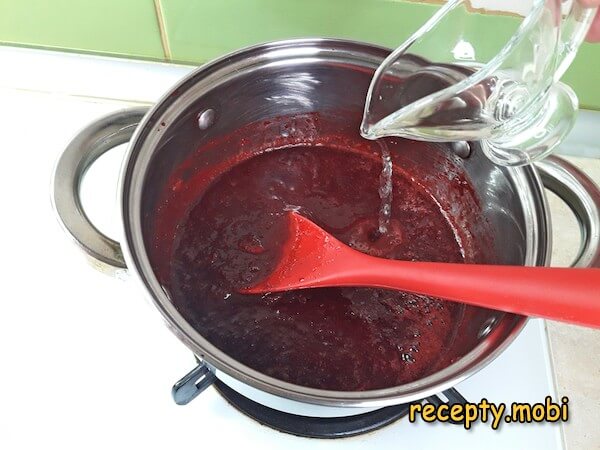
Pour in the diluted starch in a thin stream, without stopping stirring the base. Wait for the first signs of boiling to appear, then turn off the heat.
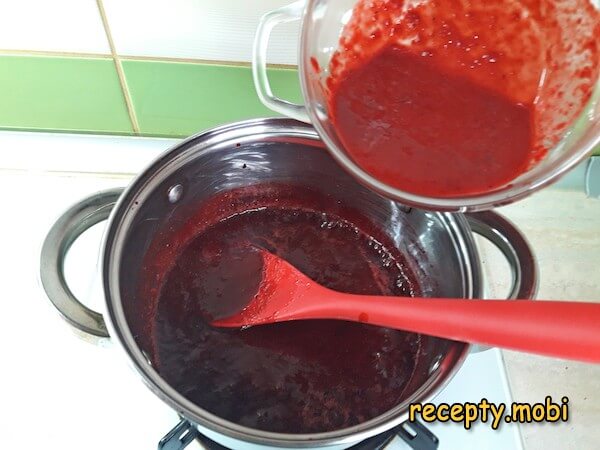
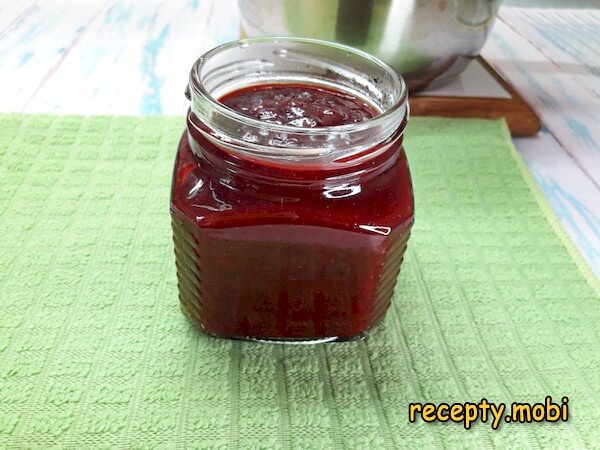
The sauce turns out thick, with a small amount of unblended cherry pieces, which give the dish a special charm.
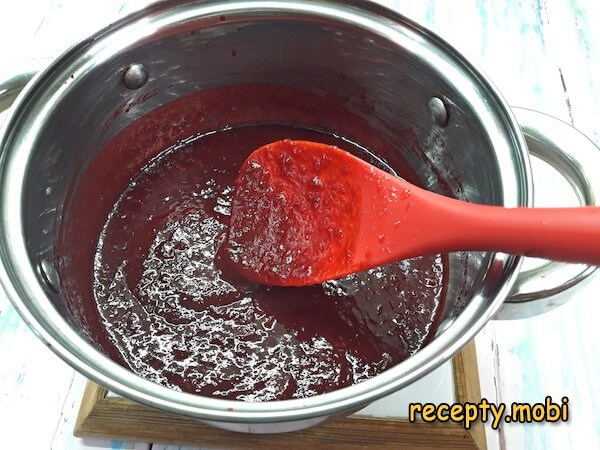
Pour the mixture into steamed jars or straight into a sauce boat.


Tips
- 1
Remove all the pits – for safety. Double-check every cherry. A pit in the blender or on the table is an unpleasant surprise.
- 2
Starch for thickening – the secret to the consistency. Cherries are low in pectin, so without starch the sauce will be thin. One teaspoon is about right.
- 3
Spices at the end – the secret to the aroma. Curry, coriander and nutmeg release their aroma during a short heating (5 minutes) and don't "burn off".
- 4
Don't blend everything – the secret to the texture. Pieces of cherry in the sauce give it a "homemade" charm. The same principle works in other kinds of berry sauces.
FAQ
Which cherries should I choose? +
Ideal are dark sour cherries (Vladimirskaya, Shubinka, Morozovka) – bright flavour, rich colour. Alternatives: the "Molodyozhnaya" and "Turgenevka" varieties (sweeter), or sweet cherries (more neutral, add lemon juice). Fresh ones should be glossy, firm, without dents or spots. Frozen is the "budget" option – defrost it and drain off the excess juice (you can cut the cooking time by 5 minutes). Not suitable: sweet dessert varieties (the tartness is lost) and overripe ones (they turn to mush). For a premium sauce, use farm-grown sour cherries. Always remove the pits – one slipping through will spoil the impression and is dangerous for the teeth.
What can I use instead of chilli? +
Alternatives: cayenne pepper (1/2 tsp – hotter), hot paprika (1 tsp – milder), "pul biber" chilli flakes (5 g – the Turkish version), pickled jalapeño (15 g – a Mexican note), or hot adjika (10 g – a Georgian accent). Fresh chilli is the premium option (the flesh without seeds is milder, with seeds hotter). Dried chilli – 5 g is enough. Don't use: sweet pepper (no heat). For a "hot" version, use chilli plus 1/4 tsp of cayenne. For a "mild" one, reduce to 5 g of fresh chilli and remove the seeds.
How long does the sauce keep? +
In the fridge in a sterile jar – up to 6 months. In the freezer in portion-sized containers – up to 1 year. Once opened, in the fridge – 2 to 3 weeks. Write the preparation date on the jars. If mould appears, do not use it – throw it away. Don't leave it at room temperature for longer than 4 hours. Take it out 15 minutes before serving (cold "dulls" the flavours). You can warm it in a water bath for 5 minutes. It is best used within the first 3 months. Seal it in small 200 ml jars – they are easier to open. For winter storage, sterilise it in water for 15 minutes per 0.5 litre.
What should I serve the sauce with? +
A classic with meat: with beef steak, pork shashlik, lamb ribs. With roast duck – a "French" serving. With grilled turkey and chicken. With game (wild boar, venison, pheasant) – a premium pairing. With pelmeni and manti. With sausages or grilled bangers – a "German" serving. With cheese (camembert, brie, goat's cheese) – an unusual choice. With pâtés and terrine. With rice side dishes and meat. With pancakes filled with meat. For the "New Year table" – with roast meat. With baked potatoes and meat. A versatile hot sauce for meat-based meals.
- Comment
or post as a guest
Be the first to comment.