avg —
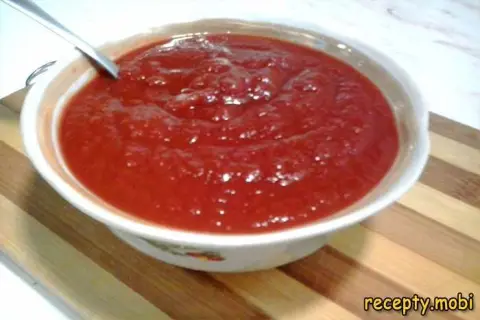
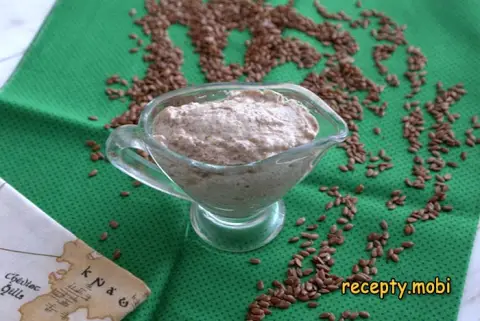
Homemade Ketchup from Tomato Paste

Instructions
I prepare the ingredients.
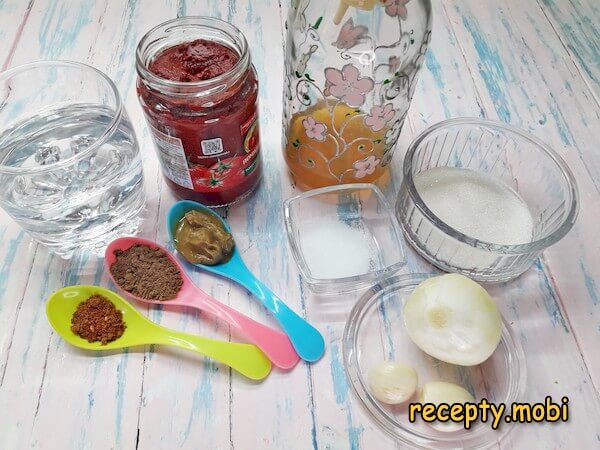
Transfer the tomato paste from the jar to a saucepan or thick-bottomed frying pan. Dilute it with water to a consistency like thick tomato juice.
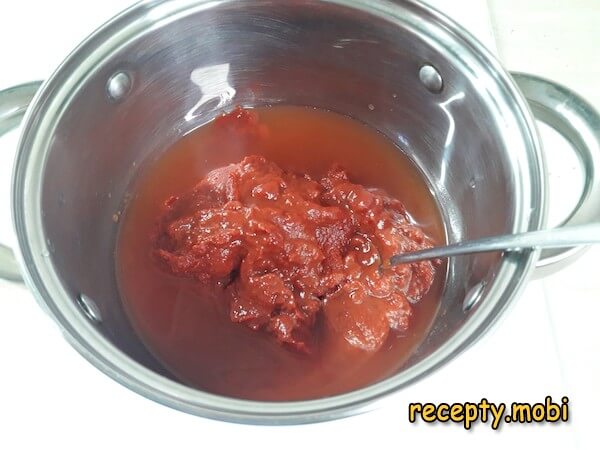
Add the salt and sugar straight away.
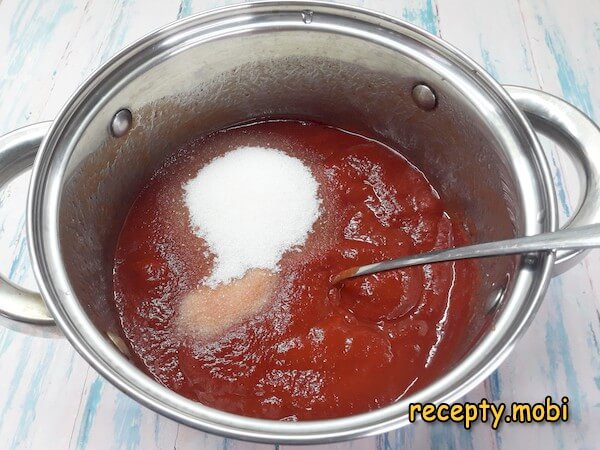
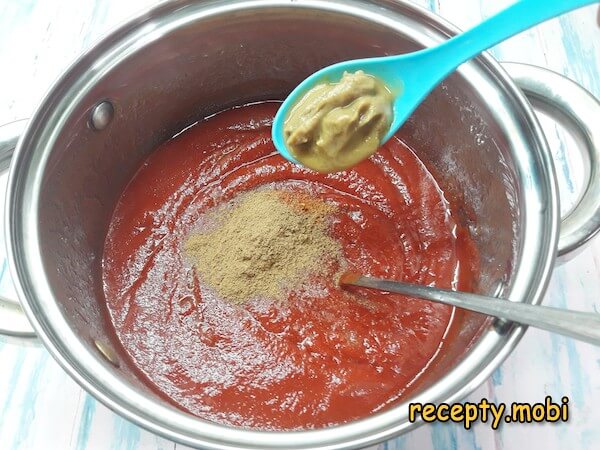
Next, the cinnamon and the prepared mustard.
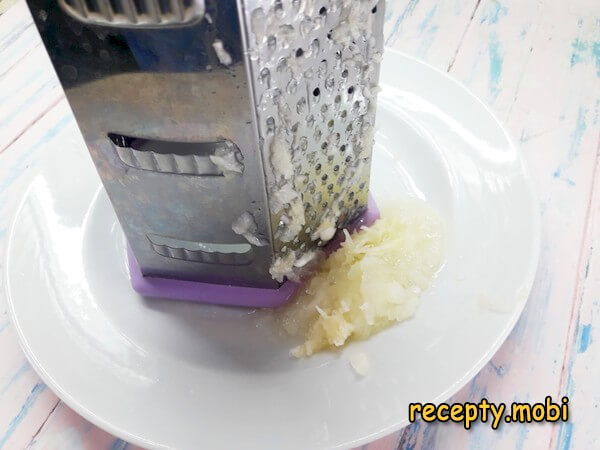
Grate the onion and garlic to a paste on a fine grater.
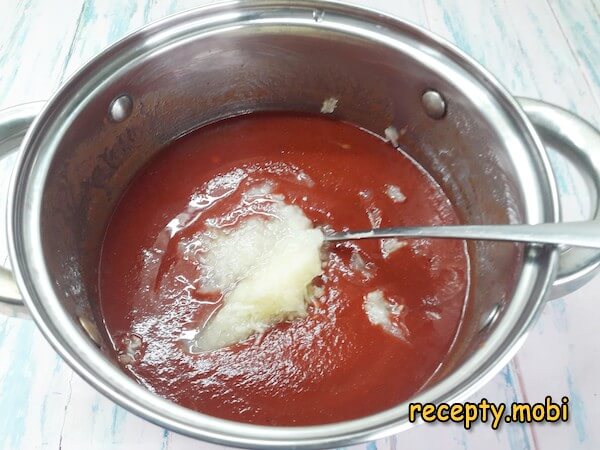
Add it to the tomato. During cooking the onion softens and practically dissolves into the ketchup, so it won't even be noticeable – only the necessary aftertaste remains.
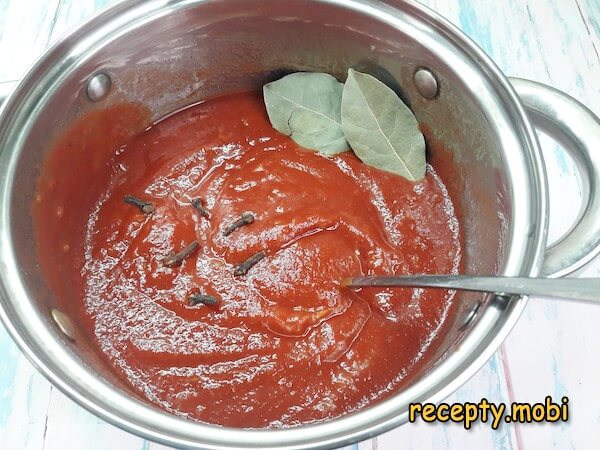
Place the mixture over low heat. Add the bay leaf and cloves here (remember how many cloves there are, so you can retrieve them later with a slotted spoon).
Bring the tomato to a barely noticeable simmer (don't boil it on high heat – the mixture bubbles dangerously and shoots out hot drops). Cook the mixture this way for 10–13 minutes.
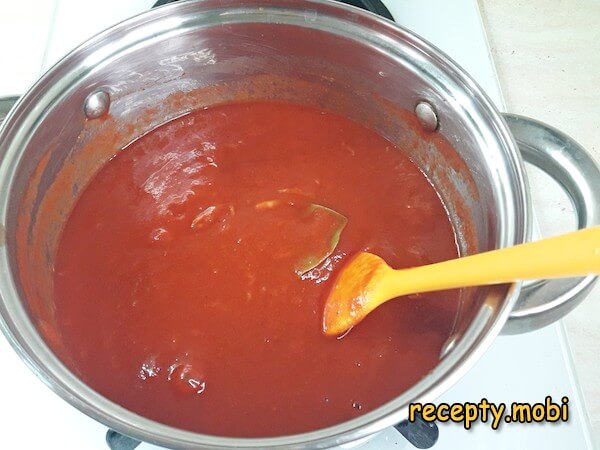
Remove the bay leaves and cloves with a slotted spoon.
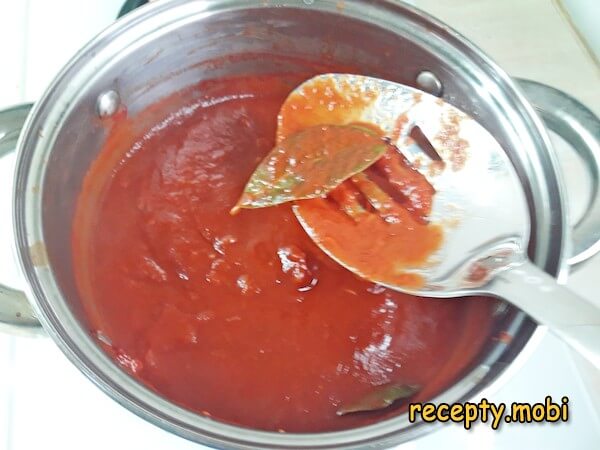
Add the vinegar. The ketchup is almost ready – all that's left is to taste it and perhaps adjust the amount of salt and sugar.
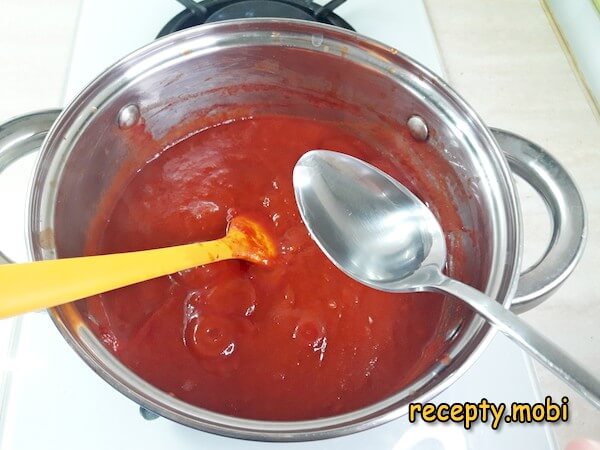
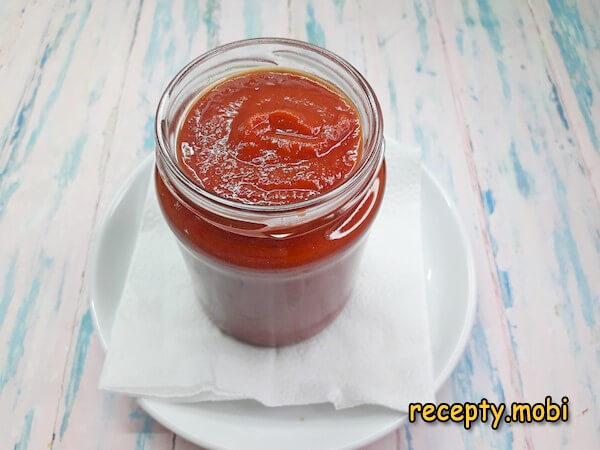
After 2–3 minutes, pour the ketchup into pasteurised jars.


Tips
- 1
TOMATO PASTE WITHOUT STARCH OR WATER is the secret to the flavour. A quality paste means concentrated tomatoes and nothing else. With fillers added, you get a "thin" ketchup with a "shop-bought" aftertaste.
- 2
LOW HEAT IS A MUST – the secret against splatter. On high heat the ketchup "bubbles up" and shoots out drops (you can get burned). Aim only for a "barely noticeable simmer".
- 3
REMEMBER THE NUMBER OF CLOVES – it matters. All 6 need to be fished out before sealing the jars. Otherwise the cloves will turn the ketchup bitter during long storage.
- 4
VINEGAR RIGHT AT THE END is the secret to the aroma. With long cooking the vinegar note "boils away". Add it 2–3 minutes before sealing. The same principle works in other kinds of homemade tomato sauces.
FAQ
Which tomato paste should I choose? +
Ideally, a natural tomato paste with a tomato content of 25–30% (as in a concentrate). The composition should be only tomatoes plus salt (no starch, water, colourings or GMO). The colour should be bright red, with no patches. The consistency should be thick, not "runny". For a premium ketchup, use Italian "Pasta di Pomodoro". Don't use paste in tubes with soy lecithin (it changes the taste) or paste with tomato flakes. Homemade tomato paste is the premium option (if you made some in the summer). 250 g of paste plus 400 ml of water is the optimal ratio.
Can I make it without hot pepper? +
Yes – the hot pepper is optional (at the cook's discretion). Without it you get a "classic" ketchup with no spicy aftertaste (for children and lovers of mild sauces). Alternatives: 1 tsp of sweet paprika (gives colour without heat), smoked paprika (for a "smoky" note), cayenne pepper (instead of the red hot pepper), ground black pepper (a gentler heat). For a "hot" ketchup, add 1 fresh chilli. For a "children's" version, leave out the pepper and mustard. Cinnamon is a must for classic ketchup – it creates that "signature" flavour.
How long does the ketchup keep? +
In sealed jars in a cool place – up to 1 year (as the author advises). At room temperature – up to 6 months. Once opened, in the fridge – 1 month. Don't store it in the sun, or the colour will "fade". If a lid bulges, don't open it – throw it away. Write the sealing date on the jars. There is no need to make large stocks – tomato paste is always available and a new batch takes 15 minutes. Seal it in small jars of 250–500 ml. Freezing is not needed (it keeps well in jars). It is best used within the first 3–6 months, when the aroma is brighter.
What should I serve the ketchup with? +
The classics: with pasta, French fries, country-style potatoes and cutlets. With pelmeni and vareniki. With fried meat, shashlik and steak. As a base sauce for pizza. With nuggets and chicken wings. With grilled sausages and frankfurters. On sandwiches with hot dogs. With shawarma and burritos. With rice and grain side dishes. With boiled macaroni and cheese. With fried eggs or an omelette – unusual, but tasty. For a "homemade burger" – on the bun with the patty. A universal sauce for the whole family. It is especially good with hot dishes.
- Comment
or post as a guest
Be the first to comment.