avg —
Homemade mayonnaise with lemon and mustard in a blender

Instructions
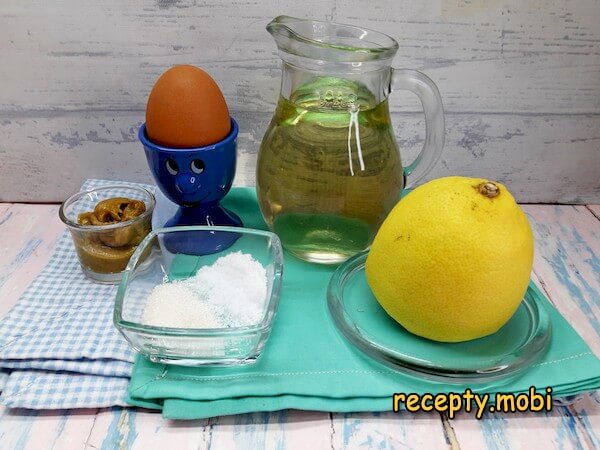
I prepare the ingredients in advance and bring them to room temperature 30 minutes beforehand – cold products do not emulsify and the mayonnaise will not thicken. I use refined, odourless oil – sunflower, olive or corn. Unrefined oil or extra-virgin olive oil will give the finished sauce a bitter taste.
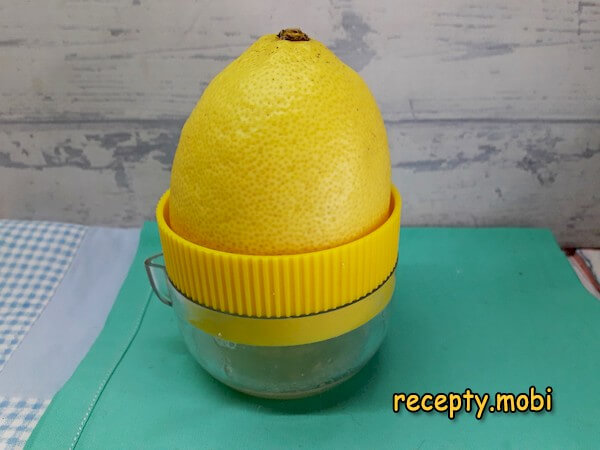
I squeeze the juice from half a lemon into a small bowl through a sieve – this way neither pulp nor seeds get into the sauce. For 250 g of oil you need exactly 2 tbsp of juice – less will give a weak flavour, more will split the emulsion. Fresh lemon juice is preferable to bottled – it is more aromatic and works more effectively.
For whipping, I use a narrow, deep container (the blender's measuring beaker or a jug 15–20 cm tall and 8–10 cm in diameter) – it is precisely this shape that gives the right whipping dynamics. I wash the egg thoroughly with baking soda – this destroys any microbes on the shell. I carefully crack it into the beaker, whole, together with the yolk.
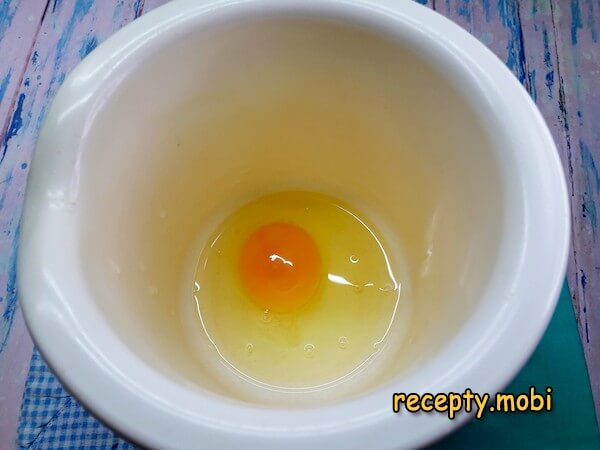
I add 2 tsp of ready-made table mustard – it acts as a natural emulsifier, binding the oil with the egg. Without mustard the mayonnaise may split. Classic table mustard gives a piquant, sharp note, while Dijon gives a milder taste and a delicate aroma.
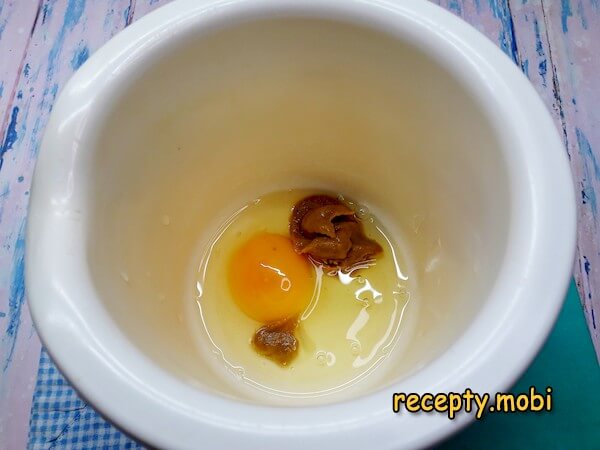
Next I add 1 tsp of sugar and 1 tsp of fine salt – this combination balances the flavour and prevents blandness. Coarse salt dissolves poorly at the blender's high speed – use fine or iodised salt from a grinder.
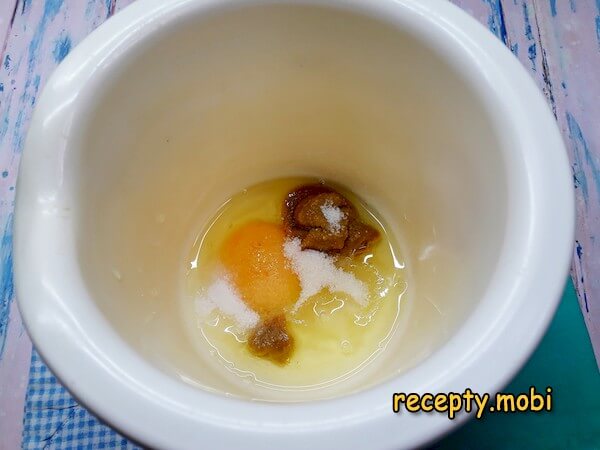
I pour 2 tbsp of freshly squeezed lemon juice straight into the beaker – it shapes the flavour and disinfects the raw egg through its acidity. The acid lowers the pH and makes the sauce safer to store – it is a homemade equivalent of a preservative. Table vinegar (9%) can be used as a substitute, but lemon gives a fresher taste.
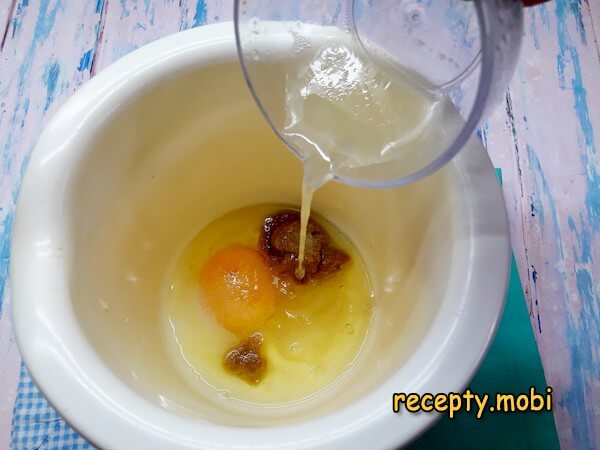
I add the first part of the refined oil – about 30 ml (2 tbsp). Do not pour in all the oil at once, otherwise the emulsion will not form and the sauce will stay runny. Gradual addition is the key principle; without it the mayonnaise will not come together even for experienced cooks.
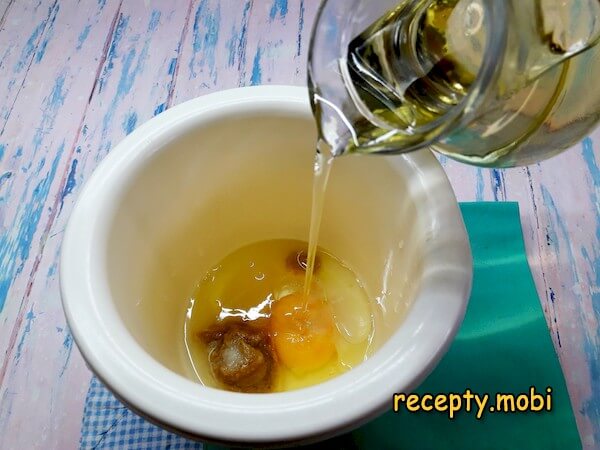
I lower the immersion blender right to the bottom of the beaker, pressing it firmly against the ingredients underneath. I switch it on at maximum speed and whip for 5–10 seconds without lifting the blender off the bottom – the mass is still liquid and yellowish, and the emulsion is just beginning to form. This is the critical stage: if you lift the blender too early, the emulsion will not come together.
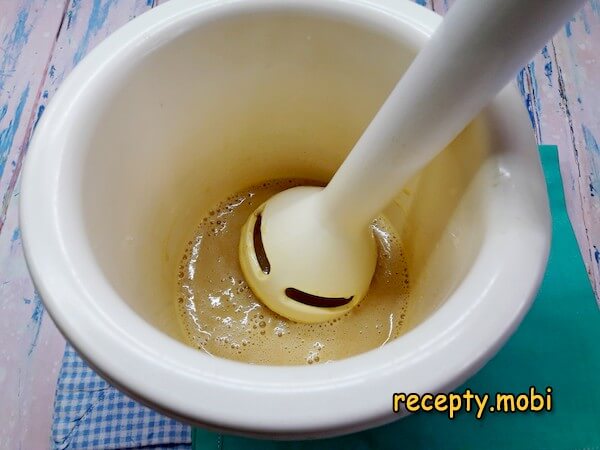
I gradually pour in the remaining oil (220 g), 50–60 ml at a time, whipping thoroughly with the blender from the bottom upwards and back after each portion. The mass will thicken and lighten, becoming whiter and denser – this is exactly how correctly whipped Provençal mayonnaise looks. The total whipping time is 1.5–2 minutes, until it reaches the thickness of thick sour cream.
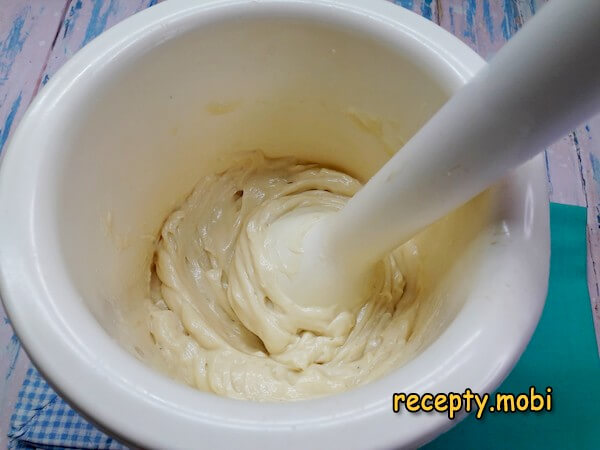
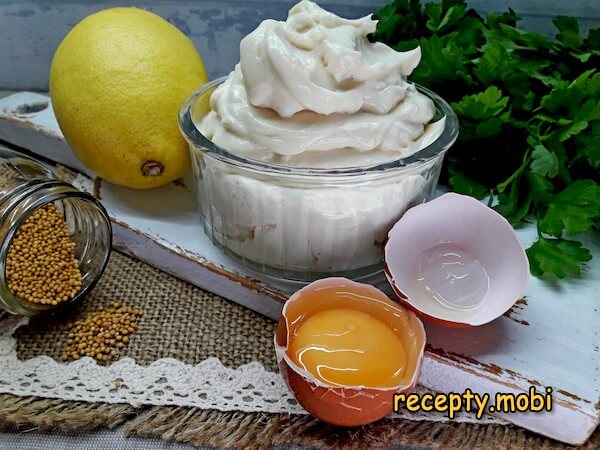
The homemade mayonnaise with lemon and mustard is ready in just a few minutes! I transfer it to a glass jar with a tight-fitting lid and keep it in the refrigerator for up to 10 days. Now there is no need to run to the shop for a bought equivalent – the natural sauce turns out far tastier and safer.


Tips
- 1
All the ingredients should be at room temperature – this is the key to successful homemade mayonnaise. A cold egg and cold oil will not emulsify and the sauce will stay runny.
- 2
Do not lift the blender off the bottom of the beaker until the mass begins to thicken – work right at the bottom for the first 10–15 seconds so that the emulsion has time to form. This is the main secret of a restaurant-quality result.
- 3
Add the oil only gradually, 50–60 ml at a time – this way the emulsion will not split and the sauce will turn out dense. If you pour in the whole amount at once, you will end up with a runny dressing that does not thicken.
- 4
For a lighter, healthier taste, use refined olive oil or a 50/50 blend with sunflower oil. Pure extra-virgin will give too sharp a taste – it is not suitable for homemade mayonnaise.
FAQ
Why is my homemade mayonnaise not thickening? +
There are three main reasons: the ingredients were cold (the egg and oil should be at room temperature, 20–22 °C); the oil was added too quickly in one go (pour it in portions of 50–60 ml); or the whipping technique was wrong (hold the blender at the bottom for the first 10 seconds). The fix for runny mayonnaise: add one more room-temperature yolk, whip it first with 30 ml of the mass you already have, then gradually pour in the rest of the runny mayonnaise. The thickness will return after 1–2 minutes of vigorous whipping.
Can I use olive oil for mayonnaise? +
Yes, but with reservations. Refined olive oil works very well – it gives a delicate taste and is not bitter. Extra-virgin olive oil is too sharp and can make the finished sauce bitter because of its high concentration of polyphenols. The best solution is a 50/50 blend of refined sunflower and refined olive oil: the taste will be more delicate and milder. For a seafood salad olive oil is ideal; for a classic Olivier, sunflower is better.
What can replace lemon juice in homemade mayonnaise? +
These will work: apple cider vinegar (6%) – 1.5 tbsp instead of 2 tbsp of lemon juice, which gives a fruity note; white wine vinegar (1 tbsp) – the classic option from European cuisine; ordinary table vinegar (9%) – 1 tbsp diluted in 1 tbsp of water, the most budget-friendly option; lime juice (2 tbsp) – a bright tropical accent. The acid is essential for preservation and flavour. Without it the mayonnaise will spoil quickly and the taste will be flat. The lime version is especially good with Mexican and Asian dishes.
How long does homemade mayonnaise keep? +
In a glass jar with a tight-fitting lid in the refrigerator, up to 10 days – that is exactly how long it stays fresh thanks to the lemon acid. Do not store it in an open container – oxidation in the air will split the emulsion within 1–2 days. It cannot be frozen – on defrosting the mayonnaise loses its structure. On safety: since the egg is raw, always use a fresh one, home-laid or from trusted producers, and wash the shell with baking soda before use. At the slightest sign of separation, a sour smell or a change in colour, throw the sauce away.
- Comment
or post as a guest
Be the first to comment.