avg —
Sauerkraut with Beets

Instructions
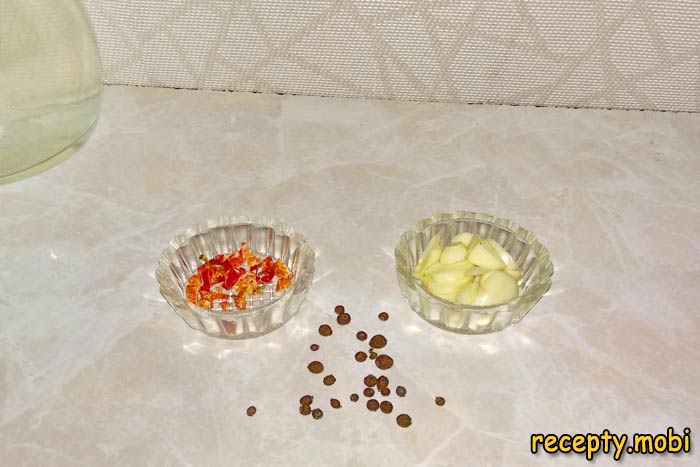
Cut the hot chilli pepper (1 pod) into thin rings 2–3 mm wide. You can leave the seeds in for more heat or remove them for a milder taste. Peel the garlic (3 cloves) and cut it into large slices 3–5 mm thick – cut this way, it will release the most aroma over the 4 days of fermentation. Wear gloves when working with chilli to protect your hands from the burn of capsaicin.
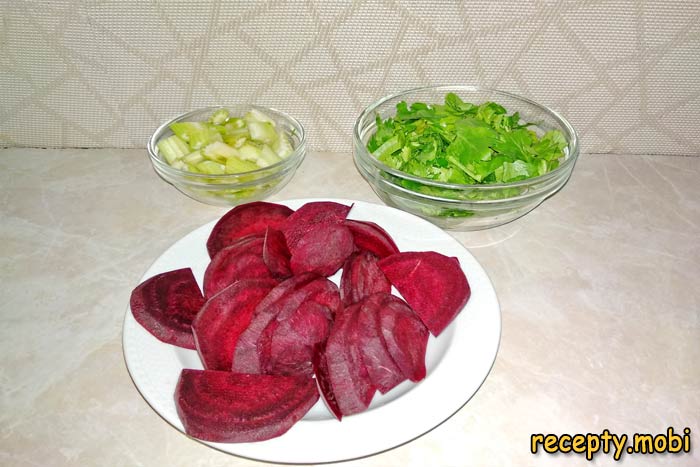
Peel the raw beetroot (2 medium pieces) and cut it into half rings or thin slices 3–5 mm thick. The beetroot should be fresh and juicy – limp beetroot will not give a bright ruby colour. Wash the celery stalks and leaves thoroughly and cut them into large pieces 3–4 cm long – this gives the appetiser its distinctive "herby" aroma.
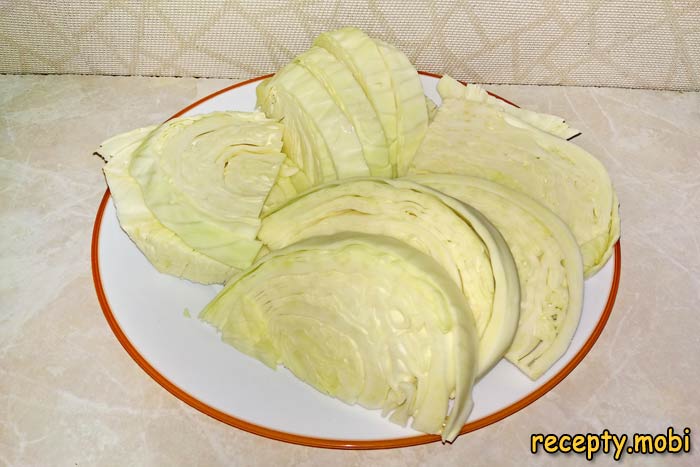
Cut the white cabbage (1 kg) into large wedges 1–1.5 cm thick – not into fine shreds! "Gurian" sauerkraut is served in exactly these large pieces. Fine shredding would give an "ordinary" Russian sauerkraut, whereas we are making the Caucasian version. Remove the tough outer leaves and the stalk.
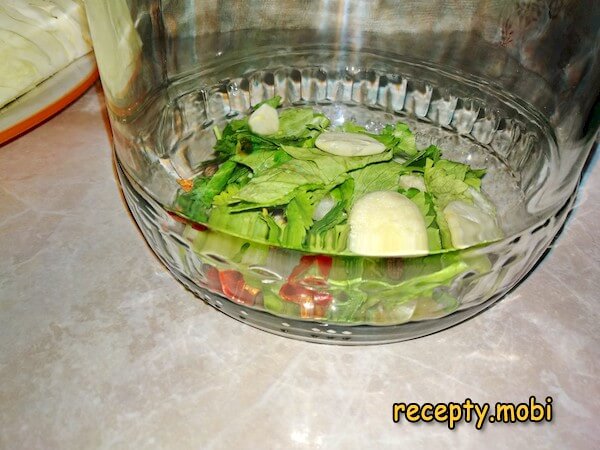
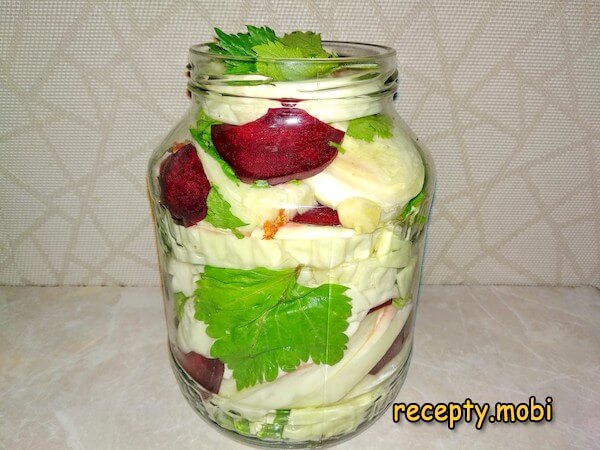
On the bottom of a clean 3-litre glass jar or enamelled pan, lay down the first "aromatic" layer: some of the chopped garlic, the chilli rings, the celery and coriander sprigs and slices of beetroot. This is the flavour "base" – without it the cabbage will taste "empty".
Fill the jar halfway with cabbage, packing it down firmly by hand – no air should be left in any gaps. Repeat the "aromatic" layer with the spices and beetroot. Then fill the jar to the very top with the remaining cabbage, pressing it down firmly. On top, arrange the rest of the garlic, chilli, coriander and celery – the "crown" of aroma.
Prepare the brine: dissolve the salt (2 tbsp) in 1 litre of warm (NOT boiled!) water until the crystals are completely dissolved. The ideal water temperature is 30–40 °C, like a "warm bath". Cold water will slow the fermentation, while boiled water will destroy the lactic-acid bacteria. Warm, non-boiled water is the ideal environment for fermentation.
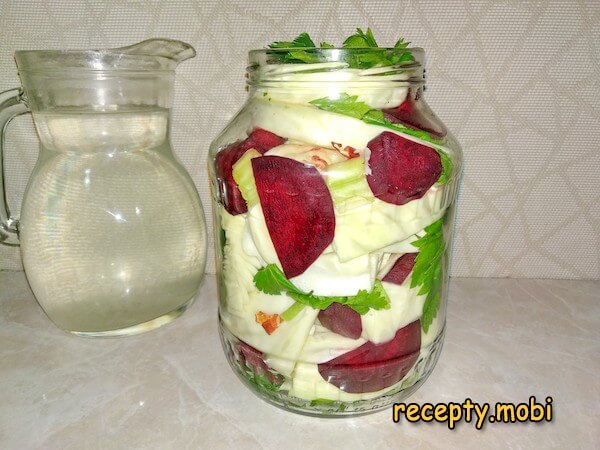
Pour the warm brine over the cabbage right up to the rim of the jar. The cabbage must be completely covered with liquid – any pieces sticking out will "go mouldy". Stand the jar on a plate (excess brine will run off during fermentation). Leave it at room temperature (+18–22 °C) for the fermentation to begin. Do not seal it airtight – air needs to get in.
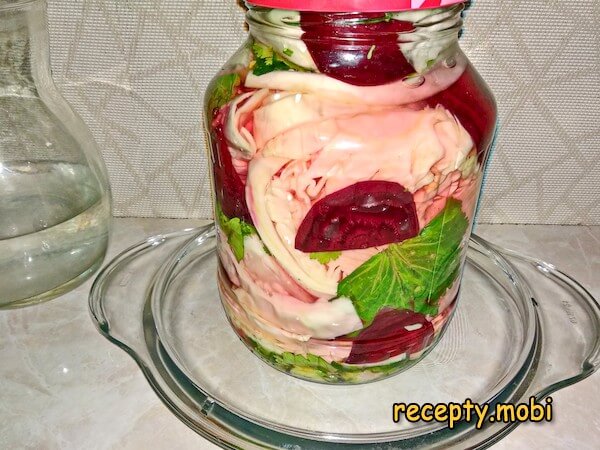
After a day the brine will turn a rich ruby colour from the beetroot – the fermentation process is well under way. Bubbles may appear on the surface; this is normal, as gases are released during fermentation. Some of the brine may have "escaped" over the edge – top it up with the brine left over after the first pour. Every day, pierce the cabbage right down to the bottom with a long wooden stick to release the trapped gas.

On the fourth day the sauerkraut with beetroot is ready – a bright ruby colour, crunchy, sour and spicy in taste. Close the jar with a lid and move it to the refrigerator for storage – the cold stops the fermentation and keeps the crunch. Serve it as an appetiser, cutting it more finely when you serve. The sauerkraut with beetroot and celery is ready!



Tips
- 1
Use only warm, non-boiled water for the brine – the fermentation will go faster and more properly. Boiled water will "kill" the beneficial bacteria.
- 2
Cut the cabbage into large wedges for the "Gurian" presentation – fine shredding gives ordinary Russian sauerkraut, not the Caucasian kind.
- 3
Store the finished cabbage in the refrigerator – the cold stops the fermentation and the cabbage stays crunchy for longer. I use a similar principle for classic sauerkraut.
- 4
For a salad, chop it more finely, add vegetable oil, spring onions and ground coriander – you get a ready-made "Georgian" side dish.
FAQ
Can it be made without the hot pepper? +
Yes. Without the chilli the cabbage will be less spicy, but still tasty thanks to the fragrant aroma of celery and coriander. Replace the chilli with sweet paprika (1 tsp) for a nice colour without the heat. You can add a few allspice berries for aroma. For a "children's" version, leave out the chilli altogether – the cabbage will suit the whole family. For an "adult" version, increase the amount of chilli to 2 pods and add some coarsely ground black pepper. The heat can be adjusted individually to taste – the main thing is to follow the basic fermentation principles.
How long does the sauerkraut keep? +
The finished sauerkraut keeps in the refrigerator in a tightly closed jar for up to 2 months without losing its taste or crunch. For longer storage you can move it to a cellar or basement at +2–4 °C, where it keeps for up to 4 months. It must not be kept at room temperature – the fermentation will continue, the cabbage will "over-sour" and turn soft. If mould appears on the surface, carefully remove it together with the top layer of cabbage; the rest is safe to eat. If there is a lot of mould, throw it away.
Why did the cabbage turn out soft rather than crunchy? +
The main reasons are: leaving it at room temperature for longer than 4 days (ferment for 3–4 days, no more!), cutting the cabbage too finely (for crunch you need large pieces of 1–1.5 cm), using boiled water for the brine (only warm, non-boiled water will do), and too little salt (the standard is 2 tbsp per 1 litre of water). Also check that the cabbage is fresh – limp cabbage will not turn out crunchy. The ideal variety for fermentation is a late white cabbage with dense heads. Young "summer" cabbage is not suitable for fermenting – it gives a soft result.
What can sauerkraut be served with? +
It is ideal as an appetiser with strong drinks: vodka, chacha, whisky or homemade moonshine – a classic. As a piquant side dish with grilled meat, shashlik or chicken tabaka – the Georgian way of serving. With boiled or baked potatoes for a hearty winter supper. With dark Borodinsky bread and salo – a "Russian-Caucasian" combination. On the Lenten table it is a vitamin-rich appetiser in its own right during winter. It can be added to borscht, shchi or vinaigrette salad, where it gives a characteristic sourness. A versatile Lenten appetiser for any occasion.
- Comment
or post as a guest
Be the first to comment.