avg —
Apple Jam in Slices

Instructions
I prepare the apples. I choose fruit that is not overripe and without any damage – then the slices will not fall apart during cooking.
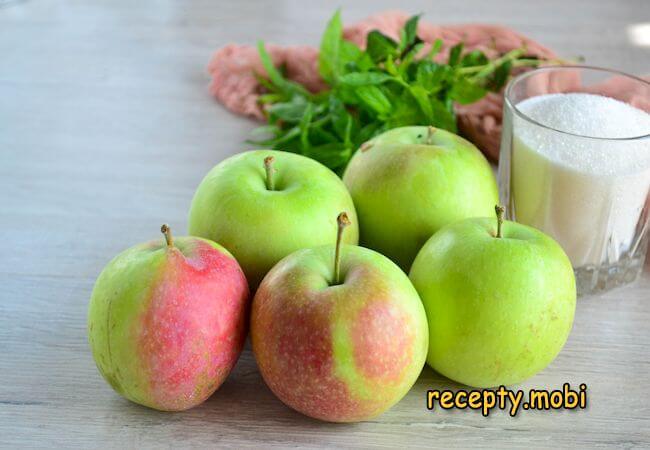
I cut the apples in half and carefully remove the cores – with a knife or a special tool. I cut the apples into thin slices. You should end up with 1.5 kg of apple slices – this amount makes 3 jars of jam of 0.5 l each.
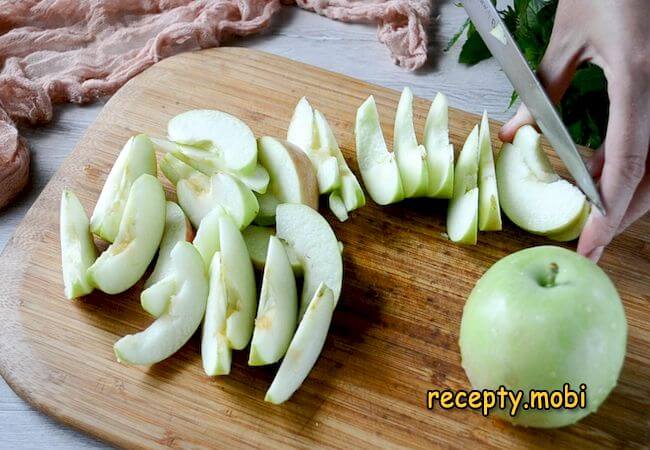
Into a suitably sized pot with a thick bottom (preferably non-stick) I place a third of the apples, then pour in 300 g of sugar. Another layer of apples, sugar, and the last layer of apples I also sprinkle with sugar. I gently shake the pot – so that the sugar is distributed evenly. The apples must not be stirred, neither now nor during cooking – otherwise the slices will be damaged and turn to mush. I leave them with the sugar for 4–6 hours so that the apples release their juice.
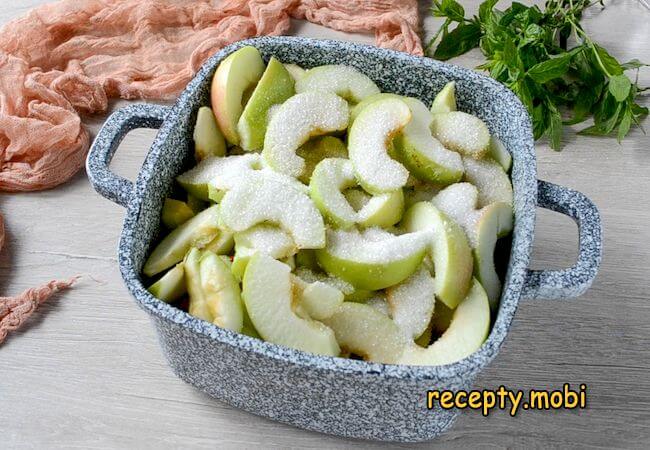
When there is enough juice – I put the pot on the heat and bring it to a boil. Now the juice will be released even more intensely, and all the remaining sugar will dissolve. I boil it for 5 minutes over high heat and remove it from the heat. There is no need to stir, I just shake the pot – so that the slices are distributed evenly in the syrup. Do not worry that the jam will burn – there is so much syrup that nothing will happen in 5 minutes.
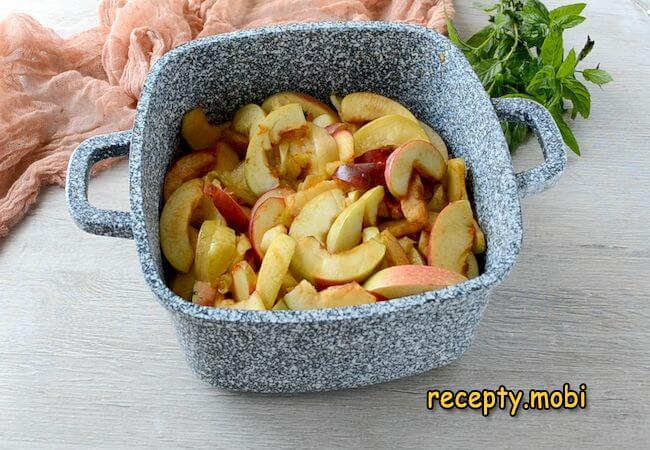
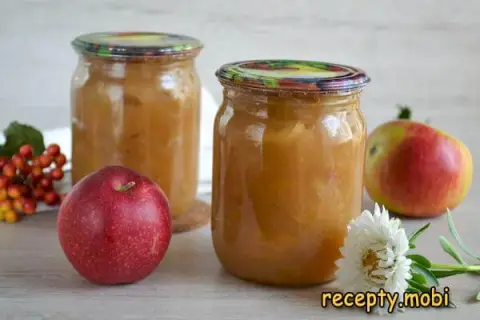
I remove the jam from the heat and leave it at room temperature for 5 hours. Then I bring it to a boil again and cook for 5 minutes. This is what the jam looks like after the second boil. I leave it again for 5–6 hours (or even overnight).
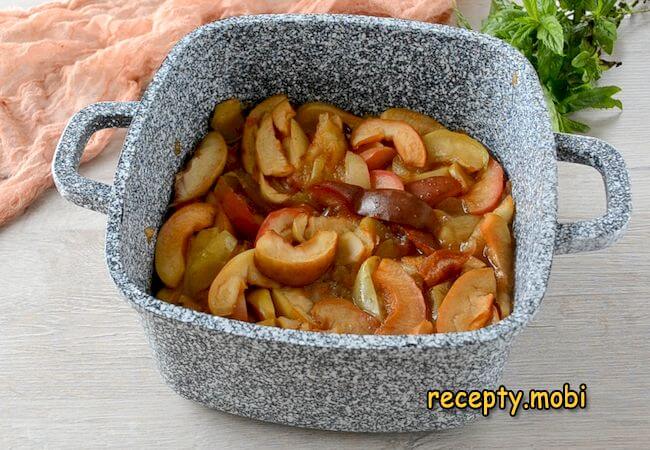
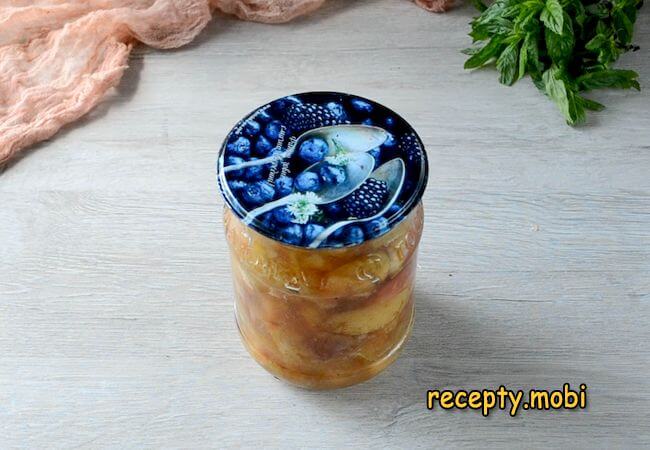
I boil the jam for 5 minutes a third time and ladle it into sterilized jars, then seal them. Apple jam in slices is ready. Be sure to try it!


Tips
- 1
USE apples that are not overripe, firm varieties (Antonovka, Simirenko, Semerenko). Soft and overripe slices will fall apart during cooking.
- 2
DO NOT STIR the jam – only shake the pot. A spatula or spoon breaks the delicate slices.
- 3
THREE STAGES of cooking are essential. Each stage "caramelizes" the slices, making them translucent and firm. You cannot achieve this effect in a single boil.
- 4
A pot with a thick bottom is crucial. A thin bottom = the syrup will burn. A non-stick coating is ideal. I use a similar method of repeated boiling in other "sliced" jams.
- 5
For a whole-fruit variation: if you want to keep tiny stem-on apples intact rather than slicing them, make whole crab apple preserves; three short cooking cycles produce clear syrup and help the fruit hold its shape.
Video

FAQ
Which apple varieties are best? +
The ideal choice: Antonovka (a little tartness, a classic of Russian jam), Semerenko (firm flesh, does not fall apart), Gala (sweet, juicy), Rozovoe Nalivnoe (fragrant, beautiful slices), Simirenko (sweet-and-sour). Avoid: Melba, Grushovka, Belyy Naliv (too delicate, they will fall apart), and soft summer varieties. Autumn and winter varieties with firm flesh are best. The best option is your own garden apples, as they have a richer flavour.
Why did the jam turn out too runny? +
Reasons: there is more syrup than needed (too much sugar, or the apples are very juicy), too few boils (you did 1–2 instead of 3), or too high heat while the juice was settling (less moisture evaporated). Solution: add a 4th boil of 5–7 minutes and the syrup will thicken. For very runny jam – boil it for 10–15 minutes and add 1 tsp of gelatine dissolved in warm water. Or reduce it over low heat with the lid off until it reaches the desired thickness. A bonus: runny jam can be used as a syrup for soaking sponge cakes.
How long does the jam keep? +
In a cellar or cool pantry – up to 2 years. At room temperature – 1 year. Once opened – 2–3 months in the refrigerator. Apple jam made with the correct technique keeps very well – plenty of sugar + triple boiling = reliable preservation. Over time the syrup may "crystallize" (which is normal) – warm the jar in warm water for 15 minutes and the crystals will dissolve. Signs of spoilage: mould, a sour smell, a bulging lid – do not eat such jam.
How can I use apple jam? +
It is versatile. In baking: for pies (especially from puff pastry – a classic!), for charlotte (instead of fresh apples + syrup), strudel. With crêpes, fritters, pancakes. As a filling for cottage cheese pancakes or cottage cheese bakes. Simply with tea – with a plain cracker or dried bread. In puff pastry rolls. As a layer in cakes. On ice cream or with yogurt. In smoothies (1 tbsp instead of sugar). The slices on their own – as a dessert with cottage cheese or cream. For adults – jam slices with rum or brandy.
- Comment
or post as a guest
Be the first to comment.