
avg —
Blackcurrant Jam: 4 Methods (Five-Minute, Thick, Jelly, No-Cook) and What to Do If It Won't Set

Instructions
Sort the currants: remove stalks, dry tips, leaves and any squashed berries. Rinse in a colander under cold water and be sure to dry on a tea towel, otherwise the extra water will thin the jam.
Sterilise the jars and lids in advance and dry them completely: in the oven at 110-120 degrees for 10-15 minutes, or over steam. By the time you fill them, the jars should be dry and warm.
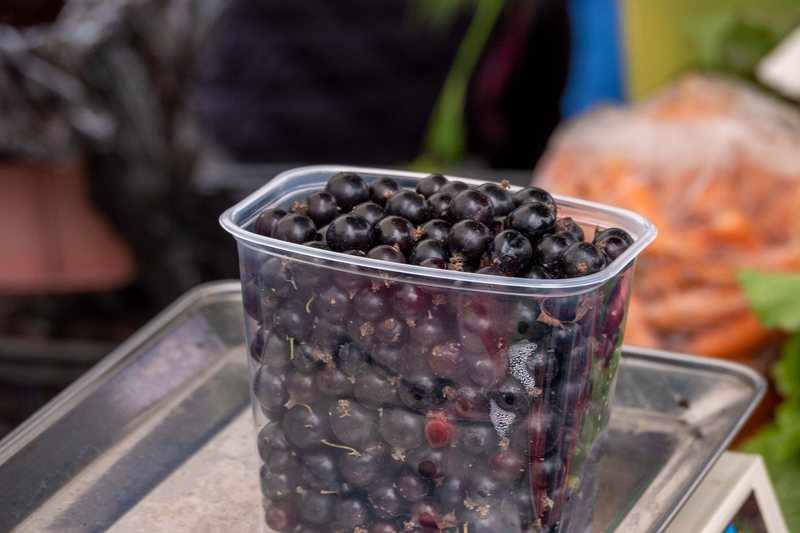
In a wide preserving pan or a heavy-based saucepan, make the syrup: combine 1 kg of sugar with 100-150 ml of water and warm, stirring, until the sugar dissolves completely.
Tip the berries into the hot syrup, stir gently and bring to the boil over a medium heat.
Skim off the foam. For the five-minute version, boil for 5-7 minutes and pour into jars straight away. For classic thick jam, simmer gently for 30-40 minutes, stirring, until the mixture darkens and begins to thicken.
Check for doneness with the saucer test: drop a little syrup onto a cold, dry saucer; a ready drop holds its shape and does not spread.
Pour the boiling jam into dry sterilised jars right to the top and seal immediately, or screw the lids on tightly.
Turn the jars upside down, wrap them in a blanket and leave until completely cold: this gives extra self-sterilisation and checks the seal.
If the jam looks runny while hot, that is normal: it thickens as it cools (see Troubleshooting).

4 Ways to Preserve Blackcurrants: A Comparison
| Method | Cooking time | Sugar : berries | Consistency | Vitamin retention | Storage time and place | Best for |
|---|---|---|---|---|---|---|
| Five-minute | 5-7 minutes at the boil | 1:1 (1-1.2 kg per 1 kg) | Runny when hot, thickens as it cools, whole berries | High, thanks to the short heating | 1-1.5 years in a dark, cool pantry | Anyone who wants it quick with maximum vitamins |
| Classic thick | 30-40 minutes | 1:1 - 1.2:1 | Thick, a spoon stands in it, whole berries in syrup | Medium | Up to 2 years in a cool, dark place | Anyone who loves dense jam with tea and in baking |
| Jelly-jam | 20-30 minutes with pureeing | 1:1 (0.7-0.8:1 with pectin) | Jelly-like, spreadable, smooth | Medium | 1.5-2 years in a cool place | For toast, fillings, jelly that sets on a saucer |
| Raw, no cooking | Not cooked | 1.5:1 - 2:1 | Thick raw mixture, berries kept fresh | Maximum, vitamin C intact | 3-4 months in the fridge or up to a year in the freezer | Anyone who wants fresh vitamins and would rather not boil |
Yield and jar sizes. From 1 kg of berries and 1 kg of sugar you get roughly 1.5 litres of jam, which is 3 jars of 0.5 litres. Small 0.3-0.5 litre jars are the most practical: a small jar is finished quickly and has no time to turn sour after opening. Below is a quick guide to scaling the quantities.
| Berries | Sugar | Water | Yield | 0.5 l jars |
|---|---|---|---|---|
| 1 kg | 1-1.2 kg | 100-150 ml | about 1.5 l | 3 |
| 2 kg | 2-2.4 kg | 200-300 ml | about 3 l | 6 |
| 3 kg | 3-3.6 kg | 300-400 ml | about 4.5 l | 9 |
Variations
Five minute jam (quick, maximum vitamins)
This is the gentlest method: the berries spend only 5-7 minutes on the heat, so more vitamin C survives in the jam, and the taste and aroma stay close to fresh berries. It suits anyone who doesn't want to stand at the stove for long and values a bright colour and lively tartness. Bear in mind that five minute jam looks rather runny in the jar and only thickens after a day or two.
Ingredients: 1 kg blackcurrants, 1 kg sugar (1.2 kg for a thicker jam), 100 ml water.
- Pick over the berries, remove any dry tails and stalks, rinse in a colander under cold water and leave to drain.
- Pour 100 ml water into a preserving pan or a wide heavy-based saucepan, add the sugar and bring to the boil over a medium heat, stirring. Simmer the syrup for 2-3 minutes until the sugar has dissolved completely.
- Tip 1 kg of blackcurrants into the boiling syrup, stir gently and bring back to the boil over a medium heat.
- Skim off the foam, reduce the heat to moderate and boil for exactly 5-7 minutes, no longer. Don't stir with a spoon; instead, gently swirl the pan so the berries stay whole.
- Ladle the hot jam into dry sterilised jars right up to the brim and seal at once with boiled lids.
If you'd like it thicker, increase the sugar to 1.2 kg or make a double five minute jam: boil for 5 minutes, let it cool completely, then boil for another 5 minutes. Storage: sealed jars keep in a dark, cool pantry for up to a year; once opened, keep the jar in the fridge.
Classic thick jam (whole berries in syrup)
This is the base recipe described in the Method section: a thick, dark, sweet jam with a rich flavour that keeps well all winter. A universal preserve for tea, for fillings, or simply on bread.
Ingredients: 1 kg blackcurrants, 1 kg sugar (up to 1.2 kg for a thicker, sweeter jam), 100 ml water.
- Pick over and rinse the berries, then dry them on a towel.
- Make a syrup from the sugar and 100 ml water: bring to the boil and simmer for a couple of minutes until the sugar has fully dissolved.
- Add the berries, bring to the boil and skim off the foam.
- Cook over a low heat for 30-40 minutes, skimming from time to time and stirring gently with a wooden spoon, until the mixture darkens and thickens.
- Test for setting: drop a little jam onto a cold saucer; a ready drop holds its shape and doesn't spread.
- Pour hot into sterilised jars, seal and turn upside down until cool.
If you want to keep the berries whole, take a different route. The evening before, cover the blackcurrants with sugar and leave overnight so they release their juice. Then cook in 2-3 sessions of 5-7 minutes each, letting the jam cool completely between rounds. This way the berries don't burst and the syrup turns pleasantly thick. Storage: up to two years in a dark, cool place.
Jelly-style jam and smooth jam (set by pectin)
Blackcurrants are rich in natural pectin, so jelly and smooth jam set without any gelatine. This version is easy to spread on toast and works well in fillings, as it holds its shape. It suits those who prefer a smooth texture without whole berries.
Ingredients: 1 kg blackcurrants, 1 kg sugar (0.7-0.8 kg is enough with pectin or gelling mix), 100 ml water, optionally 8-10 g apple pectin or a sachet of 2:1 gelling mix.
- Pour 100 ml water over the berries and simmer for 10 minutes until they soften.
- Blitz the mixture with a stick blender or rub it through a sieve.
- Return the purée to the heat, add the sugar and cook, stirring, for another 15-20 minutes until thickened: this is your smooth jam.
- For a clear jelly, squeeze the sieved mixture through folded muslin as well, and boil down just the juice with the sugar until it passes the setting test.
- If you want to speed up the set and cut the sugar, mix 8-10 g apple pectin (or a sachet of 2:1 gelling mix) with 2 tbsp sugar and add it 5 minutes before the end of cooking, stirring constantly.
- Pour hot into sterilised jars and seal.
Storage: with pectin you can drop the sugar to 0.7-0.8 kg per 1 kg of berries, but going down to 0.6 kg or below is only safe if the jars are kept strictly in the fridge; otherwise the preserve won't have enough preservative.
Raw blackcurrants with sugar, no cooking (living vitamins)
Here the berries aren't cooked at all, so almost none of the vitamin C is lost, which makes this the healthiest method. The price of skipping the heat is that sugar becomes the only preservative, and you need noticeably more of it. It suits anyone with space in the fridge or freezer.
Ingredients: 1 kg blackcurrants, 1.5-2 kg sugar.
- Pick over the berries, wash them and dry thoroughly until the surface is completely dry: even a drop of water in a raw preserve can start fermentation.
- Blitz the berries with a blender or put them through a mincer.
- Add the sugar and stir until it dissolves completely. You can leave the mixture for a couple of hours and give it another stir.
- Spoon into dry sterilised jars, not quite to the top, and sprinkle a spoonful of sugar over the surface: it will act as a seal.
- Close with a plastic or screw-top lid.
Storage: 3-4 months in the fridge, up to a year in the freezer. For the freezer, use plastic containers or leave 2-3 cm of headroom in a glass jar, otherwise a full jar will crack in the cold.
From frozen blackcurrants
Jam made from frozen berries turns out just as good, and often even thicker: freezing ruptures the berry cells, releasing more juice and pectin. A great option when the fresh season is over but there are still supplies in the freezer.
Ingredients: 1 kg frozen blackcurrants, 1 kg sugar, up to 50 ml water if you like.
- Don't defrost the berries in advance; take them out of the freezer just before cooking, or you'll lose the juice.
- Make a light syrup from the sugar and 50 ml water. You can skip the water altogether: cover the frozen berries with sugar and let them stand for 20-30 minutes, and the juice will come out by itself.
- Add the frozen berries to the hot syrup (or put the sugared berries on the heat, without water).
- Bring to the boil over a medium heat and skim off the foam.
- Cook for 15-25 minutes to the thickness you like, stirring gently.
- Pour hot into sterilised jars and seal.
Storage: the same as classic jam, up to two years in a dark, cool place.
In a multicooker (and why to be careful with a bread maker)
A multicooker is handy because the jam doesn't catch and needs almost no attention; there's no constant stirring. It's good for small batches and for anyone who doesn't want to stand at the stove.
Ingredients: 1 kg blackcurrants, 1 kg sugar, 50-100 ml water.
- Tip the berries and sugar into the bowl and add the water.
- Leave for 30-40 minutes so the berries release their juice.
- Switch on the Stew programme for 40-60 minutes.
- For the last 15 minutes, open the lid to let the excess moisture evaporate, and skim off the foam.
- Pour hot into jars and seal.
A bread maker with a Jam programme can also handle a small batch of up to 1 kg, but keep an eye on the edges: thick jam can catch against the sides of the pan. Storage: the same as classic jam, up to two years somewhere cool.
With less sugar, plus a note for diabetics
Sugar in jam is responsible not only for taste but also for keeping quality, so you can't simply leave it out, or the preserve will ferment. The safe minimum with ordinary sugar is 0.7-0.8 kg per 1 kg of berries, and even then only if you add pectin or gelling mix to take care of the thickness. Going down to 0.6 kg or below is only an option if the jars will be kept strictly in the fridge: at room temperature that amount of sugar isn't enough to stop the jam fermenting.
For diabetics, jam is made with no sugar at all, using sweeteners: erythritol, stevia or fructose. They don't caramelise and don't add body, so pectin has to do the thickening. In practice it looks like this: simmer the berries for 10 minutes, add sweetener to taste and pectin at 8-10 g per 1 kg of berries, cook down for another 10-15 minutes and pour into jars straight away. This preserve is best stored in the fridge, because there's none of sugar's preserving action here.
As a rough nutrition guide: classic jam comes to around 220-240 kcal and 55-58 g of carbohydrate per 100 g, with a high glycaemic index of about 65. The erythritol version comes to roughly 90-120 kcal per 100 g with a GI close to zero. To work out the exact figures for your own proportions, try our glycaemic index calculator.
Flavour twists and additions
The base is neutral, so you can play with the flavour without touching the main ratio of sugar to berries. The key is timing each addition correctly, or the aroma will either fail to develop or cook away.
Lemon: the zest and juice of half a lemon per 1 kg of berries add tartness, freshen the flavour and help the set thanks to the acid. Add the juice and finely grated zest 5-10 minutes before the end of cooking so the aroma doesn't escape.
Orange: the flesh and zest of one fruit per 1 kg of berries make the jam fragrant and less astringent. Take only the orange part of the zest, without the white pith, or it will turn bitter, and add it the same way, 5-10 minutes before the jam is done.
Ginger: a 2-3 cm piece, grated or thinly sliced, brings a warming spicy note that's lovely in winter tea. Put it in with the berries at the start of cooking so it has time to give up its flavour.
Mint: a sprig adds freshness. Drop it into the jam 2-3 minutes before the end of cooking and be sure to fish it out before potting, or a grassy bitterness will creep in.
Berry mixes: feel free to combine blackcurrants with raspberries, redcurrants or gooseberries in any proportion. Gooseberries and redcurrants are rich in pectin, so the jam will set even better and the flavour becomes more complex.
Storage and safety
Why jars ferment and lids bulge. Spoilage is always the work of microbes and yeasts, which need moisture, warmth and too little sugar. If the berries were wet, the jar was not dried properly, the sugar was skimped on and the lid was not sealed tightly, fermentation starts inside: gas builds up, the lid bulges, and in a warm room the jar can even blow its lid off. So the three pillars of safety are dry sterilised jars, enough sugar and an airtight seal.
Sterilising is the foundation of safe keeping. Wash the jars with bicarbonate of soda and sterilise them in whichever way suits you: in the oven at 110-120 degrees for 10-15 minutes, over steam for 10-15 minutes, or in the microwave with two spoonfuls of water for 3-5 minutes. Boil the lids for 5 minutes. The jars must be dry and ideally warm: a drop of water will not only thin the jam but can become a starting point for mould, and cold glass can crack when hot jam hits it.
On botulism and the real risks. Blackcurrants are an acidic berry, and jam is a sweet, acidic environment in which the botulism bacterium can barely develop, which is why sweet acidic preserves are considered among the safest of all. The real enemies of blackcurrant jam are not botulism but mould and fermentation caused by moisture and a lack of sugar. Hence the rule: do not cut the sugar unless you add pectin or keep the jam in the fridge.
Storage times and places by method. Cooked, sealed jam at a 1 to 1 ratio keeps for 1-2 years in a dark, cool place: a pantry, a cupboard away from the cooker, a cellar, ideally at +2 to +15 degrees. Five-minute jam and jelly are best eaten within 1-1.5 years, while the vitamins are still fresh. Raw mashed jam belongs only in the fridge for 3-4 months, or in the freezer for up to a year. Keep any opened jar in the fridge and finish it within 2-3 weeks. Always store low-sugar and diabetic versions in the cold.
Troubleshooting
The jam has not set and turned out runny
First give it a day: jam thickens as it cools, when the pectin gets to work. If it is still runny after a day, simmer it gently for another 10-20 minutes until it passes the saucer test; you can add the juice of half a lemon, or pectin (8-10 g per 1 kg of berries, or a 2:1 jam setting mix) 5 minutes before the end of the simmer. The usual cause is taking it off the heat too early or adding too much water.
The jam has crystallised and sugar crystals have appeared
This is excess sugar crystallising, either from overcooking or from a ratio richer than 1.2 to 1. The jam is not spoiled: warm it with 1-2 spoonfuls of water or lemon juice, stirring until the crystals dissolve, then pour it into clean jars again.
The jam has fermented: bubbles, hissing, a sour boozy smell
The cause is too little sugar, wet berries or a leaky lid. Jam that has only just begun to ferment can be reboiled for 10-15 minutes with extra sugar and used straight away in compote, fruit drinks or baking, but do not seal it for long-term storage. Heavy fermentation with a sharp smell and an alcoholic taste means the bin.
Mould has appeared on the surface
Skimming off a thin film and reboiling is risky: invisible threads and toxins spread deep into the sweet mixture. It is safer to throw the whole jar away, especially if the mould is fluffy or thick. For next time: pour the jam only into dry jars and do not skimp on sugar.
The lid has bulged
A bulging lid is a sign of fermentation and gas inside, and such jam must not be eaten. If you have only just opened it and there are bubbles and a sour smell inside, bin it, or at most reboil it urgently for use in non-dessert dishes. The causes are the same as for fermentation, covered in Storage and safety above.
Overcooked: the jam is dark, stringy and tastes bitter
Heavily reduced jam caramelises and starts to taste bitter. Diluting partly rescues the flavour: warm the mixture with a little water or fresh berry puree. Next time, cook in a wide pan and go by the saucer test rather than the clock.
The jam has turned cloudy, with sediment at the bottom
The usual culprits are foam that was not skimmed off or jars that were not fully dried. This does not normally affect safety; for a clearer jam next time, skim the foam more thoroughly and fill only dry jars. But if the cloudiness comes with bubbles and a sour smell, that is fermentation, and the jam must go in the bin.
Common mistakes to avoid
- Closing hot jam with a cold or poorly washed lid: the seal fails and the lid bulges.
- Cooking in an aluminium pan: the acid reacts with the metal and spoils both the taste and the colour of the jam.
- Storing jars in the light or in the warmth next to the cooker: the vitamins break down and the jam turns sour faster.
Video

FAQ
How much sugar do I need per 1 kg of blackcurrants? +
The classic is 1 kg of sugar per 1 kg of berries, a 1 to 1 ratio. For a thicker, sweeter jam take up to 1.2 kg. Raw mashed jam with no cooking needs more, 1.5-2 kg per 1 kg, because sugar is the only preservative there. With pectin (8-10 g per 1 kg of berries, or a 2:1 jam setting mix, added 5 minutes before the end of cooking) you can cut the sugar to 0.7-0.8 kg; go lower, down to 0.6 kg, only if the jam is kept in the fridge.
Do I need to add water to blackcurrant jam? +
Only a little, 100-150 ml, just enough to get the syrup started so the sugar does not catch at the very beginning. Blackcurrants themselves are juicy and quickly release liquid. You can make the jam with no water at all: cover the berries with sugar, leave them for a few hours and they will release plenty of juice. No water is added with frozen berries either.
Why did my jam turn out runny, and when will it thicken? +
Jam only thickens once it cools: while hot, the pectin molecules move freely and the syrup stays liquid; as it cools they link into a network that traps the liquid and forms a gel. So give it a day before judging. If it is still runny after a day, it was taken off the heat too early or too much water went in: simmer it gently for another 10-20 minutes until it passes the saucer test, adding lemon juice or pectin (8-10 g per 1 kg of berries) 5 minutes before the end if needed. Blackcurrants are naturally rich in pectin, so usually a slightly longer simmer is all it takes.
How do I know the jam is ready (the saucer test)? +
Drop a little hot syrup onto a cold, dry saucer: if the drop holds its shape and does not spread, and the surface quickly wrinkles into a skin, the jam is ready. Other signs: the syrup runs off the spoon in a thick thread, the berries no longer float to the top but sit evenly through the mixture, and foam has almost stopped forming.
Should I skim off the foam, and why? +
Yes, skim it. The foam collects fine debris, coagulated protein and air, which make the jam turn cloudy and sour faster. A little foam does not affect the taste, but for long storage and a beautiful clear syrup it is best removed. The skimmed foam can be eaten with tea, and it is delicious.
Is vitamin C destroyed by cooking, and is raw jam really healthier? +
Partly, yes: vitamin C is sensitive to heat, and long cooking destroys half of it or more. That is why five-minute jam is healthier than thick jam, and raw mashed jam keeps its vitamin C almost entirely, so that claim is true. On the other hand, cooked jam stores longer and is safer. Some of the other beneficial compounds (pectin, anthocyanins, potassium) survive cooking.
Should I leave the berries whole or puree them, and what is the difference? +
It is a matter of taste and purpose. Whole berries in a clear syrup look beautiful and are lovely with tea and in baking; for that, cook briefly and cover the berries with sugar in advance. A puree, as jam or jelly, is easier to spread on toast and use in fillings; it is smoother and usually thicker. The method barely affects the health benefits, only the cooking time does.
What is the difference between a currant preserve, jam, jelly and confiture? +
A preserve holds whole berries or large pieces of fruit in syrup. Jam is a smooth, spreadable, reduced mixture. Jelly is strained, reduced juice with no pulp, set into a gel. Confiture is the French style, with pieces of fruit suspended in jelly. Blackcurrants manage all four beautifully thanks to their naturally high pectin.
Can I mix blackcurrants with redcurrants, raspberries, gooseberries or orange? +
Yes, mix them in any ratio you like. Redcurrants and gooseberries add pectin, so the jam sets better. Raspberries bring aroma but are rather watery themselves, so keep them to no more than a third. Orange, the flesh and zest of one fruit per 1 kg of berries, makes the flavour softer and more fragrant.
Why do jars crack when the jam goes in, and how do I avoid it? +
Glass cracks from a sharp change in temperature: never pour hot jam into a cold jar or the other way round. Warm the sterilised jars, pour the jam in hot while the jars are still warm, and stand them on a wooden board or a tea towel rather than a cold worktop. And never use jars with cracks or chips around the rim.
Related recipes
- Comment
or post as a guest
Be the first to comment.