Pine Cone Jam – 2 Easiest Recipes
Pine cone jam is a classic and natural treat that captivates with its unique taste and aroma. The jam is made from the most ordinary ingredients: fresh pine cones, sugar, and water, but the result exceeds all expectations.
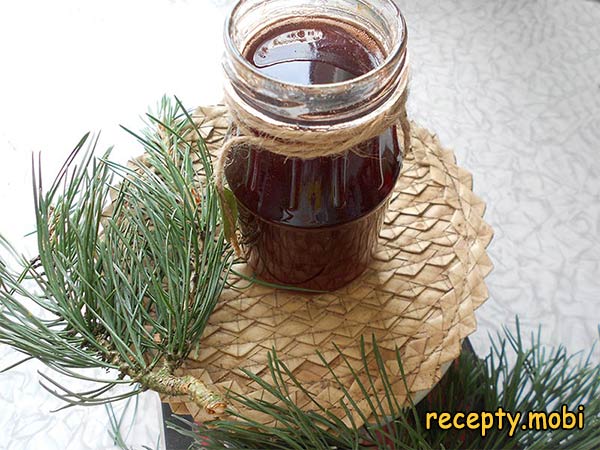
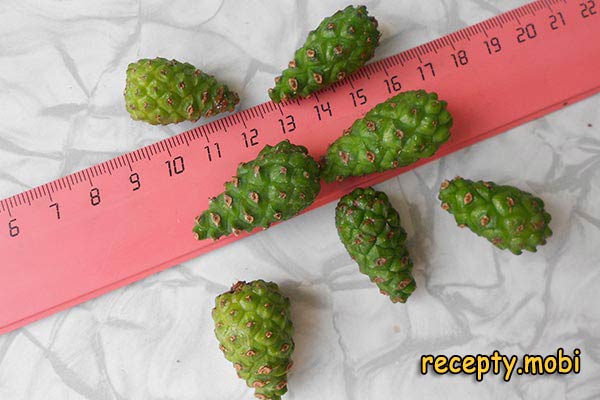
I make pine cone jam as a unique forest treat with health-giving properties – a rare delicacy you will not find in an ordinary shop. From my own experience, the main secret of a "proper" jam is to gather young green cones up to 5 cm long in May and June, while they are still soft and easy to cut with a knife. Overripe, "woody" cones older than July are no good – they will not release their juice or soften during cooking. In this article I share two tried-and-tested methods: the classic "long" one (5.5 hours) and a quick one (3.5 hours) – both give the characteristic cherry-coloured jam with a pine-forest aroma.
The beneficial properties of pine jam are valued in folk medicine: it contains phytoncides, essential oils and vitamin C, and helps with colds, coughs and bronchitis. One or two teaspoons of the jam with hot tea is a "grandmother's" remedy for a cold. At 240 kcal per 100 g, the jam is a typical dessert product. From 1 kg of cones you get 3 jars of finished jam. The picking season lasts only 2–3 weeks a year – do not miss the moment!
Which cones are suitable for jam
For jam you need young green cones of the Scots pine, up to 5 cm long, gathered in May or June. During this period they are soft and juicy and can be cut with a knife without much effort. The ideal "indicator" of a cone's readiness is your fingernail – it should leave a mark when pressed. If the cone "springs back" under your nail, it is not ready yet; if it is completely hard, it is already overripe.
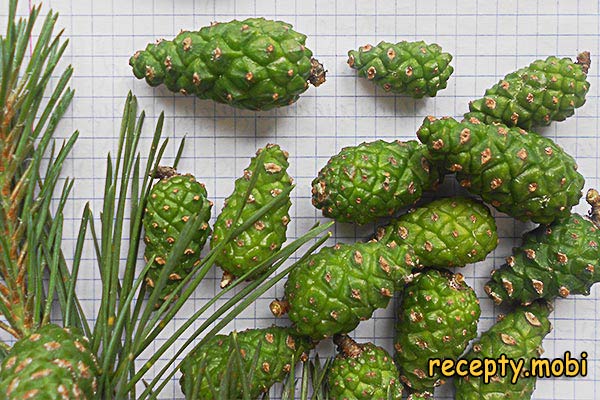
Where to gather them: in clean pine forests far from roads, industrial sites and the city. Do not take cones from diseased trees (with spots, growths or damage), cones that have fallen to the ground, or those with fungal lesions. Ideally, pick them from young pines 10–20 years old in a sunny clearing. Pick them off gently by hand and do not break the branches.
Attention! Do not take cones from sick or damaged trees, or those collected in areas with poor ecology.
Method 1 – classic long (5.5 hours)
Preparation Time: 5 hours 30 minutes (including soaking).
Ingredients for 3 jars
We will need:
- young pine cones: 1 kg;
- granulated sugar: 1 kg;
- water: 2 – 2.5 l.
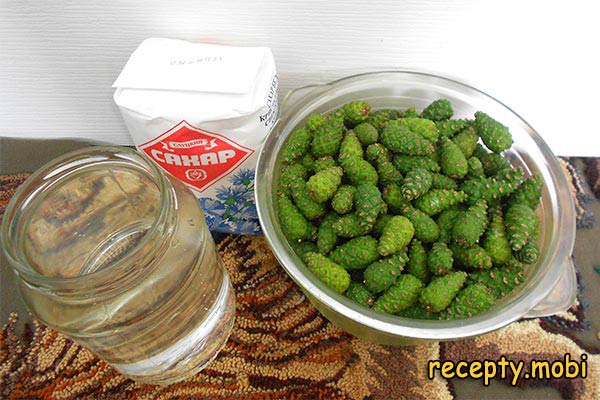
Cooking, step by step
1. Soaking (2 hours). Wash the cones thoroughly in several changes of water to remove dust and insects. Cover them with clean cold water and leave for 2 hours (overnight if you start in the evening). During this time the cones absorb water and become softer for cutting.
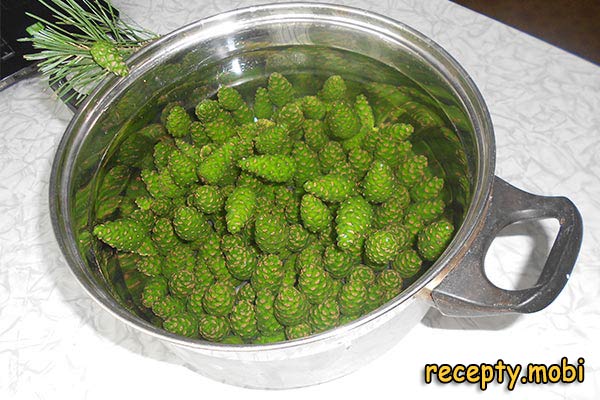
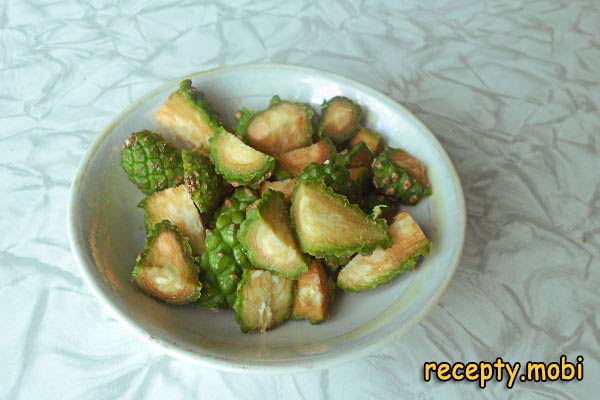
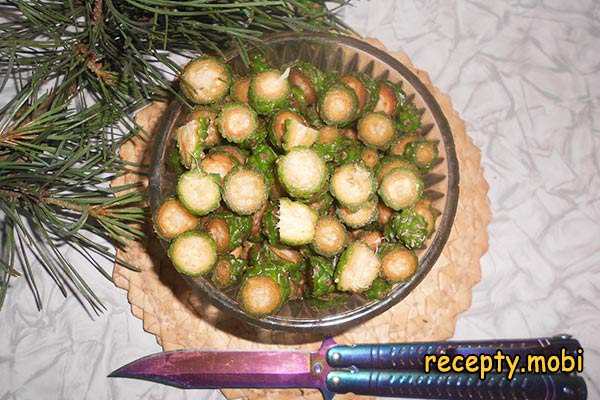
2. Cutting. Drain the water and rinse the cones. Cut them with a sharp knife: small cones lengthwise into 2 parts, large ones into 4–6 pieces. Chopped cones release their substances and juice into the jam more actively. You can cook them whole, but chopped cones give a richer flavour.
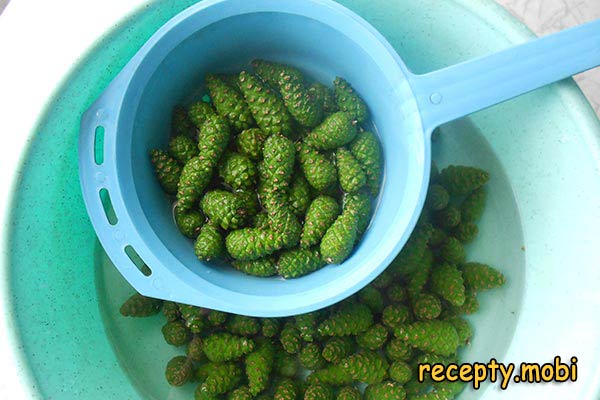
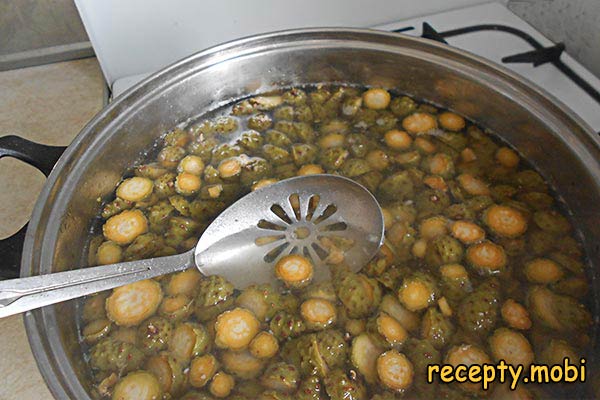
3. First boiling (3 hours). Transfer the cut cones to a large heavy-bottomed pan and cover with clean water (2 – 2.5 l) to about 3 cm above the cones. Bring to the boil over high heat. Reduce to a low heat and cook for 3 hours without a lid. Regularly (every 15 minutes) skim the resinous film and foam from the surface with a slotted spoon – this is important for the clarity of the finished jam.
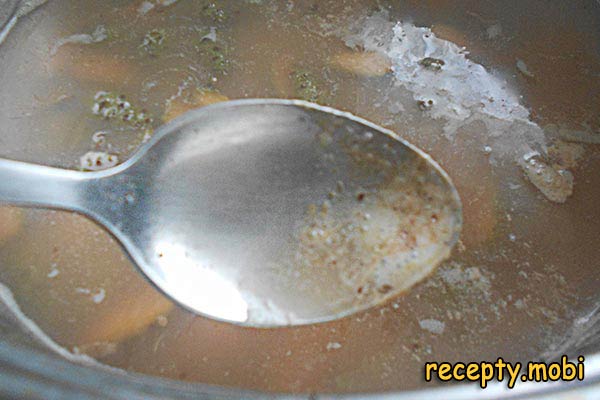
4. Adding sugar (3 hours). After 3 hours of cooking the cones will lose their rich green colour and turn brownish-burgundy, and the liquid will become cloudy. Pour the sugar (1 kg) into the boiling liquid and stir thoroughly until completely dissolved. Continue cooking for another 3 hours over the lowest heat, skimming the foam from time to time.
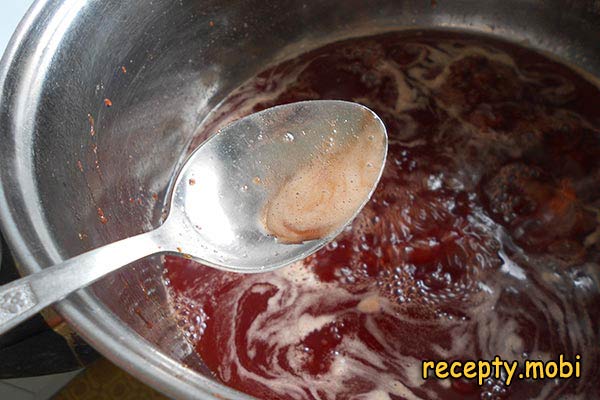
5. Readiness. The finished jam is a light syrup of a cherry-brandy colour with cones inside. Check readiness with the "drop on a saucer" test: a cooled drop holds its shape – it is ready. If you want it thicker, cook longer, but remember that the jam will thicken further after cooling.
6. Filling the jars. Remove the cones with a slotted spoon (you can leave 1–2 cones per jar for looks). Pour the hot jam into dry sterilized jars of 200–300 ml and seal with sterile lids. Turn them upside down and wrap them up until completely cool.
Information. You can cook jam from whole pine cones, but chopped ones give off their substances more actively into the broth. That is why we cut them.
Method 2 – quick (3.5 hours)
Preparation Time: 200 minutes (3 hours 20 minutes).
Yield: 3 jars.
Ingredients for 3 jars
You will need:
- green pine cones: 1 kg;
- sugar: at the rate of 1 kg per 1 l of broth (about 1.5 kg);
- water: 2.5 l.
Cooking, step by step
1. Preparing the cones. As in the first method: wash them thoroughly, soak them in water for 2 hours and cut them into 2–6 pieces depending on size. This step is identical to the classic method.
2. Short boiling (40 minutes). Cover the cones with clean water (2.5 l) and bring to the boil over high heat. Reduce the heat and cook at a gentle simmer for just 40 minutes – much faster than the classic method. During this time the cones release their substances and essential oils into the water.
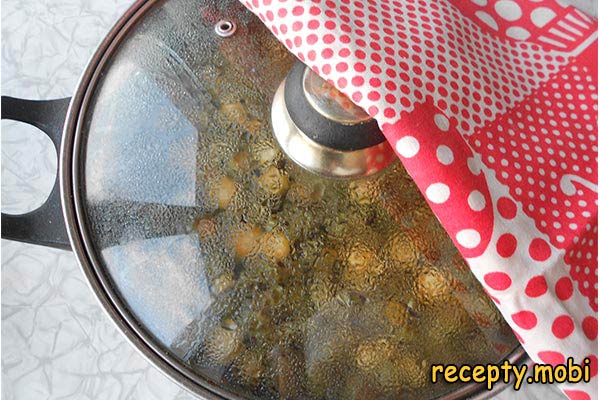
3. Cooling completely. Remove the pan from the heat and leave until completely cool (1 hour). This is a crucial stage – as it cools, the cones continue to release their juice into the liquid and the aroma develops to the full.
4. Straining the broth and making the syrup. Strain the broth through a sieve into a clean pan and measure its volume (you usually get about 1.5 l). Add sugar at the rate of 1 kg of sugar per 1 l of broth (for 1.5 l that is 1.5 kg of sugar). Discard the cones – they have already given up all their goodness.
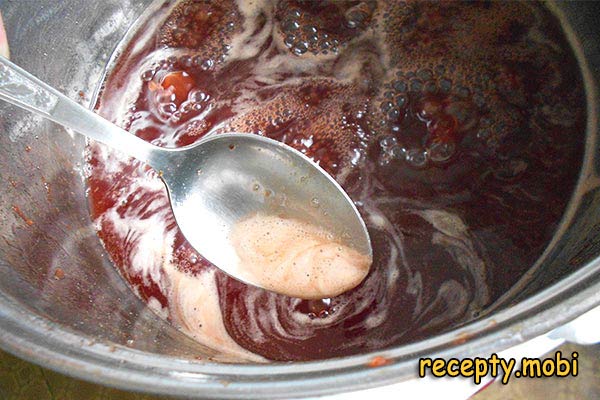
5. Cooking the syrup (1 hour). Cook the syrup over low heat for about 1 hour, skimming the foam constantly. The cooking time is approximate – it depends on the intensity of the heat. Judge readiness by the colour (cherry-brandy) and the thickness (it should not be very thick). If the jam is dark and thick, it has been overcooked.
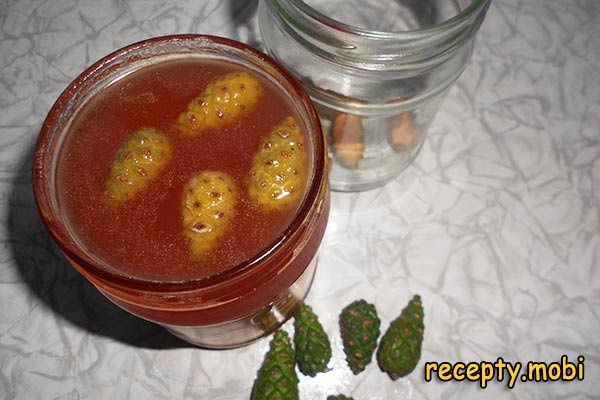
6. Filling the jars. Pour the hot syrup into dry sterilized jars and seal with sterile lids. Turn them upside down and wrap them up.
Comparing the two methods
Method 1 (classic): the jam comes out with cones inside (which you can eat), a deep cherry colour and an intense aroma. It takes longer (5.5 hours) and needs you to be present throughout. It is good for gifts – an "eye-catching" jam in a jar with cones.
Method 2 (quick): just the syrup without cones, a brandy-cherry colour and a milder aroma. It is made 1.5 times faster (3.5 hours) and is more convenient for a large batch. It suits everyday use – easier to spread on toast and add to tea.
Storage and uses
Storage: properly sterilized and sealed jam keeps in a cool dark place (5–15°C, a cellar or pantry) for up to 2 years. Keep an opened jar in the refrigerator for up to 1 month with the lid on. It is not recommended to store it for longer than 2 years – the aroma of the cones gradually fades.
Use in folk medicine: 1–2 teaspoons of the jam with hot tea 2–3 times a day for colds, coughs, bronchitis and a sore throat. For the immune system, 1 teaspoon in the morning on an empty stomach with tea during the autumn and winter. Do not exceed the dose of 2–3 teaspoons a day – a large amount may irritate the stomach lining because of the resins.
Culinary uses: with tea, toast and butter; as a soak for sponge cakes and honey cakes; for making sauces for meat (with mustard and rosemary); as a filling for homemade chocolate and sweets; in marinades for roasting pork and lamb; and as a flavouring for mulled wine and punch. On a similar principle I make rose petal jam – another rare delicacy.
FAQ
Where should I gather pine cones for jam?+
Only in clean pine forests far from roads (at least 1 km away), industrial sites and large cities. Ideally, 50–100 km from a big city, in forested areas. Do not gather cones from fallen trees, by the roadside or on factory land – they contain heavy metals and toxins. The picking season is May and June and lasts only 2–3 weeks, while the cones are young and soft. Take them from young pines 10–20 years old in sunny clearings. Pick them off gently by hand and do not break the branches – the tree will suffer.
Can I use cedar or spruce cones?+
Yes, you can make jam from other conifer cones too. Siberian cedar (pine) cones are more aromatic and rarer; they are prepared on the same principle as pine ones (45–60 minutes of cooking plus sugar), and cedar nuts can be added to the finished jam for texture. Spruce cones are less aromatic but give a lovely amber colour; use young ones up to 4 cm. Fir cones are the rarest, with the strongest medicinal properties. Larch cones have an unusual "smoky" aroma. Each kind gives the jam its own character. Pine cones are the "classic" available to most regions of Russia.
What are the benefits of pine cone jam?+
It contains phytoncides (natural "antibiotics"), essential oils, vitamins A, C, E, P, K and the B group, minerals (magnesium, potassium, iron) and resins. It is a folk remedy for colds, coughs, bronchitis, sore throat, laryngitis, a weakened immune system, vitamin deficiency and nervous disorders. It has been used in Siberia and the Urals since the 17th century. Contraindications: pregnancy and breastfeeding, children under 3 years, hepatitis, kidney disease and individual intolerance to conifers. Consult a doctor before using it as a medicine.
Why did my jam turn out bitter?+
The main causes of bitterness: 1) the cones gathered were too old (after July they are already "woody" and contain a lot of resin); 2) the water was not changed after soaking (the drawn-out bitterness stayed in the jam); 3) the resinous film and foam were not skimmed off enough during cooking (resins cause bitterness); 4) the jam was overcooked (more than 6 hours in the first method – a dark brown colour); 5) cones from diseased trees or a poor gathering area were used. If the jam is already bitter, add 2–3 tablespoons of lemon juice per jar and cook for another 10 minutes – this partly neutralises the bitterness. Use it for meat sauces rather than for tea.