avg —
Plum Jam with Pits for Winter

Instructions
I prepare the ingredients for the plum jam with pits for winter. Wash and sort the plums, excluding any overripe or damaged fruit.
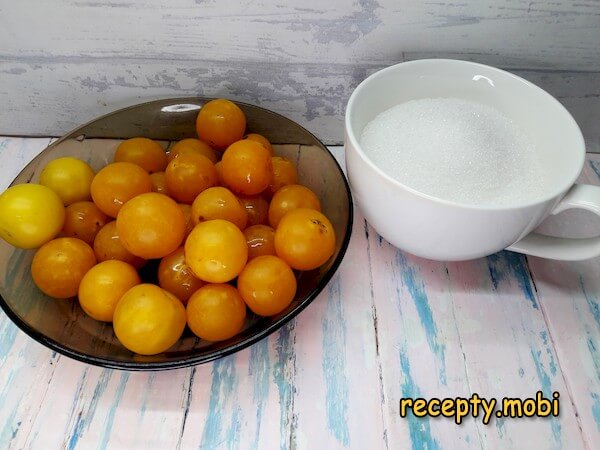
Prick the fruits in several places with a toothpick or thick needle.

Dissolve the sugar in the water. It looks like very little liquid, but you shouldn't add more, because the plums will release their own juice and the sugar will melt when heated, increasing the volume of liquid.
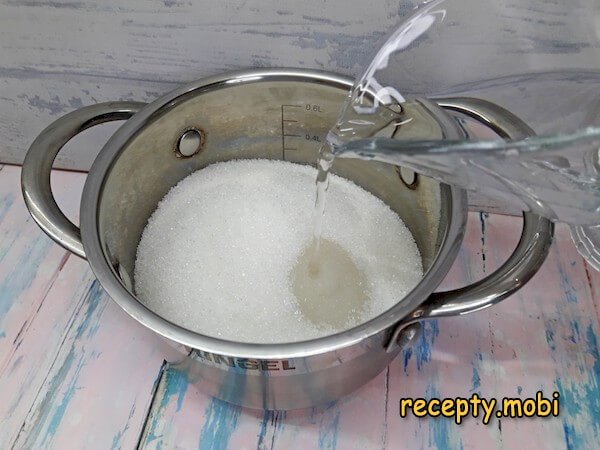
Boil the syrup for a couple of minutes.
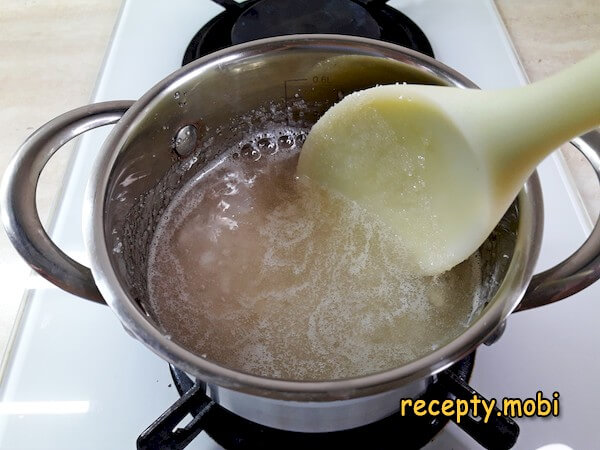
Pour it over the plums. Leave the fruit like this for 2 hours.

After this time the berries soften slightly and the amount of liquid increases. Put the preserve over heat and bring it only to the boil, then turn off the stove. Let the plums stand for 2 more hours. During this time, sterilise the jars for sealing.

Turn the medium heat back on. This time, boil the plums for 5 minutes, removing any froth that forms.
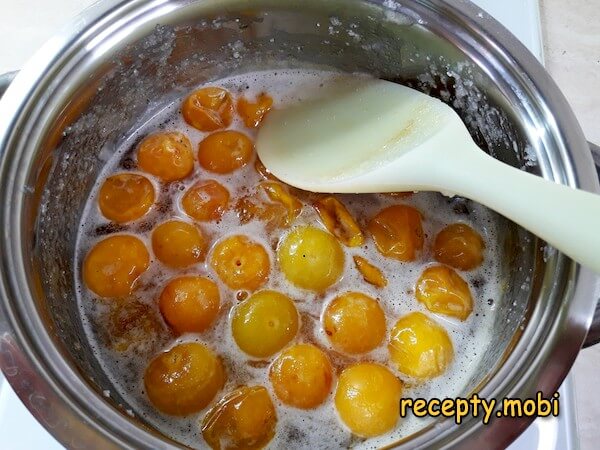
The syrup becomes clear during this time – the main thing is not to overcook the fruit.
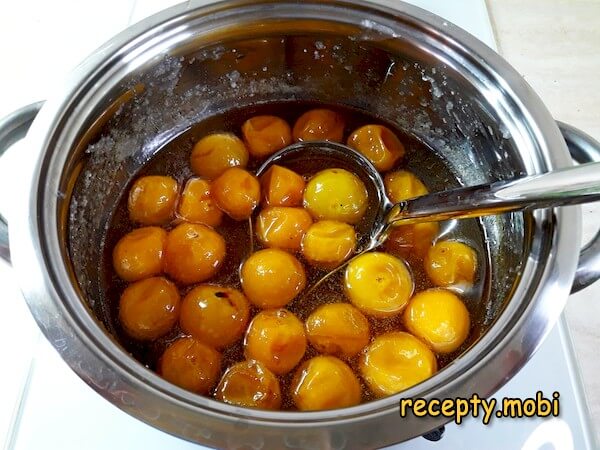
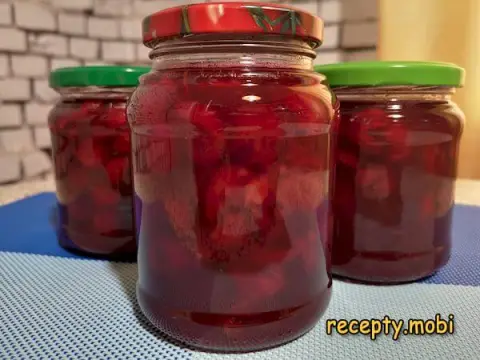
Fill the jars with jam to the top.
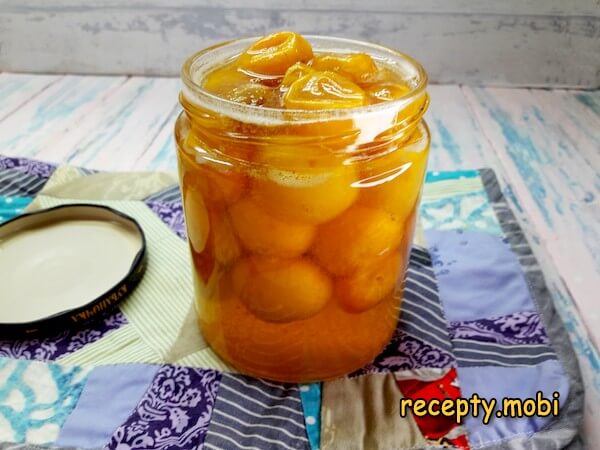
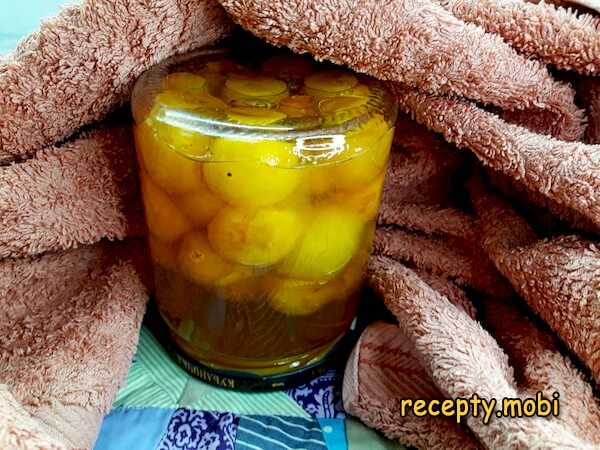
Seal with the lids, turn the preserve upside down, and wrap it in a thick towel. In this warm bath the plums should stand for no more than 2 hours, so they keep their shape.
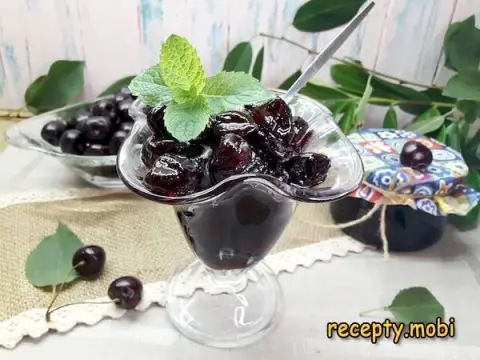
For storage, plum jam with pits for winter can be left in the apartment, but a cooler place is ideal. In both cases, a sealed jar that contains pits must not be kept for more than a year. A pleasant, fresh taste with moderate tartness and the summery, sunny colour of the fruit will remind you of warm days.



Tips
- 1
UNDER-RIPE ALYCHA – the secret of shape. Overripe fruit boils down into mush. Firm fruit keeps the balls whole.
- 2
PRICK WITH A NEEDLE – the secret against bursting. Without pricks the skin cracks. With pricks, the syrup penetrates inside evenly.
- 3
TWO HOURS OF SOAKING, TWICE – the secret of a clear syrup. Gradual soaking makes the jam amber rather than cloudy.
- 4
ONE-YEAR STORAGE – with the pit. Jam with pits cannot be kept any longer – prussic acid. The same principle applies to other kinds of plum jam.
FAQ
Which alycha should I choose? +
Ideal – under-ripe yellow alycha (Kubanskaya Kometa, Shatyor, Gek) – firm balls, brighter in colour. Alternatives: red alycha (Naydyona, Puteshestvennitsa) – gives ruby jam; black (Pramen) – dark amber. Fresh fruit is springy and glossy, with no dents or spots. A size of 2.5–3 cm is optimal (meaty pulp). Not suitable: overripe soft ones (they spread out) and damaged ones. Frozen is not suitable (it has lost its shape). For a premium result – farm-grown southern fruit (Krasnodar region). Leave the pits in – as per the recipe, they help the fruit hold its shape.
What can replace the sugar? +
Alternatives: brown cane sugar (a caramel note); fructose (350 g – a "diabetic" option, sweeter than usual); honey (250 g + 200 g sugar – not boiled for more than 5 minutes). A ratio of 90% of the alycha's weight is optimal (it is sour). For a "less sweet" version use 350 g, but storage will shorten to 6 months. Do not use: aspartame-based sweeteners (they turn bitter when heated) or icing sugar (it dissolves unevenly). For premium – cane "demerara" (a caramel note). For "classic" – ordinary white refined sugar.
How long does the jam keep? +
In sterile sealed jars with the pit – up to 1 year in an apartment, up to 1.5 years in a cellar. Without the pit – up to 2 years. After opening, in the fridge – 2–3 weeks. Write the canning date on the jars. If mould or fermentation appears, do not open it – throw it away. Do not store it in the sun – the colour will fade. Seal it in small 0.5 L jars – they are easier to open. Ideally use it within the first 9–12 months. After a year with the pit, do not eat it – prussic acid accumulates. It is best to eat it all within the season.
What to serve the jam with? +
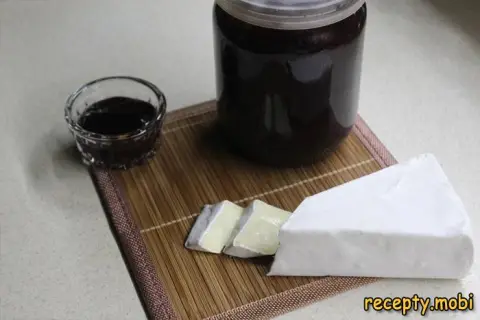
A classic with tea: with toast, thin pancakes, fritters, syrniki. With curd cheese or a curd bake. With vanilla ice cream or yoghurt. As a filling for shortcrust pies. As a layer for a sponge cake. With cheeses (brie, camembert, goat) – a "French" serving. With porridge such as oatmeal or semolina. With hot waffles and croissants. On open sandwiches with butter and curd. With a cup of green or black tea. With coffee with milk. With a glass of cognac – a "European" dessert. A versatile, sunny jam for winter tea times.
- Comment
or post as a guest
Be the first to comment.