avg —
Royal Gooseberry Jam (+Cooking Video)

Instructions
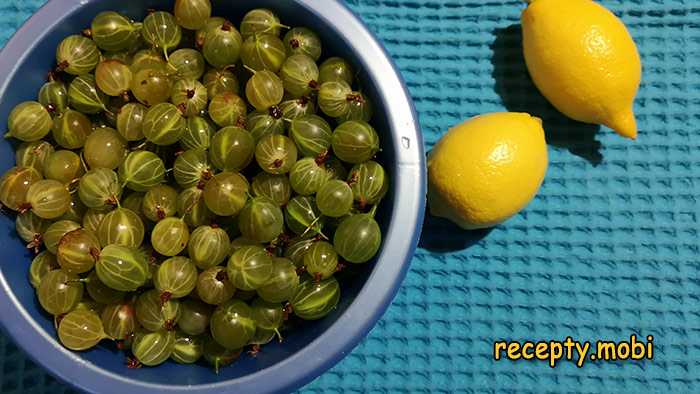
I prepare the ingredients. It is best to take slightly unripe or even completely green gooseberries. The amount of sugar will be decided once the berries have been stuffed with pieces of lemon and weighed.
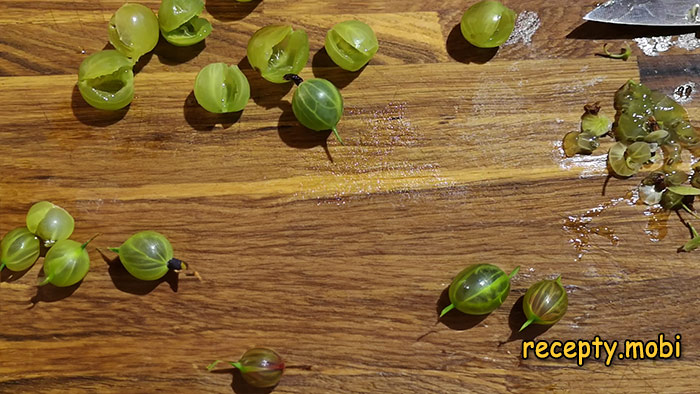
From the sorted and washed berries I trim the stem and blossom ends off both sides. I make an incision in one side of the gooseberry and remove the pulp and seeds with the head of a pin or a hairpin.
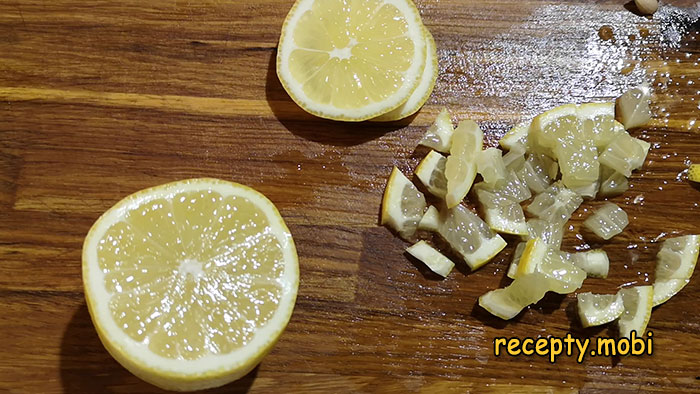
I slice half a lemon into rounds first, then divide them into small squares.
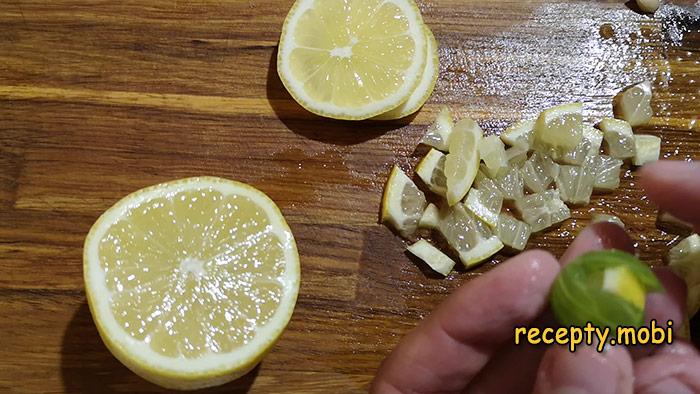
I insert a piece of lemon into each berry.
I do the same with all the prepared berries, after which they need to be weighed in order to calculate the amount of sugar correctly – it is added in an equal proportion to the fruit. In this example, the weight of the stuffed berries came to 520 grams. That means 520 grams of sugar should be measured out too. I place the berries in a small pot or a basin (a small pot is more convenient for cooking, since you can shake it by the handles to mix the contents without a spoon and without deforming them, whereas with a basin you cannot do this – there you need a spoon for stirring).
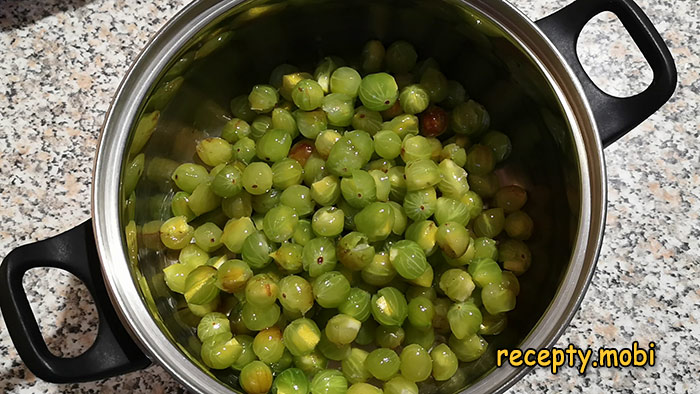
I sprinkle half of the measured sugar over the top (in this example, that is 260 grams).
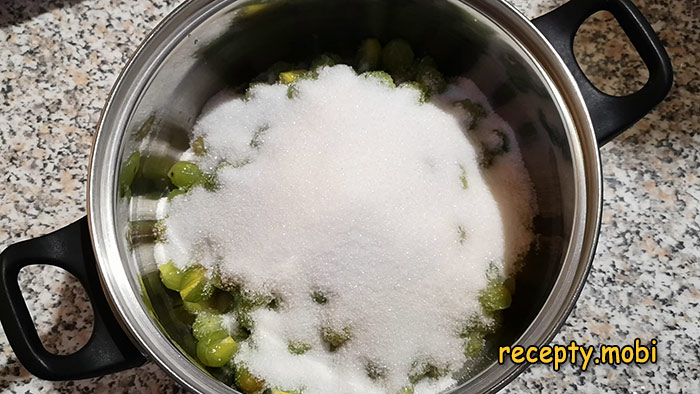
I add 50 millilitres of water.
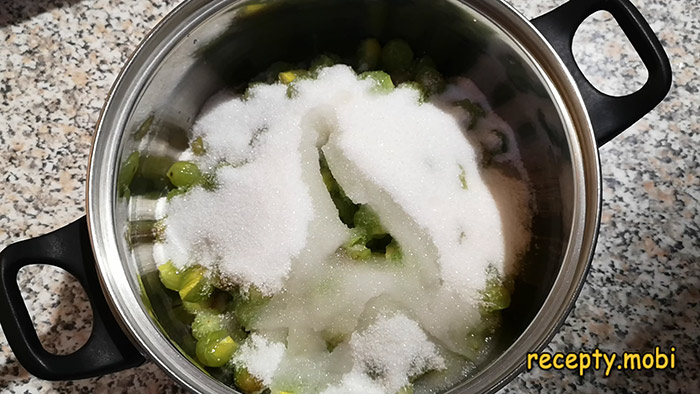
I set the pot on the stove over low heat and, once it starts to boil, cook for exactly 5 minutes.
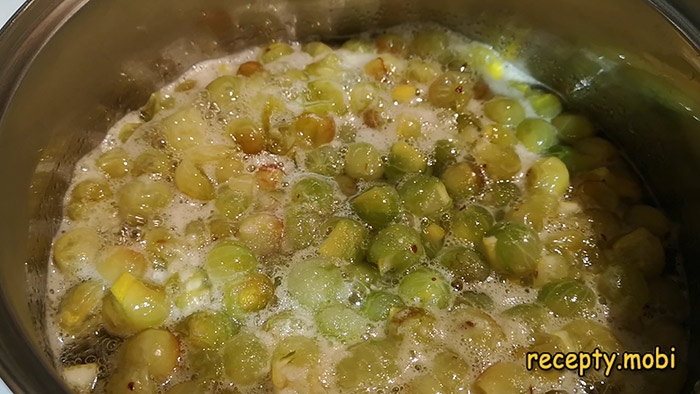
During cooking I shake and rotate the pot a few times to help the sugar dissolve. I collect the foam that forms with a spoon.
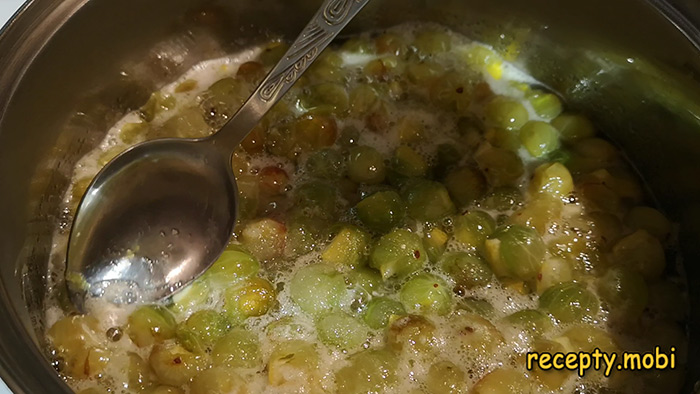
Now the jam needs time to soak and cool down. This takes at least 5 hours.
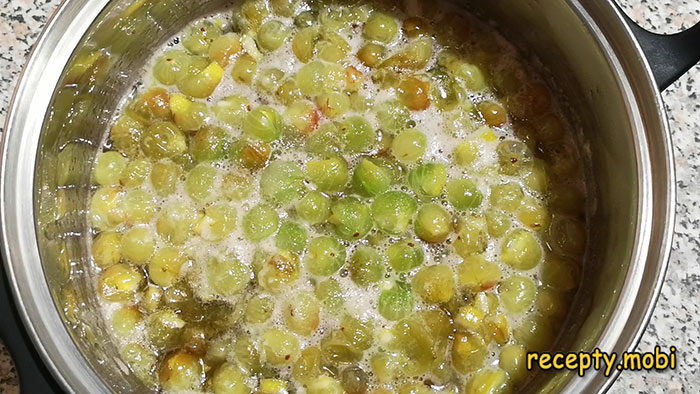
Then I pour the second half of the sugar into the pot.
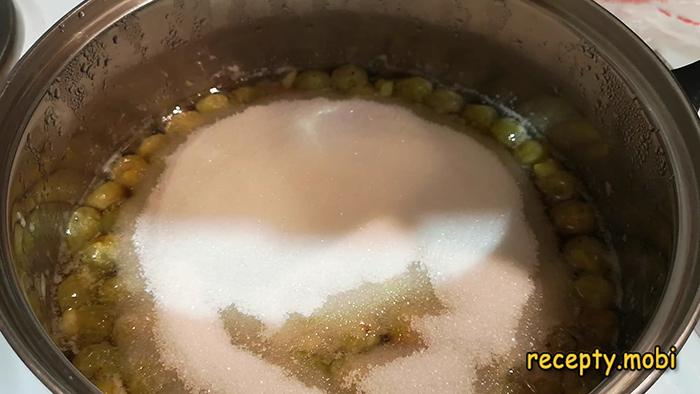
I put the pot back on the stove over medium heat.
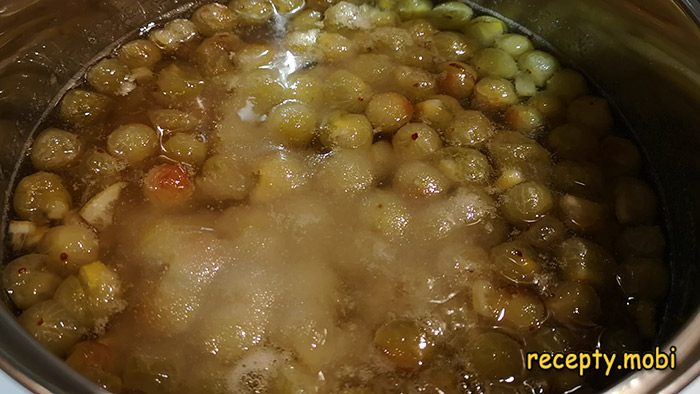
Foam starts to gather again – it needs to be removed. I boil the jam for 5 minutes and again let it cool for 5 hours.
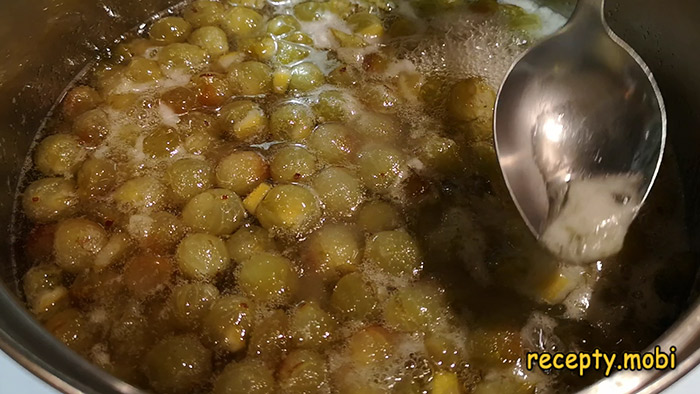
For the last, third time I put the pot on the heat. I add the mint leaves (without stems) and boil everything together for another 5 minutes.
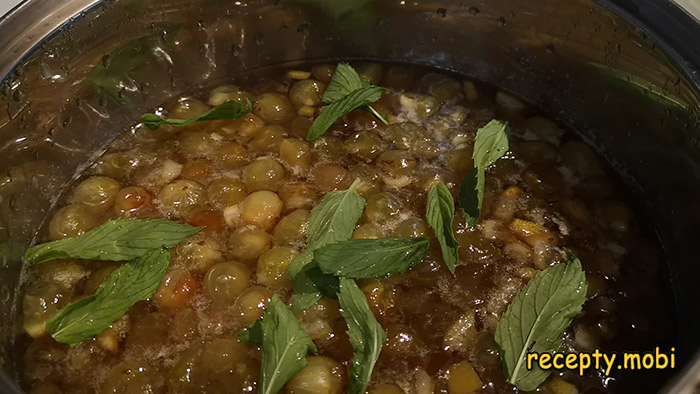
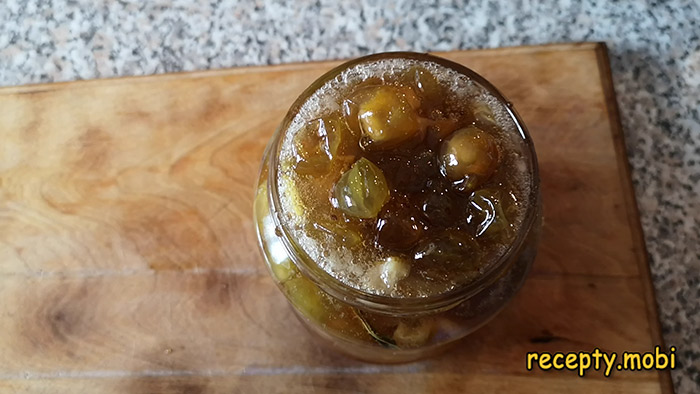
I fill a sterile jar with the hot jam. At this stage it is still runny, but after cooling the mass will thicken considerably.
I screw on a lid that has sat for a few minutes in boiling water. I turn the jar upside down to make sure the seal is secure, then return it to its upright position.
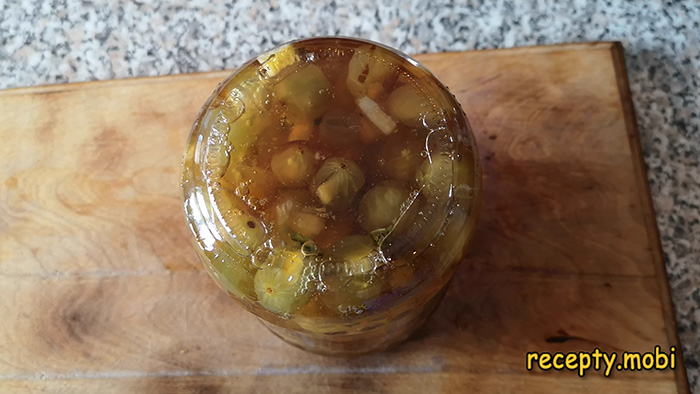
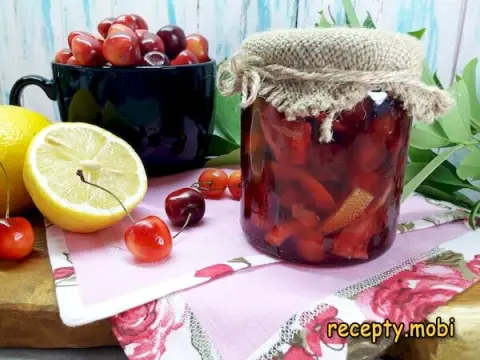
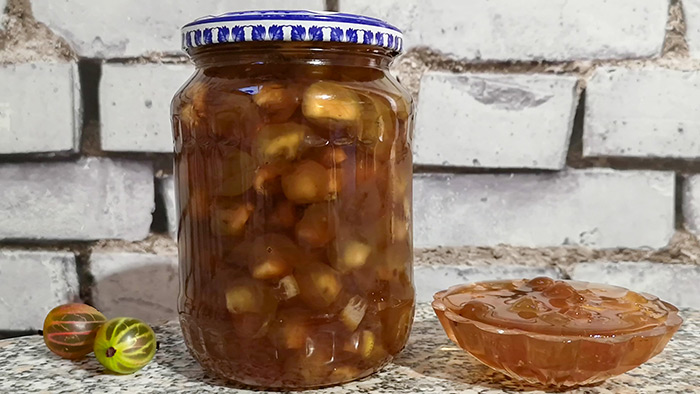
The royal gooseberry jam is ready. All that is left is to wait for it to cool completely and move it to the pantry. The jam will keep happily even at room temperature until next year's harvest. But most likely it will be eaten, washed down with a cup of tea, much sooner – it is just that tasty and unusual.


Tips
- 1
Stuffing with a hairpin – the "secret" to the shape. A knife tears the berry in half. A hairpin neatly removes the pulp through the side incision, so the berry stays whole.
- 2
The three-time boil – the "secret" to keeping the berries intact. Long cooking turns gooseberries into mush. Three rounds of 5 minutes with a five-hour pause keep the berries whole and the syrup thick.
- 3
Weighing after stuffing – the "secret" to the right sweetness. Adding sugar to plain gooseberries leaves the jam not sweet enough. After stuffing with lemon the weight is different – an exact 1:1 ratio.
- 4
Mint at the end – the "secret" to the aroma. Long cooking kills the aroma of mint. Added in the third boil for 5 minutes, the freshness of the mint is preserved. The same principle works in other kinds of royal jams with citrus.
Video

FAQ
Which gooseberries should I choose? +
Green, slightly unripe berries are ideal, as they are firm and hold their shape (640 g is the classic amount). Do not use overripe, soft and sweet berries, burst ones, or small bruised ones. For the best result you want large, firm, unripe green gooseberries without worm holes.
What can replace the lemon in the filling? +
The lemon can be swapped for orange or grapefruit cut into small pieces, though the flavour will be milder or slightly more bitter. Do not use lemons coated in wax (do not put their peel into the jam) or preserved fruit. For the classic version, use a fresh lemon with thin, fragrant peel.
How long does royal jam keep? +
In a cellar or a cool, dark place at 5–15 °C it keeps for up to 2 years. At room temperature, up to 25 °C, it keeps for about a year. Once the jar is opened, store it in the fridge and use it within a couple of months. If mould appears on the lid or the lid bulges, do not use it – throw it away. Do not leave the jam in sunlight, as it will darken.
What do you serve royal jam with? +
It is a classic for tea-time: with a cup of black or green tea, or with coffee. It is also lovely with pancakes and fritters, with cottage-cheese fritters and cheesecake bakes, with toast for breakfast, with a croissant or a bun, or with a scoop of vanilla ice cream. It makes a refined preserve for gifts and special occasions.
- Comment
or post as a guest
Be the first to comment.