avg —
Watermelon Rind Jam

Instructions
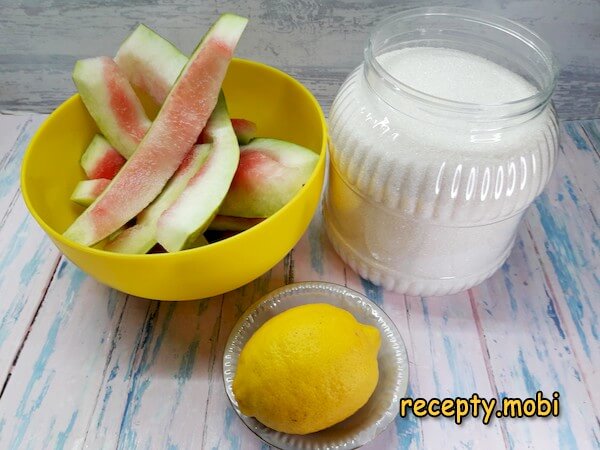
I prepare the ingredients for the watermelon rind jam.
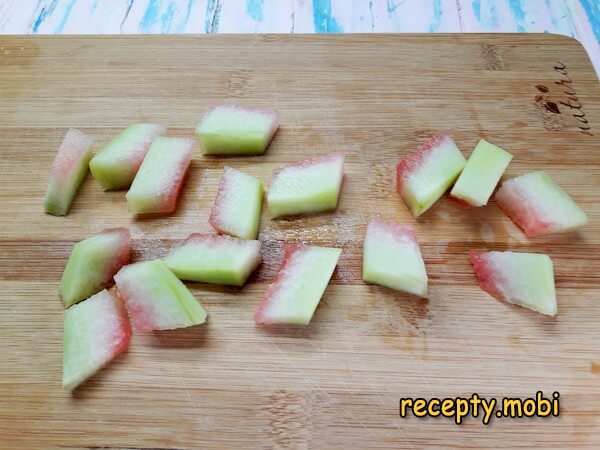
Once you have collected a quantity of watermelon rinds, cut off the dense green peel. You can leave a little red flesh, just a couple of millimetres, for a more attractive appearance.
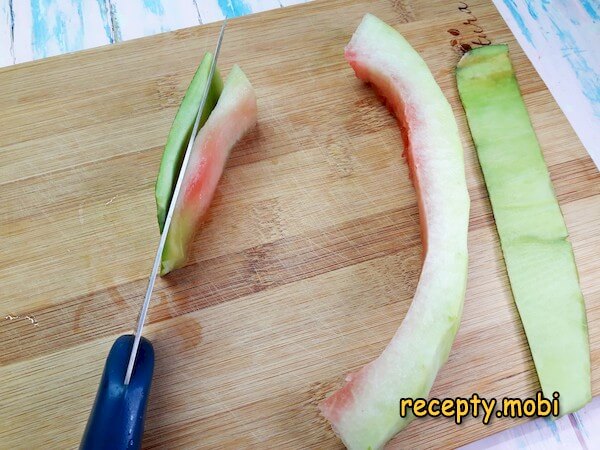
Cut the prepared rinds into strips 1–1.5 cm wide.
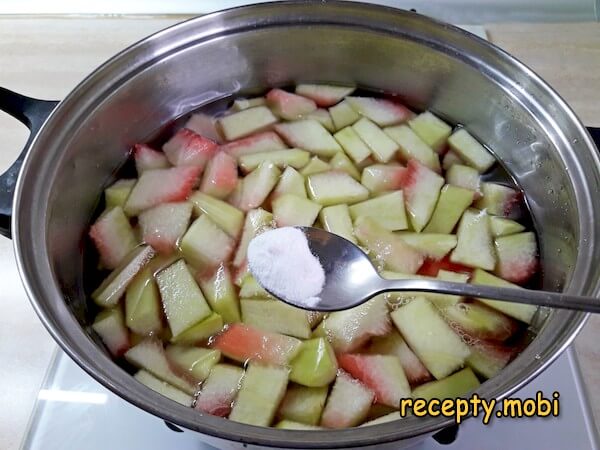
Place them in a pot and fill it with enough water to submerge the watermelon pieces. Add the baking soda and stir. Boil everything for a couple of minutes, then remove from the heat.
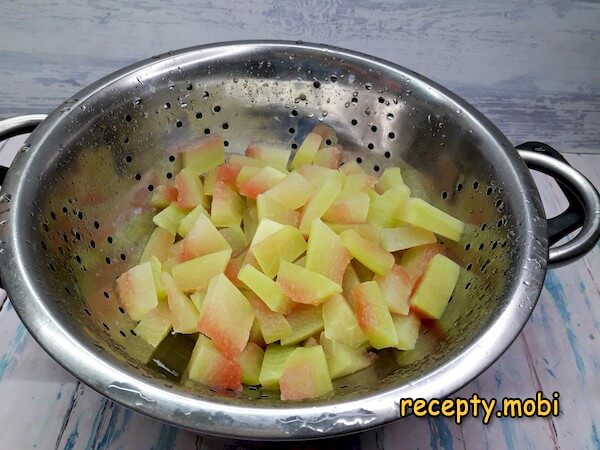
Now wash the rinds, let the water drain off, and weigh the drained pieces.
Use that weight as the basis for calculating the amount of sugar, as mentioned above. Pour this sugar over the watermelon pieces.
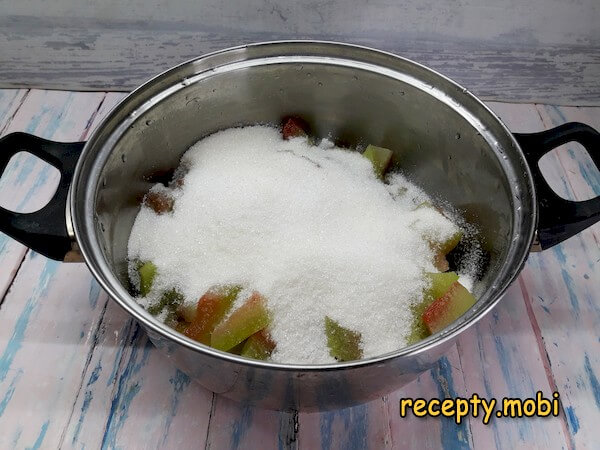
After 2 hours the sugar will have dissolved and a large amount of syrup will have formed.
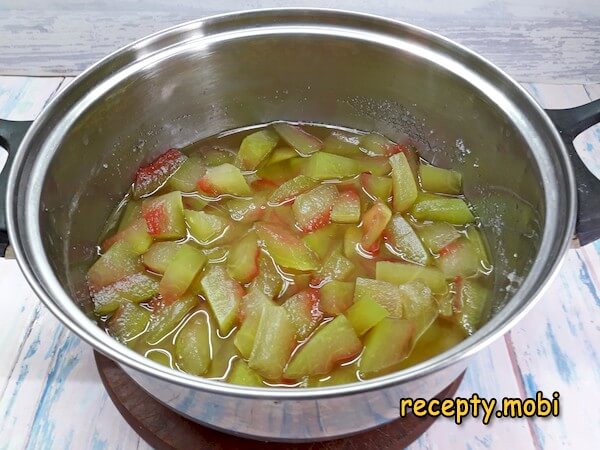
Put the pot on the heat and, once it comes to the boil, remove it from the stove.
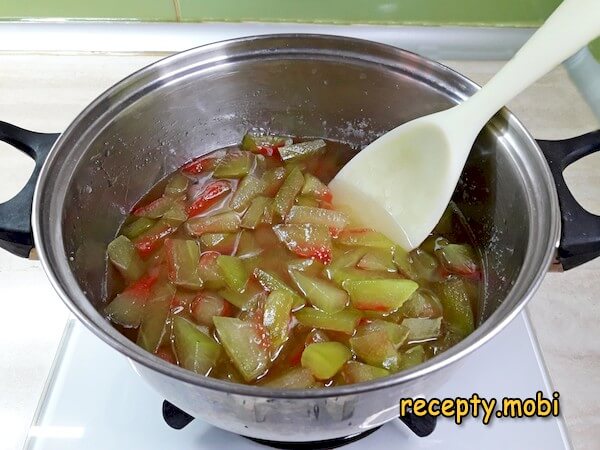
Let the pieces stand on the worktop for 8 hours, soaking up the sweet syrup and taking on a slight transparency and a lighter colour.
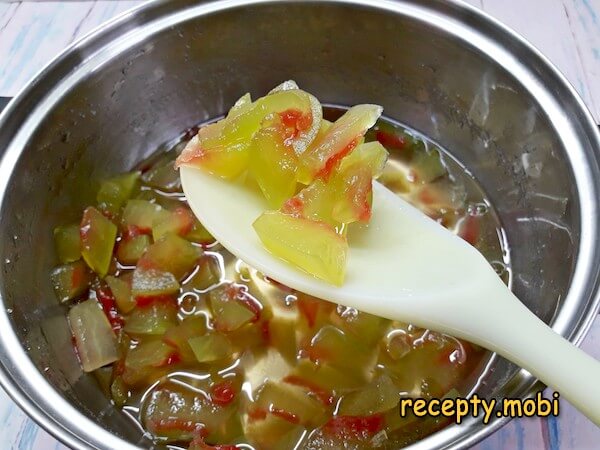
Next, add the lemon to the container, cut into large pieces so that it is easier to fish out and remove later. Bring the contents to the boil once more, then switch off the stove.
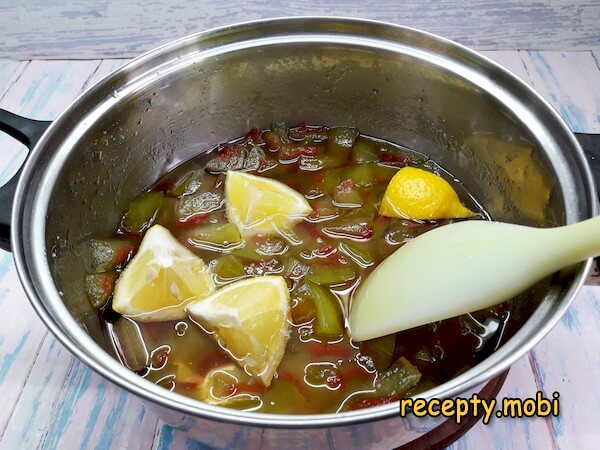
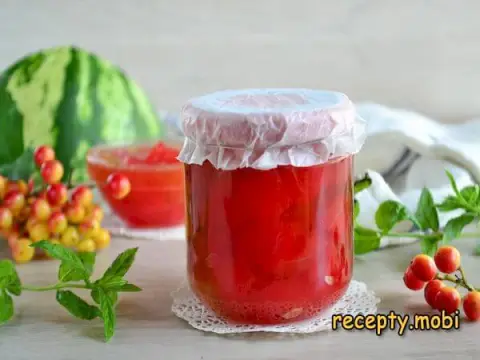
Leave the watermelon pieces to steep a second time for 8 hours, after which they will become honeyed and almost transparent. Sterilise the jar for sealing.
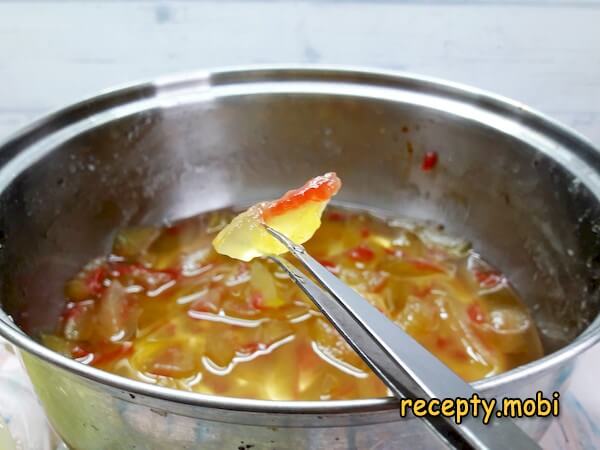
Now you can take out the lemon, and boil the rinds in their syrup for 5–7 minutes.
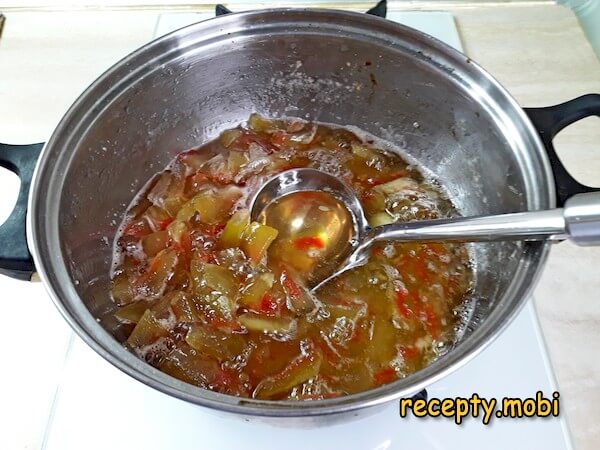
Fill the jar with jam. The pieces must not be left exposed in the air – they should be covered with syrup, which thickens over time. Screw on the lid and turn the jar upside down. If there are no leaks, after 5 minutes set the jar upright (a water bath is not required).



Tips
- 1
Baking soda in the water is the secret to a firm bite. In the soda solution the rinds keep their firmness and do not turn soft in the jam.
- 2
The 2 mm of red flesh is the secret to the look. That thin strip gives the candied pieces a pinkish tint and a brighter appearance.
- 3
Weighing after boiling is the secret to accuracy. The sugar should be 80% of the weight of the boiled rinds, not of the fresh ones.
- 4
Two 8-hour soaks are the secret to transparency. The pieces gradually absorb the syrup and turn amber. The same principle works for other jams made from unusual ingredients.
FAQ
Which watermelon should I choose? +
Ideally, a thick-rind variety (Astrakhan, Ogonyok, Kholodok) – there is more "flesh" in the rind. Alternatives: thin-rind varieties (a smaller yield) or melon-patch types (Krymsky, Lyubimets) for a sweeter, premium option. A fresh, ripe watermelon is best – after you have eaten the flesh, keep the rinds. Avoid unripe melons (the rind tastes bitter) and half-wilted ones. For a premium jam, choose farm melon-patch varieties. The size of the watermelon does not matter. You can collect the rinds gradually and freeze them, then cook one large batch at once.
What can I use instead of lemon? +
Alternatives: lime (1/2 – a tropical note), citric acid (1/3 tsp – simpler, without the zest aroma), orange (1/2 – a sweeter note) or grapefruit (1/4 – with a touch of bitterness). Freshly squeezed juice and zest are the premium choice. Do not use a waxed lemon (rinse it with boiling water first) or carton juice with preservatives. Cut the citrus into large pieces so it is easy to remove. Without any citrus, the jam turns cloying and is harder to store for long. For a premium version, add 1 cinnamon stick to the jam; for a spicier one, add a pinch of ginger.
How long does the jam keep? +
In sterile, sealed jars at room temperature – up to 1 year. In a cool cellar – up to 1.5 years. Once opened, in the fridge – 2–3 weeks. Label the jars with the canning date. If mould appears, do not open the jar – throw it away. Do not keep it in the sun, or the colour will fade. It is best used within the first 6–8 months. Seal it in small 250–500 ml jars, which are easier to open. If it crystallises, warm it in a water bath for 10 minutes. The semi-transparent pieces may become brighter over time.
What do you serve the jam with? +
A classic with tea: with toast, pancakes or syrniki. With cottage cheese or a cottage-cheese bake. With vanilla ice cream or yogurt. As a filling for shortcrust pies. As a layer in a sponge cake. With cheeses (brie, camembert, goat's cheese) for a French-style serving. With hot waffles and croissants. On buttered bread. To decorate cakes – instead of candied fruit. With a cup of green or black tea. With a milky coffee. For a premium serving, with crackers and cheese. An all-round, unusual jam to surprise your guests.
- Comment
or post as a guest
Be the first to comment.