Write a comment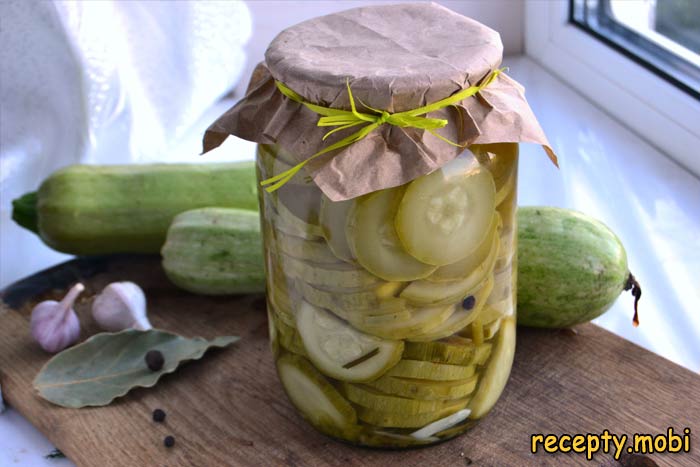
Crispy Pickled Zucchini for Winter in One-Liter Jars
The crispy marinated zucchini for the winter in litre jars, according to this recipe, taste similar to pickled cucumbers but are noticeably much more tender. They also crunch like cucumbers, look beautifully appetizing, and are in proper demand on the festive table during the cold winter months ahead.
The whole recipe takes about 60 minutes from start to finish. The recipe yields 1 generous litre jar, perfect for stocking the winter pantry shelf with this beautifully unique homemade specialty alongside other classic seasonal preserves.
Preparation time: 60 minutes.
Ingredients
Show ingredients
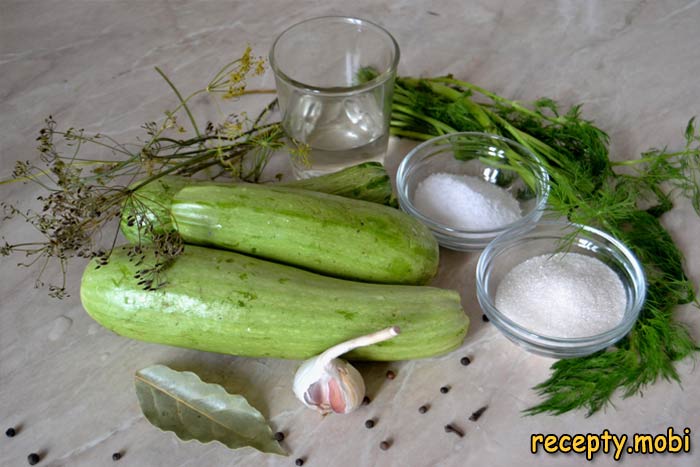
- zucchini - 0.75 kg;
- garlic - 1 clove;
- bay leaf - 1 pc;
- dill greens with umbrellas - 2 sprigs;
- parsley - 2 sprigs;
- pepper - 5 peas;
- horseradish root - a piece or a leaf of horseradish.
Marinade:
- water - 0.5 l;
- sugar - 25 g;
- salt - 25 g;
- vinegar 9% - 38 ml.
Preparation
- Prepare all the ingredients according to the list above.
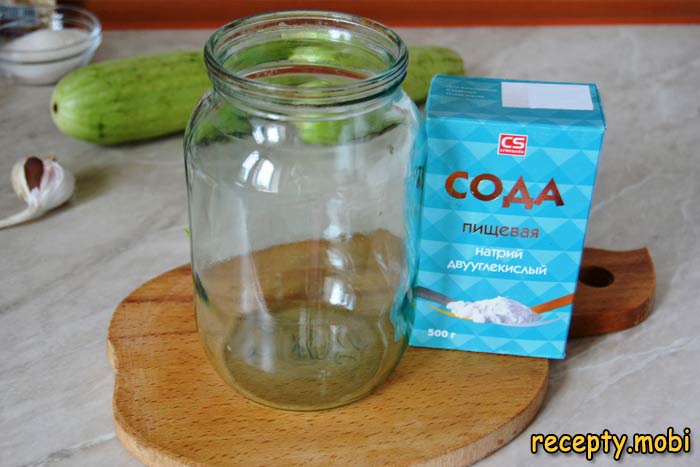
- A glass litre jar is genuinely ideal for canning zucchini. The vegetables will be thinly sliced, so a lot can fit in a litre container. Pickled zucchini in litre jars are convenient for storage since they don't take up much space. Wash the jar in a soda solution, then thoroughly rinse it under a stream of warm water. The clean jar is sterilized with steam or by another method.
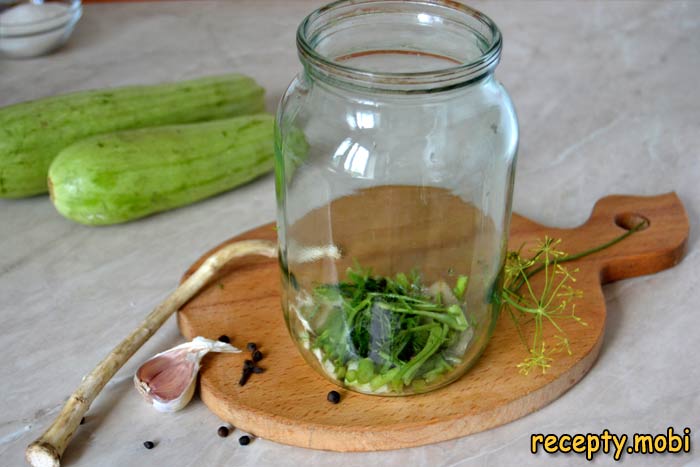
- When the dishware is properly prepared, start adding the spices for pickling. Peel a garlic clove, cut it into several pieces, and place it at the bottom of the jar. Add fresh dill, peppercorns, and bay leaf. If you like the aroma of cloves, you can put 1-2 buds in the jar. Be sure to add horseradish to the canning. Horseradish gives strength to the pickled zucchini and crunchiness. Wash and clean a small piece of horseradish root. After cutting it into small pieces, place them in the jar. If there is no horseradish root available, it can be replaced with a horseradish leaf.
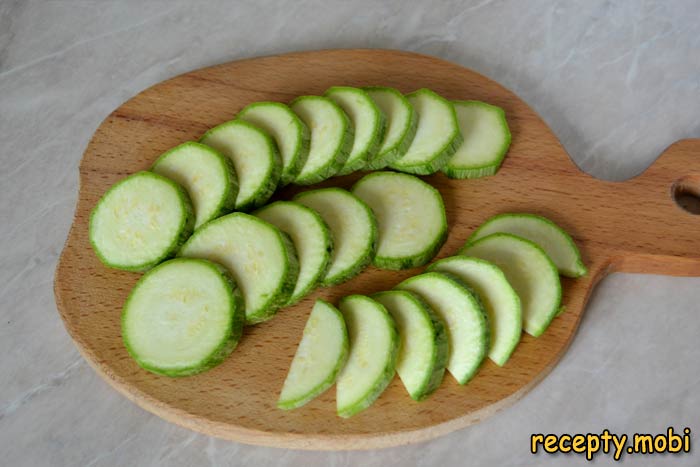
- Young zucchini are best for pickling. Young fruits make the tastiest and most tender finished snack. Cut small, thin zucchinis into circles about 7 mm thick. Large zucchinis will yield larger circles. To make the snack convenient for consumption, cut the large circles in half.
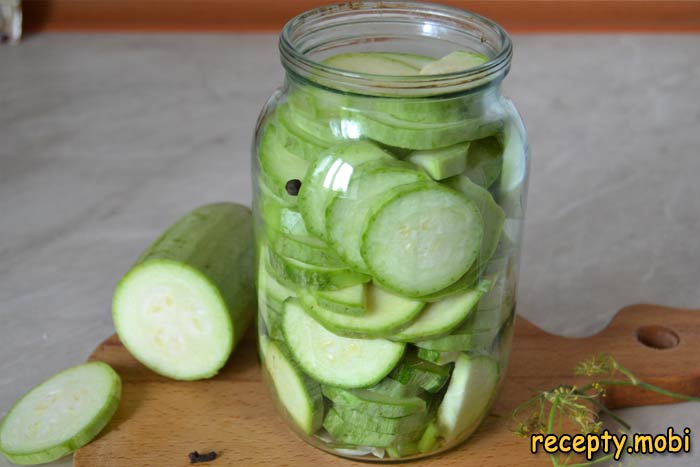
- Place the sliced zucchini pieces in the jar, leaving as little empty space as possible between the zucchini circles.
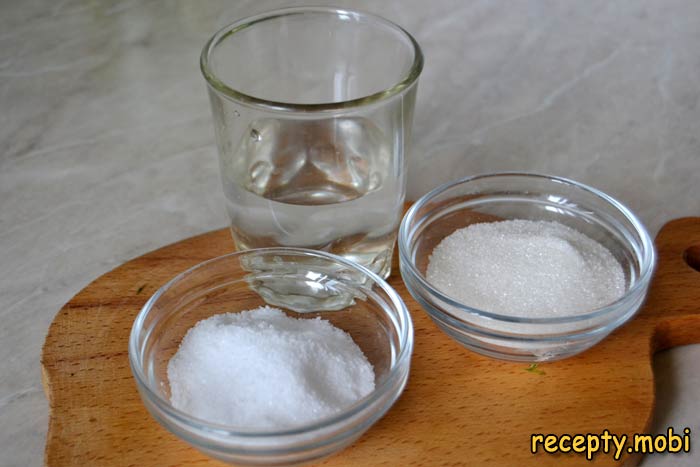
- Pour the necessary amount of water for the marinade into a cooking pot. If the zucchini are tightly packed in the jar, about 0.5 litre of water is needed for one litre jar. Add sugar and salt here according to the recipe. Bring to a boil, stirring the salt and sugar in the water so that the spices dissolve faster. Once vinegar is added, bring the marinade to a boil along with the vinegar.
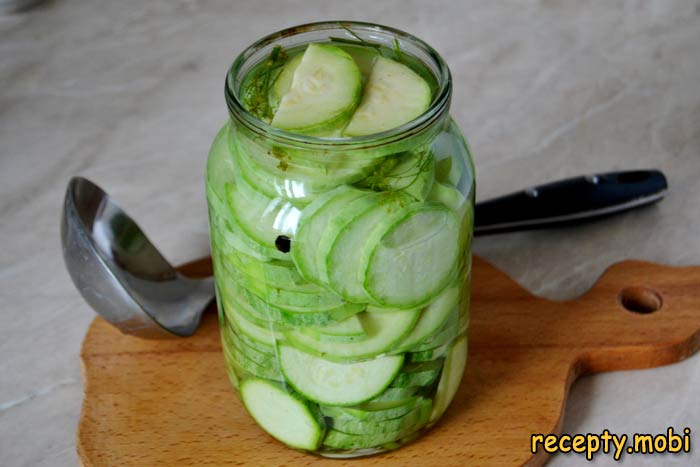
- As soon as the marinade boils, pour it into the jar with the zucchini immediately.
- Cover the jar with zucchini with a sterilized lid. Place the jar in a sterilization pot, putting a cloth under the bottom. Fill the container in which the jar stands with hot water (up to the shoulders of the jar). Sterilize for 20 minutes total after the water boils.
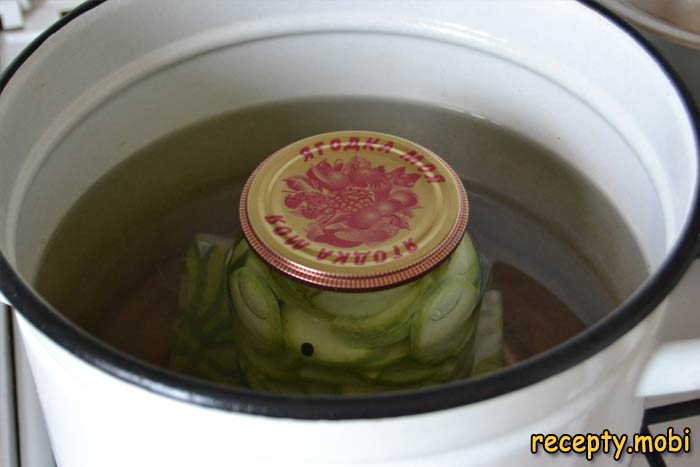
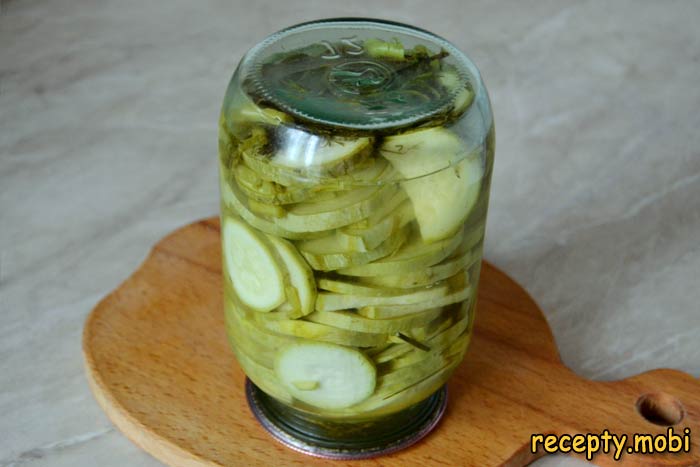
- After removing from the water, seal the jar tightly. Turn it upside down and place it lid down on a thick cloth. Wrap it in a blanket for 12 hours total. Store the cooled preservation in a cool, dark place.
Cook crispy marinated zucchini for the winter in litre jars following our recipe. Happy and successful canning.
Cooking video
Tips and Tricks
Tip 1. Use young tender zucchini with thin skin and small undeveloped seeds for the most beautifully crisp finished pickled result, since older mature zucchini have tough skin and large hard seeds that ruin the proper finished crunch. The brief search for young zucchini at the local market or farmer's stand genuinely matters for the most beautifully crispy finished pickles every single time at home.
Tip 2. Add fresh horseradish (root or leaf) to the jar for the iconic proper crunchiness, since horseradish contains natural compounds that help maintain the firm vegetable texture during long-term storage. To pair these beautifully crispy pickled zucchini with another properly classic homemade winter preservation recipe for a complete pantry shelf, try our beautifully tangy pickled cucumbers with marigolds as a contrasting cucumber-based alternative.
Tip 3. Sterilize the filled jar for the proper full 20 minutes in the boiling water bath, since insufficient sterilization can lead to dangerous spoilage during long-term winter storage. The brief patience for proper sterilization genuinely matters for the safest possible finished result every single time at home. Use a wire rack or folded cloth on the pot bottom to prevent the jar from cracking against the heat.
Tip 4. Store the sealed jars in a properly cool dark location like a cellar, pantry or unheated cupboard for the longest shelf life over the winter months ahead. For another properly classic homemade preservation recipe to add variety to your winter pantry shelves, try our beautifully classic canned sorrel (winter appetizers) as a contrasting sorrel-based preservation alternative.
FAQ
What if I don't have horseradish?
Substitute the horseradish with extra fresh garlic cloves, fresh ginger root, mustard seeds, or even a small piece of dried red chili pepper for similar natural antimicrobial protection during long-term storage. Each substitute brings its own slightly different finished flavour profile. The horseradish itself contributes the iconic peppery crunch that defines this preparation, but the zucchini will still preserve safely without it as long as proper sterilization and sealing are followed throughout the canning process.
How long do these pickled zucchini keep?
Properly sealed and stored in a cool dark location like a cellar or pantry, these crispy pickled zucchini will keep beautifully for up to a full year for the best finished flavour and texture. After opening the jar, store the contents in the refrigerator and consume within two weeks for the best quality. The flavours actually develop and improve significantly over the first month of storage as all the various spices properly merge with the zucchini into a beautifully harmonious finished pickle.
Can I add other vegetables to the jar?
Absolutely. Try adding sliced cucumbers, carrots, sweet bell peppers, cauliflower florets, small whole cherry tomatoes, or even green beans alongside the zucchini for a properly mixed-vegetable jar that brings beautiful colour variety to the winter pantry shelf. Each addition brings its own character to the jar. Maintain the same brine ratio regardless of the vegetable mix for the safest properly preserved finished result every single time at home.
Can I make a smaller or larger batch?
Absolutely. Scale all the ingredients proportionally to match the smaller jar size or quantity that you want to prepare. The brine ratio of 25g salt + 25g sugar + 38ml vinegar per 0.5l water remains constant regardless of the total batch size. Even a single small jar can be prepared using this same proven proportional approach, which makes this recipe genuinely flexible for both large preserving sessions and small experimental test batches alike at home in the kitchen.