Write a comment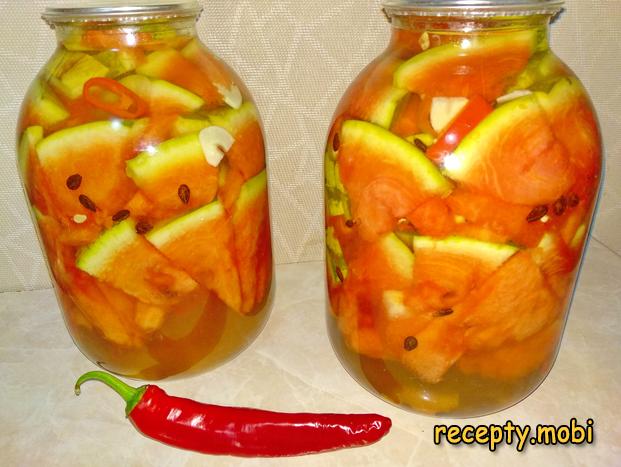
Pickled Watermelons in Jars (Winter Delicacies)
For real gourmets of beautifully spicy snacks, the pickled watermelons in jars with pepper and garlic will be a real find. The properly unusual combination of the simplest ingredients in one dish is always genuinely interesting at the table. Undoubtedly, this snack will pleasantly surprise your guests during the New Year holidays. The bright pickled watermelon in jars also makes a properly pleasant memory of summer during the cold winter months.
The whole recipe takes about 90 minutes from start to finish. The recipe yields 2 large 3-litre jars, perfect for stocking the winter pantry shelf with this beautifully unique homemade specialty alongside other classic seasonal preserves.
Time for preparation: 90 minutes.
Ingredients
Show ingredients
- watermelon – individually as much as fits in the jar;
- bitter pepper – 1 piece;
- garlic – 1 large or 2 medium cloves per 3-liter jar;
- fragrant pepper – 5 pieces per jar;
- bitter pepper – 20 pieces per jar.
Brine based on 1 liter of water:
- salt – 1 tbsp;
- vinegar – 3 tbsp;
- sugar – 4 tbsp;
- water – 1 L.
Preparation
- During preservation, the products will be poured with boiling water twice, and only the third time – with the proper brine. Therefore, for this snack, the watermelon should be slightly under ripe. Cut the watermelon into small wedges so that the pieces can easily fit into the jar. The size of the watermelon will decrease anyway during the cooking process.
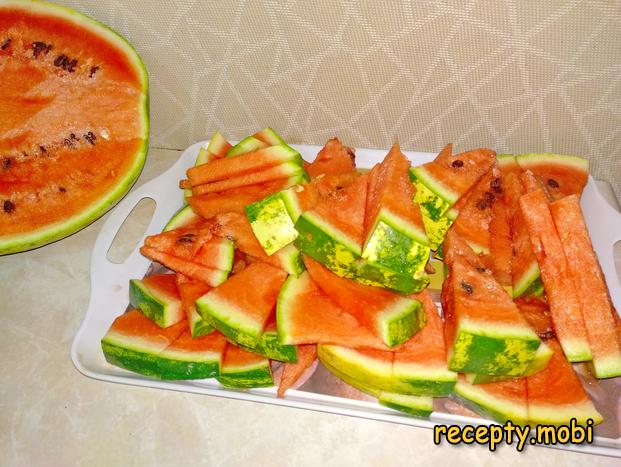
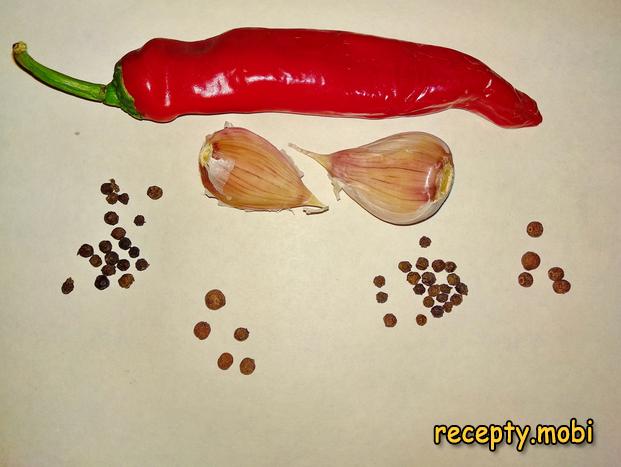
- For one 3-litre jar, take half of the hot pepper, 1-2 cloves of garlic depending on size, plus fragrant and bitter pepper according to the recipe or personal taste.
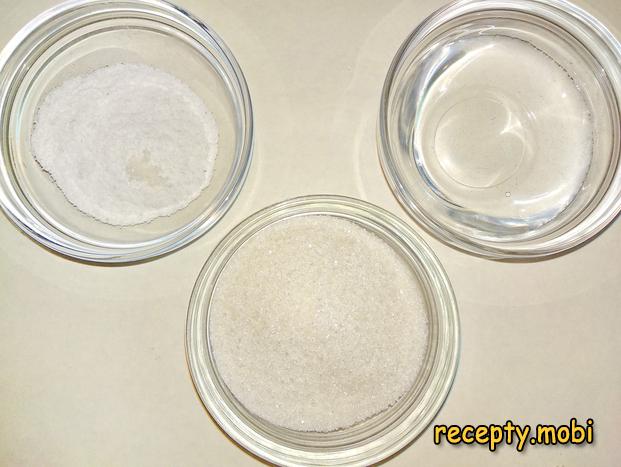
- Carefully measure out the salt, sugar, and of course, the vinegar according to the recipe.
- Slice the garlic. Using kitchen scissors, cut the bitter pepper into small pieces. You can add a sprig of fresh dill to the jar if desired.
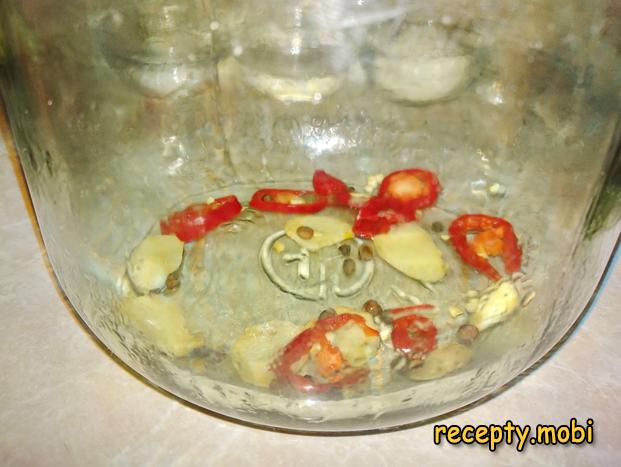
- Place the bitter pepper, garlic, and peppercorns at the bottom of the prepared jars, and fill with the watermelon wedges.
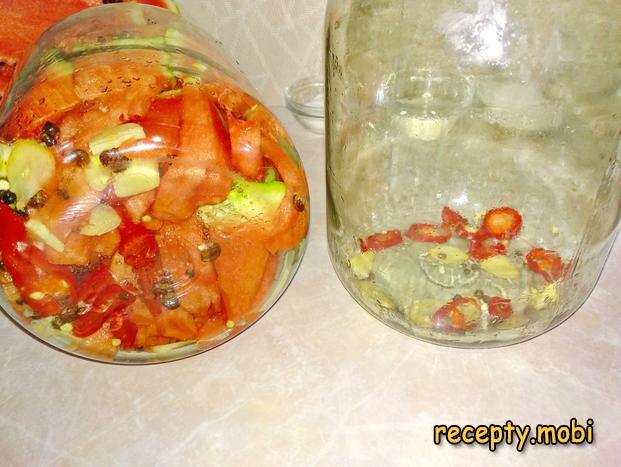
- Fill the jar to the top with watermelon. Pack the pieces tightly together, but try not to break the wedges.
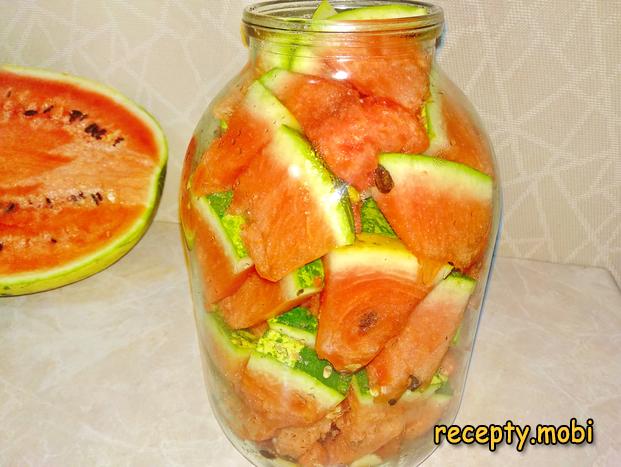
- Pour clean, boiling water into the jars right to the top, cover loosely with sterilized lids. Leave the products to heat for fifteen minutes total. After which, drain the water carefully and boil it again. The second time, pour the boiling water over the watermelons for fifteen minutes total as well.
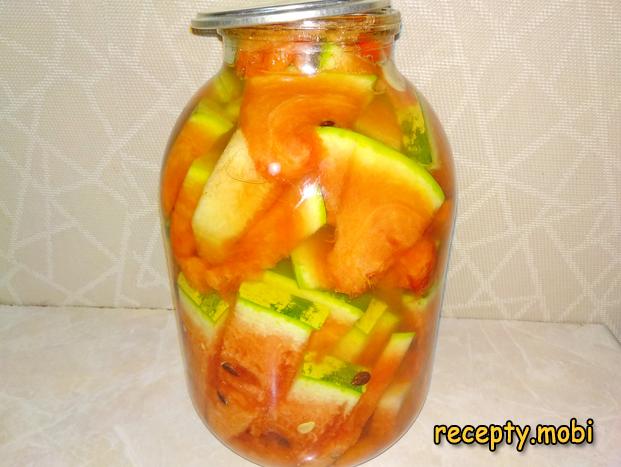
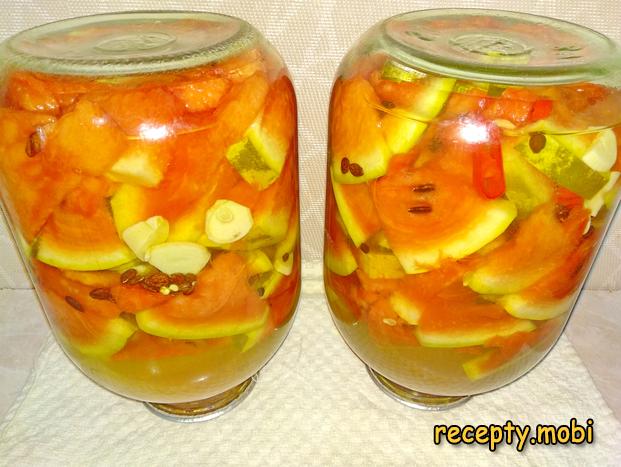
- From two 3-litre jars, drain the water carefully into a pot, it should yield three litres of liquid. If less water is obtained, it is necessary to add water to make exactly three litres. Add the salt and sugar according to the recipe, let it boil for a couple of minutes total and pour in the prepared vinegar. Let the brine boil for another minute and pour into the jars. For one 3-litre jar, about one and a half litres of brine is used. Fill the jars with brine to the very edge and seal hermetically. As usual, turn the jars upside down on a clean towel, wrap warmly with a small blanket for a full day.
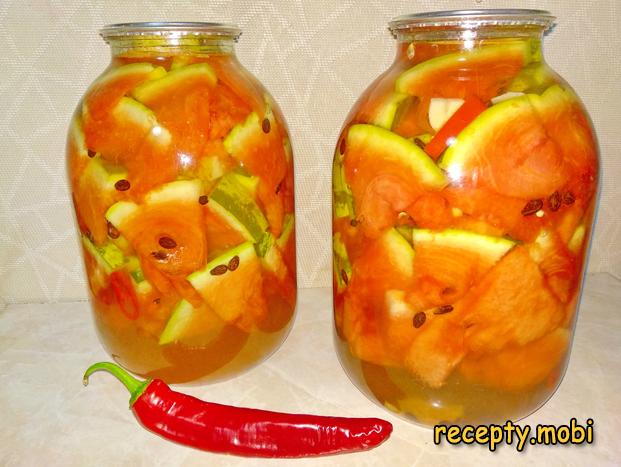
- The pickled watermelons in jars with pepper and garlic are now properly ready. Such winter snacks store remarkably well in the apartment without a cellar.
Tips and Tricks
Tip 1. Use slightly underripe watermelons rather than fully ripe ones, since the firmer flesh holds its shape beautifully through the multiple boiling water sessions without dissolving into mush. The brief search for the right slightly-underripe watermelon at the market genuinely matters for the most beautifully whole finished pieces every single time. Overripe sweet watermelon would simply turn to slush in the hot brine.
Tip 2. Use the double-boiling-water-then-brine technique rather than just one brine pour, since the brief preliminary heating properly softens the watermelon for the marinade to penetrate. To pair these beautifully unusual pickled watermelons with another properly classic homemade preserved-fruit preparation for variety in your pantry shelves, try our beautifully spiced marinated plums for winter without sterilization as a contrasting fruit-based alternative.
Tip 3. Add hot pepper and garlic for the most properly piquant finished flavour, since the savoury spices balance the natural sweetness of the watermelon beautifully. The brief patience for proper spice measurement genuinely matters for the most balanced finished result every single time. Adjust the spice quantities slightly to personal taste based on tolerance for heat and intensity.
Tip 4. Serve the pickled watermelon as an unusual appetiser alongside vodka or cold beer at the celebration table, with cured meats on a charcuterie board, or even as a striking cocktail garnish for properly varied serving applications. For another properly classic homemade pickled preparation to add variety to your pantry shelves, try our beautifully tangy pickled cucumbers with marigolds as a contrasting traditional vegetable alternative.
FAQ
What kind of watermelon should I use?
Use slightly underripe firm-fleshed watermelon for the best finished result, since fully ripe soft watermelon would dissolve into mush in the hot brine. Small icebox-style watermelons or sugar baby watermelons work absolutely brilliantly thanks to their thin rinds and firm flesh. Avoid overripe seedless watermelons, which tend to be too soft and too sweet. Test for proper firmness by pressing the watermelon flesh — it should feel firm with only minimal give, not soft and squishy.
Can I keep the rind on the pieces?
Absolutely. Many traditional Russian recipes for pickled watermelon actually include small portions of the white rind alongside the red flesh for added textural variety in the finished jar. The rind becomes beautifully tender during the marinating process and adds a unique crunchy element to the finished snack. Cut the watermelon into wedges that include both red flesh and a thin strip of white rind for the most properly traditional finished appearance and texture in the closed jars.
How long do these pickled watermelons keep?
Properly sealed and stored in a cool dark location, the pickled watermelons in jars will keep beautifully for up to 6 months for the best finished flavour. After opening, store the jar in the refrigerator and consume the contents within two weeks for the best quality. The flavours actually develop significantly during the first month of storage as all the spices properly infuse the watermelon pieces in the closed jars. The pickled watermelons store well even at regular room temperature without a cellar.
What can I serve these with?
Pickled watermelons pair absolutely brilliantly with chilled vodka, cold beer, smoked meats on a charcuterie board, sharp aged cheeses, fresh crusty bread, plus various salty appetisers like olives, anchovies and cured fish for a properly traditional Russian-style "zakuska" appetizer spread. The unusual sweet-and-spicy finished flavour also makes a striking garnish for cocktails, especially classic Bloody Marys or vodka-based summer drinks at the celebration table during winter holiday gatherings.