avg —
Red Currant Jelly for Winter

Instructions
I get the ingredients ready.
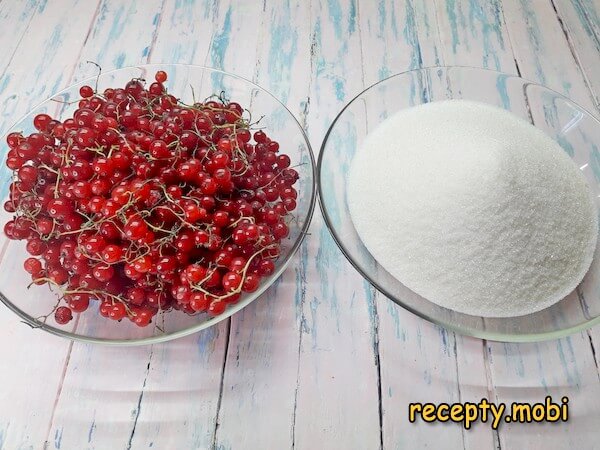
Sort the currants, removing any that are rotten or dried out, and break off the stems. If a few green tails are left behind it is no problem – they will not pass through the sieve, but they do increase the pectin content.
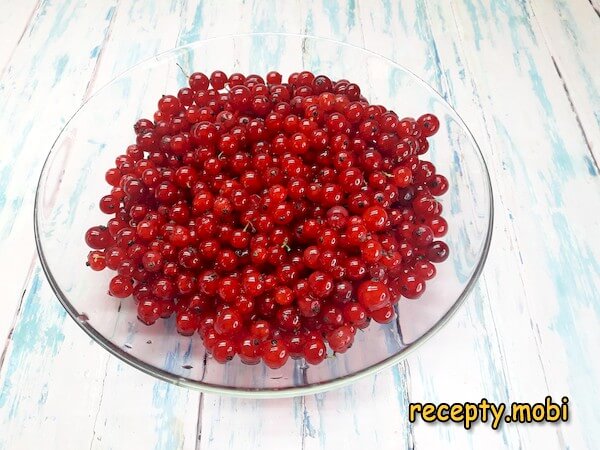
Transfer the berries to a pot that is much taller than the level they reach, because the foam rises very high during boiling. Mash the fruit with a potato masher.
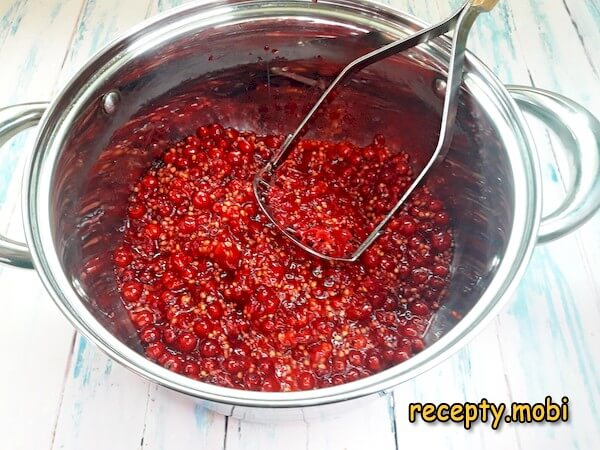
Add the sugar.
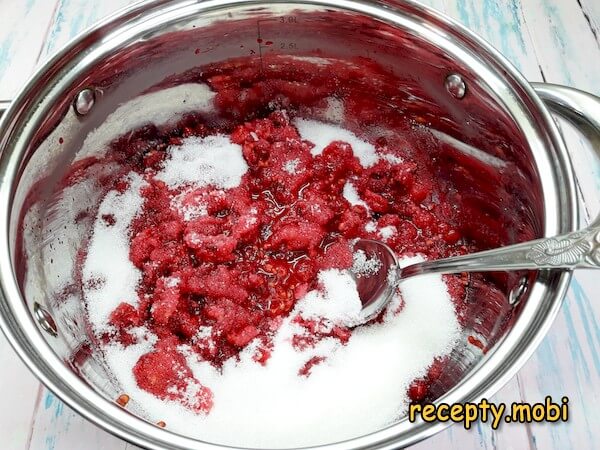
Mix well.
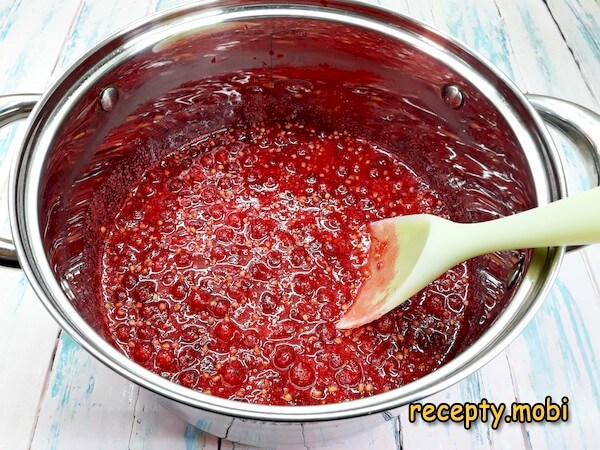
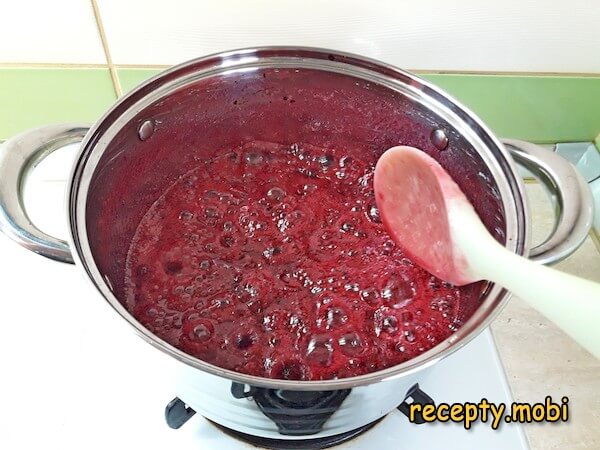
Place the pot of sugar-and-berry mixture over high heat. Once it boils, do not turn the heat down and do not step away from the stove. The vigorous boil makes the foam rise sharply right to the top, so it needs stirring almost constantly. Boiling this hard, cook the currants for exactly 10 minutes.
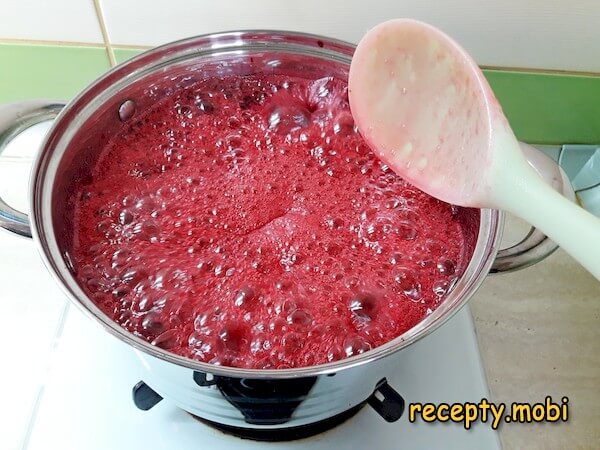
In the last few minutes the mass becomes a little harder to stir, as it turns more viscous. As soon as the foam settles and large bubbles replace the small boiling ones, turn off the heat.
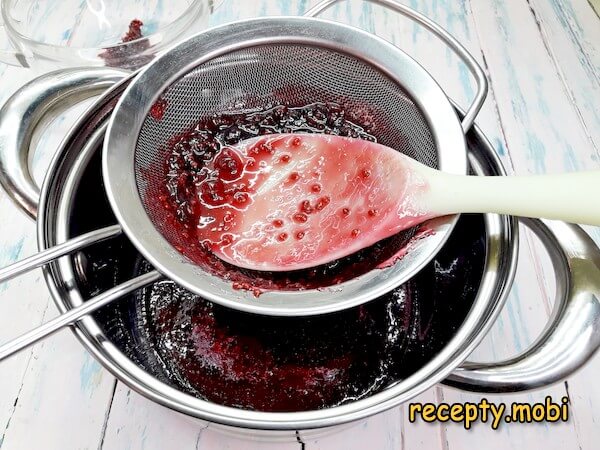
Now all that is left is to rid the jelly of seeds by rubbing it through the fine mesh of a sieve. Try to squeeze the pulp almost completely dry.
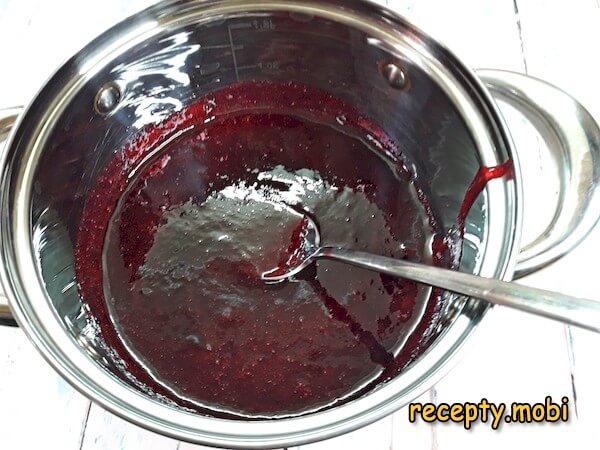
The result is a dense jelly with no additives whatsoever. All that remains is to spoon it into clean, dry jars (sterilising them is safer to be on the safe side, though the preserve keeps perfectly well until the next harvest even so).


Tips
- 1
LEAVE THE GREEN TAILS ON – the secret to setting. They contain a lot of pectin, which is responsible for the gelling. The sieve will separate them from the finished jelly later.
- 2
A TALL POT – the secret against boiling over. The foam rises very high during a vigorous boil. Shallow cookware means foam on the stove.
- 3
EXACTLY 10 MINUTES OF BOILING – strictly. Any longer and the jelly cooks down into jam and loses its shine. Any less and it will not set.
- 4
SQUEEZE THE PULP DRY – the secret to quantity. A lot of juice stays behind in the pulp, so press it through the sieve firmly. The same principle works for other kinds of berry jelly set with pectin.
FAQ
Which currants should I choose? +
Ideally, ripe red currants with their stems (as the author recommends). Popular varieties include Natalie, Red Dutch, Sakharnaya and Jonkheer van Tets. A berry size of 0.5–1 cm is best. Currants picked fresh in the morning are the most fragrant. Avoid heavily spoiled or unripe (green) berries, although a couple of green ones will add more pectin and firmness. For the premium jelly, use berries from your own garden. Frozen red currants will also do (550 g thawed, plus the juice).
Can I replace the currants? +
Pectin-rich alternatives include gooseberries, black currants, white currants and underripe apples. Berries low in pectin (strawberries, raspberries, cherries) will need gelatin or agar-agar. For a "woodland" version, use a 50/50 mix of red and black currants. For a premium one, use jostaberries (a cross between currant and gooseberry). Do not use citrus fruits (they change the character) or compote berries in syrup. For 550 g of berries, 500 g of sugar (a ratio of almost 1:1) is ideal for jelly.
How long does the jelly keep? +
In an ordinary city flat (as the author recommends) – up to a year. In the fridge – up to 2 years (it becomes even thicker). Once opened and kept in the fridge – 1 month. Do not store it in the sun, or the colour will "fade". If the lid bulges, do not open it – throw it out. Seal it in small 200–250 g jars, which are easier to open. It is best used within the first 6 months, when the aroma is brighter. Freezing is not needed. If the jelly has set very firmly, warm it in the microwave for 20 seconds or thin it with water.
What do I serve the jelly with? +
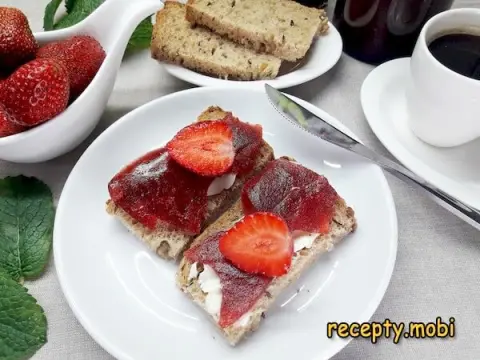
The classic is with toast for tea (as the author recommends). At breakfast with pancakes or syrniki. On open sandwiches with butter. With hard cheeses (camembert, brie) for a "French" serving. With roast meat (pork, duck) as a sauce. As a filling for cakes and pies. With a cup of coffee with milk. With plain yogurt. With ice cream. With hot tea and lemon for a "Russian" tea-drinking. With hot milk and vanilla. It is a versatile sweet preserve for every occasion.
- Comment
or post as a guest
Be the first to comment.