Write a comment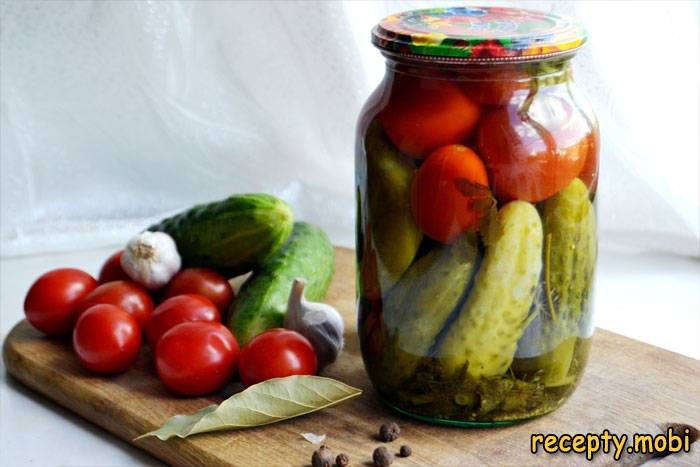
Cucumber and Tomato Assortment for Winter in a Liter Jar
How wonderful it is to open a jar of assorted cucumbers and tomatoes in winter! Some people love pickled crunchy cucumbers, while others prefer juicy and aromatic tomatoes. The dual-vegetable preserve gives you both in one jar — open one container and please everyone at the table at once. The combination is a Russian-pantry classic that captures summer-vegetable abundance into shelf-stable jars worth their weight in gold come February when fresh produce is sparse and expensive.
Time to Prepare: 50 minutes.
Ingredients
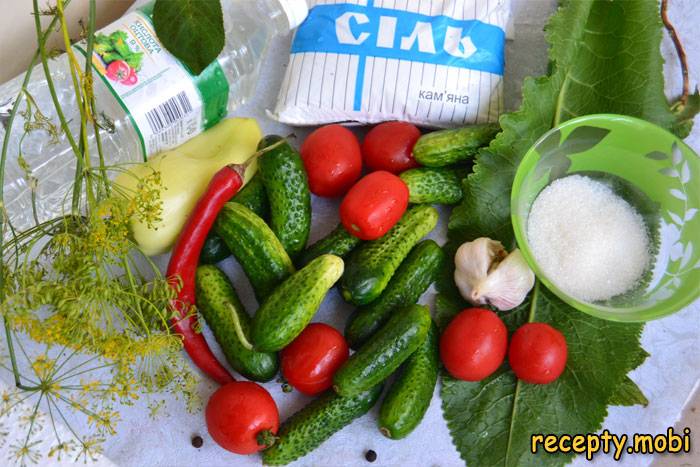
Show ingredients
Prepare the necessary products for canning assorted cucumbers and tomatoes for winter in a liter jar:
- cucumbers - 0.3 kg;
- tomatoes - 0.3 kg;
- garlic - 1 clove;
- bell pepper - 1/3 pc;
- horseradish - 1 leaf or piece of root;
- bay leaf - 1 pc;
- dill umbrellas - 2 pcs;
- parsley - 2 sprigs;
- currant or cherry - 1-2 leaves;
- pepper - 5 peas;
- hot pepper - a piece;
- non-iodized salt - 1/3 tbsp;
- sugar - 1/2 tbsp;
- 9% vinegar - 2 tsp.
Preparation
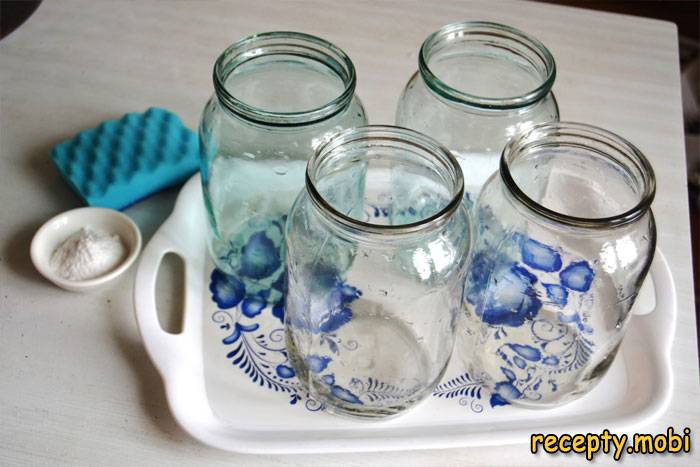
- Rub the containers intended for canning with baking soda. Wash thoroughly with clean water. After the water procedures, sterilize the jars properly for safe long-term storage.
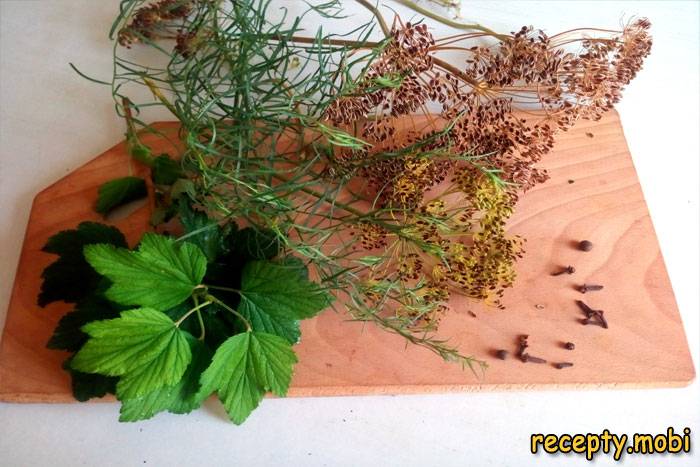
- Wash the necessary greens thoroughly under running water.
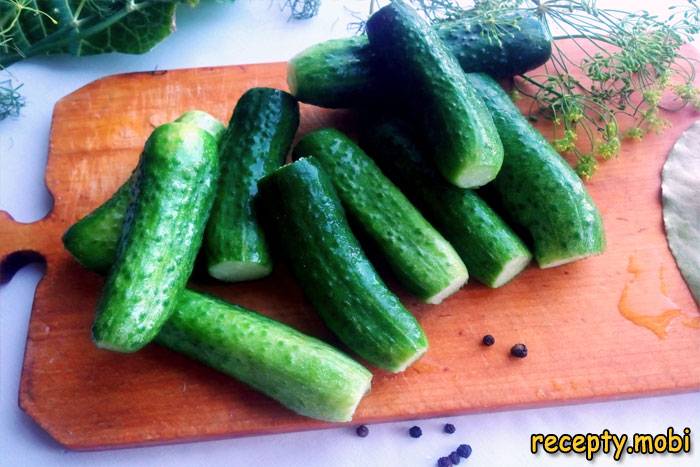
- For pickling the assorted tomatoes, take small cucumbers. To make the canning beautiful, choose fruits that are the same size. Before canning, after washing, place the cucumbers in a bowl of water for a few hours. If the cucumbers are fresh and firm, 2 hours is sufficient. After removing them from water, wash again under a stream of clean water. Cut off the ends from the side of the stem.
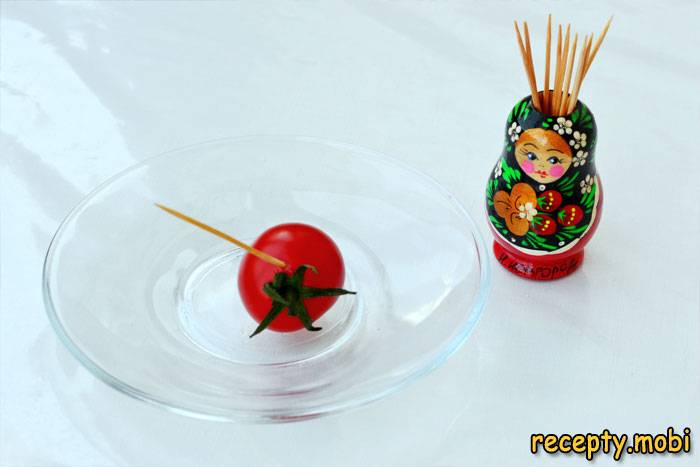
- Take medium-sized tomatoes since the jar is small. Better to take "Cream" tomatoes — they have thick skin that rarely bursts during canning. Near the stem, pierce several holes with a wooden skewer.
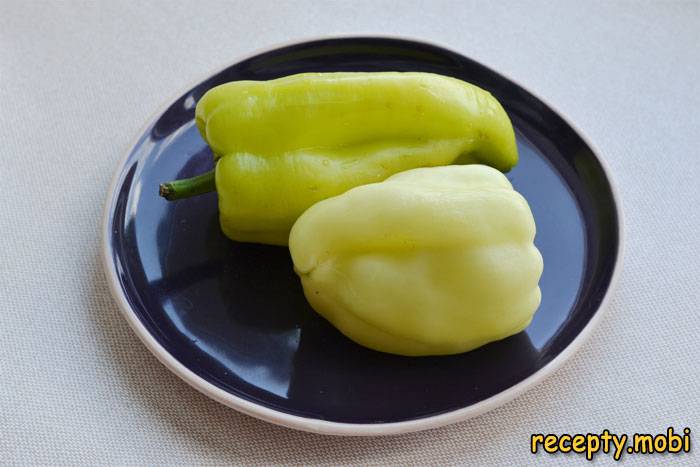
- Cut a piece of bell pepper into strips for layering with the other vegetables.
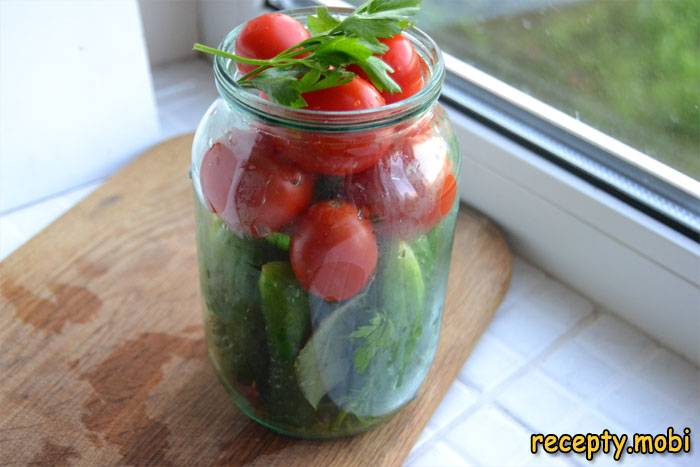
- Once all vegetables are prepared, proceed to fill the jar. At the bottom, place the pepper peas, dill umbrellas, cut strips of pepper, and chopped garlic. Cut a piece of horseradish root. If no root, replace with a horseradish leaf. Add a small piece of hot pepper.
- Pour boiling water over the assorted vegetables in the jar. Cover with a sterilized lid and leave the vegetables in boiling water for 15 minutes. Drain the water from the jar into a saucepan and put on the fire. After boiling for 30 seconds, pour back into the jar with the vegetable assortment for another 15 minutes. To warm the vegetables better, additionally wrap the jar with a kitchen towel.
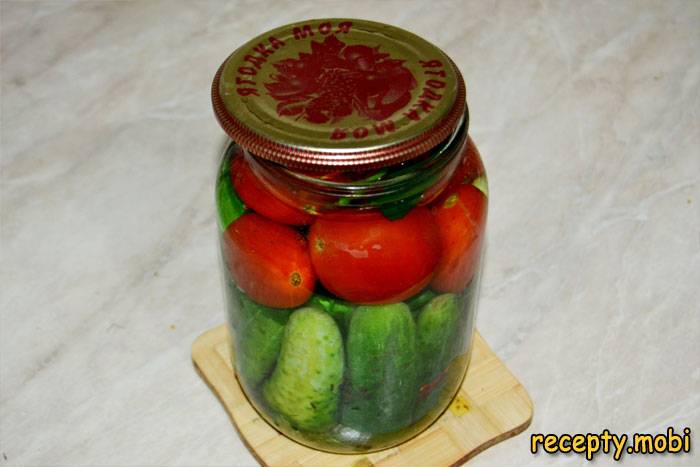
- The third pouring will be the marinade. Prepare the marinade from the drained water. Add another 50 ml to ensure enough marinade. Add sugar and salt to the water. Boil, stirring, until the spices completely dissolve. Pour 2 tsp of 9% vinegar into the jar with vegetables, then pour the boiling marinade up to the top. Immediately seal the jar tightly. Turning upside down, cover with a blanket for 12 hours.
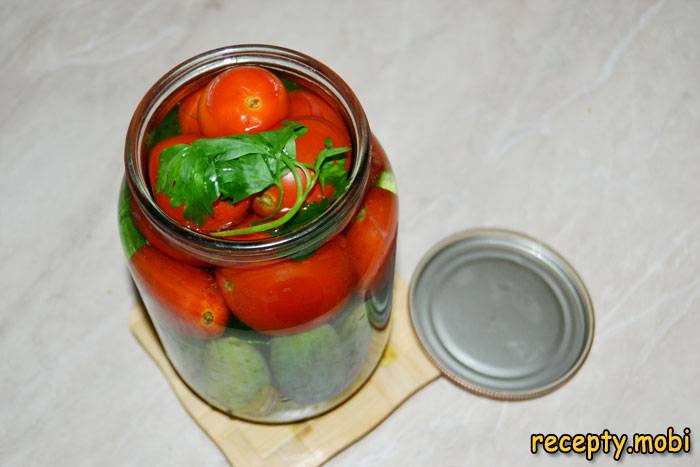
- Turn the jar back to normal position and cool well. Store the cooled jar in a cool, dark place for proper long-term preservation.
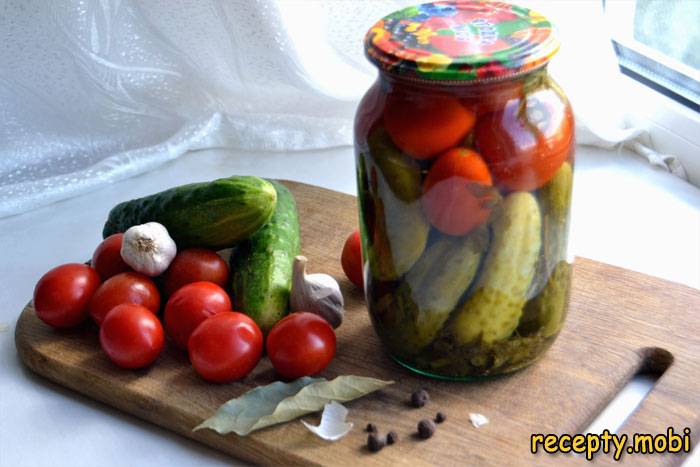
Prepare assorted cucumbers and tomatoes for winter using this recipe. Wishing you successful and tasty preparations!
Cooking Video
Tips and Tricks
Tip 1. Choose pickling cucumbers (Kirby or similar small varieties) for crispiest results. Standard slicing cucumbers turn mushy in brine; proper pickling cucumbers retain crunch through months of storage. The variety choice matters significantly more than home cooks typically realize for finished preserve quality and texture retention over storage periods.
Tip 2. Use non-iodized salt — this is non-negotiable for proper pickling. Iodized salt produces cloudy brine and metallic off-flavors during long storage. Look for kosher salt, sea salt, or specifically labeled pickling salt for best results. The same non-iodized principle applies to many home preserves including zucchini with tomatoes for winter and similar canned vegetable preparations.
Tip 3. Pierce the tomatoes near the stem to prevent bursting. The small holes allow gentle pressure equalization during the hot brine pour, preventing the dramatic skin-bursting that ruins jar appearance. The 30-second piercing step dramatically improves visual presentation of the finished preserve in the jar.
Tip 4. Wait at least 1 month before opening for full flavor development. Fresh-made preserves taste good but the brine penetration develops dramatically during storage. Pair the finished preserve with crusty homemade bread, mashed potatoes, fried meats, or as a tangy side dish for any winter meal that needs bright vegetable contrast.
FAQ
How long do these preserves keep?
Properly sealed and stored in a cool dark place (under 18°C), the assorted preserves keep for 12 months at peak quality. Check seals before opening — the lid should be slightly concave and not move when pressed. Any jar with popped lid, bulging cap, or off smell should be discarded immediately, never tasted. Refrigerate after opening and consume within 2-3 weeks for best results.
Can I scale up this recipe?
Yes — multiply all ingredients linearly for larger jars or multiple jars. The cooking times stay similar but may need slight extension for very large batches. Use larger pots to maintain proper depth and heat distribution during marinade preparation. Larger batches actually work better than tiny ones since the gentle thermal mass helps prevent burning during brine boiling stages.
Why is my brine cloudy?
Either iodized salt was used, jars were not properly sterilized, or the cucumbers were not soaked beforehand. Use only non-iodized salt for pickling. Sterilize jars properly before filling. Soak cucumbers for at least 2 hours to remove dirt and excess starch that clouds brine. Address all three factors for crystal-clear brine across multiple batches consistently.
What other vegetables work in this assortment?
Carrots, cauliflower florets, small onions, garlic cloves, green beans, or zucchini all integrate beautifully alongside the cucumber-tomato base. Each addition produces distinct character. Adjust ratios based on personal preferences and what is plentiful in your garden or local market. The basic technique — layered vegetables in spiced vinegar brine — adapts to many vegetable combinations for varied seasonal preserves throughout the year.