Write a comment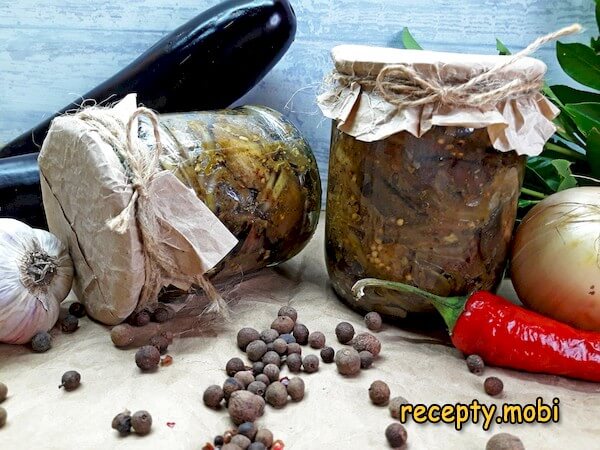
Eggplants for Winter in Jewish Style
Eggplants for Winter in Jewish Style is the distinctive Jewish-tradition winter preserve — eggplant sectors dry-fried + onion-garlic + shashlik seasoning + 7-hour weighted marination + 30-min sterilization in jars. Unlike standard eggplant caviar (pureed), this preserve maintains DISTINCT EGGPLANT PIECES with chewy texture + rich-aromatic marinade. The 8-hour preparation + 8-hour cooling produces 2 jars of 0.5 L + small remainder for tasting. Stores at room temperature until next harvest. Much more interesting than usual caviar.
Ingredients
Show ingredients
- eggplants – 1 kg;
- onion – 320 g;
- garlic – 1/2 head;
- shashlik seasoning – 12 g;
- coarse salt – 13 g;
- white sugar – 18 g;
- 9% vinegar – 25 ml;
- refined oil (no strong smell) – 50 ml.
Preparation
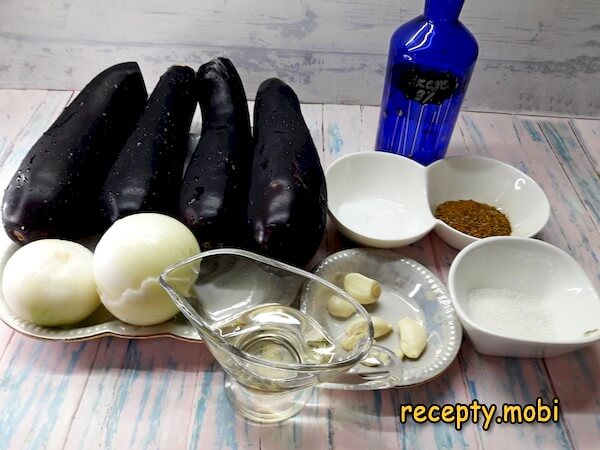
- I prepare the necessary ingredients.
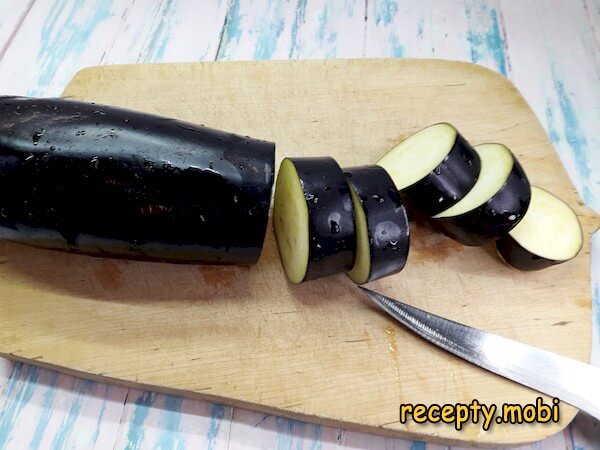
- Cut tip + tail off eggplant. Slice into CIRCLES 2 cm thick.
- Divide each circle into 4 SECTORS.
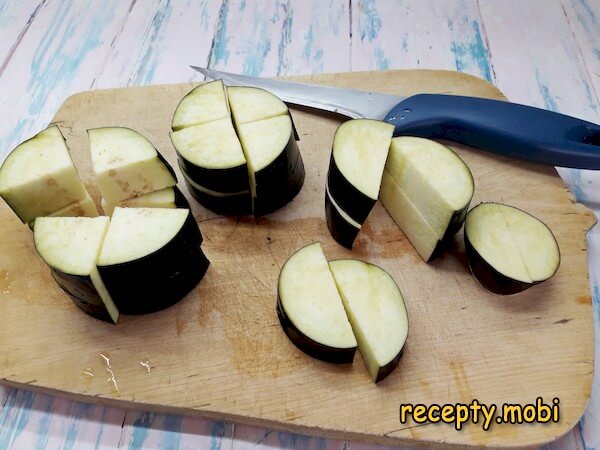
- Place all slices into deep bowl.
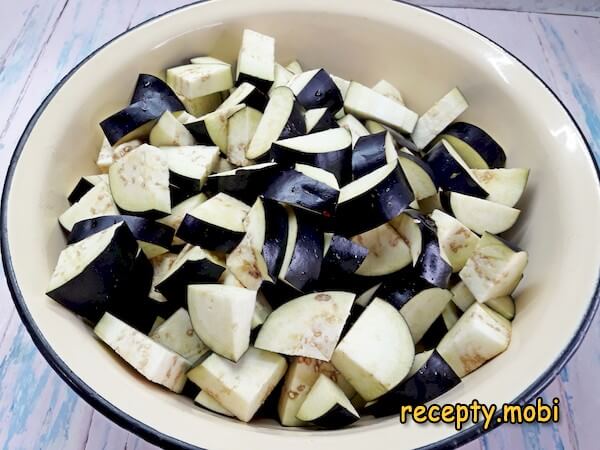
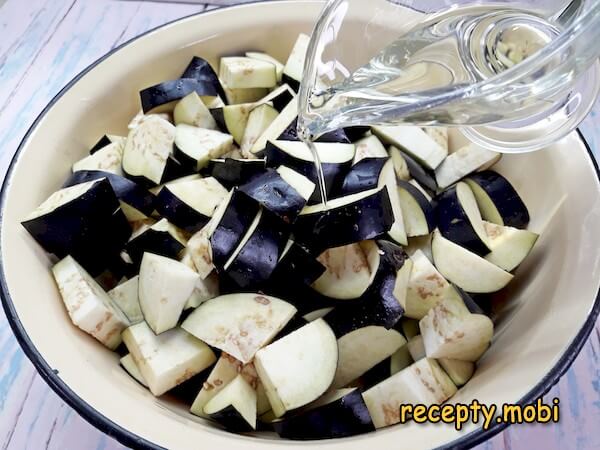
- DRIZZLE contents with OIL.
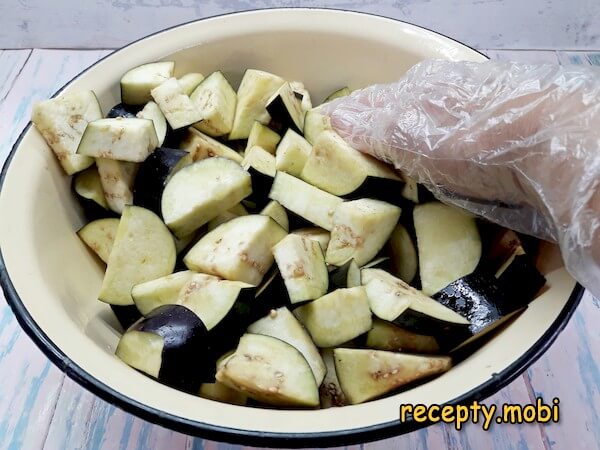
- Thoroughly mix so each piece coated in oil (do this BY HAND).
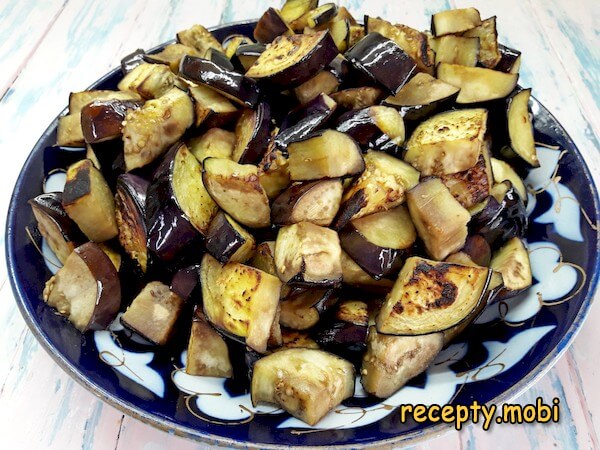
- In DRY heated frying pan: place part of eggplants in SINGLE LAYER. Fry both sides until SEMI-COOKED + color change.
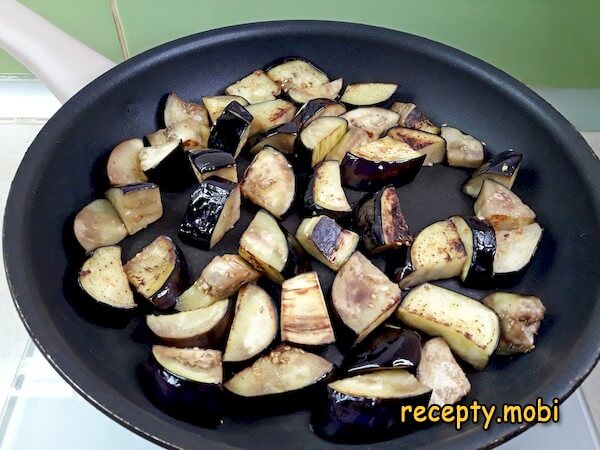
- In small batches: prepare ALL pieces.
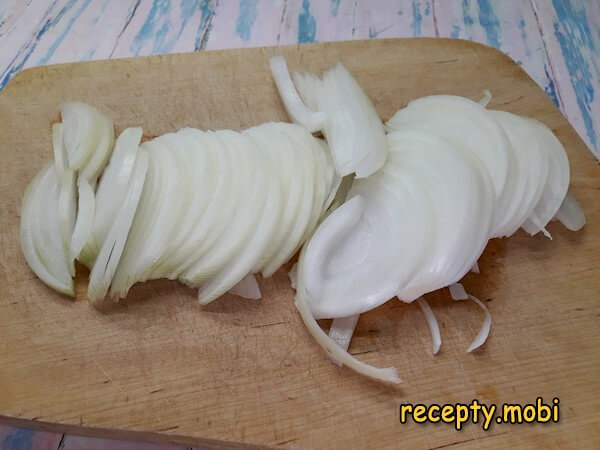
- Chop ONION into THIN feathers.
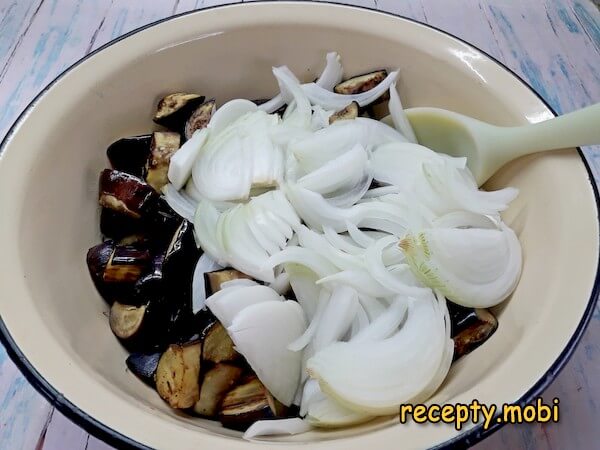
- Transfer to fried eggplants.
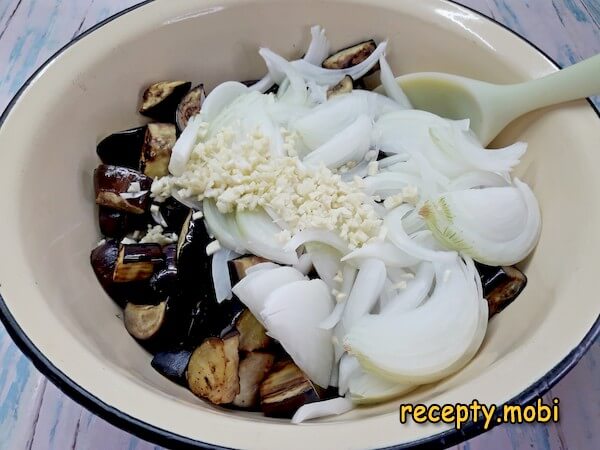
- Add finely chopped GARLIC (NOT crushed with press).
- Add SHASHLIK SEASONING + SUGAR + SALT.
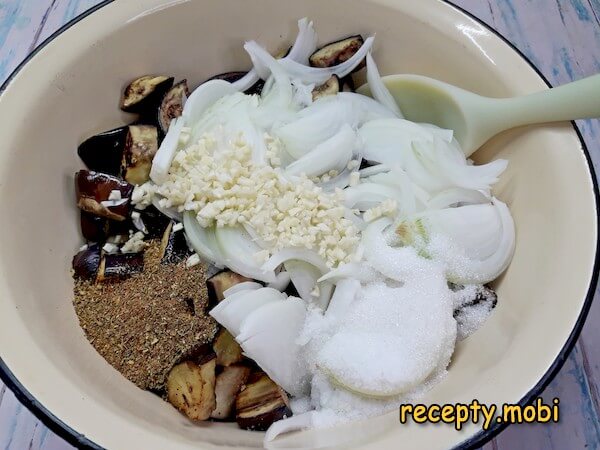
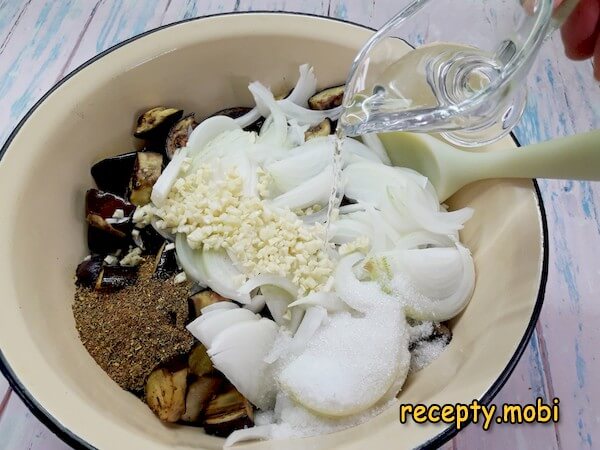
- Pour VINEGAR immediately.
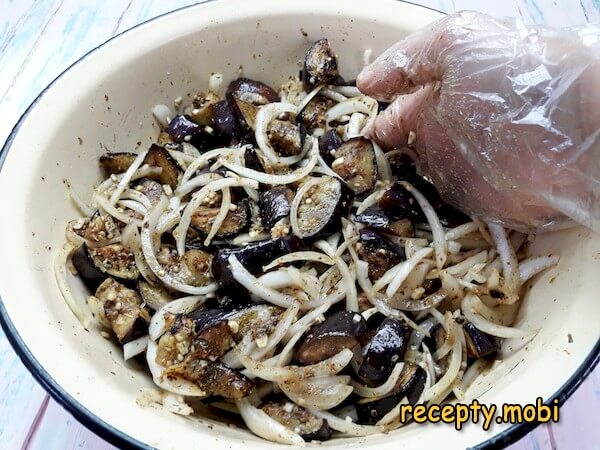
- Mix everything VERY CAREFULLY by hand to homogeneous mixture — careful not to crush eggplant pieces.
- Cover whole mixture with suitable-diameter PLATE.
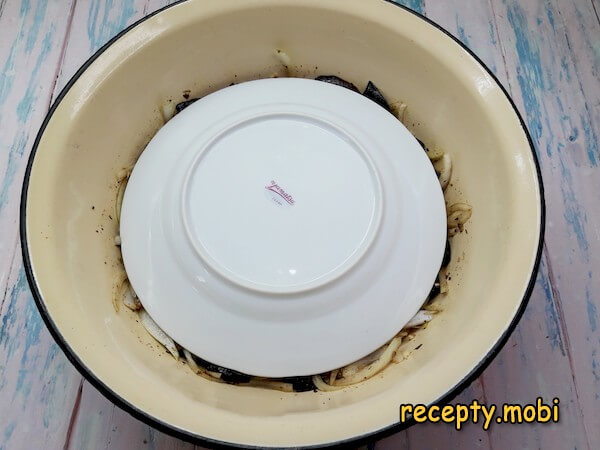
- Place WEIGHT (3 kg sufficient) on top. Marinate at room temperature.
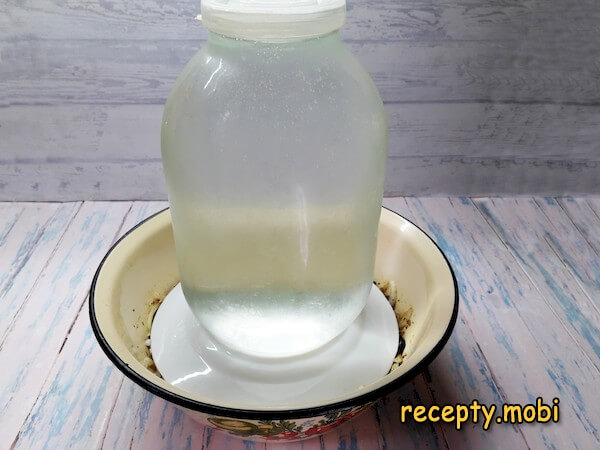
- After 7 HOURS: large amount of juice released.
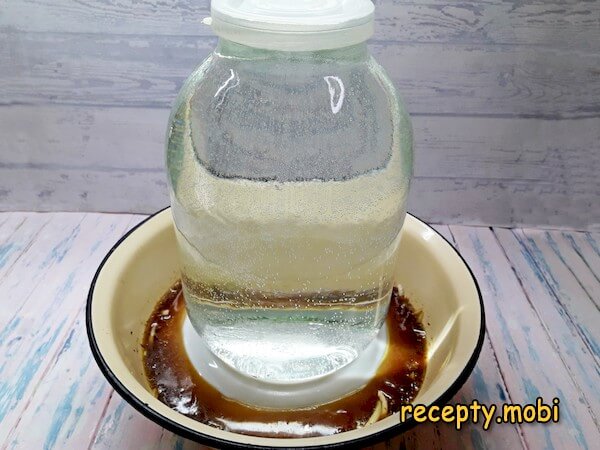
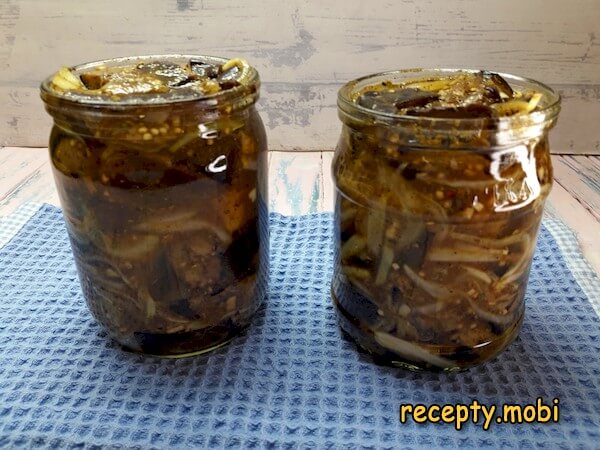
- Mix mixture; tightly pack into clean jars (pre-sterilization optional, not strictly required).
- Place jars in pot taller than jars themselves; piece of cloth on bottom. Pour water (cold or hot) up to SHOULDERS of jars. Place lids on top; turn on stove. After steady boil: STERILIZE 30 MINUTES.
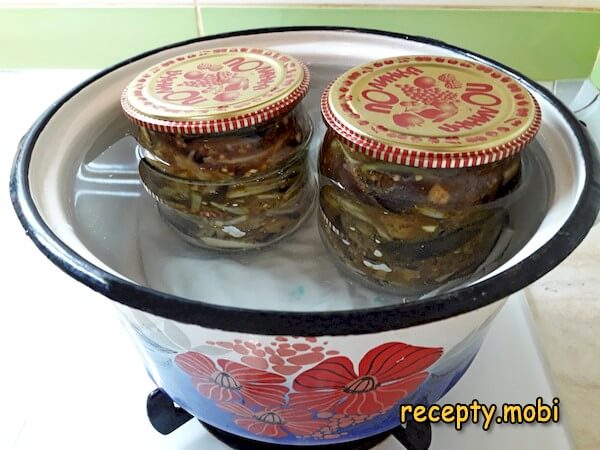
- Carefully remove from boiling water; screw on lids; turn UPSIDE DOWN; check seal tightness.
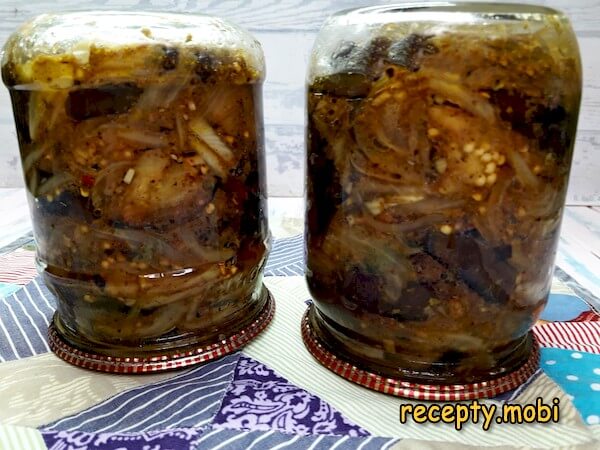
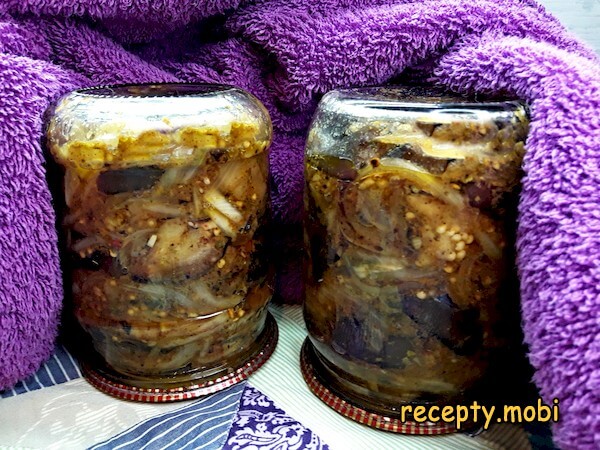
- Wrap jars in thick towel; leave 8 HOURS to cool slowly.
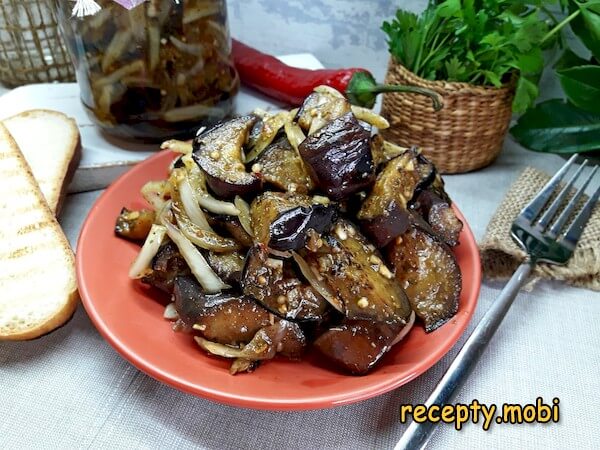
- Eggplants for winter in Jewish style: store even without basement (heated room works). Lasts until next harvest. Taste much more interesting than usual caviar. Bon appétit!
Tips and Tricks
Tip 1. THE DRY-FRYING-WITH-OIL-COATED EGGPLANT TECHNIQUE. Steps 5-7's "drizzle eggplants with oil + DRY-FRY" is signature method. Standard wet-frying eggplant: absorbs LOT of oil during frying (up to 100% by weight), greasy result. OIL-COATED + DRY-FRY: pieces individually coated provides minimal-but-uniform oil distribution + dry-pan eliminates excess fat absorption. Result: LIGHTER eggplant pieces with proper fried character. The 50 ml oil for 1 kg eggplant = restrained 5% by weight. Same minimal-oil technique: Mediterranean grilled eggplant, modern healthy preparations. Don't pour oil into pan — coat eggplants first.
Tip 2. THE SHASHLIK-SEASONING JEWISH-STYLE TWIST. Step 12's "shashlik seasoning" is what defines this recipe's Jewish-tradition character. Shashlik seasoning typically contains: coriander + cumin + black pepper + paprika + dried herbs + occasionally fenugreek. The Jewish-tradition preserve traditionally used Eastern-European shashlik seasoning blends to evoke MEAT-grilling aromas + warmth in vegetable preparation (kosher meat substitute). The 12 g amount is calibrated — enough for prominent flavor without overpowering eggplant. Same dry-spice-blend principle: Caucasian preserve traditions, Mediterranean adjustments. For another classic Jewish-tradition appetizer worth comparing, see Herring Forshmak Classic.
Tip 3. THE 7-HOUR WEIGHTED MARINATION. Steps 15-17's "plate + 3 kg weight + 7 hours" is texture-essential. Without weight: pieces float in marinade unevenly, juice extraction incomplete. WITH WEIGHT: pieces compressed gradually release juice, marinade forced into eggplant cells, even color + flavor distribution. The 3 kg weight + 7 hours combination: produces ~30% volume reduction + ~200 ml extracted juice. Stand-in objects: water-filled jars (1 L = 1 kg), heavy stones, cast-iron skillet. Same weighted-marination principle: traditional pickle-making, Korean kimchi initial-pressing stage.
Tip 4. THE 30-MIN STERILIZATION + 8-HOUR COOLING SEQUENCE. Steps 19-21's full canning process is preservation-essential. The 30-min STERILIZATION-IN-JAR (not pre-sterilized jars): cooks eggplant pieces fully + activates preservation. 8-HOUR THERMAL BATH cooling: gradual cooling preserves texture (rapid temperature drop = soggy result). Combined: room-temperature year-long storage achievable. Same in-jar-sterilization principle: French confitures, Italian conserve. Don't skip cooling — full 8 hours essential for proper seal + quality. For another classic Jewish-tradition preserve worth trying, try Eggplant Caviar Classic.
Frequently Asked Questions
What's "Jewish style"?
Recipe name reflects Soviet-era Jewish-diaspora cooking tradition: vegetable preserves with bold-spice + meat-evoking aromatics + portable-kosher character. KEY Jewish-style elements: shashlik-seasoning (meat-grilling spices in vegetable preparation), preserved-distinct-pieces (vs pureed eggplant caviar), 7-hour marination (Sabbath-prep tradition where work prepared ahead). The name represents 20th-century Soviet-Jewish kitchen tradition. NOT religious-kosher specifically (no separation rules), just culturally-Jewish preservation style. Other Soviet-Jewish-tradition preserves: tzimmes, gefilte-fish-on-the-side. Recipe-canonical character: aromatic + chewy + bold-flavored.
Can I substitute shashlik seasoning?
Yes — variations work. CARAWAY + CORIANDER + PAPRIKA mix (3 g + 4 g + 5 g): closest substitute, traditional Eastern European character. KHMELI-SUNELI (Caucasian blend): produces Georgian-fusion variation, equally good. ITALIAN HERB MIX (oregano + basil + thyme): Mediterranean-fusion, distinctly different but tasty. CUMIN + BLACK PEPPER + DRIED THYME: Middle Eastern-fusion. The 12 g total amount stays consistent across blends. AVOID: curry powder (wrong direction entirely), 5-spice (different cuisine character). The shashlik blend is recipe-canonical Jewish-style — others are creative variations.
How long does it really keep?
Properly sealed jars in heated room (recipe-stated): UP TO 12 MONTHS. Months 1-3: peak texture (pieces firm, marinade bright). Months 4-8: still excellent, marinade fully integrated. Months 9-12: still tasty, slightly softer pieces. Past 12 months: not recommended at room temp. COOL CELLAR (10-15°C): extends quality to 18 months. Once OPENED: refrigerate, consume within 2-3 weeks. Storage tips: clean dry spoon, tight lid between uses, dark place. Spoilage signs: bulging lid, fermentation bubbles, off-smell — discard. The recipe was designed for room-temperature year-long storage.
What sides go best?
Jewish-Soviet tradition has specific eggplant-preserve companions. CLASSIC: with dark rye bread (Borodinsky) — most iconic pairing. WARMING: alongside roasted chicken, brisket, traditional cholent. PASTA: tossed with hot pasta = quick lazy lunch. RICE: over plain rice for one-bowl meal. ZAKUSKA: served cold on bread alongside vodka, beer (traditional). EGG DISHES: scrambled eggs with eggplant relish on top. The preserve is versatile — equally good cold (from jar) OR briefly heated. Don't pair with strongly-acidic dishes (compete on acid). Mediterranean fusion: serve with olives + cheese + flatbread.