Write a comment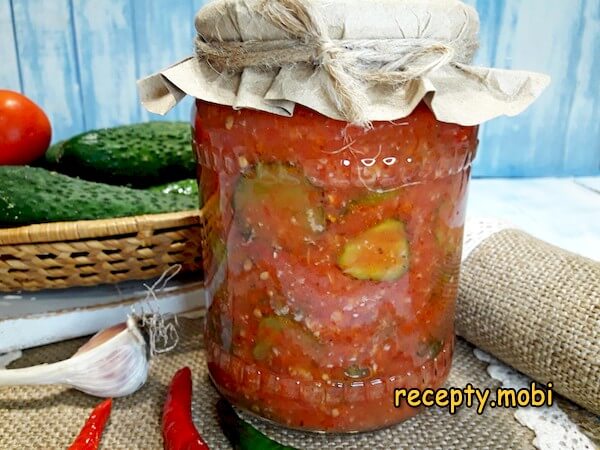
Georgian-style Cucumbers for Winter
Georgian-style cucumbers for winter is the no-sterilisation Caucasian preserve that handles cucumbers of any size — gherkins, medium pickling-cukes, even oversized end-of-season specimens. The trick: slice all cucumbers into rounds of similar thickness, briefly boil in tomato-spice sauce, and jar while hot. Khmeli-suneli (the Georgian spice blend) and chili pepper give the unmistakable Caucasian profile. The tomato sauce is so good that bread mopping is the natural finish — many Russian families serve this preserve as much for the sauce as for the cucumbers themselves.
The recipe yields 1 jar (750 g) at 78 kcal per 100 g. Total time 30 minutes active + 8-10 hours blanket cooling.
Ingredients
Show ingredients
- cucumbers – 500 g;
- tomatoes – 350 g;
- garlic – 35 g;
- white sugar – 50 g;
- rock salt – 12 g;
- odorless vegetable oil – 40 ml;
- paprika – 0.5 tsp heaped;
- khmeli-suneli – 1 tsp heaped;
- chili pepper – 1 pc;
- 9% vinegar – 15 ml.
Preparation
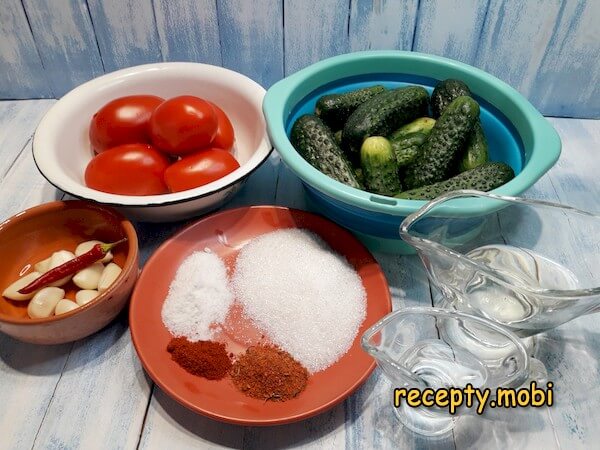
- I prepare the ingredients. Cucumbers of any size work — adjust round thickness to size. Chili pepper amount adjusts to heat preference. Jars and lids sterilise in advance.
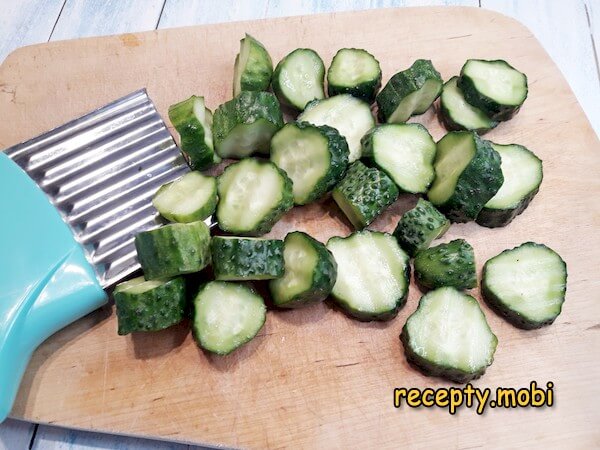
- Small cucumbers slice into 1.5 cm rounds; larger ones slice into 1 cm rounds — thinner slices ensure the larger cucumbers cook through in the brief boil.
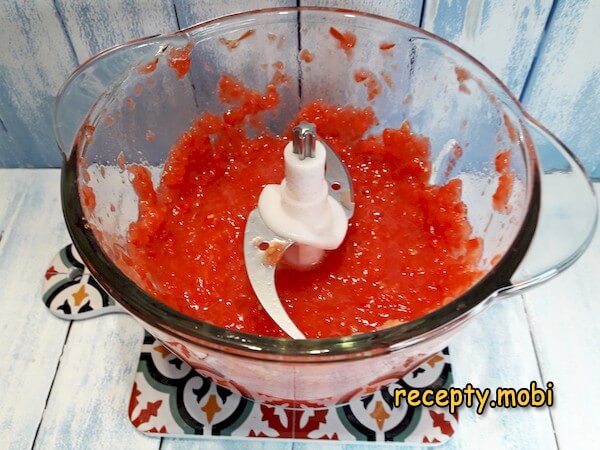
- I remove tomato stems and grind the tomatoes (with skins) in a blender or meat grinder into a smooth puree.
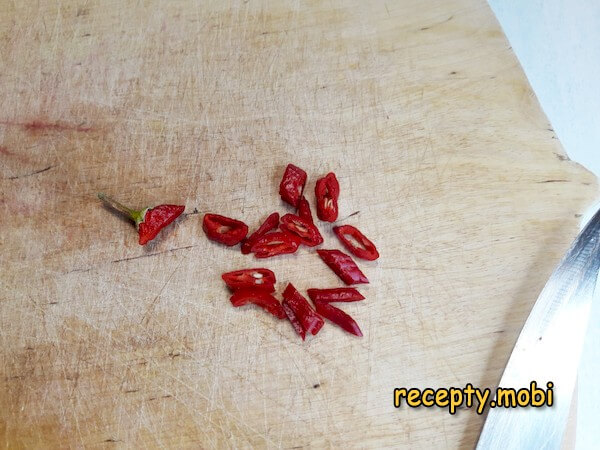
- The chili pepper finely chops.
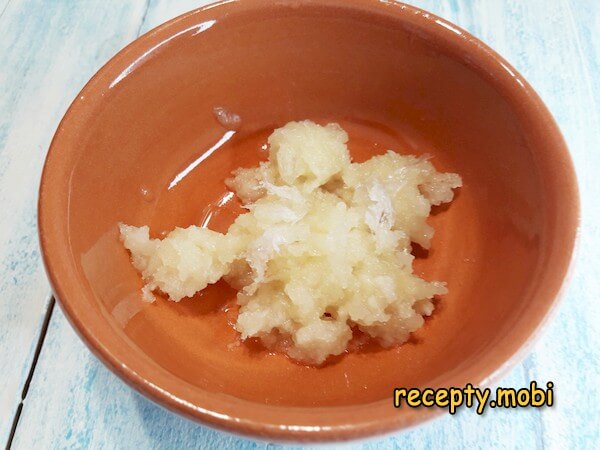
- Garlic crushes through a press.
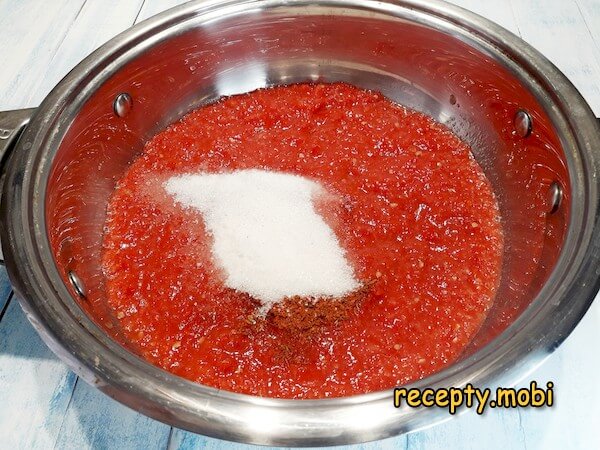
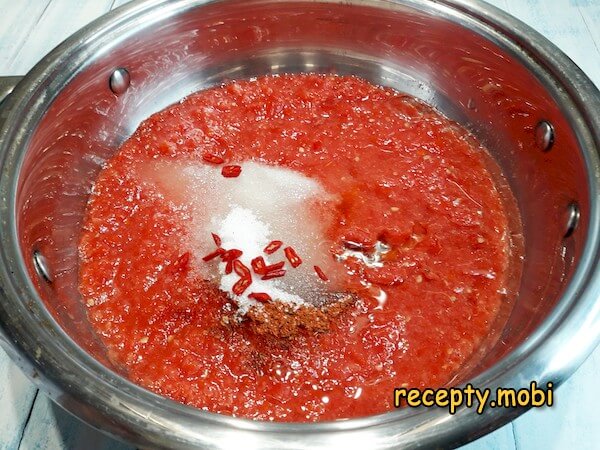
- The tomato puree pours into a wide-bottomed pan with high sides. I add salt, sugar, khmeli-suneli, and paprika.
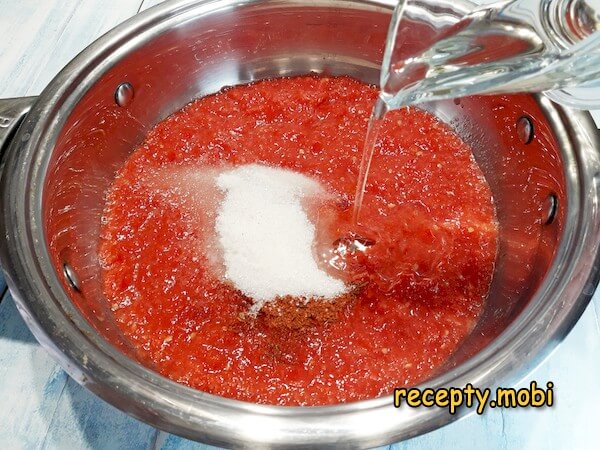
- The vegetable oil pours in.
- The chopped chili pepper joins.
- The cucumber rounds pour into the tomato sauce. Pan goes on medium heat.
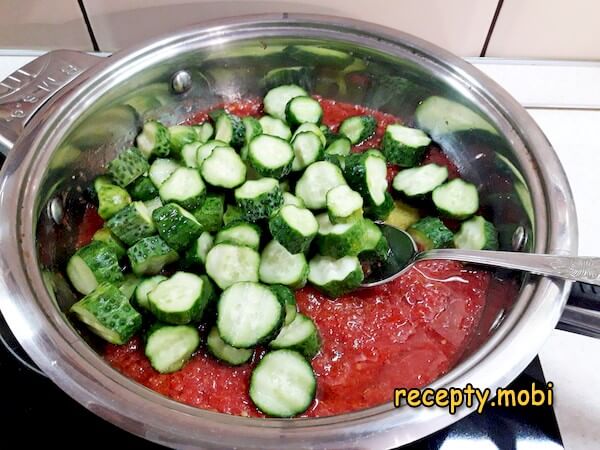
- Boil exactly 3 minutes from the start of boiling — precise timing keeps the cucumbers crunchy.
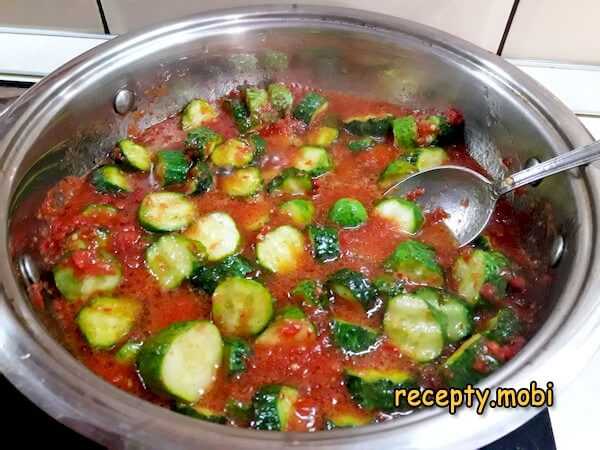
- Garlic goes in, I stir, simmer 1-2 minutes more. Critical: don't overcook — the cucumbers must keep their bite.
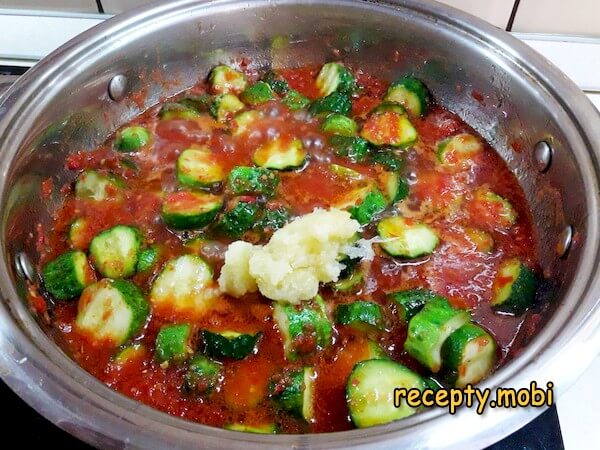
- Watch the cucumber colour as the safety check — at the first sign of darkening, the vinegar goes in, the mixture comes back to boil for exactly 1 minute, then off heat.
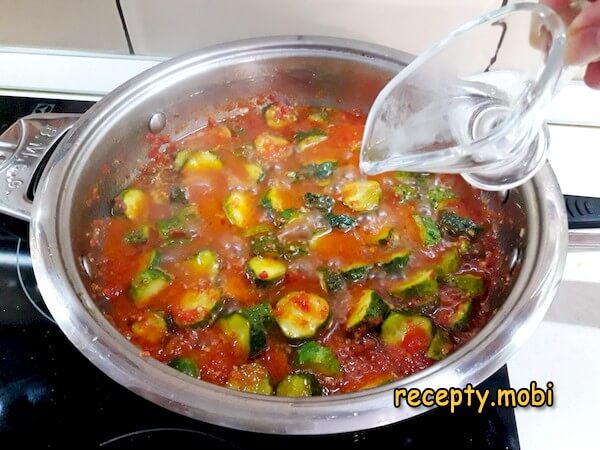
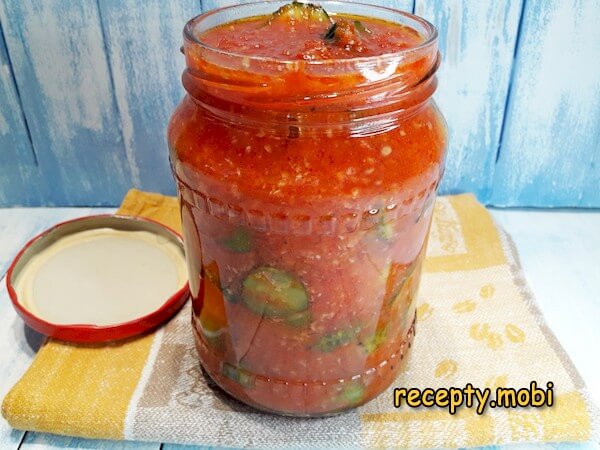
- The cucumbers and sauce ladle into jars to the very top — every cucumber submerged in sauce.
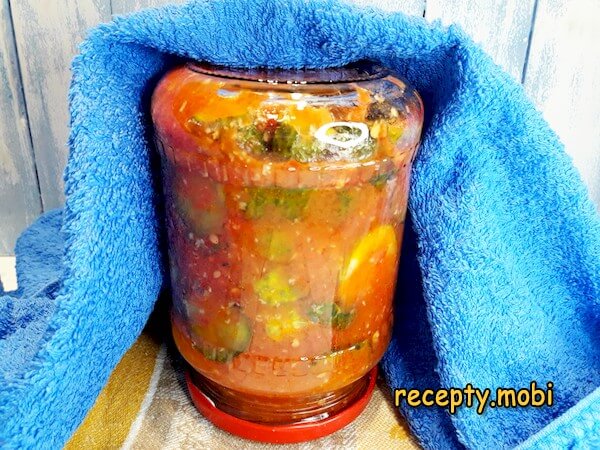
- Lids screw on tight, jars invert, blanket-wrap, slow-cool 8-10 hours. The slow inverted cool creates a strong vacuum seal.
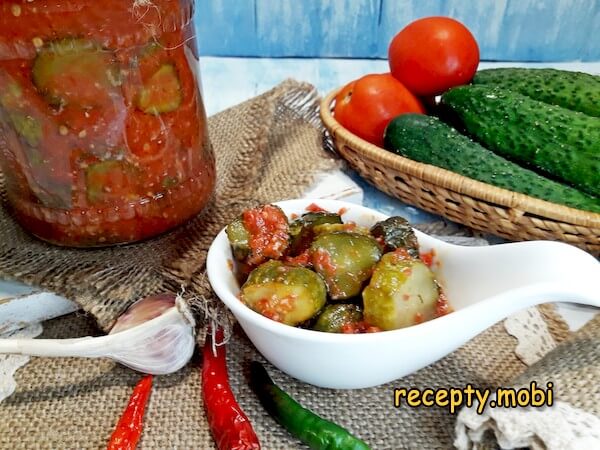
Georgian-style cucumbers for winter store at room temperature in a dark spot away from sunlight. The preserve transforms ordinary lunch or dinner into something memorable. Pair with porridge, pasta, or country-style potatoes for a full Caucasian dining experience. Try it. Bon appétit!
Cooking video
Tips and Tricks
Tip 1. THE 3+1+1 MINUTE TIMING IS PRECISE. Step 10's "exactly 3 minutes" plus step 11's "1-2 minutes" plus step 12's "1 minute" with vinegar = 5-6 minutes total cook time. This is calibrated to soften cucumbers enough for marinade absorption while preserving the famous crunch. Longer cook produces soft mushy cucumbers; shorter cook leaves the brine flavour superficial. Set a timer for each stage.
Tip 2. KHMELI-SUNELI IS THE GEORGIAN SIGNATURE. The 1 tsp of khmeli-suneli (the proprietary Georgian spice blend with coriander, fenugreek, marigold, basil, dill, bay, and sometimes saffron) is what makes this dish identifiably Georgian. Without it, you have generic Eastern European spiced cucumbers. With it, you have the unmistakable Caucasian fragrance. Available at Russian-Eastern European markets or online; DIY substitute (less authentic): 1/2 tsp ground coriander + 1/4 tsp dried fenugreek + 1/4 tsp dried basil + pinch saffron. For another Georgian winter preserve worth comparing, see Green Tomatoes in Georgian Style for Winter.
Tip 3. WATCH THE COLOUR AS A DONENESS CUE. Step 12's instruction to watch cucumber colour is the experienced-cook safety check. Fresh raw cucumbers are bright green; cooked cucumbers darken slightly toward olive-green. The exact moment of "first signs of darkening" is when vinegar should be added — too early and the cucumbers are undercooked; too late and they're soft. Combined with the timer-based approach, the visual cue makes the timing nearly foolproof.
Tip 4. THE SAUCE IS HALF THE PRIZE. Russian-Caucasian families often pour the tomato-cucumber sauce onto the plate alongside the cucumbers as a kind of dipping sauce — the spiced tomato-oil-vinegar liquid is so flavourful that bread mopping is the inevitable finish. Some serve the cucumbers and reserved sauce together as a relish over grilled meat (perfect with Georgian shashlik). Make extra batches; the sauce alone has many uses. For another spicy Caucasian winter eggplant preserve worth trying, try Georgian-style Eggplants for Winter.
Frequently Asked Questions
Why does this work for any cucumber size?
Most cucumber preserve recipes specify pickling cucumbers (small, dense, low water content) and reject "regular" cucumbers as too watery. This recipe sidesteps the problem by slicing all cucumbers into rounds — uniform thickness ensures uniform cooking regardless of original cucumber size. The thicker slices for small firm cucumbers (1.5 cm) and thinner slices for larger softer cucumbers (1 cm) compensate for the different water content. The result is consistent texture across cucumber types — making this an excellent "use up the end-of-summer cucumber glut" recipe.
How long do the jars keep?
Properly sealed jars at room temperature in a dark spot keep 10-12 months — until next summer's cucumber season. Cool basement storage extends this slightly. Once opened, transfer to fridge and use within 2-3 weeks. The cucumbers gradually soften over months in the jar but retain acceptable texture for at least 6 months. If you spot mould, fizzing, or bulging lids, discard the entire jar — properly preserved Georgian-style cucumbers don't ferment.
Can I use canned tomatoes instead of fresh?
Yes — for autumn-winter preparations when fresh tomatoes are out of season, canned crushed tomatoes (no added herbs) work as direct substitute. Use 350 g of canned crushed tomatoes (drain off any excess water that floats on top). Quality canned tomatoes (San Marzano, etc.) sometimes give better results than mediocre fresh tomatoes. Avoid: canned diced tomatoes (wrong texture for the sauce — too chunky), canned tomato puree (already concentrated, would make the sauce too thick), or jarred pasta sauce (already seasoned, throws off the recipe balance).
Can I make this without chili pepper?
Yes — chili-free versions are equally Georgian (the cuisine isn't uniformly spicy across regions). Skip the chili pepper entirely; the paprika still provides colour and gentle warmth. For mild but flavourful: replace chili with 1/2 tsp of mild Aleppo pepper (Turkish-Syrian, gentle heat). For variation: replace chili with 1 tbsp pomegranate molasses (Lebanese-style sweet-tart accent that works surprisingly well). The base recipe forgives many variations on the heat axis.