Write a comment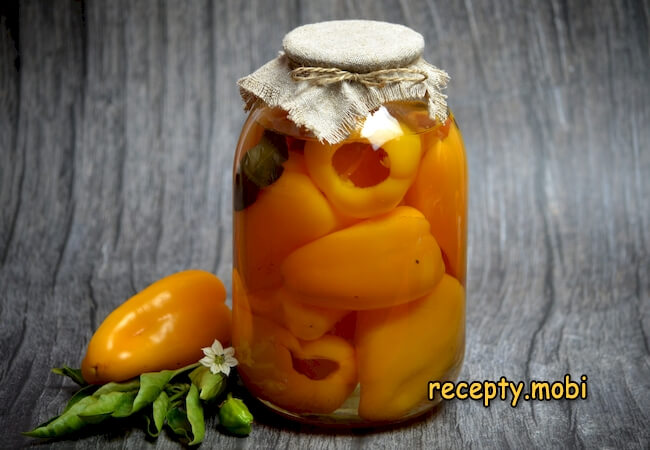
Marinated Bulgarian Peppers for Winter (for Stuffing)
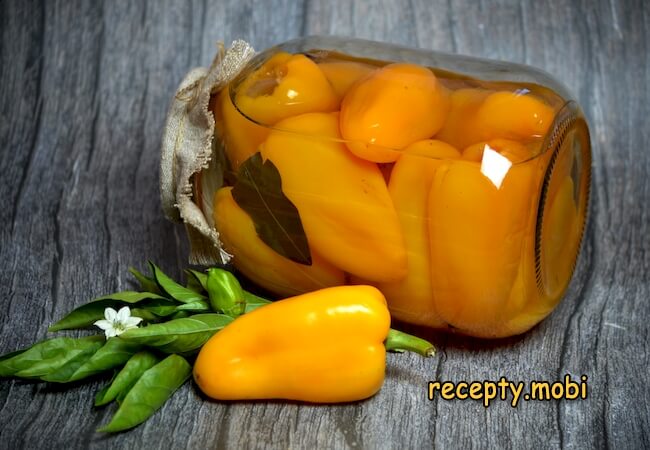
Marinated Bulgarian peppers for winter are the kitchen gardener's smart shortcut for the stuffed-pepper season. The recipe preserves whole bell pepper pods inside a single three-litre jar so that on a cold January evening the only work needed is to fill them with rice and meat and slide them into the oven. Equal sugar and salt with a careful drizzle of vinegar produce a neutral marinade that lets the future stuffing flavors shine. Warm-coloured pods (red, yellow, orange) hold up best in the brine and emerge after months of storage as firm, crunchy shells ready for any classic stuffed-pepper recipe.
Ingredients
Show ingredients
- yellow bell pepper — 1.2 kg;
- sugar — 3 tsp;
- salt — 3 tsp;
- vinegar 9% — 2 tbsp;
- bay leaves — 3 pieces;
- allspice — 1 tsp;
- dill seeds — ¼ tsp.
Preparation
- Pick out medium-sized pods of similar dimensions because the peppers will be stuffed later. Uniform size matters more here than for any other use; mismatched pods bake unevenly when filled and look untidy on the serving plate, so spend a few minutes selecting carefully.
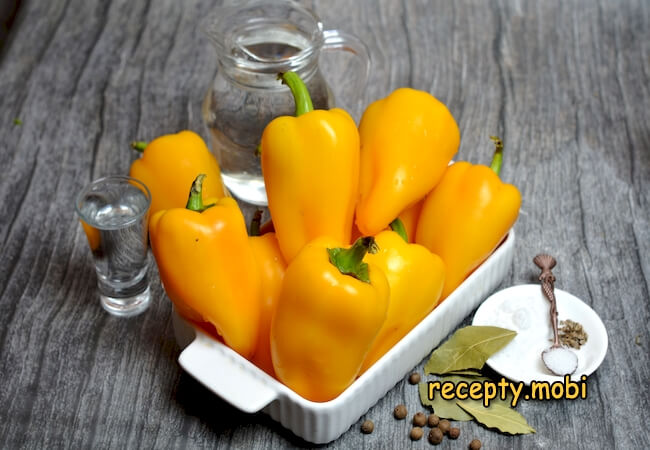
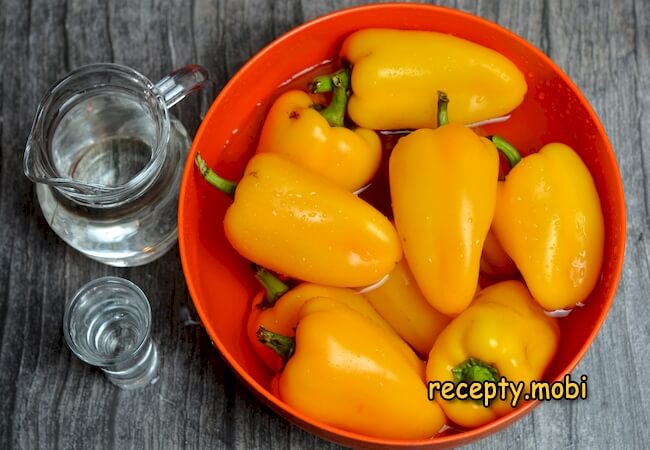
- Wash the peppers under cool running water and inspect each one as it goes through. Sort out any pods with damage to the skin, soft patches, or signs of wilting; even a single bad pepper can spoil the entire jar over the long storage period.
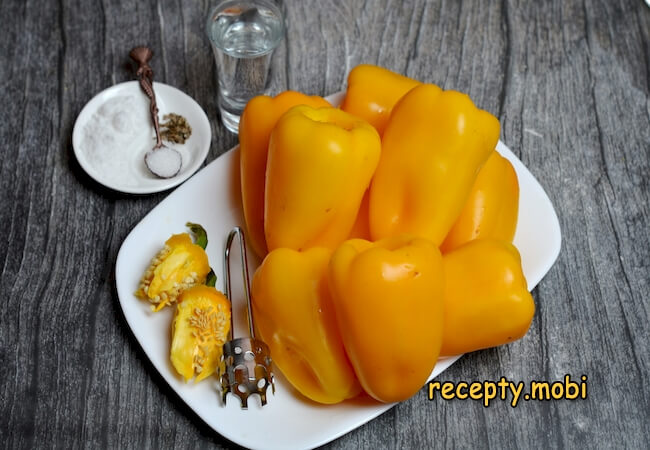
- A specialty corer makes the seed-removal step go quickly. Rotating the metal ring at the stem end produces a neat clean opening with no torn flesh. A sharp paring knife works too if you do not own the dedicated tool, just take care to leave the surrounding flesh intact.
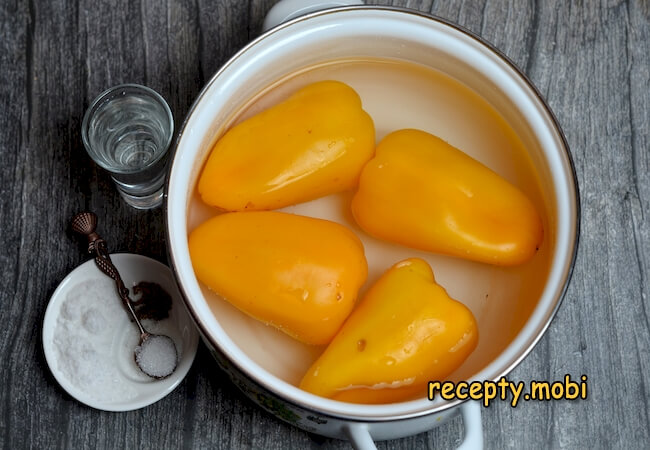
- If your largest pot cannot hold all the peppers at once, blanch them in small batches by dropping the cleaned pods into boiling water and cooking for three minutes. Keep the water unsalted, the lid off, and the boil at a moderate pace; aggressive boiling tears the flesh and softens the pods too much for stuffing later.
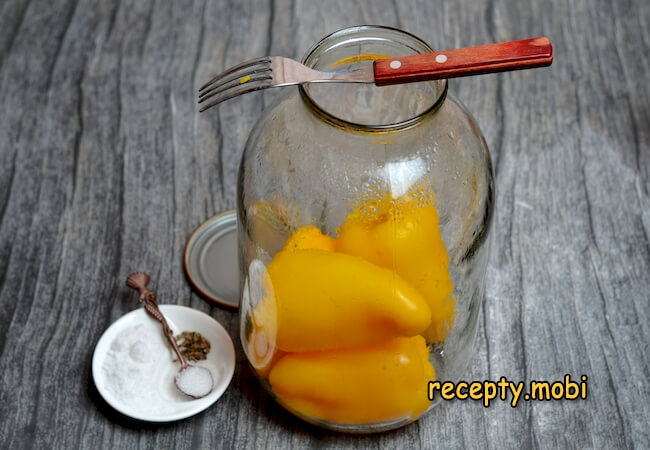
- Have a sterilized three-litre jar ready next to the stove. Lift the first batch of blanched peppers out of the pot, tip out any cooking water trapped inside the pods, and slide them into the jar while still hot. Cover with a sterilized lid between batches. Pack the peppers gently without crushing the walls; a small shake helps the pods settle into place comfortably inside the jar.
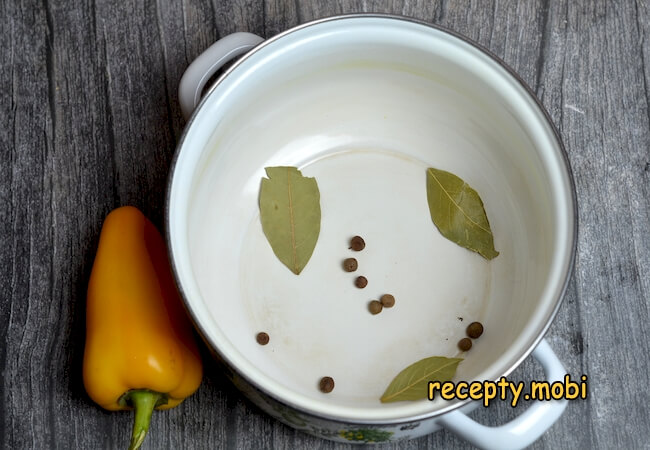
- Pour out the blanching water from the empty pot and add the bay leaves and allspice straight to the bottom. The dry pot lets the spices toast briefly in the residual heat, releasing their aromatic oils into the marinade you are about to make.
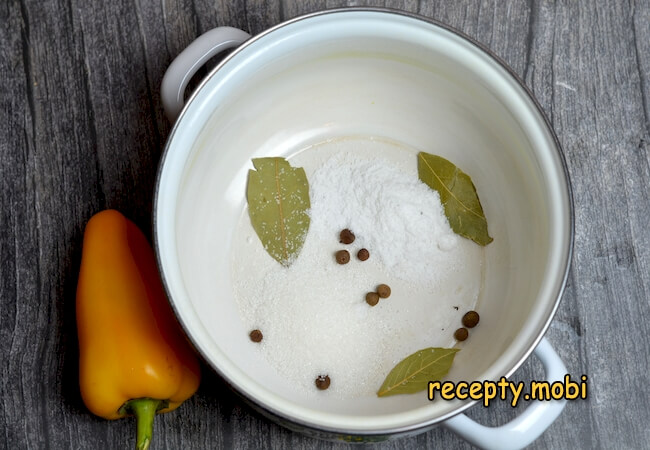
- Measure the sugar and salt into the spiced pot, scooping each spoonful level rather than heaped. The neutral marinade requires precise quantities to deliver the right balance, and a heaped scoop pushes the brine into territory that masks the natural pepper flavor entirely.
- Pour in two and three-tenths litres of cold water and add a small pinch of dill seeds for extra aroma. Bring the marinade to a vigorous boil over high heat and let it bubble for two to three minutes so the salt and sugar dissolve fully and the spices release their flavor into the liquid.
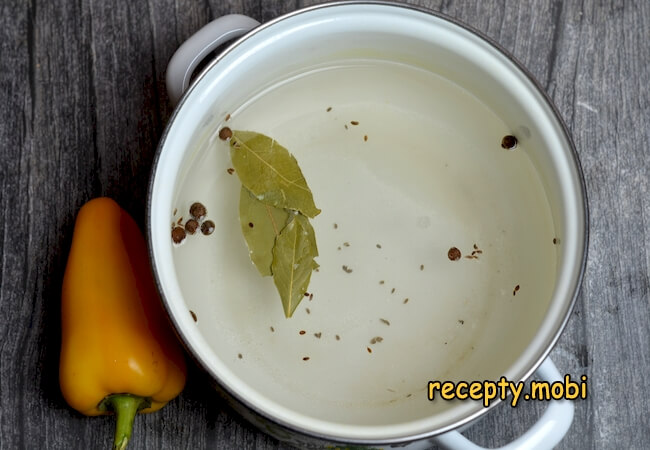
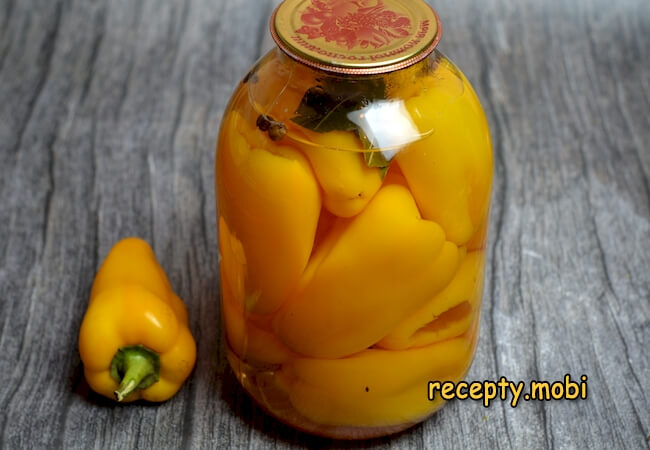
- Pour the hot marinade carefully over the peppers in the jar, making sure every spice from the pot also makes it into the jar. Then add the two tablespoons of vinegar; if your tablespoons are shallow, use a measuring cup instead and pour in thirty millilitres exactly for the right acidity level.
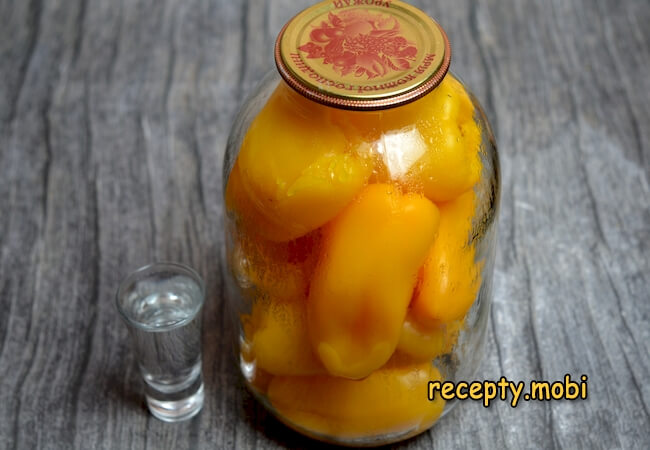
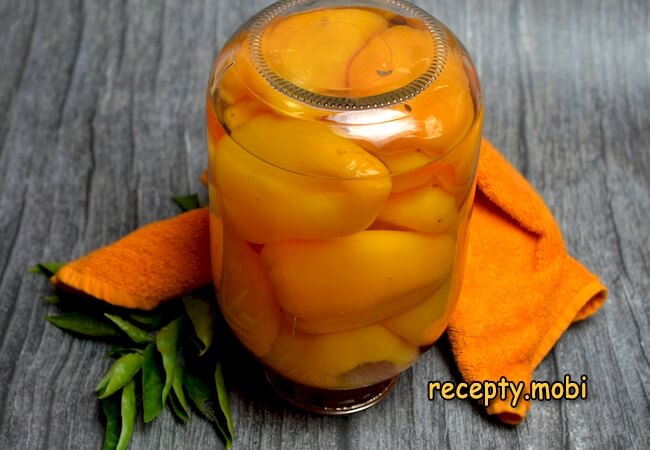
- Seal the jar firmly with the sterilized lid, turn it upside down on the counter, and wrap it thickly in towels or a heavy blanket. Leave the insulated jar undisturbed for a full day so the contents cool slowly and the seal sets perfectly under the pressure differential.
- Marinated Bulgarian peppers for winter store beautifully in a cool dark cellar for about a year. They are designed exclusively for stuffing applications; the deliberately mild marinade lacks the punch needed for serving as a stand-alone salad or appetizer, but it provides the perfect blank canvas for whatever rice-and-meat filling you put inside later.
Tips and Tricks
Tip 1. Use only non-iodized salt for the brine, the kind sold as kosher salt, pickling salt, or coarse sea salt without anti-caking additives. Iodized table salt clouds the marinade permanently and can leave a faintly bitter aftertaste in the peppers after several months of storage. The right salt dissolves cleanly into the boiling water and steps quietly into the background, letting the peppers retain their natural color and texture through the entire shelf life.
Tip 2. Choose pods with thick fleshy walls rather than thin-walled lightweight peppers. Thick-walled varieties hold up much better to the blanching and storage process, retaining the firm crunch needed for stuffing. Thin-walled peppers go limp during long storage and tear easily when filled. For another reliable preserve to stock the winter pantry, see this recipe for pickled green tomatoes.
Tip 3. Sterilize the jar and lid thoroughly before filling. Boil the lid for five minutes in a separate small saucepan and either bake the empty jar at one hundred and twenty degrees for fifteen minutes or steam it over a kettle of boiling water. Properly sterilized vessels are the single most important factor in the long shelf life of any home preserve, and skipping the step risks losing the entire jar to spoilage long before opening day.
Tip 4. Leave the sealed jar inverted under the blanket for the full twenty-four hours, never less. The slow cooling under insulation creates the strong vacuum seal that keeps the peppers safe through months of cellar storage. Rushing this step or skipping the inversion risks weak seals that allow air back into the jar and spoil the contents within weeks. Pair the eventual stuffed peppers with a warm bowl of fermented cabbage with cranberries for a complete winter meal.
Frequently Asked Questions
Why did my marinated peppers turn cloudy in the jar after a few weeks?
Cloudiness usually points to one of three causes. The most common is using iodized salt instead of non-iodized; iodized salt contains additives that cloud brine permanently. Another cause is insufficient sterilization of the jar and lid before filling, which lets unwanted bacteria into the jar. A third possibility is that the seal failed slightly and air entered the jar over time. Lightly cloudy brine is usually still safe if the jar is sealed and the peppers smell normal, but discard any jar where the brine smells off or shows visible mold.
Can I add other vegetables to the same jar with the peppers?
Yes, several vegetables work well alongside bell peppers in the same jar. Whole peeled garlic cloves, small whole tomatoes, and slices of carrot all complement the peppers beautifully and add visual interest to the finished jar. Avoid cucumbers, which require a different brine ratio, and avoid leafy greens like dill or parsley, which turn slimy during long storage. Whatever additions you choose, blanch them briefly first to soften them and reduce the bacterial load, then layer them between the peppers in the jar before pouring in the hot marinade.
How long do the marinated peppers stay safe to eat after opening the jar?
Once opened, the jar should move to the refrigerator immediately and the peppers stay safe and tasty for about two weeks under refrigeration. Always use clean utensils when scooping out the peppers; introducing bacteria from a dirty fork can spoil the remaining contents within days. Keep the peppers fully submerged in the brine; any pods sticking above the liquid risk drying out and turning soft. If you notice off-smells, fizzing, or visible mold at any point during refrigeration, discard the entire contents of the jar.
What stuffing works best with these marinated peppers?
The traditional Russian stuffing combines cooked rice with seasoned ground meat (beef, pork, or a mixture), sautéed onion, grated carrot, and chopped fresh herbs. The mixture is bound with a beaten egg and packed into each pepper before baking under a tomato-and-sour-cream sauce. Vegetarian versions swap the meat for sautéed mushrooms, cooked lentils, or crumbled feta cheese mixed with herbs. Whatever filling you choose, do not overstuff the peppers; leave a small headspace so the filling has room to expand during baking without bursting through the walls.