Write a comment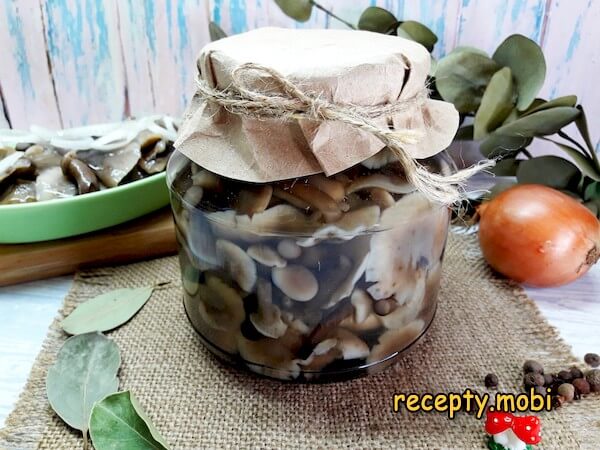
Marinated Honey Mushrooms for Winter
Marinated Honey Mushrooms for Winter is the classic Russian/Eastern-European winter preserve — autumn-harvested honey mushrooms (firmer + denser than summer ones, rarely worm-infested) marinated in spiced vinegar brine for shelf-stable winter consumption. Honey mushrooms (autumn variety) are easily recognized in forest by: YELLOW SKIRT on stem, ROUGH CAP appearing "sprinkled with sugar". The 50-minute total preparation produces 1 jar of 800 g — adequate for several months of small-portion consumption. Perfect with vodka, on toasted bread, mixed with onion + oil as appetizer. Best at peak quality 2-4 weeks after canning (flavors integrate).
Ingredients
Show ingredients
- For the mushrooms: honey mushrooms (unpeeled) – 800 g;
- For the marinade: purified water – 1 L;
- For the marinade: rock salt – 2 tbsp without heap;
- For the marinade: white sugar – 1 tbsp heaping;
- For the marinade: 9% vinegar – 2.5 tbsp;
- For the marinade: bay leaf – 3 pcs;
- For the marinade: black peppercorns – 4-5 pcs;
- For the marinade: garlic – 1-2 cloves (optional, can be omitted).
Preparation
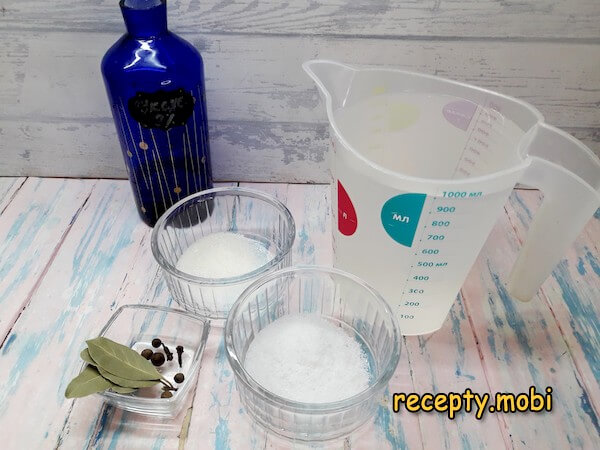
- I prepare the ingredients for marinated honey mushrooms. Marinade quantity = sufficient for 800 g jar; need 800 g unprocessed mushrooms.
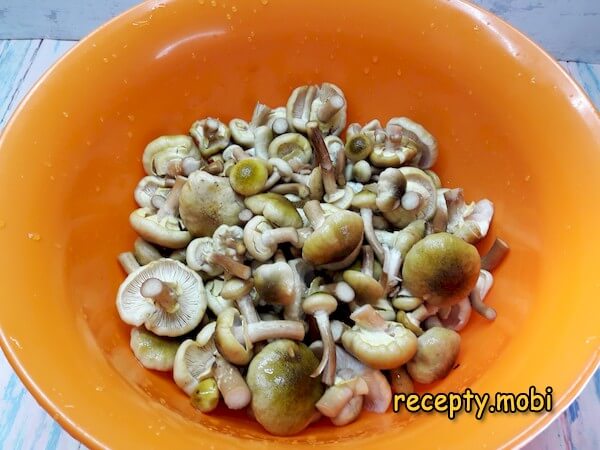
- Source mushrooms: forest gathering (best), supermarket/market in season (acceptable). Place fresh mushrooms in bowl; weigh required amount.
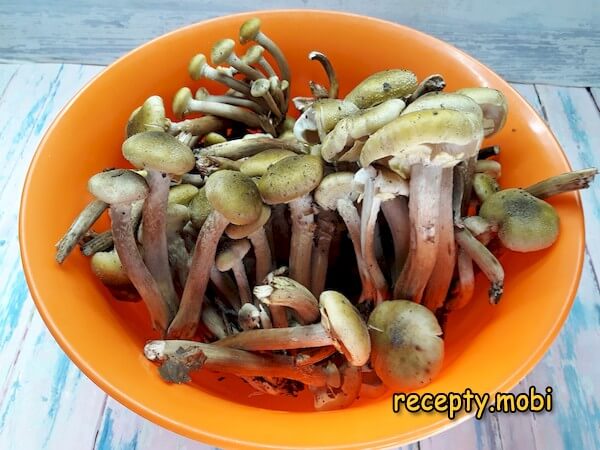
- DRY CLEANING first: trim soiled legs, remove damaged areas, get rid of forest debris. MATURE mushrooms (long legs): trim leg almost to cap (legs stay tough after boiling). YOUNG mushrooms (small undeveloped caps): leave whole. SAVE TRIMMED LEGS — boil 30 min separately, mince, add to mushroom cutlets filling.
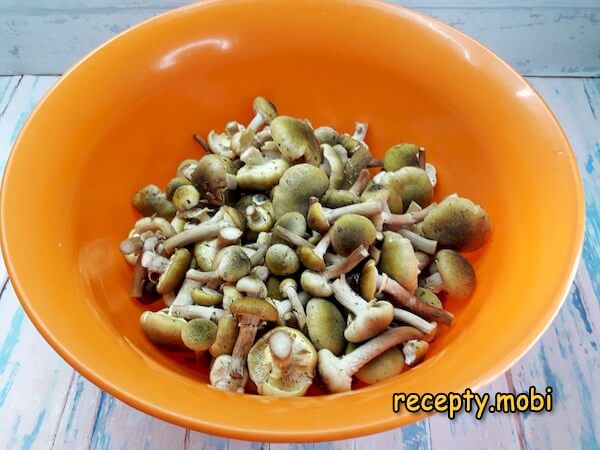
- After dry cleaning, easily rinse mushrooms in COOL water (avoid hot — would cook prematurely).
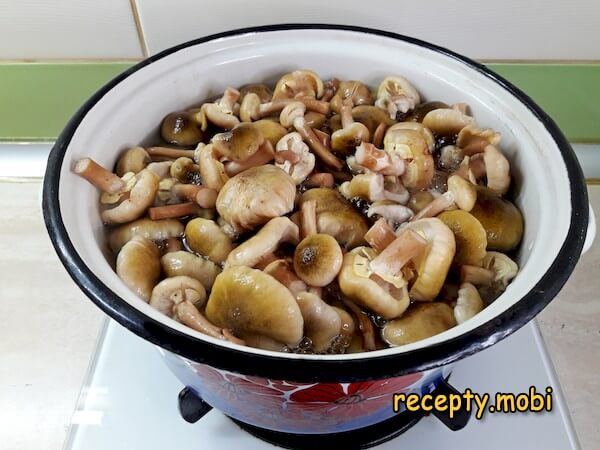
- Boil water in spacious pot. Quantity: any volume that allows mushrooms to float freely. DON'T salt the water. After boiling, pour in mushrooms. Initially they float; as they cook, they all submerge.
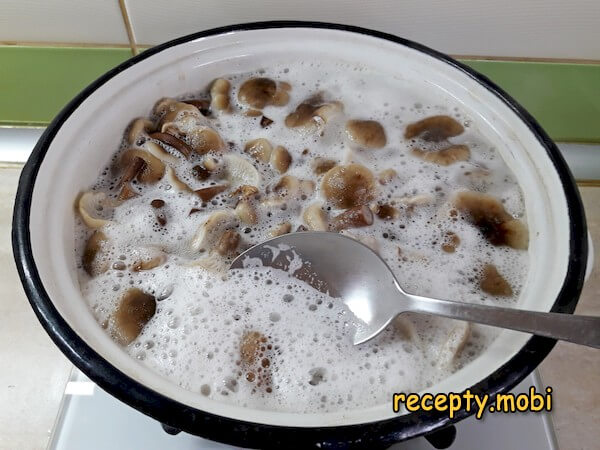
- Lots of FOAM gathers — collect with spoon (clarifies marinade later). From boiling moment: cook mushrooms 20 minutes.
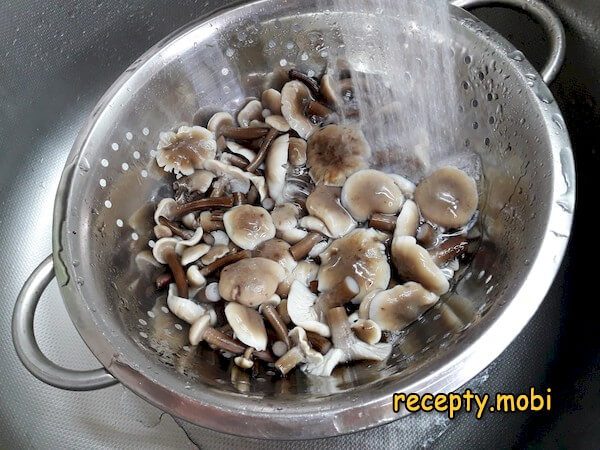
- Transfer to colander; rinse thoroughly under running water (washes away remaining debris + foam residue).
- Make marinade: combine all marinade ingredients EXCEPT vinegar in pot. Place on stove.
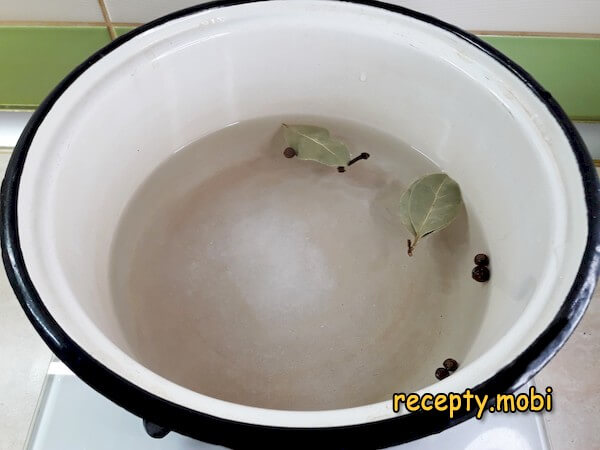
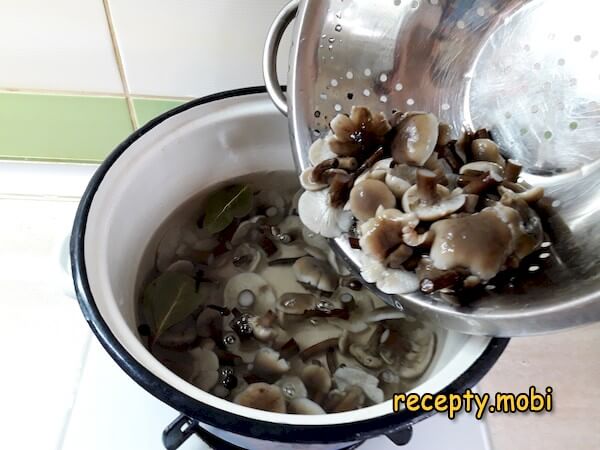
- When marinade boils: transfer ALL mushrooms into it. Boil 15 minutes. Add VINEGAR 1 minute before cooking ends (vinegar added late preserves its acidic preservative power). Meanwhile, sterilize glass jar (steam, microwave, or oven); boil lid 2-3 minutes.
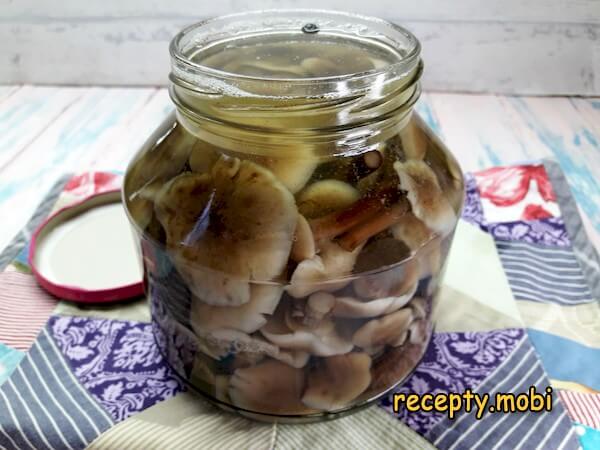
- Fill jar with mushrooms + marinade — no free space up to neck (eliminates air pockets that allow spoilage). Tighten lid firmly.
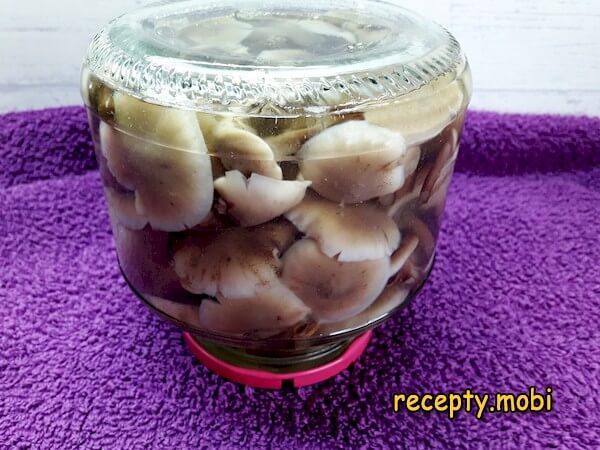
- Turn jar UPSIDE DOWN on soft towel; check seal reliability (no leaks). If reliable: leave to cool naturally.
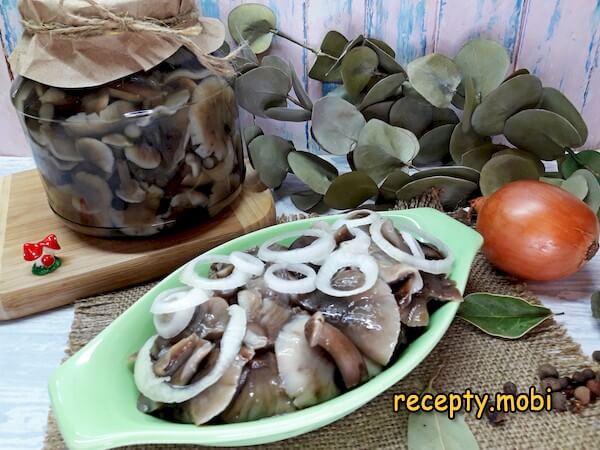
- Marinated honey mushrooms for winter are ready. Storage: COOL place is preferred BUT room-temperature storage works for 1 year. Serving: rinse mushrooms briefly + transfer to salad bowl + drizzle with vegetable oil + season with thin onion rings. Bon appétit!
Tips and Tricks
Tip 1. THE TWO-STAGE COOKING METHOD. The recipe's two-cook approach (water-boil step 5-6 + marinade-boil step 9) is preservation science. FIRST COOK (plain water, 20 min): kills any bacteria/parasites in raw forest mushrooms, removes initial bitterness. RINSING between cooks (step 7): washes away any remaining contaminants. SECOND COOK (in marinade, 15 min): infuses spices + acid for preservation + flavor. Single-cook attempts (skipping first water-boil): produce funkier-tasting + less-safe result. Same two-stage technique used for: any forest-foraged mushroom preserves. Don't shortcut.
Tip 2. THE LATE-VINEGAR ADDITION. Step 9's "vinegar 1 minute before cooking ends" is technique-essential. Adding vinegar at start of marinade boil: 15 min boiling DESTROYS most of vinegar's acid (volatile compound), reduces preservation power, leaves softer-pickled result. Adding vinegar 1 min before end: acid character + preservation power preserved fully. Same principle: any vinegar-marinade preparation requires LATE acid addition for proper preservation. Don't add vinegar early — significantly impacts shelf life. For another forest-mushroom preparation worth comparing, see Marinated Porcini Mushrooms.
Tip 3. THE MUSHROOM-IDENTIFICATION CRITICAL. The intro mentions "yellow skirt + sugar-sprinkled cap" identifying features. CRITICAL FOOD SAFETY: never harvest unfamiliar mushrooms — many poisonous species LOOK SIMILAR to honey mushrooms (especially galerina marginata, deadly poisonous, sometimes called "deadly galerina"). RULES for safe foraging: harvest only with experienced guide first season, learn 3-5 mushroom species DEEPLY before expanding repertoire, check each mushroom against multiple field-guide features. SAFER ALTERNATIVE: buy from known mushroom-foraging vendors at farmers markets, OR buy from supermarkets where species ID is verified. Misidentification = potentially fatal mistake.
Tip 4. THE 2-WEEK FLAVOR-INTEGRATION RULE. Mushrooms benefit from time before opening — flavors INTEGRATE during 2-4 weeks of storage. Just-canned: edible but slightly raw-vinegar character, flavors not yet integrated. After 2 weeks: peak flavor — vinegar mellowed, spices fully infused, mushrooms fully marinated. After 1 month+: continues at peak. After 1 year: still safe but slight texture degradation. The "make in autumn for winter use" timeline is calibrated by this rule. Don't open immediately after canning — wait at least 14 days. For another winter-mushroom preparation worth trying, try Marinated Mushroom Mix.
Frequently Asked Questions
Can I use other mushroom species?
Yes — multiple forest + cultivated species work. CHANTERELLES (golden, late-summer): produce premium-quality marinated result. PORCINI (boletes, autumn): luxurious preserve, expensive. PEARL OYSTER MUSHROOMS (cultivated): widely available year-round, work adequately. CHAMPIGNONS (white button): mildly different (less complex flavor), economical. BUTTER MUSHROOMS (slippery jacks): traditional Russian variety, slimy texture before processing. SHIITAKE (Asian variety): unusual fusion. Each species has slightly different cooking time + character. The 800 g quantity scales linearly. Avoid: morels (require dry heat, not pickling), truffles (different preparation entirely), enoki (too delicate).
Can I use less or no vinegar?
The vinegar is the PRESERVATIVE — reducing or eliminating it dramatically changes shelf life. STANDARD recipe (2.5 tbsp vinegar): 1-year room-temperature shelf life. REDUCED vinegar (1.5 tbsp): 6-month refrigerator-only shelf life, milder flavor. NO vinegar (lacto-fermentation alternative): 1-month refrigerator only, distinctly different flavor profile (sour from natural fermentation). For LOW-ACID DIETS: reduce salt also (interactions). The recipe's 2.5 tbsp is calibrated for standard preservation; modifications shift the dish from "preserved canning" to "fresh refrigerated condiment".
How long does it keep?
Properly canned at room temperature: UP TO 1 YEAR. Refrigerated after opening: 2-3 weeks. Visual signs of spoilage: bulging lid (fermentation — discard immediately), mold growth on top (discard), off-smell of opened jar (discard). Storage requirements: dark cool place (cellar, pantry), no direct sunlight, no temperature fluctuations. Properly stored: bright clear marinade, mushrooms maintain firmness, no off-odors. The acid + salt + sugar combination + thorough sterilization creates shelf-stable preserve. Best practice: rotate stock — eat oldest first, replace with fresh autumn batches.
What's the best serving accompaniment?
Russian/Eastern-European tradition has classic pairings. CLASSIC: drained marinated mushrooms + thin onion rings + olive oil + minced fresh dill = appetizer salad. WITH VODKA: served alongside frozen vodka + dark rye bread (traditional Russian zakuski). ON TOASTED BREAD: open-faced sandwiches with cream cheese + chopped mushrooms. SALAD COMPONENT: chopped into Olivier salad, vinaigrette salad, "fur coat" herring salad. PASTA TOPPING: tossed with hot pasta + fresh herbs + Parmesan. The mushrooms are condiment-style accompaniment for many dishes; try mixing into different recipes throughout winter.