Write a comment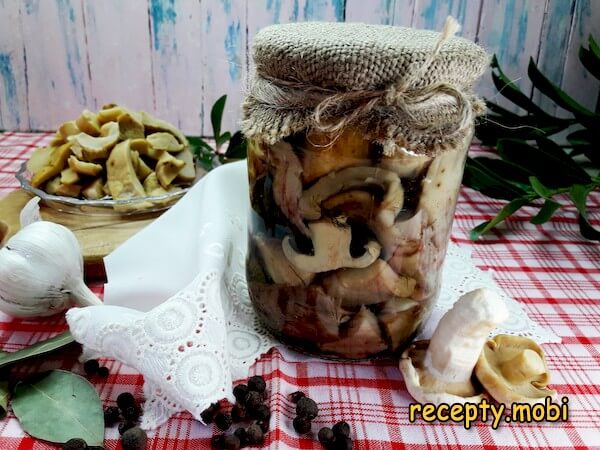
Marinated Milk Mushrooms for Winter
Marinated Milk Mushrooms for Winter is the genuine Russian/Slavic forest-mushroom preserve — milk mushrooms ("gruzdi") require special care: 2-day soaking + 2-stage boiling + brief marinade-cooking. KEY recipe-element: removes natural mushroom-bitterness through extended soaking. The 2-day total elapsed time produces 1 jar (700 ml). Best stored throughout winter; serve with hot potatoes during freezing weather. Genuine forest-foraging tradition adapted for safe canning. Takes patience but produces premium pickled-mushroom delicacy unlike anything store-bought.
Ingredients
Show ingredients
- milk mushrooms – 500 g;
- For the marinade: purified water – 750 ml;
- white sugar – 50 g;
- rock salt – 40 g;
- peppercorns – 3 pcs;
- dill umbrella (dried/frozen ok) – 1 pc;
- bay leaf – 2 pcs;
- 70% vinegar acid – 2 tsp;
- odorless vegetable oil – 2 tbsp;
- garlic – 2 cloves.
Preparation
- Set aside 500 g freshly-collected mushrooms.
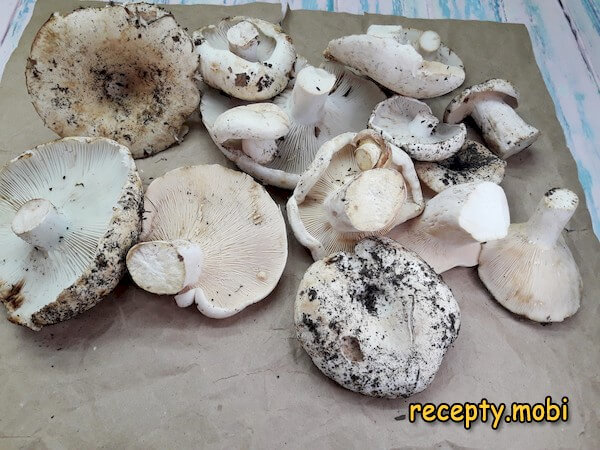
- Pour water; arm with small BRUSH + KNIFE. Thoroughly wash mushrooms; rinse each specimen under running water at end.
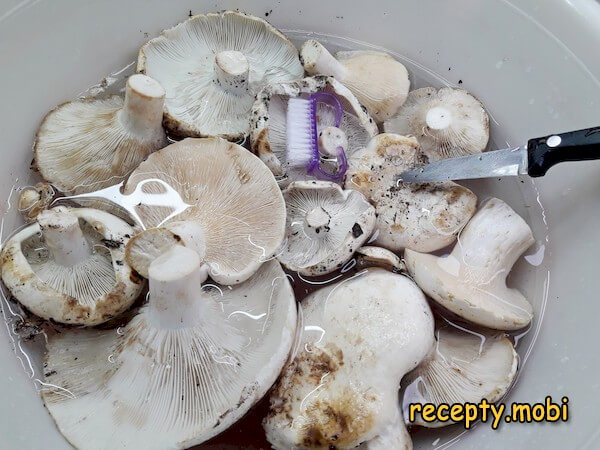
- Place washed mushrooms in BOWL.

- SOAK 2 DAYS in fresh water; change water AT LEAST 5 TIMES per day. Excess BITTERNESS comes out, leaving only slight hint.
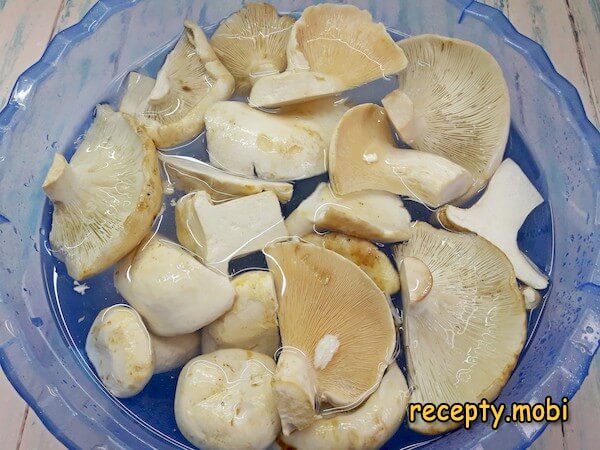
- Cut soaked LARGE mushrooms into several pieces — fit through jar neck. Place in pot.
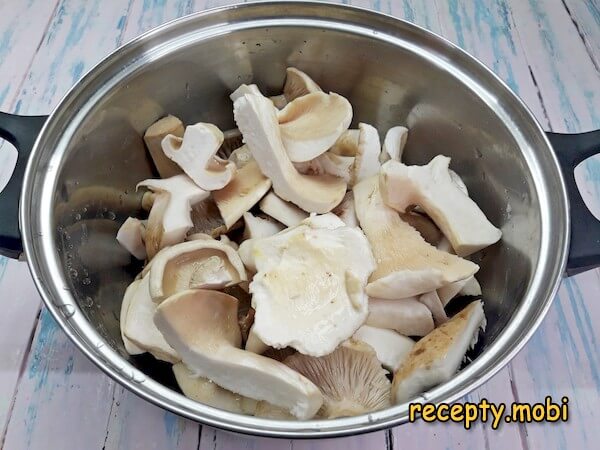
- Add water (mushrooms swim freely); turn on stove. Boil 15 MINUTES.
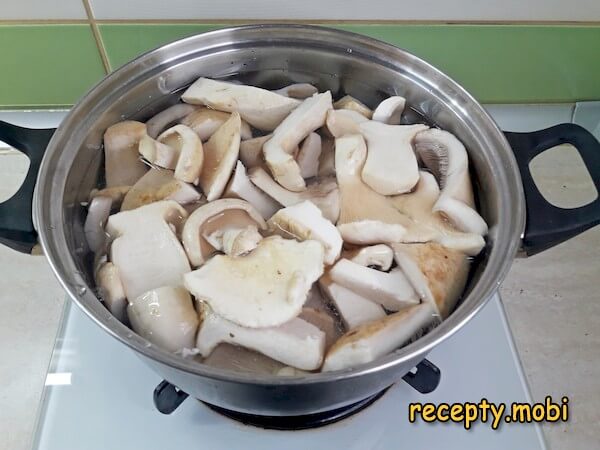
- Just before boiling: fluffy FOAM forms — REMOVE.
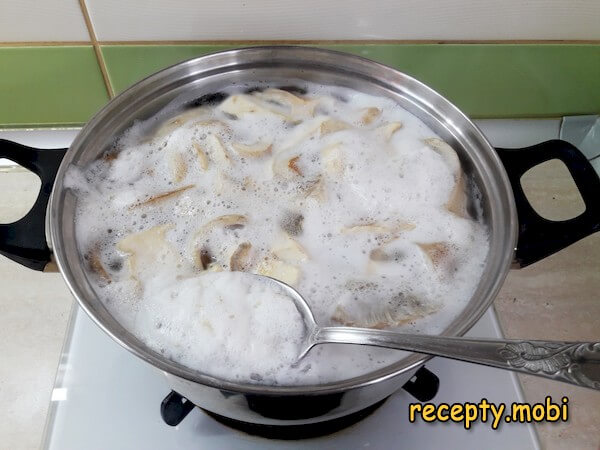
- After boiling: pour mushrooms into COLANDER. Rinse with COLD water — washes away foam remnants + possible debris.
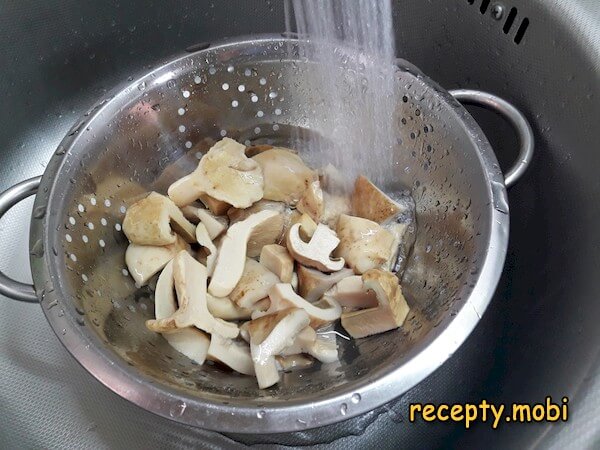
- Again place in pot; this time BOIL 30 MINUTES. If foam forms again: REMOVE.
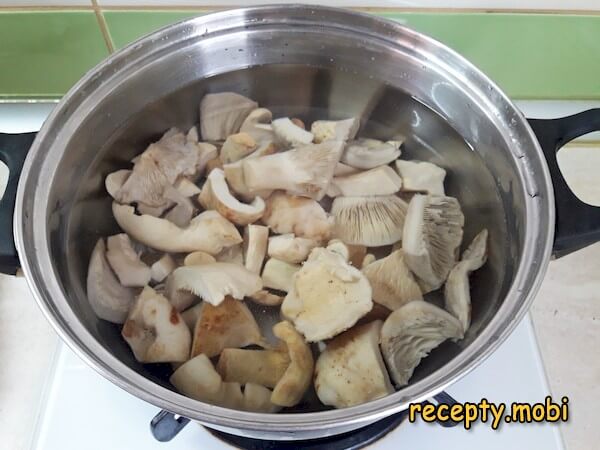
- During this time: prepare PICKLING ingredients.
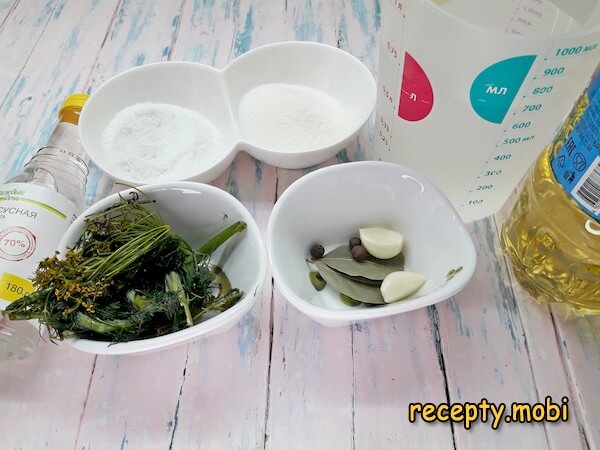
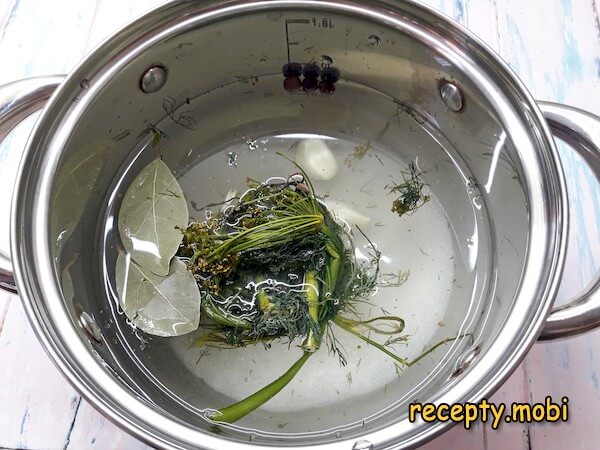
- Mix all specified ingredients (EXCEPT vinegar + oil) in pot. Place on fire.
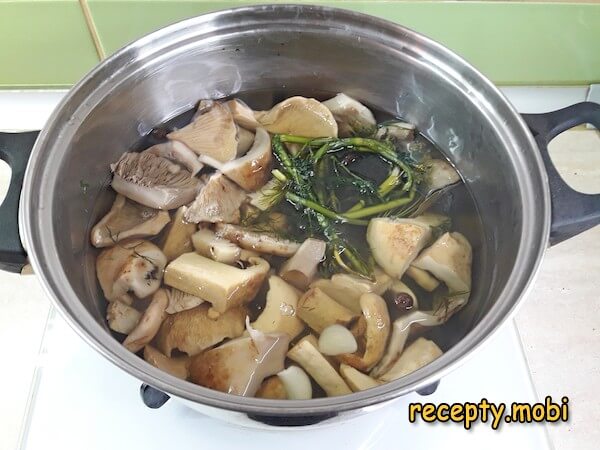
- After boiling: rinse mushrooms again; pour BOILING marinade. Boil 8 MINUTES.
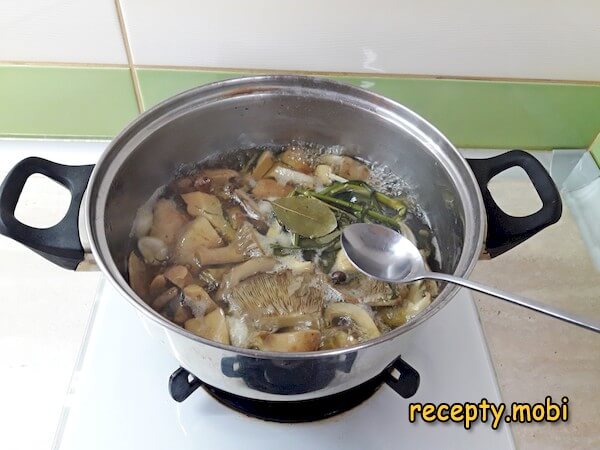
- Add VINEGAR ACID; continue boiling 2 MINUTES MORE.
- Place mushrooms in STERILE jar with marinade — leave LITTLE air space to top.
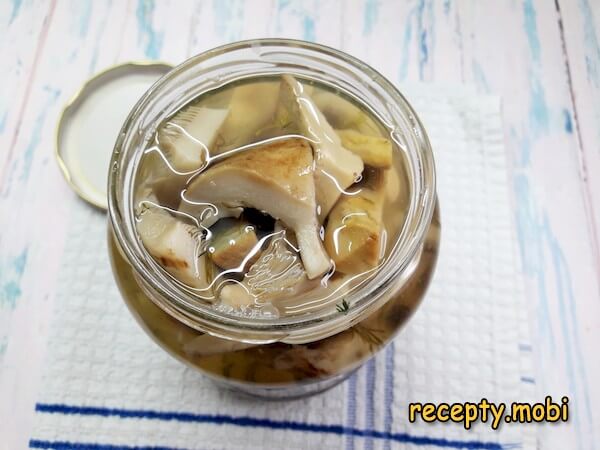
- Add vegetable OIL.
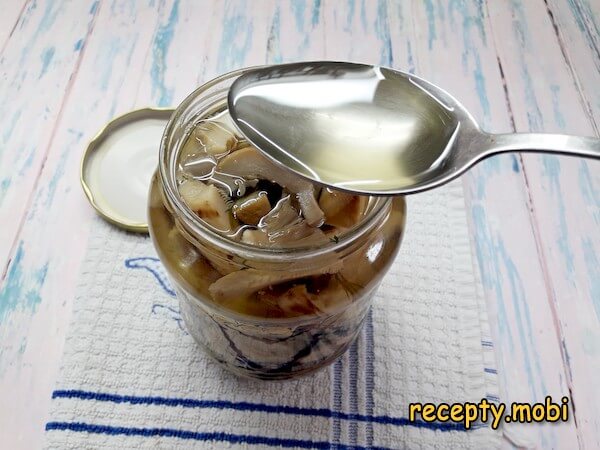
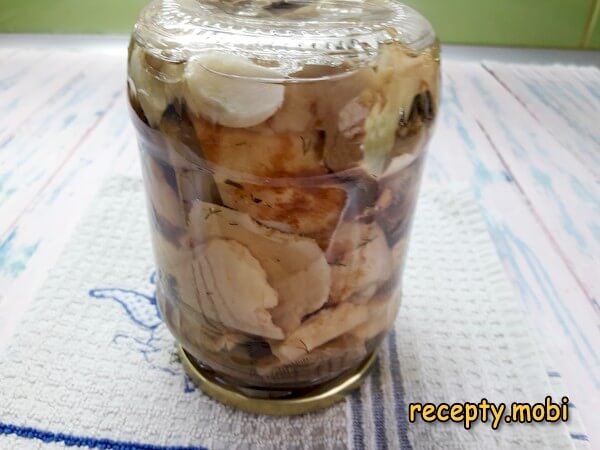
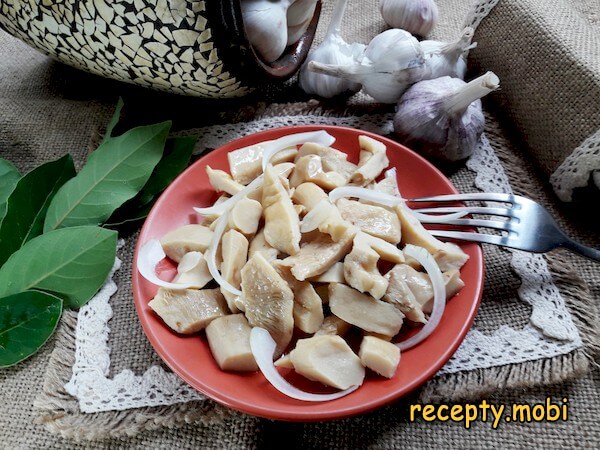
- Screw on BOILED LID. Wrap jar; turn UPSIDE DOWN. Mushrooms ready immediately after cooling — but better to store throughout winter. Cherished jar opened during freezing weather + served with hot potatoes = cozy moment. Bon appétit!
Tips and Tricks
Tip 1. THE 2-DAY SOAKING + 5x DAILY WATER CHANGES. Steps 4's specific soaking protocol is recipe-essential safety + flavor. Milk mushrooms (gruzdi): contain natural BITTERNESS + potentially-irritating compounds, REQUIRE extensive soaking before consumption. 2 DAYS + 5x daily water changes (~10 total water swaps): leaches bitter compounds gradually, leaves only "slight hint" of natural mushroom character. Skipping or shortening soaking: bitter inedible result. Same extensive-soaking principle: traditional Russian "gruzdi" preparation, similar mushroom-foraging traditions across Slavic + Nordic countries. Don't shortcut — defines proper milk-mushroom preparation. Set timer for water changes if needed.
Tip 2. THE TWO-STAGE BOILING TECHNIQUE. Steps 6+9's "boil 15 min + drain + boil 30 min" is safety + texture essential. SINGLE long-boil method: residual debris/bitter compounds remain in cooking liquid, finished mushrooms have off-character. TWO-STAGE method: First boil (15 min) extracts initial dirt + bitter compounds + residual irritants → drain + rinse. Second boil (30 min) provides final cooking in clean water → ready for marinade. Result: cleaner-tasting + safer mushrooms. Same multi-stage cleaning: traditional Russian forest-mushroom preparation, modern food-safety practices. The total 45-min boiling: ensures safe preparation despite mushroom-foraging origin. For another classic Russian forest-mushroom preserve worth comparing, see Marinated Honey Mushrooms.
Tip 3. THE 70% VINEGAR ACID PRECISION. Recipe's "70% vinegar acid - 2 tsp" is concentrated-acid specification. STANDARD 9% vinegar (more accessible): would require ~16 tsp for equivalent acidity = TOO MUCH liquid in marinade. CONCENTRATED 70% acetic acid: 2 tsp provides full preservation acidity in compact volume. CAUTION: 70% vinegar is essentially pure acetic acid + extreme caution required (skin burns, eye damage). DILUTION OPTION: 16 tsp 9% vinegar = equivalent acidity (adjust water reduction). Same concentrated-acid principle: traditional Russian preserves, German Essigessenz preparations. Handle with gloves + ventilated kitchen + away from children/pets.
Tip 4. THE OIL-LAYER PRESERVATION FINISH. Step 15's "add vegetable oil" is preservation + flavor essential. Plain marinade-only preservation: works but exposes top-layer mushrooms to oxidation when jar opened. OIL-LAYER on top: creates SEAL between marinade + air, prevents oxidation, extends opened-jar shelf life, signature shine on top of jar. The 2 tbsp amount: forms thin protective layer (1-2 mm). Same oil-preservation principle: Mediterranean preserves, traditional Russian "marinady". Don't skip — extends quality significantly. For another classic Russian/Slavic mushroom preparation worth trying, try Mushrooms with Sour Cream.
Frequently Asked Questions
What are "milk mushrooms"?
Russian "gruzdi" (Lactarius resimus + related Lactarius species) — distinctive forest mushrooms named "milk mushrooms" because cut surface releases white milky latex. CHARACTERISTICS: white/pale-yellow caps with funnel shape, dense flesh, distinctive natural bitterness requiring extensive preparation. TRADITIONAL Russian foraging tradition: prized for pickled-mushroom dishes, cannot be eaten raw or quickly-cooked. AVAILABILITY: Russian/Eastern European groceries (frozen acceptable), foraging in coniferous forests of Russia + Eastern Europe + parts of Asia. Western EQUIVALENT: not commonly available — substitute with similar-density mushrooms (chanterelles, porcini for forest-mushroom character). Recipe-canonical "gruzdi" produces uniquely traditional Russian-pickle character.
Can I substitute different mushrooms?
Yes — variations work. HONEY MUSHROOMS (opyata, Armillaria): smaller forest mushrooms, no soaking needed (no bitterness), 30-min total cook time, similar pickling result. CHANTERELLES: yellow forest mushrooms, gentle preparation, 15-min cook time. PORCINI (boletes): premium choice, no bitterness, similar method without 2-day soak. WHITE BUTTON (champignons): cultivated alternative, simplest preparation, no soaking. CRIMINI: cultivated, brown, simple preparation. MIXED forest-mushroom marination: traditional Russian variety. The MILK MUSHROOM (gruzdi) version (recipe-canonical): most distinctive Russian-tradition character. Substitutes lose authenticity but produce delicious alternatives.
How long do they keep?
Sealed jars in cool place: UP TO 12 MONTHS at peak quality (recipe-stated for "throughout winter"). Months 1-3: peak texture (mushrooms firm, marinade bright). Months 4-8: PEAK FLAVOR (post-canning aging develops complexity). Months 9-12: still excellent, slight softening of mushrooms. Past 12 months: not recommended. COOL CELLAR (10-15°C): extends quality to 18 months. ROOM TEMPERATURE: 6 months max (cooler is better for mushroom preserves). Once OPENED: refrigerate, consume within 1 month. Storage tips: clean dry fork between uses, tight lid, dark place. Spoilage signs: bulging lid, fermentation bubbles, cloudy marinade — discard immediately.
What goes best with them?
Russian/Slavic tradition has specific milk-mushroom companions. CLASSIC: with hot boiled potatoes (most iconic pairing — recipe-stated). WITH SOUR CREAM: dollop on mushrooms enhances richness, traditional. ZAKUSKA: served as cold appetizer with vodka, beer (signature drinking-snack). HEARTY: alongside grilled meats, pelmeni dumplings, vareniki. BREAD: dark rye (Borodinsky), simple white bread, sourdough. SOUP: chopped fine + added to mushroom soup for double-mushroom character. EGG DISHES: scrambled eggs with marinated mushrooms = breakfast treat. The mushrooms are versatile zakuska — pairs with anything fatty/rich (cuts richness with acidic refresh).