Write a comment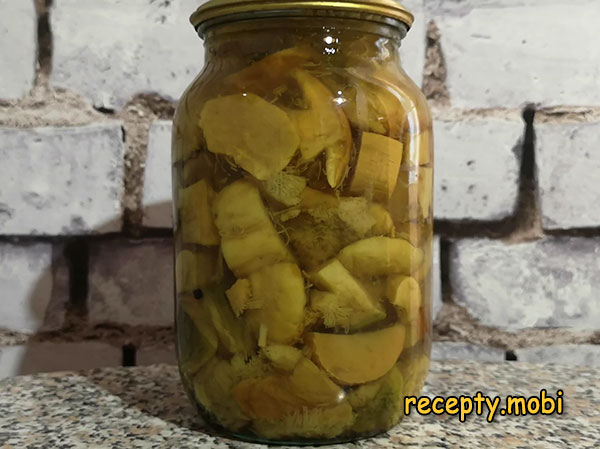
Marinated White Mushrooms Without Sterilization
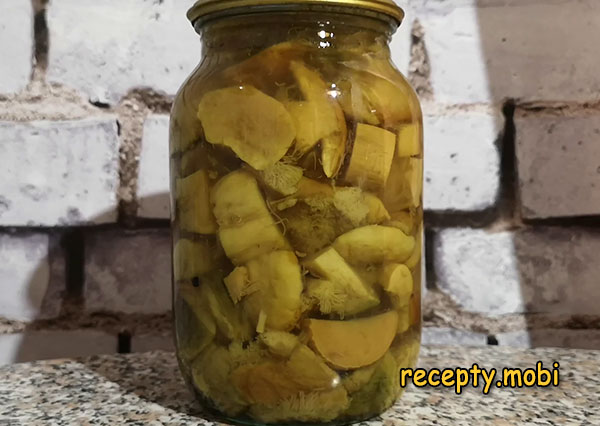
Marinated white mushrooms (penny buns / porcini, Boletus edulis) are the king of preserved mushrooms — and this no-sterilisation method makes them genuinely possible to prepare at home. The mushrooms keep their unmistakable forest aroma and meaty texture; the brief two-stage boil + heat-seal jar technique provides safe shelf storage without the additional water-bath sterilisation step. White mushrooms are the most prized of all wild mushrooms for marinating; their dense flesh holds up beautifully through the marinade absorption.
The recipe yields 1 liter jar at 37 kcal per 100 g. Total time about 50 minutes.
Ingredients
Show ingredients
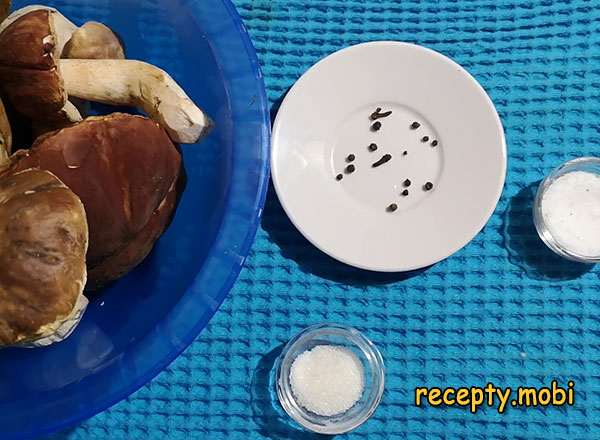
- white mushrooms (penny buns) – 720 grams;
- black peppercorns – a pinch;
- cloves – 2 pcs;
- 9% vinegar – 2 tbsp;
- sugar – 1 tsp;
- salt – 1 tbsp heaping.
Cooking
1. I prepare the ingredients. White mushrooms must be fresh, no visible damage. I rinse them under cold water (gentle stream — porcini have spongy pores that absorb water if soaked) to remove forest debris and dirt.
2. I cut the white mushrooms into medium cubes — about 2 cm pieces. Smaller specimens stay halved or whole.
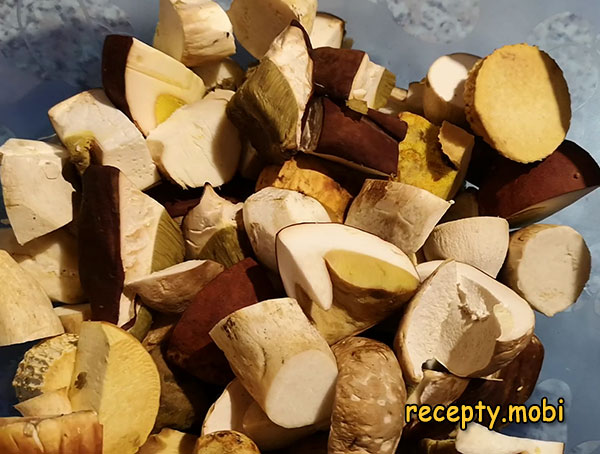
3. The cut mushrooms transfer to a deep pot and 2 cups (about 500 ml) of water joins them.
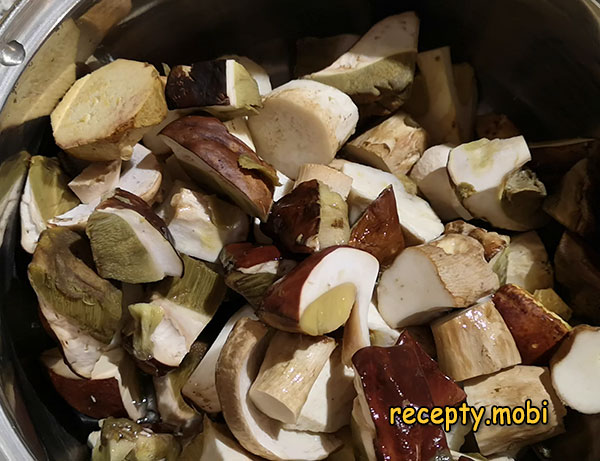
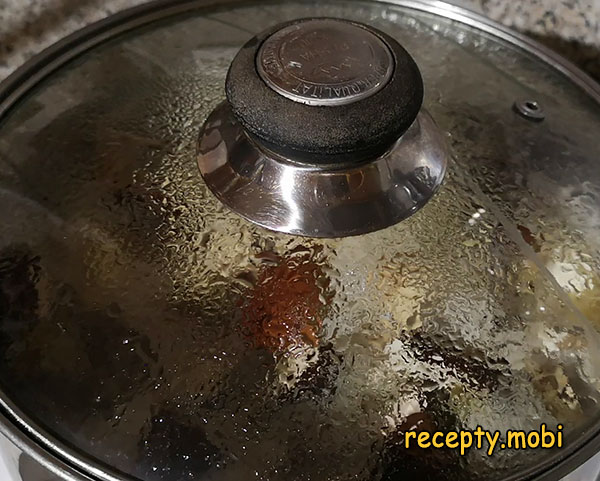
4. Pot onto medium heat. I bring to boil with occasional stirring, then cook 5 minutes more, skimming foam as it rises. The first-stage clean-boil extracts forest debris.
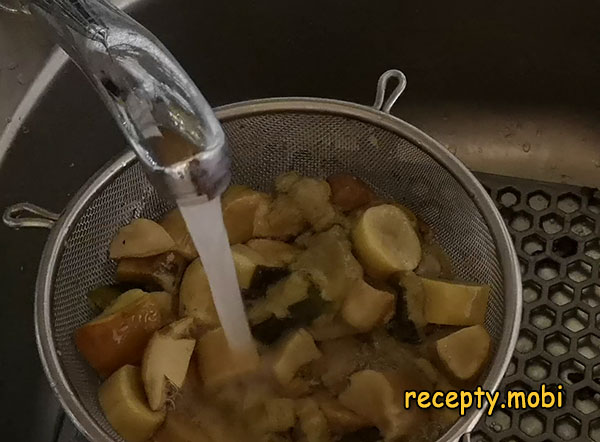
5. I drain the mushrooms in a colander and rinse under cold running water — removes residual cooking liquid and any final debris.
6. The cleaned mushrooms return to the pot for the second-stage marinade boil.
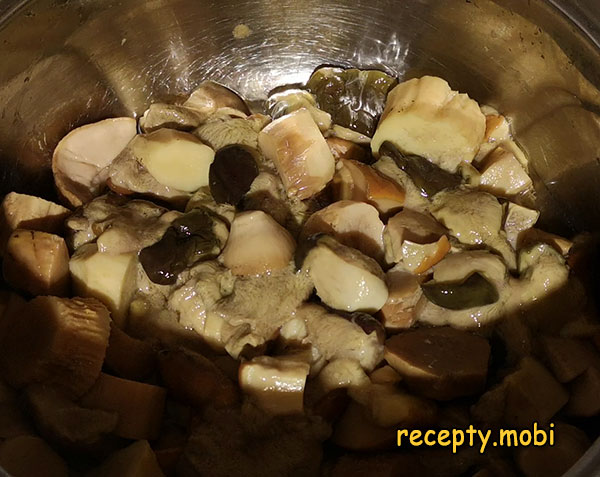
7. Fresh water covers the mushrooms by about 1 cm — this is the marinade liquid base.
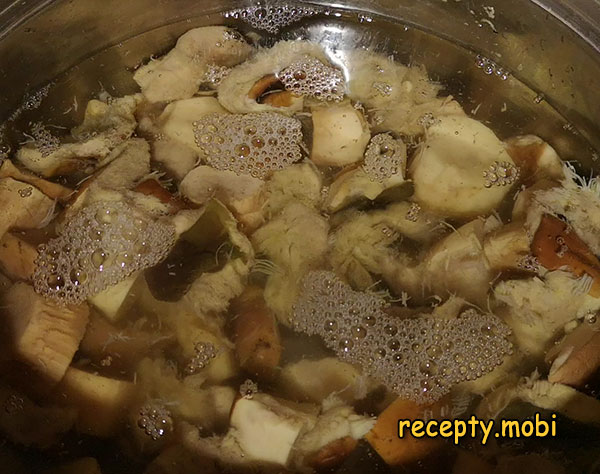
8. Pot over medium heat to boiling, then 20 minutes simmer with periodic foam-skimming.
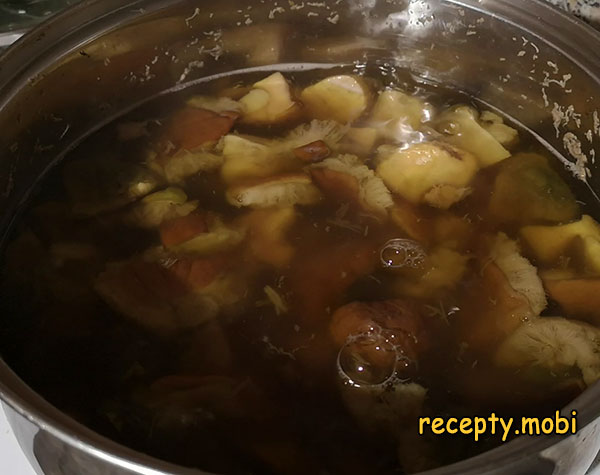
9. Salt (1 heaping tbsp) and sugar (1 tsp) go in.
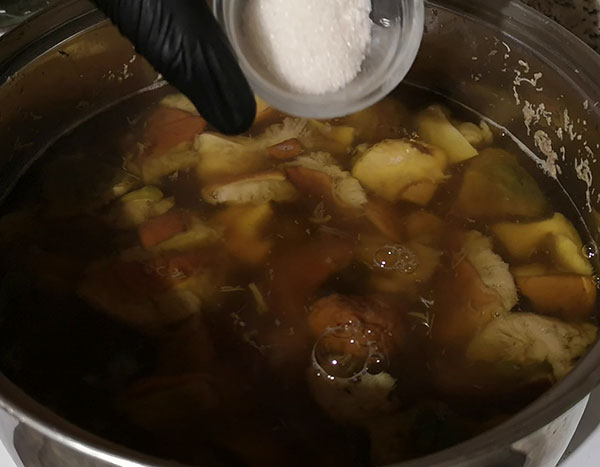
10. Then black peppercorns and clove buds. I stir well, cover with the lid, and simmer 10 more minutes — the spices fully infuse.
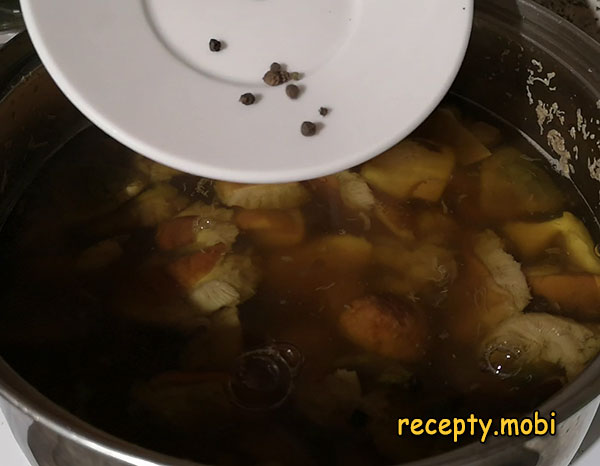
11. The 9% vinegar (2 tbsp) goes in last. I mix thoroughly, cover, and simmer 5 more minutes — late-stage vinegar preserves its acidity. The hot heat-seal-bound jar is the no-sterilisation safety mechanism.
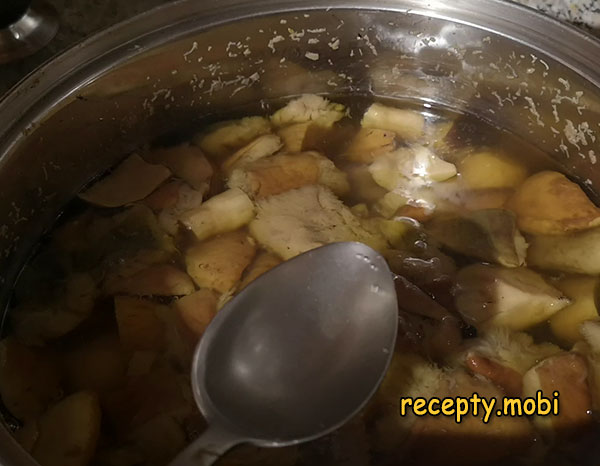
12. The pre-sterilised jar fills with mushrooms first (slotted spoon), then the hot marinade pours in to the very top. Sterilised lid screws on tight.
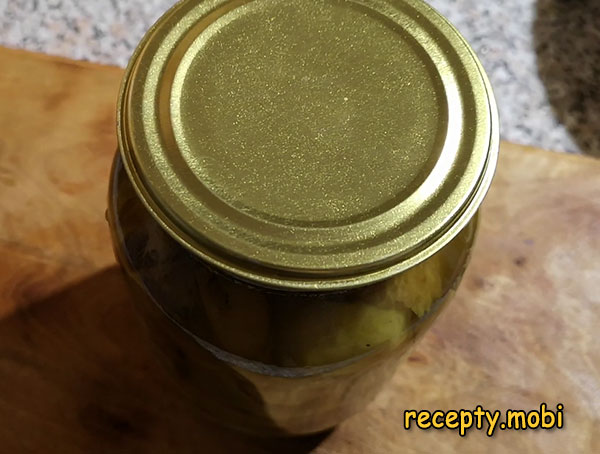
13. The jar inverts and cools upside-down — slow inverted cooling creates a strong vacuum seal that's the basis of the no-sterilisation safety.
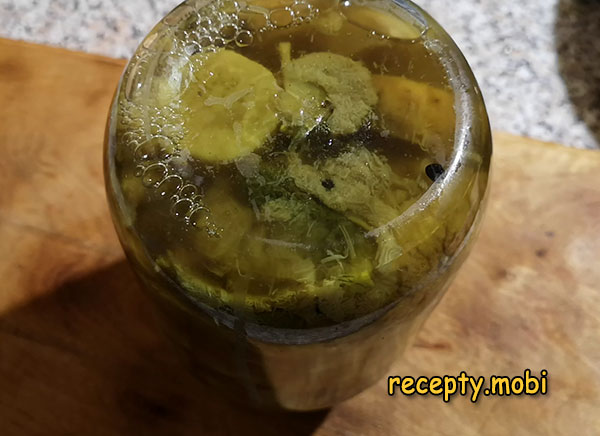
Marinated white mushrooms without sterilisation for winter are ready. The combination of brief boil + acidic marinade + sterilised jar + heat-seal technique gives shelf-stable preserve with the prized porcini character intact. Enjoy your meal.
Cooking video
Tips and Tricks
Tip 1. THE NO-STERILISATION SAFETY CHAIN. This recipe relies on multiple safety steps working together: thorough mushroom cooking (35 minutes total), acidic marinade (vinegar lowers pH below safety threshold), sterilised jar and lid, hot fill, immediate seal, slow inverted cool. Skip any step and the safety chain breaks. The brief 50-minute total time looks easy, but each component is calibrated for proper preservation. Don't shortcut the timings or skip the foam-skimming.
Tip 2. WHITE MUSHROOMS ARE THE PRIZE — TREAT THEM RIGHT. Porcini (Boletus edulis) command the highest mushroom prices in markets because of their concentrated savoury depth and meaty texture. Don't dilute by mixing with cheaper species in the same jar — keep porcini pure. The 2 cm cube size is ideal for displaying their character; smaller cubes lose visual identity. Avoid soaking porcini in water (the spongy pores absorb water and dilute flavour) — gentle running-water rinse is the right approach. For another wild-mushroom preserve worth comparing, see Marinated Plums for Winter Without Sterilization.
Tip 3. THE PINCH OF PEPPERCORNS IS PRECISE. The recipe says "a pinch" of black peppercorns rather than a specific count — this is intentional. Different peppercorn sizes (Tellicherry vs Lampong vs Sarawak) have different volumes-per-count. A pinch (about 6-8 medium peppercorns) is the right quantity for the 720 g of mushrooms regardless of peppercorn variety. Don't over-pepper; porcini's delicate forest aroma is easily overwhelmed by aggressive spicing.
Tip 4. SERVE TO MAXIMISE THE PORCINI EXPERIENCE. Drain the mushrooms from the marinade for service (don't let them swim in liquid on the plate). Best presentations: in a small glass bowl with thin-sliced raw onion and a drizzle of high-quality cold-pressed sunflower or olive oil, accompanied by rye bread; or as a topping for soft polenta with grated Parmesan; or sliced into thin strips and folded into pasta with cream sauce. The marinade liquid keeps separately for use in stews, soups, or salad dressings — too good to discard. For another no-sterilisation winter preserve worth trying, try Marinated Tomatoes for Winter Without Sterilization.
Frequently Asked Questions
How is "without sterilisation" different from full sterilisation?
Full-sterilisation methods include an additional step where the filled, lidded jar gets boiled in a water bath for 15-30 minutes — this provides extra heat treatment that kills any remaining bacterial spores and gives the longest possible shelf life. Without-sterilisation methods rely on: thorough cooking of contents, acidic marinade, hot-fill at boiling temperature, immediate sealing, and slow inverted cooling for vacuum formation. The shelf life is slightly shorter (8-10 months vs 12+ months for fully sterilised), but the simplicity and time savings are substantial. For mushrooms with proper acid level (vinegar), the no-sterilisation method is genuinely safe.
What if I can't find fresh porcini?
Porcini availability is highly seasonal in most countries — late summer to early autumn is the foraging window. Substitutes for fresh porcini: dried porcini rehydrated (use 80 g dry rehydrated in 500 ml warm water — gives different but excellent flavour), other boletes (aspen mushroom Leccinum aurantiacum, birch bolete L. scabrum — close substitutes), king oyster mushrooms (modern substitute, less authentic but commonly available), or high-quality cultivated portobellos. Frozen porcini also work — thaw fully and proceed from step 1.
How long does the preserve keep?
Properly sealed jars at room temperature in a dark cupboard keep 8-10 months without sterilisation (12+ months WITH water-bath sterilisation, for comparison). Cool basement storage extends this. Once opened, transfer to fridge and use within 2-3 weeks. The mushrooms continue softening slightly over months in the jar but retain good texture for at least 6 months. If you spot mould, fizzing, or off-smells, discard the entire jar — properly preserved mushrooms don't ferment or develop visible mould.
Can I add other aromatics?
The recipe is precise but tolerates modest additions. Best add-ins: 1-2 dill umbels (the seed-heads, traditional Russian addition for "dill-pickle" character), 1 small bay leaf (use sparingly — porcini's natural aroma is delicate), 1 garlic clove (sliced) per jar (sharp accent), or 0.5 tsp of fennel seeds (Italian-Mediterranean lean). Avoid: cinnamon (clashes with mushroom), allspice + cloves combination (already have cloves in recipe — adding allspice creates "Christmas-spice" overload), or any sweet aromatics. The base recipe is excellent; additions should enhance, not overwhelm.