Write a comment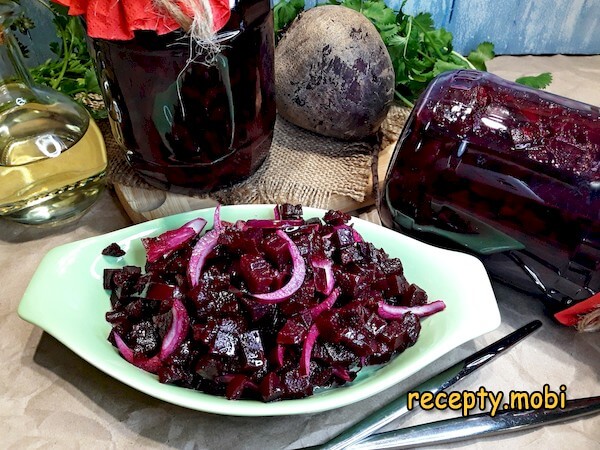
Pickled Beets for Winter in Jars – Easy Homemade Recipe
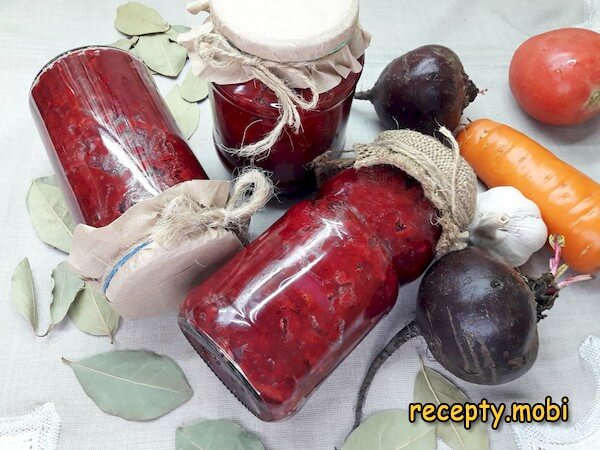
This pickled beets recipe is the no-sterilisation winter preserve method — pre-cooked beets sliced or grated, briefly boiled in spiced vinegar marinade, and sealed in jars where the heat-seal does the preservation work. The result is sweet-sour, slightly firm-textured beets that work as standalone side dish, salad component, or borscht-prep shortcut. Two 750 ml jars from 1 kg of fresh beets is a satisfying winter-pantry yield.
The recipe yields 2 jars (750 ml each) at just 26 kcal per 100 g — one of the lightest winter preserves possible. Total time 1 hour active + 8 hours overnight cooling.
Ingredients
Show ingredients
- beets – 1 kg;
- white sugar – 1 heaped tbsp;
- rock salt – 1 level tbsp;
- bay leaf – 2 pcs;
- cloves – 4 pcs;
- allspice – 4-5 pcs;
- 9% vinegar – 70 ml;
- drinking water – 1 L.
Preparation
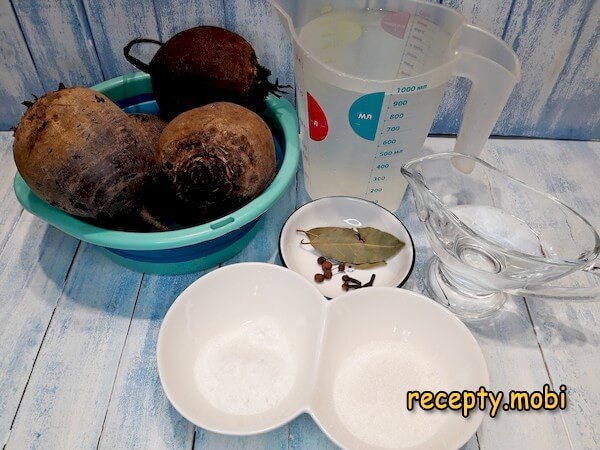
- I prepare the ingredients. Beets of any size work for canning — small or large, the key qualities are sweet flesh, dark burgundy colour, and no white streaks. I sterilise jars and lids by my preferred method.
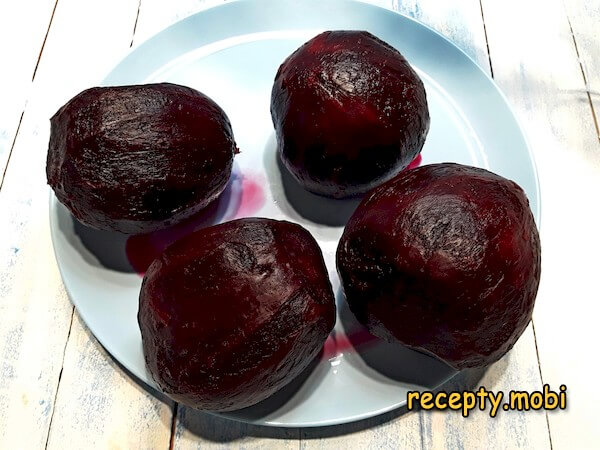
- I boil the beets in plain water. Small ones cook in 30 minutes; large ones need an hour or more. Done when a fork pierces all the way to the centre easily. I peel the cooked beets under cold running water — skins slip off effortlessly. 3. I cube the beets into 1.5 cm pieces, OR grate them on a coarse grater (or Korean-carrot grater for thin strips). Choice depends on intended use: cubes for vinaigrette and borscht; grated for salads and herring-under-fur-coat. Both work; the choice is aesthetic, not functional.
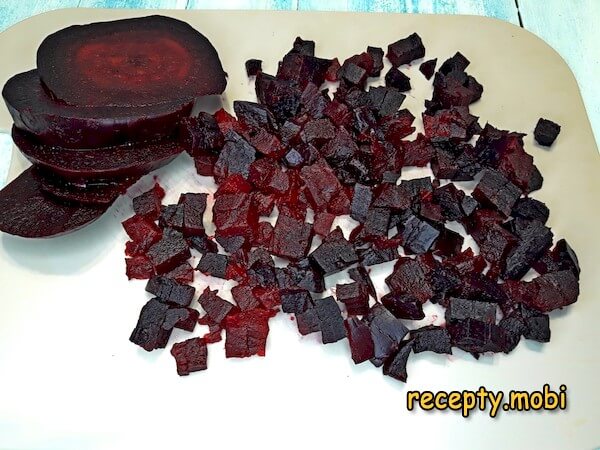
- I process all the beets in my chosen way (cubed or grated).
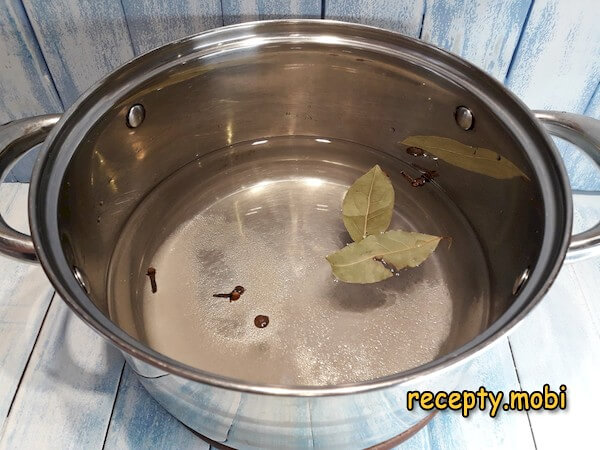
- For the marinade, I combine water, salt, sugar, cloves, allspice, and bay leaves in a pot. Bring to a boil and simmer 5 minutes to fully release the spice aromatics into the brine.
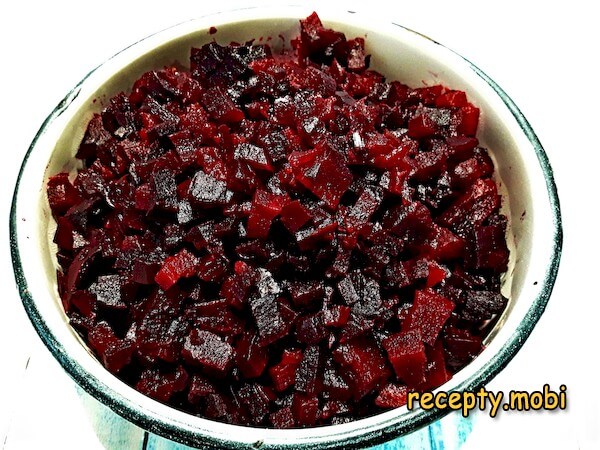
- I add the prepared beets to the boiling marinade.
- I bring everything back to a boil, then pour in the vinegar.
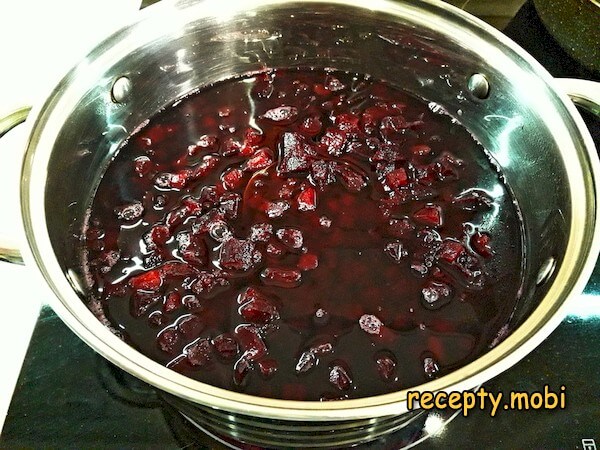
- I boil the beets in the marinade for exactly 2 minutes — no more. Longer cooking softens the beets past the desired bite.
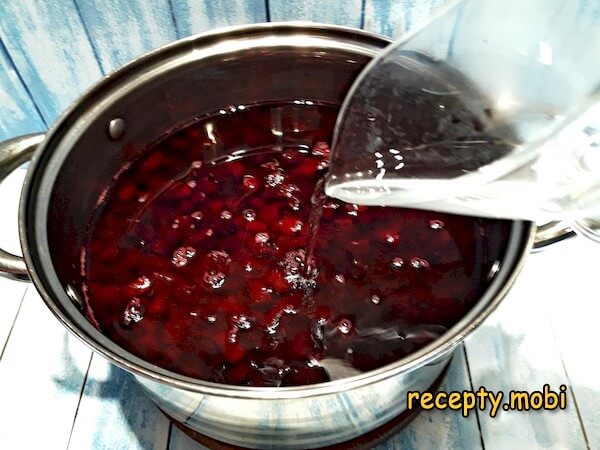
- I distribute the beets and marinade into the sterilised jars, filling to the very top.
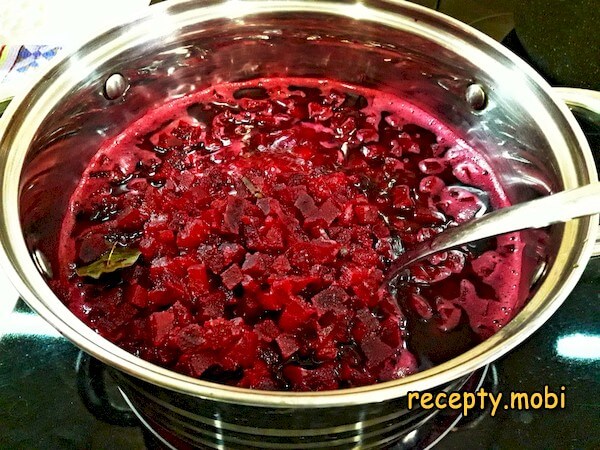
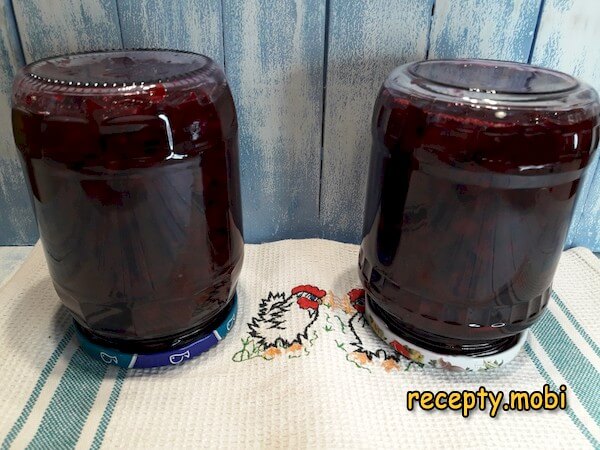
- I screw the lids on tight and invert the jars upside down — this checks for leaks and starts the vacuum-seal formation.
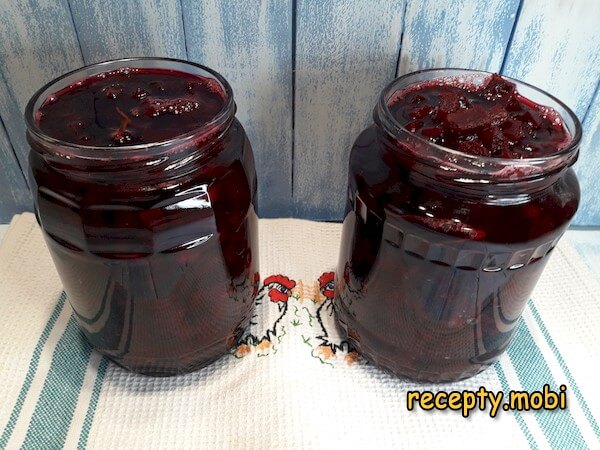
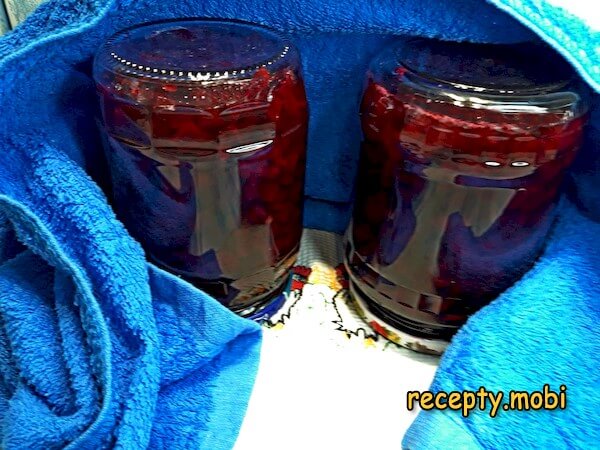
- If no leaks appear, I wrap the inverted jars in a blanket and leave to cool slowly until completely cold (about 8 hours overnight). The slow cool gives a strong vacuum seal.
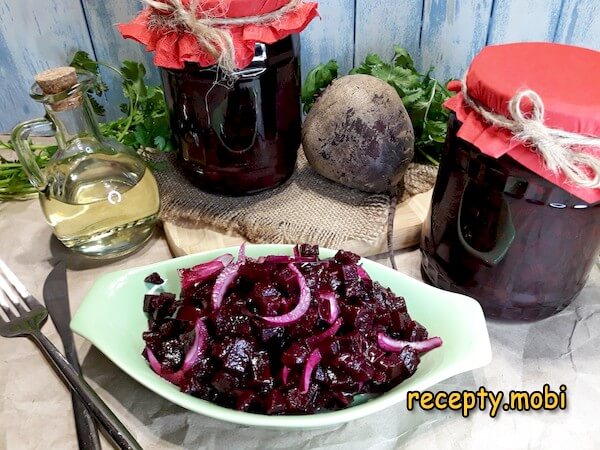
The pickled beets develop a pleasant sweet-sour balance and retain a slight firmness — even the simplest preparation (chopped + onion + oil) becomes an excellent side dish for meat or grain mains. Sometimes the pickled beets stand alone as a side dish without further preparation.
Store the sealed jars in a dark place — a regular kitchen cupboard works fine, since salt + sugar + vinegar are excellent preservatives that allow room-temperature shelf storage. Sealed jars keep up to 12 months.
Tips and Tricks
Tip 1. THE 2-MINUTE BOIL IS NON-NEGOTIABLE. Step 8's exact 2-minute timing is calibrated to set the texture without softening the beets to mush. Longer cooking (5+ minutes) gives soft, almost-mushy beets that don't hold their cubed/grated structure. Set a timer and stop at exactly 2 minutes. The texture difference between 2 and 5 minutes is dramatic.
Tip 2. COOK BEETS WHOLE, PEEL UNDER COLD WATER. Boiling beets whole (not pre-peeled) preserves the dark colour — peeled-then-boiled beets bleed colour into the cooking water and finish pale. The peel-under-cold-water trick (step 2) is the easiest beet-peeling method possible — skins slip off in seconds. For another beet-based winter preparation worth comparing, see Pickled Watermelons in Jars (Winter Delicacies).
Tip 3. SPICE VARIATIONS. The base spice blend (cloves + allspice + bay) is classic Eastern European pickle profile. Variations: add 1 tsp coriander seeds for citrusy depth; add 1 cinnamon stick for warm complexity; add 2 thin slices of fresh ginger for subtle heat; or add 1 dried chili for spicy beets. Each variation gives a different but equally valid version. Stick to the base for traditional Russian-Ukrainian flavour.
Tip 4. USES BEYOND VINAIGRETTE. The pickled beets are cookery-versatile far beyond traditional Russian salads. Use in: grain bowls (chopped into farro or barley); modern salads with feta and walnuts; sandwiches with goat cheese and arugula; dips (blended with sour cream and dill); Polish-style red beet borscht (use the marinade liquid as a borscht base). For another related winter pickle, try Crispy Pickled Zucchini for Winter in One-Liter Jars.
Frequently Asked Questions
Why no sterilisation step?
The recipe relies on heat-seal sterilisation — boiling beets + boiling marinade + boiling jars (from sterilisation) + immediate sealing while everything is still hot creates a vacuum seal that's fully bacteria-tight. The acid level from the vinegar (well above 4% in the finished product) plus the salt and sugar provide additional preservation. Properly sealed jars don't need water-bath sterilisation. The crucial step is the inversion-and-wait at step 10-11 — that's when the vacuum forms.
Cubed or grated — which is better?
Functionally identical. Choice depends on intended use: - Cubed: best for vinaigrettes, beet-and-cheese salads, borscht (where you want visible chunks) - Grated coarse: best for herring-under-fur-coat, beet salads with mayo - Grated fine (Korean-carrot grater): best for sandwich fillings, modern dressed salads For pure flexibility, do half-cubed and half-grated in separate jars.
Can I add other vegetables to the jar?
Yes — beet preserves welcome additions. Common Russian-style additions: thin-sliced raw garlic (1-2 cloves per jar) for kick; thin-sliced raw onion (50 g per jar) for sharpness; whole peppercorns + dill seeds for added aromatics; or thinly sliced apple for sweetness. Add at step 9 layered between the beet pieces. Don't add anything that needs further cooking (raw root vegetables) — the 2-minute boil isn't enough.
How long do the jars keep?
Sealed jars at room temperature keep 12 months. Once opened, transfer to fridge and use within 2-3 weeks (the vinegar continues to soften the beets and the marinade gradually loses its sharpness). If you spot any mould, fizzing, or off-smells, discard the entire jar. Properly sealed jars (lid stays flat under pressure, doesn't pop when pressed) are safe.