Write a comment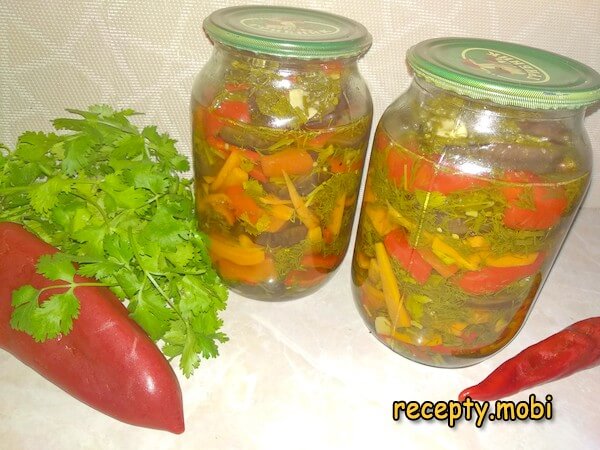
Pickled Eggplants with Peppers (Winter Preserves)
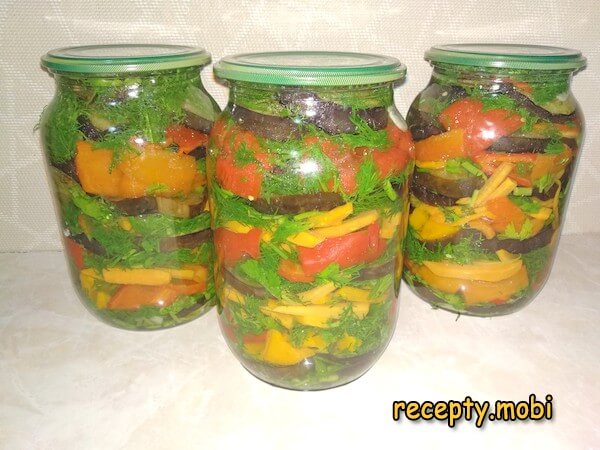
Marinated eggplants with peppers is a delicious, vibrant appetizer of winter preserves. An appetizing and festive dish that will rightfully decorate even a holiday table. The aesthetic beauty of the dish is complemented by its flavor quality; since the vegetables are cut quite coarsely, they have retained each of their flavors. The colorful jars work beautifully as gifts during winter holidays and add restaurant-quality preserved-vegetable elegance to any pantry collection. At the same time, the marinade has united the tastes of all the vegetables and spices, accompanied by an incredible aftertaste. Eggplants, carrots, and bell peppers — these vegetables combine excellently together. Such preserves look appetizing even in a jar.
Ingredients
Show ingredients
- eggplants (blue) - 1 kg;
- bell pepper – 1 kg;
- carrots – 0.5 kg;
- hot pepper – to taste;
- garlic – 1 head;
- dill, cilantro, parsley – to taste;
- vegetable oil – 200 ml;
- salt – 1 tbsp;
- sugar – 1.5 tbsp;
- vinegar 9% - 80-100 ml.
Preparation
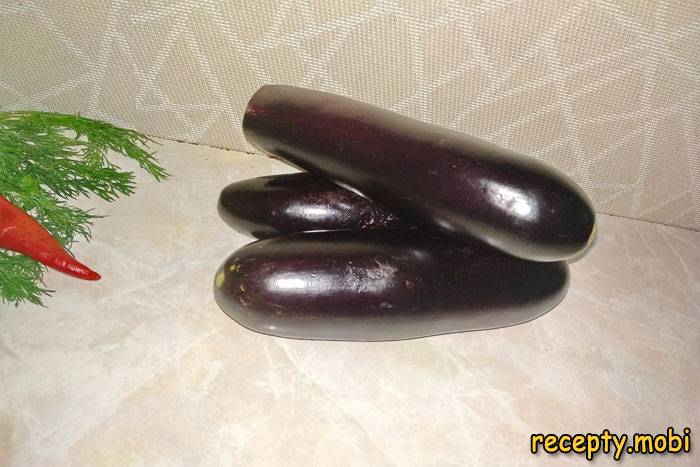
- Cut the prepared eggplants into circles about a centimeter thick. The uniform thickness ensures even cooking and consistent finished texture throughout the jars.
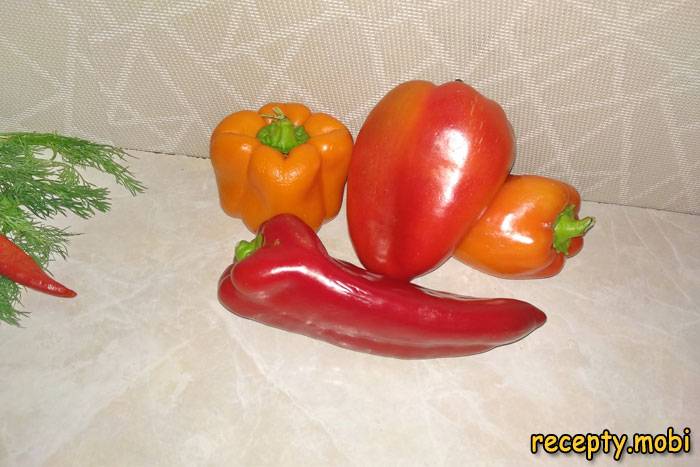
- In winter, such bright peppers will definitely please. Wash, remove stems and seeds for proper preparation.
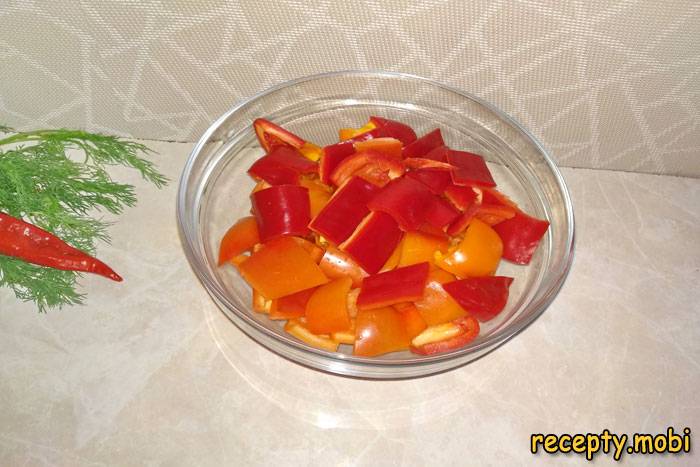
- Cut the pepper into fairly large pieces. The substantial size maintains visual appeal and textural integrity throughout the marinating and storage period.
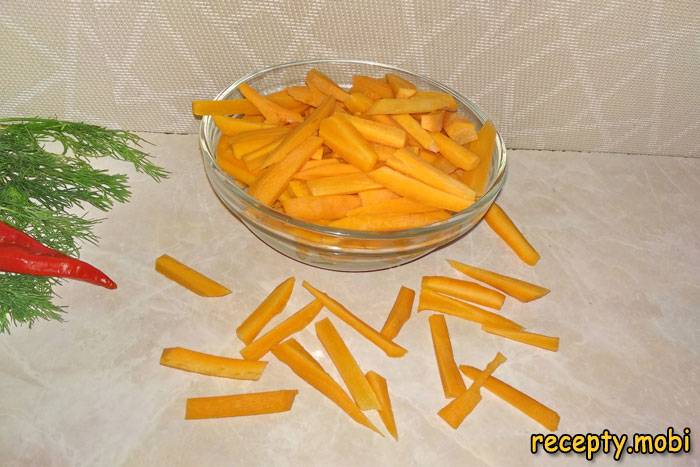
- Shred the carrots into large sticks. The matchstick shape adds beautiful visual contrast to the layered jar presentation.
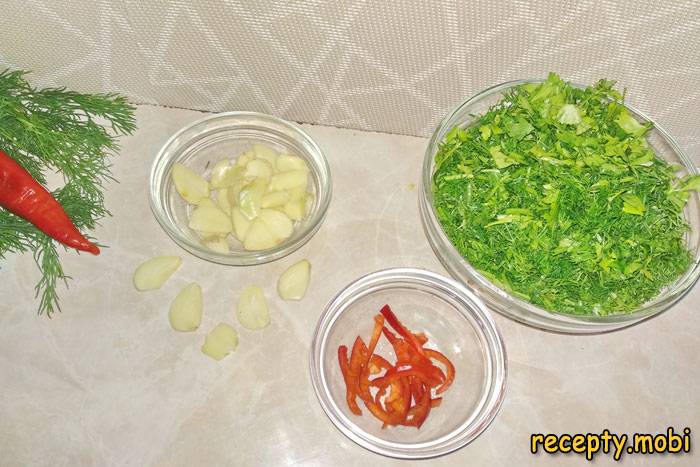
- For this appetizer, a lot of herbs will be needed. Prepare it by cutting it randomly. Garlic, cut into slices, will look great in the jars. Divide the hot pepper lengthwise, remove the seeds. Cut into thin strips for proper distribution throughout the preserve.
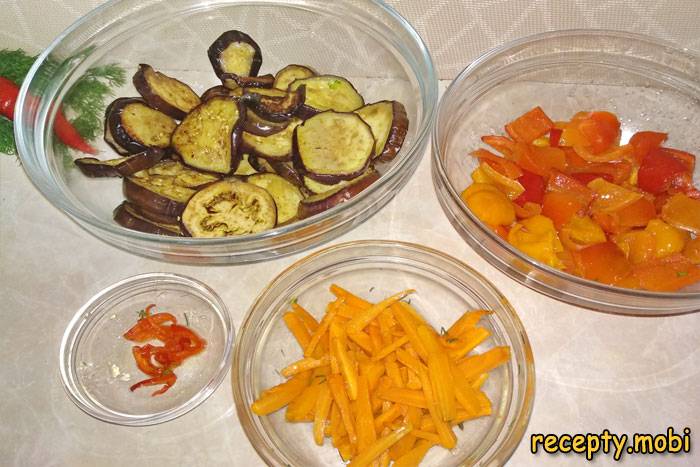
- Pour oil into the skillet. All vegetables should be sauteed separately, do not add more oil! First, saute the carrots until half-cooked, then add the pepper. Lastly, saute the eggplants in the skillet with almost no oil. This way, they will absorb minimal oil for proper finished caloric balance.
- At the bottom of the liter jar, add some herbs, hot pepper, and garlic. Layer the vegetables, sprinkling with herbs. First, lay the eggplants, then top with the sweet peppers, and place the carrots as the third layer. On top of the third layer, in addition to herbs, add a few slices of garlic.
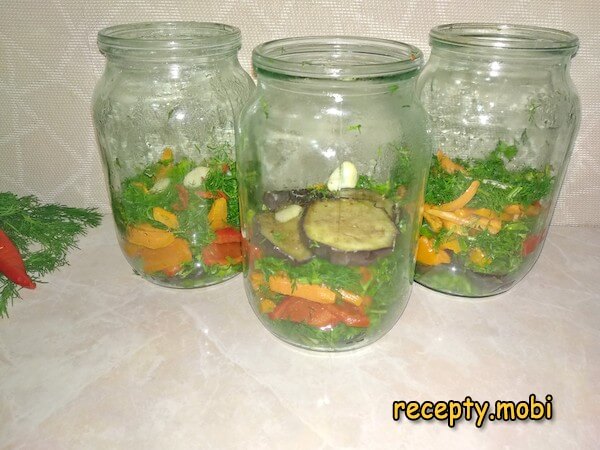
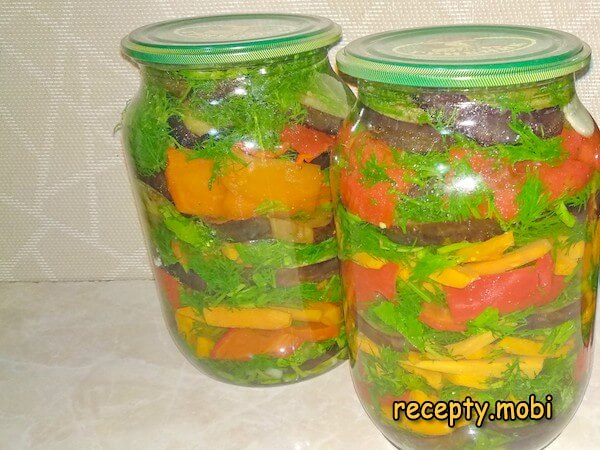
- Fill the jars to the very top in this manner.
- Take a liter of water, heat it to a boil. According to the recipe, add salt and sugar, let it dissolve for two to three minutes, and then pour in the vinegar. To prevent the vinegar from evaporating, immediately remove the brine from the heat.
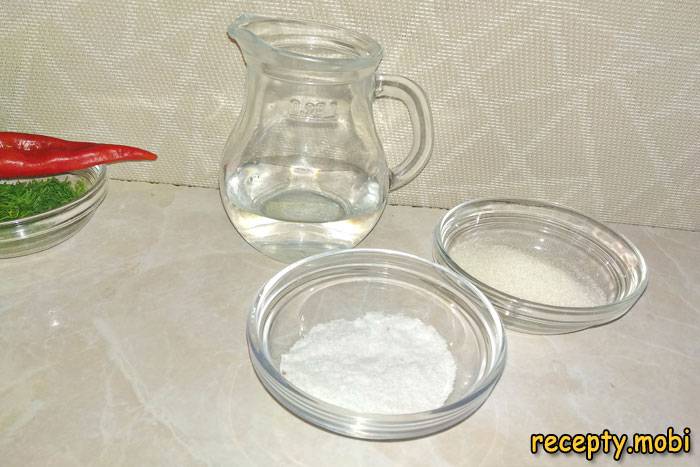
- Fill the jars with the marinade to the brim and send them for sterilization. In a large pot, place a towel or napkin, set the jars inside. Fill them with hot water up to the shoulders. From the moment of boiling, wait for 20 minutes, then take out the jars and seal with lids.
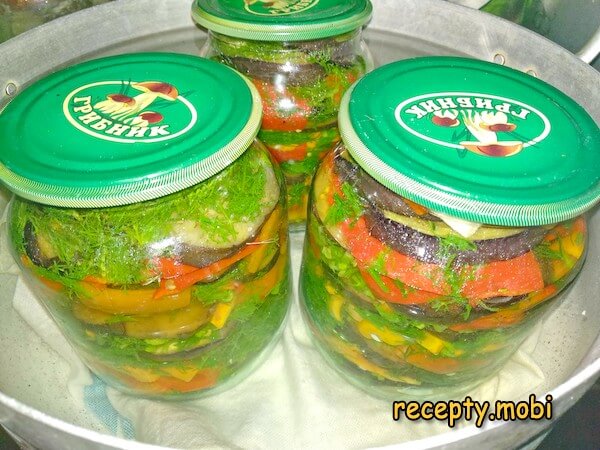
- This is the bright delicacy that has turned out. In a dark, cool place, these preserves can be stored for a long time. They will delight winter evenings.
Cook marinated eggplants with peppers using our recipe. Wishing you tasty and successful preparations!
Tips and Tricks
Tip 1. Choose firm fresh eggplants without bruises or soft spots for the best preserve quality. Damaged eggplants brown quickly and produce inferior finished texture; pristine eggplants maintain firmness and proper appearance throughout the entire winter storage period. The vegetable quality matters more than home cooks typically realize for finished preserve quality and overall taste experience throughout months of pantry storage. Choose medium-sized eggplants for proper diameter circles.
Tip 2. Salt-and-drain the eggplant circles for 30 minutes before sauteing to remove bitterness. Untreated eggplants can carry bitter notes that mar the finished preserve flavor; salt-treated eggplants show clean sweet character authentic to traditional preserved-vegetable preparations. The same salt-and-drain principle elevates many eggplant preparations including baked eggplants in the oven and similar Mediterranean-style vegetable dishes throughout the cooking year.
Tip 3. Sterilize the jars properly for safe long-term winter storage. Improperly sterilized jars cause spoilage and food-safety risks; thoroughly sterilized jars protect the preserves throughout months of cellar storage. The sterilization patience pays back significantly in preserve safety and quality consistently across batches. Use boiling water bath method for at least 10 minutes minimum, or oven sterilization at 100 degrees for 15 minutes for proper food-safety standards.
Tip 4. Wait at least 4 weeks before opening jars for full flavor development. Fresh-canned preserves taste sharp and disconnected; properly aged preserves show beautifully integrated flavors with full marinade penetration throughout the vegetables. Pair the matured preserves with crusty homemade bread for traditional Russian zakuski spreads, alongside grilled meats for substantial winter meals, or as accompaniment to vodka shots for traditional holiday entertaining presentations.
FAQ
How long do these preserves keep?
Properly canned and stored in a cool dark place (cellar, pantry), the preserves keep for 12 months at peak quality. After opening, store in the refrigerator and consume within 2 weeks for proper food safety. The flavor improves significantly over the first 4-6 weeks as components meld together beautifully throughout the aging period. Always use clean utensils when serving to prevent contamination and extend the open-jar shelf life across multiple servings throughout the winter months.
Can I skip the sterilization step?
No, sterilization is essential for safe long-term storage and prevents botulism risks in the low-acid vegetable preserves. Refrigerator-only versions skip sterilization but must be consumed within 2-3 weeks; properly sterilized jars stored at room temperature keep for 12 months. The food-safety considerations are non-negotiable for proper canning practices across various preserve recipes throughout the year for safe family consumption.
What other vegetables work in this preparation?
Zucchini, summer squash, mushrooms, green beans, or cauliflower all work beautifully alongside or instead of the standard ingredients. Each vegetable produces distinct character: zucchini is sweetest and most tender, mushrooms add umami depth, cauliflower adds substantial texture. Mix and match based on garden abundance and personal preference for endless seasonal variations. The basic technique stays identical regardless of vegetable choice for traditional Russian-style winter preserves throughout the harvest year.
Can I reduce the vinegar for less sharpness?
The vinegar quantity is important for proper food safety in canned preserves — reducing below 80ml per liter compromises the acidic environment needed to prevent spoilage. For less sharp finished flavor, increase the sugar by 1 tablespoon to balance the acidity perceived in the finished product. The acidic environment is non-negotiable for proper canning safety; flavor adjustments must work around the food-safety requirements consistently across all preserve recipes for proper home canning practices.