Write a comment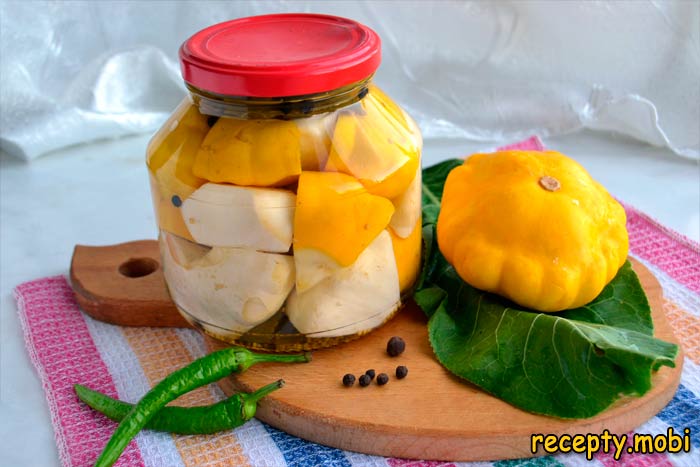
Pickled Patissons for Winter without Sterilization
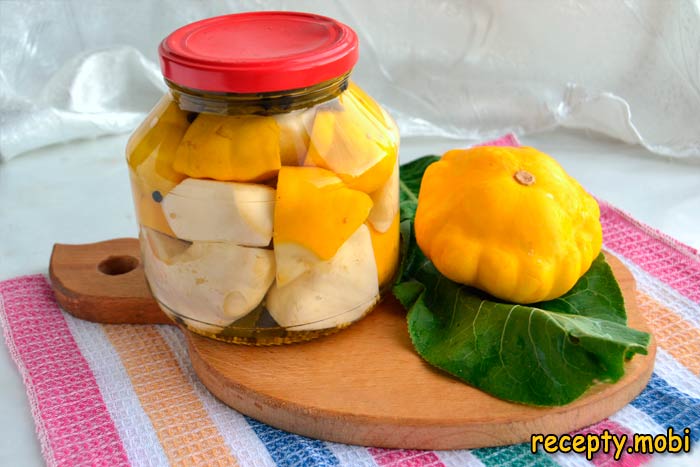
Pickled patissons (pattypans) complement meat dishes harmoniously, looking beautiful and bright on the festive table. The pickled patissons from this recipe retain their firmness, become pleasantly crispy, and are tasty enough to rival the cousin recipe with zucchini. The technique is no-sterilization, which saves significant time at the canning stage without compromising long-term storage safety. Bright white and yellow patissons in clear jars make a beautiful pantry display, ready to grace any winter meal with a tangy crispy bite that reminds everyone of summer’s garden bounty.
Caloric value: 21 kcal per 100 grams of the dish.
Preparation time: 50 minutes.
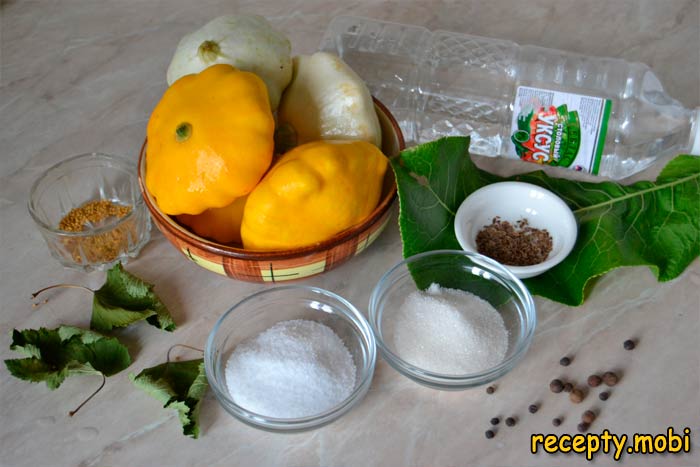
Ingredients
Show ingredients
Both white and yellow patissons are suitable. Be sure to take peas of various peppers for aroma and your favorite pickling herbs.
- patissons - 1.5 kg;
- horseradish - 1 large leaf;
- black currant - 3 leaves;
- garlic - 1-2 cloves;
- dill - 4 umbrellas or 2 tsp dill seeds;
- mustard seeds - 1 tsp;
- bay leaf 1-2 pcs.
Marinade for 1 liter of water:
- salt - 2 tbsp (heaping);
- sugar - 1 tbsp (heaping);
- allspice - 6 pcs;
- black pepper - 10 pcs;
- 9% vinegar - 3 tbsp in each 1 liter jar.
Preparation
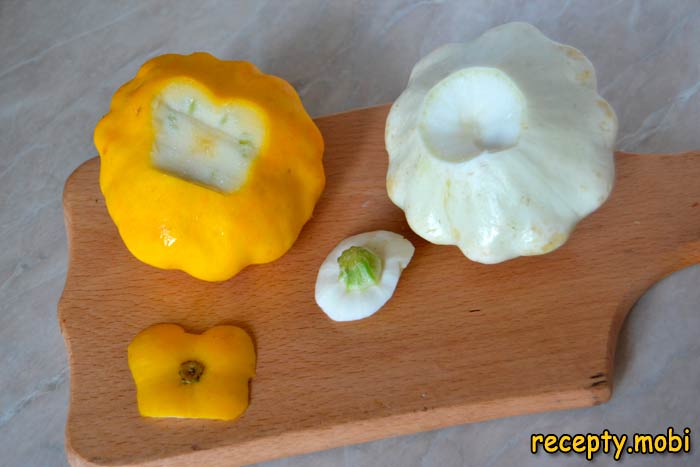
- For canning, take young patissons. The fruits must be fresh and firm. Following these rules ensures the tastiest crispy patissons in winter. To achieve beautiful canning, take patissons of different colors. Cut the stems from the fruits, slightly deepening the knife into the pulp near the stem. From the opposite side, also cut off the end of the vegetable, removing any dark spots.
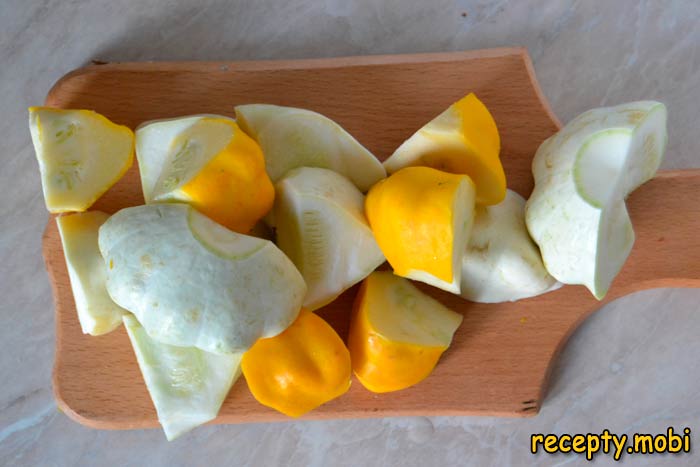
- Now cut the patissons into large wedges. If you have small fruits (about 5 cm in diameter), leave them whole without cutting into pieces. Whole baby patissons make the most attractive jar presentation.
- Wash the jars for canning in warm water with baking soda. Thoroughly rinse the containers with clean water and sterilize. In each jar, place a large clove of garlic cut into pieces. After cutting the horseradish leaf, place at the bottom of the jar. Take dill that you have — umbrellas or seeds are best, with green dill sprigs as the last resort.
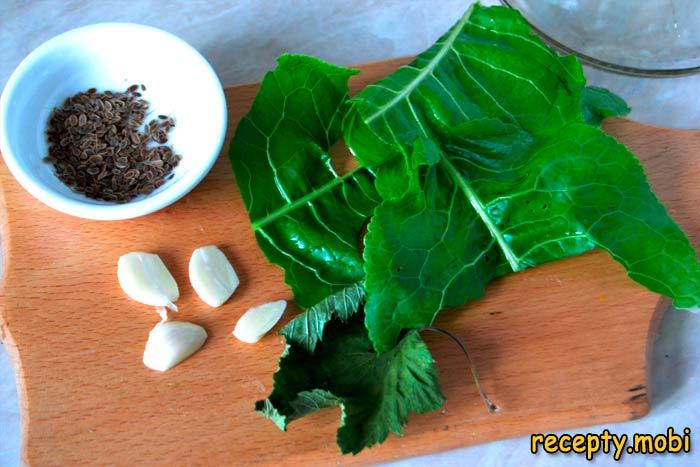
- Fill the jars with the sliced patissons. Cover with the remaining cut horseradish leaf on top. Pack tightly without crushing the vegetables.

- Boil water and carefully pour boiling water over the patissons in the jars. Leave the patissons to warm in the boiling water for 5 minutes. Then drain the water from the patissons into a pot, and put the pot with this water on the heat. Once the water is boiling again, pour it back into the jars with the patissons.
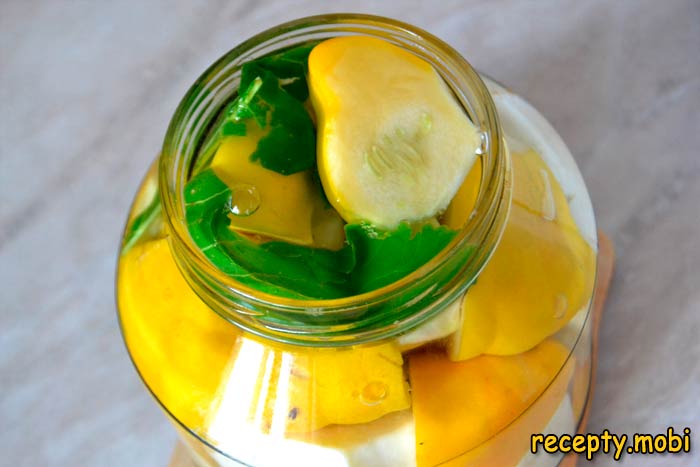
- Now cover the jars with previously boiled lids. Leave for 15 minutes, covering the top with a towel. After 15 minutes, drain the water from the jars into a measuring cup to determine how much marinade is needed. Once you know the volume, proceed to make the marinade according to the recipe.
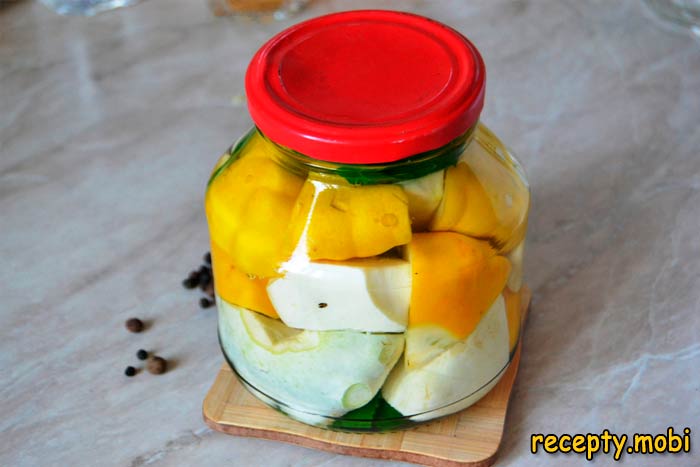
- Pour clean water needed for the marinade into a cooking pot. Add the spices according to the recipe, stirring them in. Let the marinade come to a boil, cover with a lid, and boil for a few minutes to allow the spices to fully release their flavor.
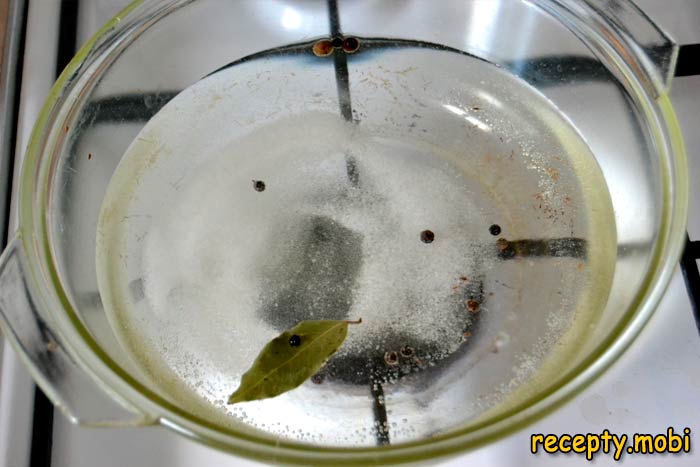
- Pour the boiling marinade into the liter jar with patissons. When the jar is about halfway full, add 3 tbsp of 9% vinegar into the jar. Then continue filling the jar with the marinade to the very top.
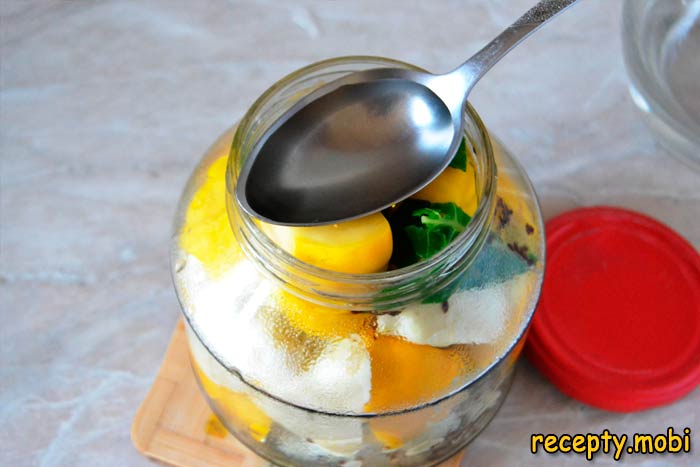
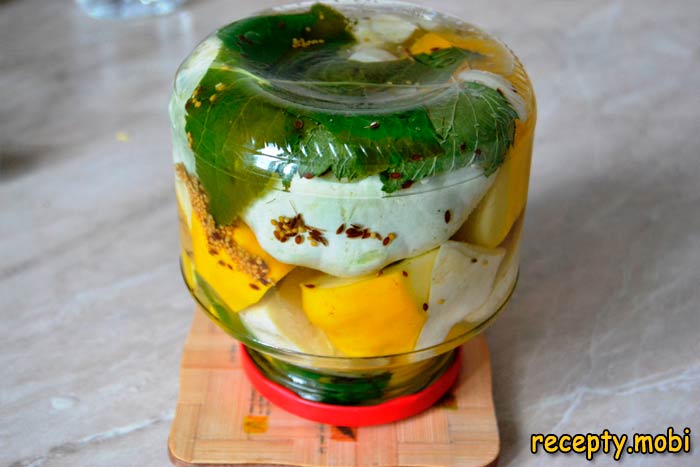
- The marinade should reach the rim of the jar without spilling over the edge. Now securely seal the jar. Turn the closed jar with patissons upside down. Since we sealed the patissons without sterilization, cover the jars with a blanket. After 12 hours, take the jars out from under the insulation and store them away.
- Store the pickled patissons in a cool place. The dramatic mixed-color jars look beautiful in any pantry and make impressive gifts when tied with ribbon. The crispy texture and tangy spicy flavor make these a winter staple in many homes.
Cooking video
Tips and Tricks
Tip 1. Choose young, firm patissons no larger than tennis-ball size. Older patissons develop hard skins and seedy interiors that produce inferior pickles. Young patissons have tender skins and small soft seeds that absorb the marinade beautifully. The freshness of the starting vegetables is the most important factor in the finished pickle quality — second only to proper sterilization technique.
Tip 2. Mix white and yellow patissons in the same jar for visual drama. The contrasting colors make the pickled jar look like a piece of edible art. The same color-mixing principle elevates many home preserves including sauerkraut with beets and other multi-vegetable ferments. Beautiful jars make better gifts and look more appetizing on the table.
Tip 3. Add a small horseradish root or extra leaves for extra crispness. The compounds in horseradish help maintain crispy texture during long-term storage. Without horseradish, patissons can become slightly soft over months in the jar. The leaves are the traditional choice but pieces of grated root work too in equal measure.
Tip 4. Wait at least one month before opening the jars for the best flavor. The marinade needs time to fully penetrate the patisson flesh and the spices to integrate fully. Pickles opened after 24 hours taste flat and lifeless; pickles opened after 30 days taste vibrant and complex. Pair with crusty homemade bread for a perfect winter snack.
FAQ
What if I cannot find patissons?
Young zucchini, summer squash, or yellow squash all work as substitutes with the same technique. Cucumbers also work but produce softer pickles than patissons. The basic recipe forgives substitutions; just choose firm fresh young vegetables for the best texture. Mix several different summer squashes in the same jar for a beautiful color array reminiscent of a farmer’s market display.
How long do the pickled patissons keep?
Properly sealed jars stored in a cool dark place keep for up to a year. The flavor peaks at 2-3 months and stays excellent through 6-9 months. After a year, the texture starts to soften noticeably though the food remains safe. Once opened, refrigerate and use within 2-3 weeks. Always inspect for signs of spoilage like cloudy brine or off smells before eating, especially with home-canned products.
Why are my patissons soft instead of crispy?
Three usual causes: too-old vegetables, no horseradish in the jar, or marinade too hot when poured. Use only young firm patissons. Always include horseradish leaves or root for natural crispness preservation. Make sure the marinade has cooled slightly before final pouring — boiling marinade can soften the vegetables. Following all three guidelines produces consistently crispy pickled patissons.
Can I make this recipe with less salt or sugar?
Salt is essential for both flavor and preservation; reducing it below the recipe amount compromises shelf stability. Sugar can be reduced by up to 30% without significant problems — some traditional cooks use no sugar at all. The 1 tablespoon of sugar in this recipe balances the salt and vinegar tang rather than making the pickles sweet. Adjust to your family’s preference, but do not eliminate salt.