Write a comment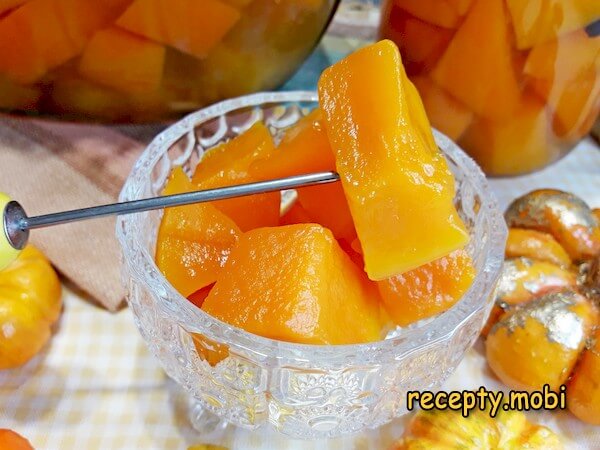
Pickled Pumpkin for Winter
Marinated pumpkin for winter is a striking and unusual preserve that surprises even experienced cooks — the finished texture and flavour closely mimic canned pineapple. The trick is in the spiced marinade combining sugar, lemon, ginger root, cinnamon stick, allspice, cloves, and apple vinegar. The pumpkin pieces drink in this aromatic mixture and emerge as a sweet-tart, citrus-spiced preserve perfect for the festive table or as a budget-friendly pineapple substitute in salads.
The recipe yields 2 jars (1.5 L total) at 147 kcal per 100 g — moderate calorie load for a sweet preserve. Total time 35 minutes active plus 8 hours of overnight cooling under a blanket.
Ingredients
Show ingredients
- pumpkin with skin – 1200 g (peeled – 1000 g);
- white sugar – 350 g;
- drinking water – 500 ml;
- apple vinegar 6% – 120 ml;
- natural cinnamon – 1 stick;
- lemon – 1 pc;
- ginger root – 15 g;
- cloves – 4 pcs;
- allspice – 5-6 pcs.
Preparation
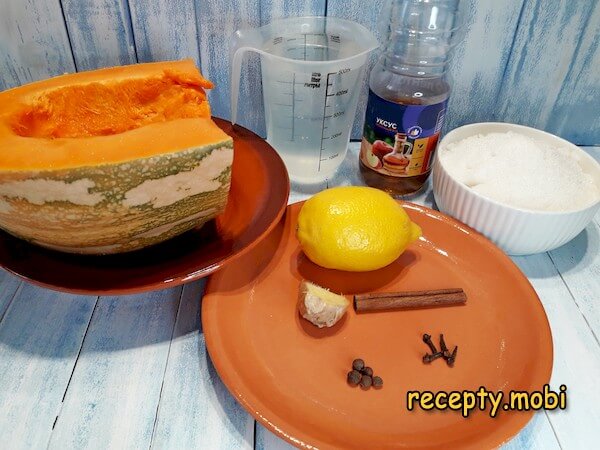
- I prepare the ingredients. The pumpkin variety matters: pick a sweet, dense, non-watery type (butternut, kabocha, or hokkaido all work well). Watery field-pumpkin varieties release too much liquid during cooking and dilute the marinade. All listed spices are essential — each contributes a distinct note that builds the pineapple-like flavour profile.
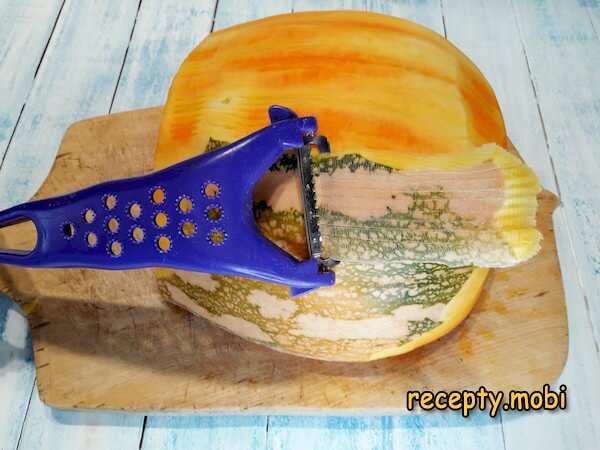
- I peel the pumpkin with a vegetable peeler — far easier than knife-peeling thick winter pumpkin skin. A Y-shaped peeler is even better for the curved pumpkin surfaces.
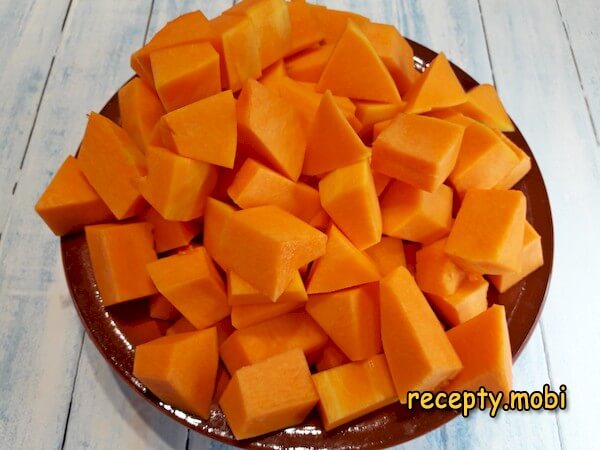
- I cut the dense orange flesh into 2×2 cm cubes — the size that mimics canned pineapple chunks.
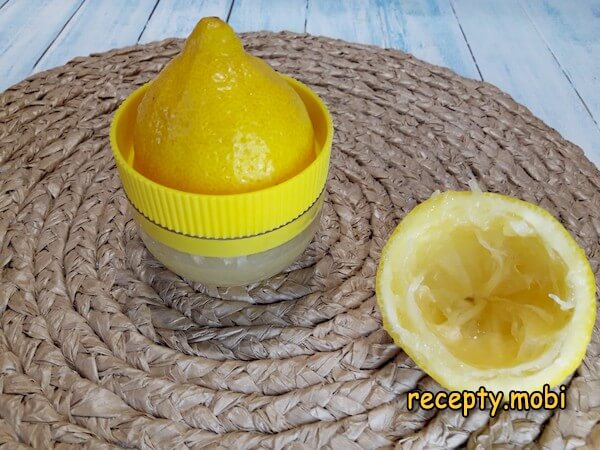
- I squeeze the juice from the whole lemon. The zest goes into the marinade pot; the juice waits to be added later.
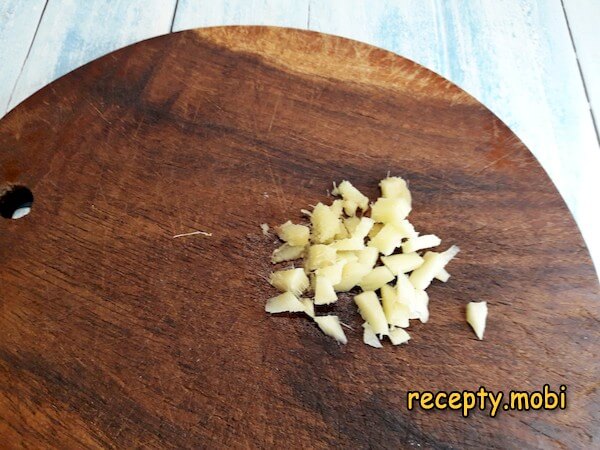
- I scrape the ginger skin off (a teaspoon edge works perfectly) then chop the ginger into small cubes about 5 mm.
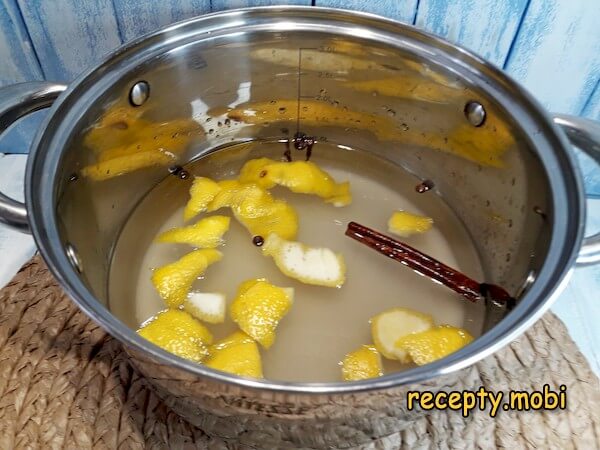
- Into a pot go the water, sugar, lemon zest, ginger, cloves, allspice, and cinnamon stick. I bring to a boil and let the spices fully infuse the syrup.
- At the boil, I add the lemon juice — lemon juice added now, after the initial spice infusion, retains more of its bright citrus character.
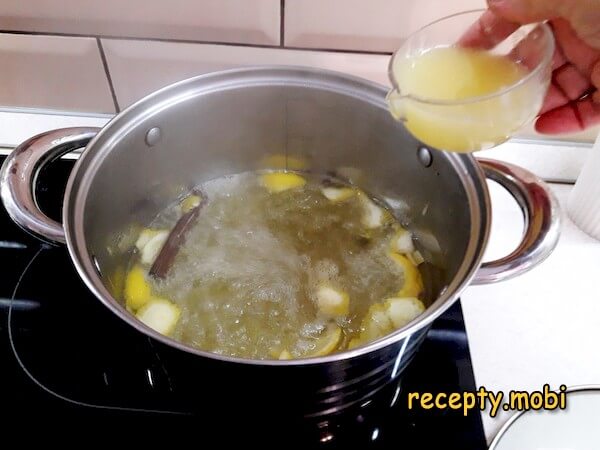
- Then the apple vinegar goes in. I bring everything back to a vigorous boil.
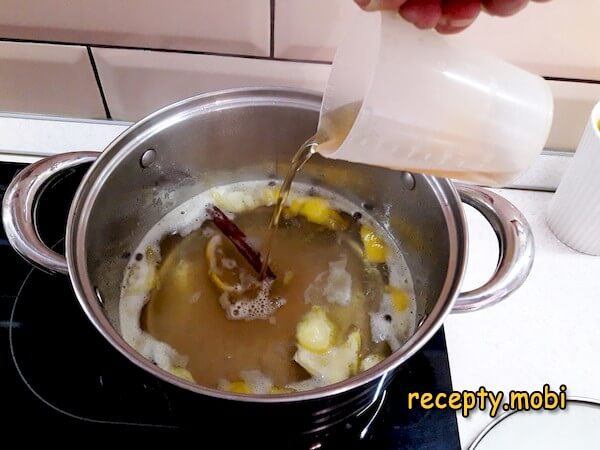
- Now in goes all the pumpkin chunks. They quickly drop the pot temperature briefly — back to medium-high to recover the boil.
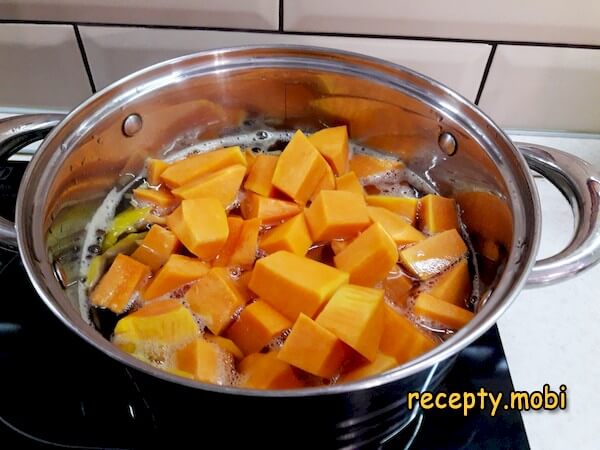
- Once the marinade returns to a boil, I start the timer for at least 15 minutes of cooking.
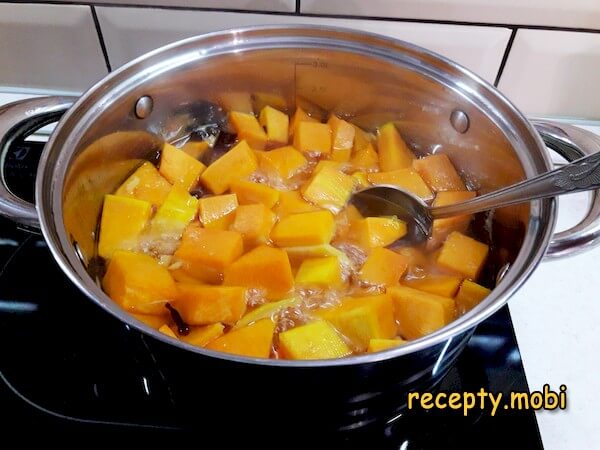
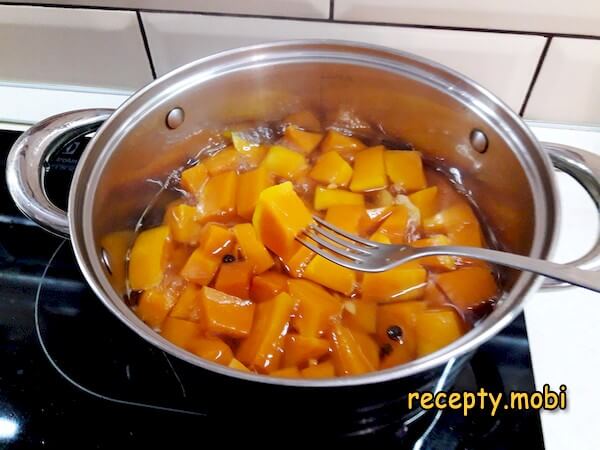
- From here it's an individual judgment call — different pumpkin varieties need different cook times. If the chunks haven't softened enough by 15 minutes, continue cooking another 5-10 minutes. Test with a fork: if it pierces easily without much pressure, the pumpkin is done. While the pumpkin cooks, I sterilise the jars and lids.
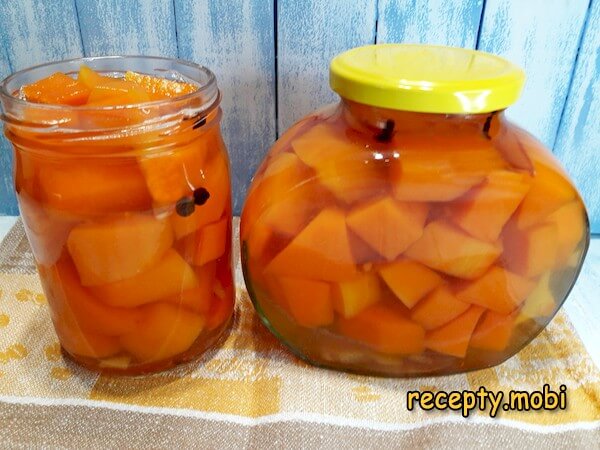
- I arrange the pumpkin chunks into the hot sterilised jars and fill with marinade to the very top, then screw the lids on tight.
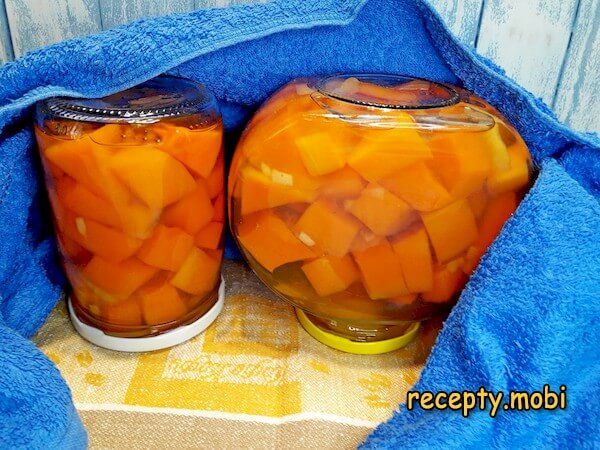
- I invert the sealed jars and wrap them in a warm blanket for the slow-cool thermal bath. The 6-8 hour overnight cooling completes the seal-formation and allows the pumpkin to fully absorb the marinade flavours.
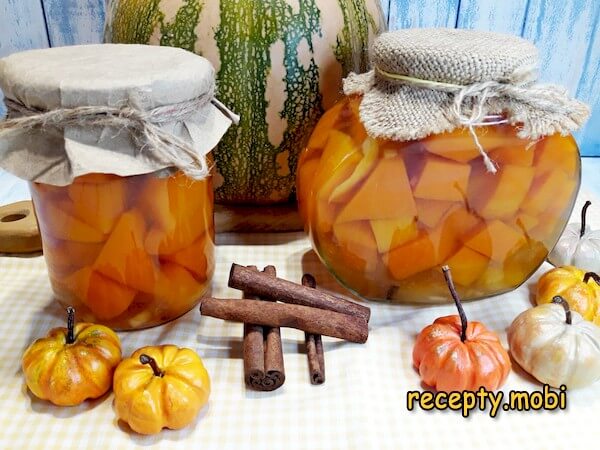
For long-term storage, the cooled jars go to a regular kitchen cupboard where they keep until next season. The aromatic preserve has citrus tartness and ginger freshness with subtle warm spice — it pairs beautifully with meat and poultry, or replaces expensive canned pineapple in salads (the famously frugal Soviet-era kitchen trick that started this recipe's popularity).
Try it, enjoy your meal!
Tips and Tricks
Tip 1. THE PUMPKIN VARIETY DETERMINES SUCCESS. Sweet dense varieties (butternut, kabocha, hokkaido, sugar pumpkin) give the right pineapple-mimic texture and flavour. Watery field pumpkins or jack-o-lantern pumpkins fail completely — too watery, too stringy, not sweet enough. If you can't identify the variety, taste-test a raw cube: it should be sweet enough to enjoy raw with a slight nutty undertone. Bland or watery raw pumpkin won't transform into great preserve.
Tip 2. WATCH THE COOK TIME PRECISELY. Step 10-11's variable cook time (15-25 minutes) is the recipe's trickiest element. Undercooked pumpkin is too firm and unpleasant; overcooked turns to mush and disintegrates in the marinade. The fork-test is essential: easy pierce with no resistance = done. Different pumpkin varieties have wildly different cell-wall structures and need different times. Check every 3-5 minutes after the 15-minute mark. For another vinegar-based winter preserve worth comparing, see Pickled Cucumbers for Winter in a Liter Jar with Vinegar.
Tip 3. SPICE SUBSTITUTION FLEXIBILITY. The base spice blend (cinnamon, ginger, cloves, allspice) gives the pineapple-mimic effect; substitutions are possible but change the character. Star anise (1 piece) instead of cloves gives a Chinese-five-spice lean. Cardamom pods (4-5) instead of allspice add Middle Eastern complexity. For mulled-wine-style: use the same spices plus a strip of orange peel and a pinch of nutmeg. Fresh ginger is non-negotiable; powdered ginger gives a different, harsher heat.
Tip 4. SERVING CREATIVITY. The pineapple-mimic effect is so successful that this preserve replaces canned pineapple in many uses: chopped into chicken-pineapple salads, on Hawaiian-style pizzas, in fruit cocktails, on cheese boards. The marinade liquid is also useful — drizzle over yogurt, mix into vinaigrette dressings, or use as the syrup for non-alcoholic mocktails. For another spiced winter preserve to compare, try Pickled Eggplants with Peppers (Winter Preserves).
Frequently Asked Questions
Why does it taste like pineapple?
The pineapple-mimic effect comes from a specific combination of acid, sweetness, and tropical-spice character. The lemon juice and apple vinegar provide tropical fruit acidity in the right proportion. The 350 g of sugar matches canned pineapple's syrup sweetness. The ginger gives the slight bite that real pineapple has. The cinnamon and cloves add the warm aromatic notes that pineapple develops in canning. Combined with the firm-tender texture of cooked pumpkin chunks, the brain registers "pineapple" before "pumpkin." It's a remarkable kitchen illusion that's been used for generations.
How long does the canned pumpkin keep?
Sealed jars at room temperature in a dark cupboard keep up to 12 months without quality loss. The vinegar plus high sugar plus heat-seal create a stable preservation environment. Once opened, transfer to fridge and use within 2-3 weeks. The marinade gradually softens the pumpkin in the open jar, so use within the 2-3 weeks for best texture. If you spot any mould, fizzing, or off-smells, discard the entire jar — proper preserves don't ferment or smell off.
Can I use sweetener instead of sugar?
Not directly — sugar serves both flavour and preservation roles in this recipe. The 350 g of sugar concentration is part of what makes the preserve shelf-stable; sugar substitutes (stevia, erythritol, xylitol) don't have the same osmotic preservation effect. For diabetic-friendly versions, the safest approach is to make the recipe with full sugar but consume in small portions (1-2 cubes per serving), or shift to refrigerator-only storage with reduced sugar (200 g instead of 350 g) and use within 2 months. Don't store reduced-sugar versions at room temperature.
What does the inverted-jar-with-blanket method do?
Two simultaneous functions. First, leak detection: an inverted jar with a faulty seal will visibly leak marinade — you spot bad jars immediately and re-seal them. Second, slow cooling: the blanket-wrapped jars cool gradually over 6-8 hours, which gives a stronger vacuum seal than rapid cooling. The slow temperature drop creates a more complete pressure differential as the contents contract. Both functions together replace formal water-bath sterilisation that's standard for many other preserves, allowing this recipe to skip that step.