Write a comment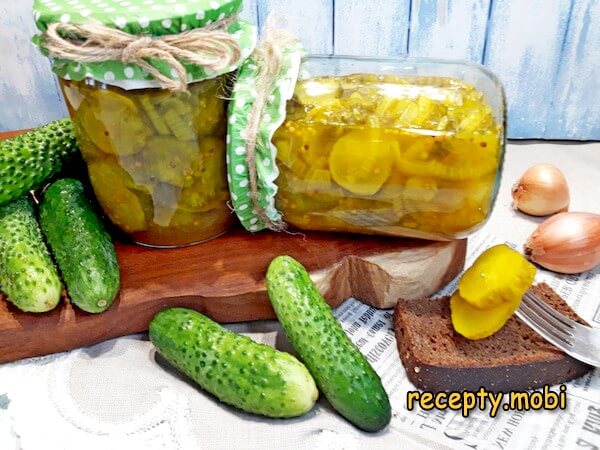
Pickles from cucumbers for winter – Step-by-Step Recipe
This American-style cucumber pickle recipe is the foundation for sandwiches, burgers, and burger-bar relishes — sweet-and-sour with spiced edges, very different from the dill-and-garlic Slavic pickle tradition. The cucumbers are sliced into rounds, brined briefly to draw out excess water, then boiled for just two minutes in a sweet vinegar marinade with mustard and turmeric before being sealed in jars for the pantry.
The bright yellow colour comes from turmeric (don't overdose — too much turns bitter), and the flavour develops over the first two weeks in the jar. Plan ahead: the recipe is genuinely 2 hours start-to-finish but mostly hands-off brining time.
Ingredients
Show ingredients
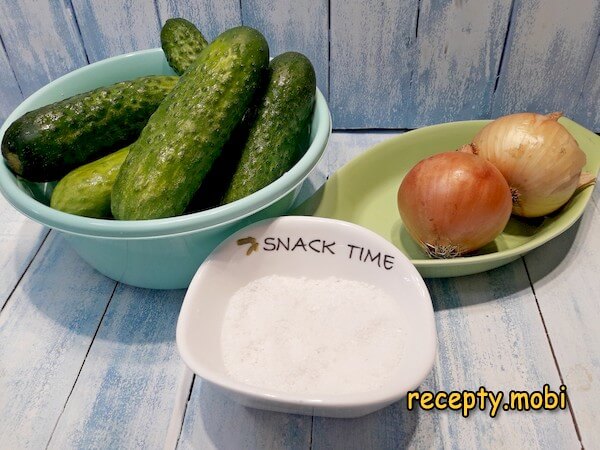
- cucumbers – 750 g;
- white onion – 180 g;
- coarse salt – 70 g.
Marinade:
- white sugar – 210 g;
- allspice – 5-6 berries;
- turmeric – 1 tsp;
- Dijon (French) mustard – 1 tbsp;
- 9% vinegar – 180 ml.
Preparation
- I prepare the ingredients. The cucumbers should be firm and bumpy — the bumpy varieties hold their crunch through the boil better than smooth salad cucumbers. I wash them thoroughly under cold running water.
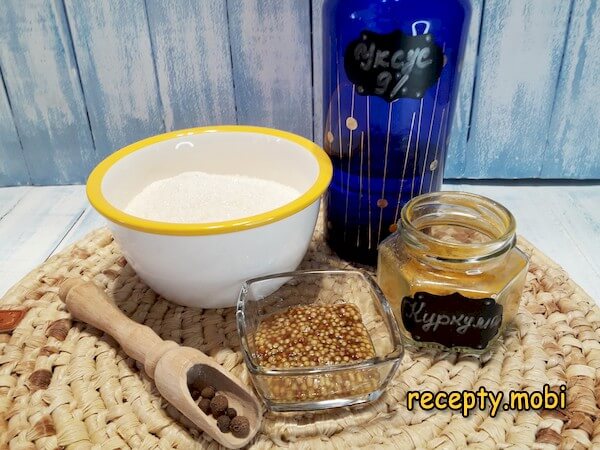
- I gather the marinade components. Turmeric gives the cucumbers their distinctive golden hue and a subtle earthy flavour, but I stay strictly within the recipe quantity — too much turmeric reads as medicinal bitterness rather than warm spice.
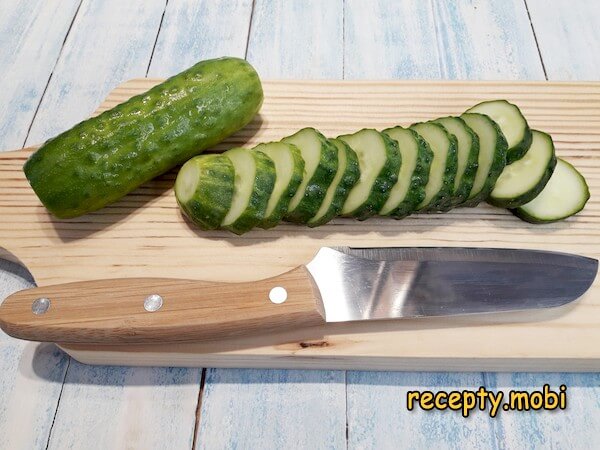
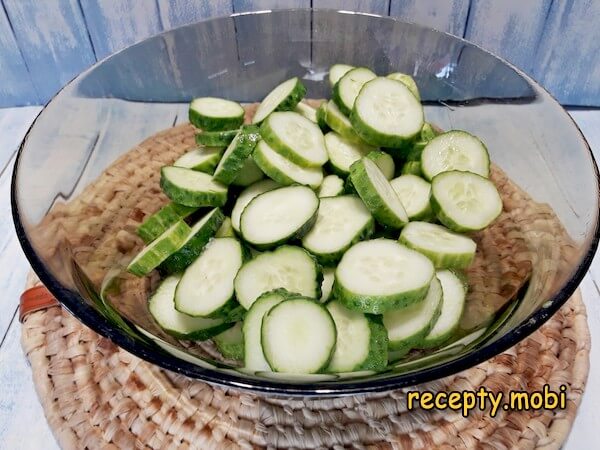
- I trim the ends off the cucumbers and slice them into 0.5 cm rounds. Uniform thickness matters here — uneven slices brine and cook at different rates, giving inconsistent texture in the finished jar.
- I transfer the cucumber rounds to a deep mixing bowl with enough room to stir without spilling.
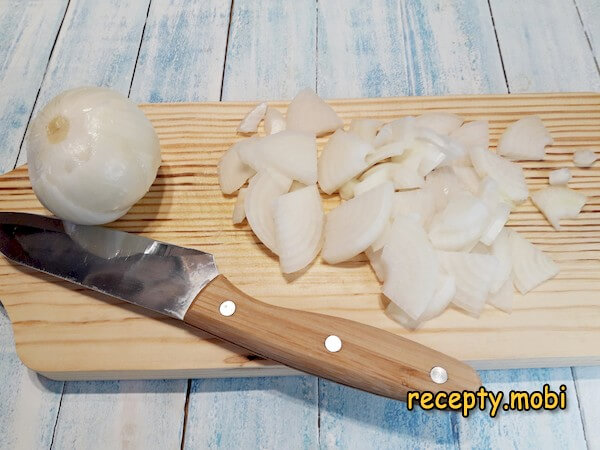
- I cut the onion into quarter rings — half-moons cut in half again. The shape mirrors the cucumber rounds and gives the finished pickle a uniform look.
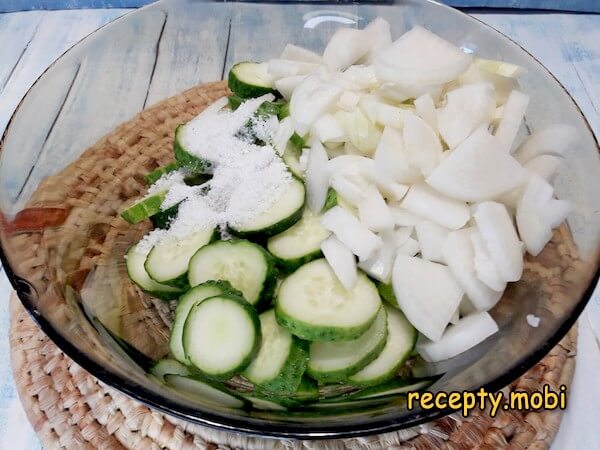
- I add the onion rings to the cucumbers along with all the coarse salt.
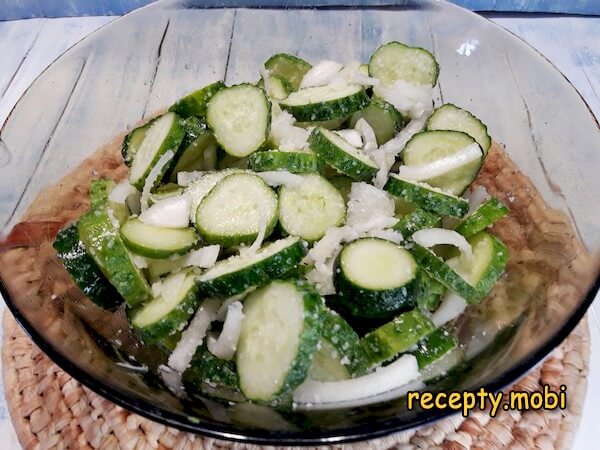
- I mix everything thoroughly with my hands — hands give better control than a spoon for evenly distributing salt across irregular surfaces. Then I leave the mixture to sit on the counter for exactly 2 hours, stirring every 30 minutes. Stirring redistributes the brine and helps the cucumbers release their water uniformly.
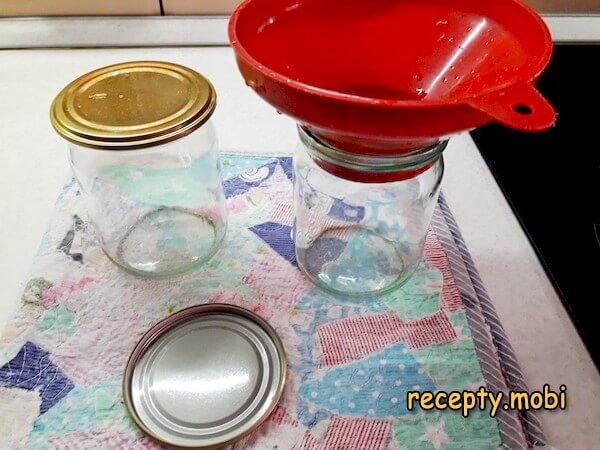
- While the cucumbers brine, I sterilise the jars. The microwave method is fast: wash the jars, leave 20-30 ml of water in each, microwave at full power for 3-4 minutes (the steam sterilises). Boil the lids separately for 5 minutes. A wide canning funnel scalded with boiling water makes the filling step less messy.
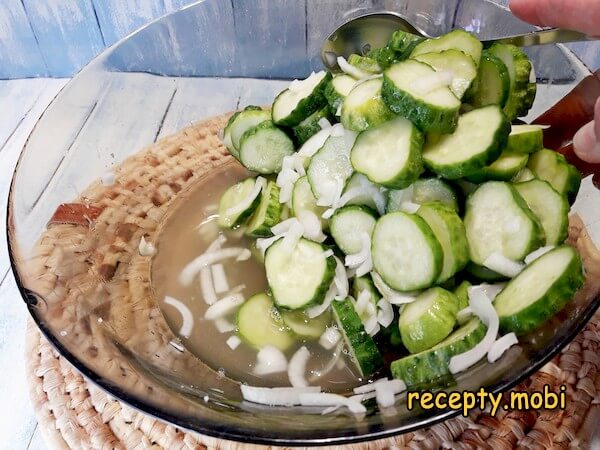
- After the 2 hours, the cucumbers have released a substantial pool of liquid — visible at the bottom of the bowl.
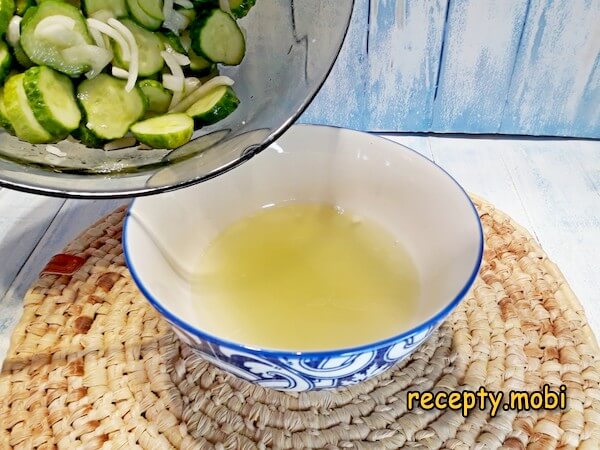
- I drain off this liquid and discard it — it carries away the bitterness from the raw cucumber peels. I do NOT rinse the slices afterwards (some recipes say to); rinsing washes off the salt cure entirely and leaves the finished pickle bland and over-sweet.
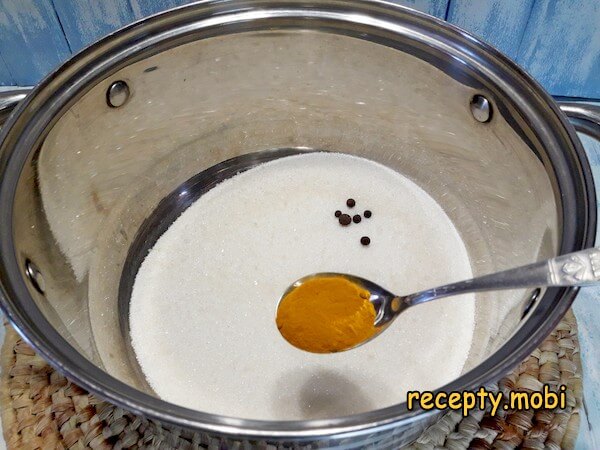
- In a pot just large enough to hold all the cucumbers, I combine the marinade ingredients — sugar first, then allspice berries and turmeric.
- I add the Dijon mustard. Dijon brings both the heat and the slight emulsifying quality that gives the marinade a glossier finish than plain vinegar would.
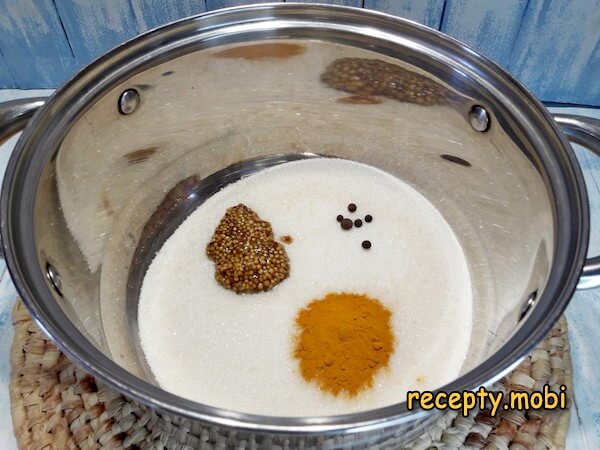
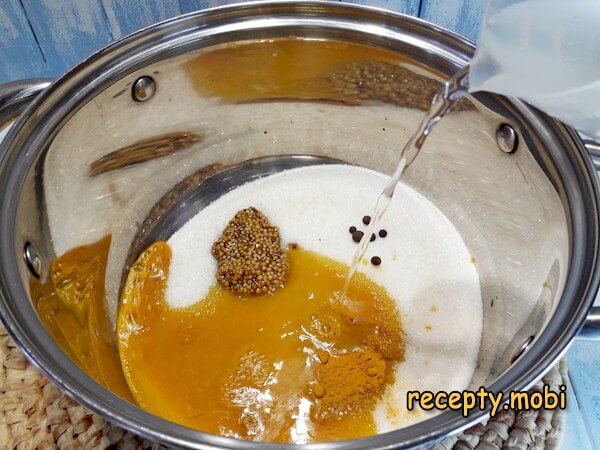
- I pour in the vinegar and stir everything together until the sugar starts dissolving.
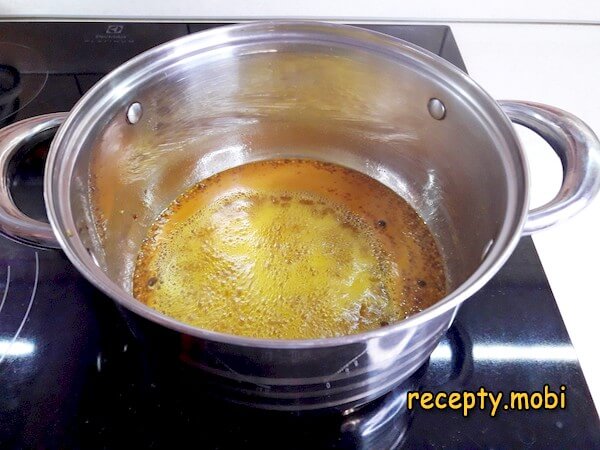
- I place the pot on the stove over medium heat and bring the marinade to a boil, stirring to dissolve all the sugar.
- I add the brined cucumber-onion mixture to the boiling marinade.
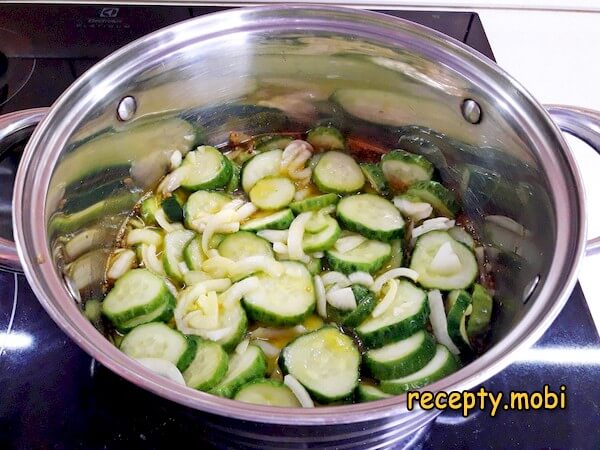
- I wait for the pot to return to a boil, then carefully lift the lower layers of cucumbers to the top so every slice spends time in contact with the hot marinade. This is the moment to start timing — exactly 2 minutes from the second boil.
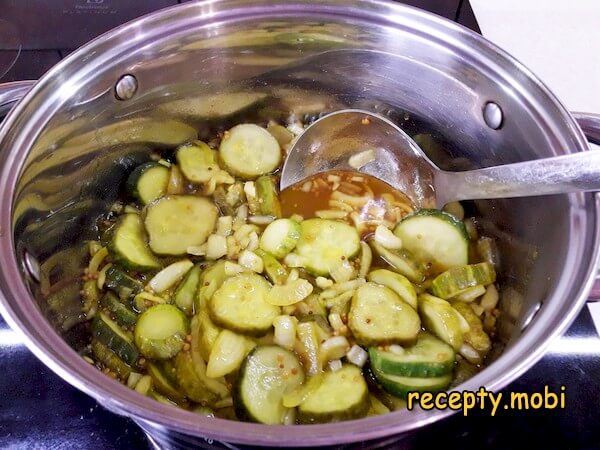
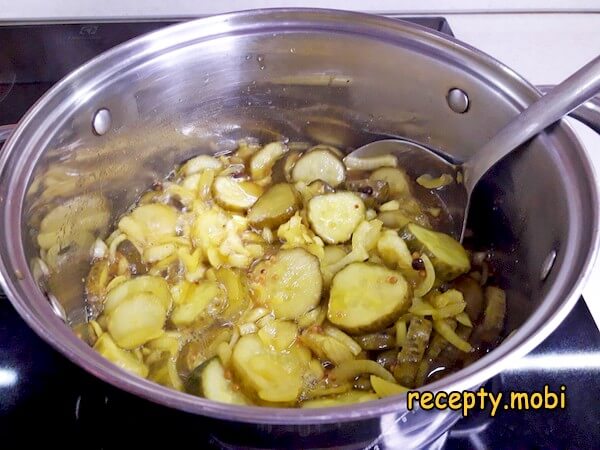
- I boil for exactly 2 minutes — no longer. During this brief window the cucumber rounds shift colour from bright green to dark olive green, signalling the cell walls have collapsed enough for the brine to penetrate. Then I turn off the heat.
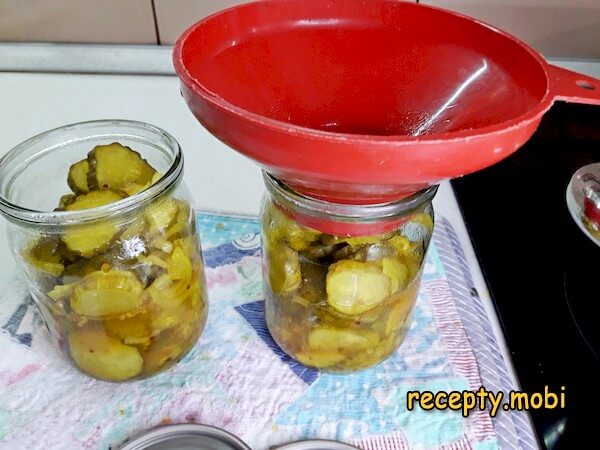
- I distribute the cucumbers into the sterilised jars first, packing them gently but firmly — leaving the marinade in the pot.
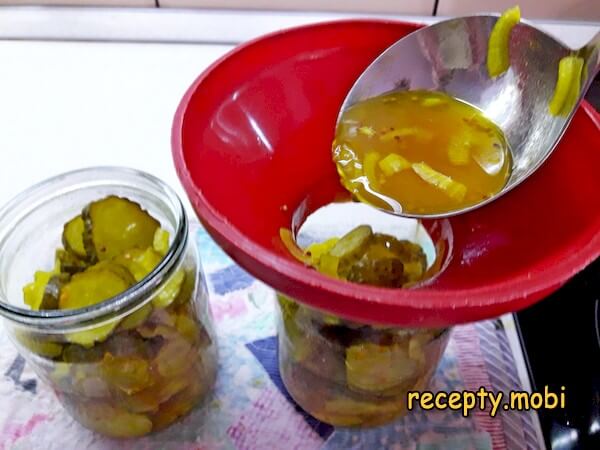
- Then I top up the packed jars with the hot marinade, leaving about 5 mm headspace at the top.
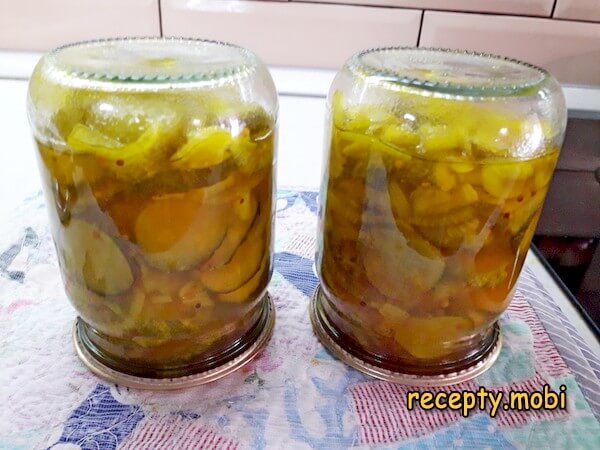
- I seal the jars tightly with the boiled lids, invert them upside down, and leave them to cool that way. The inversion creates the vacuum seal as the contents cool — properly sealed jars store at room temperature all winter.
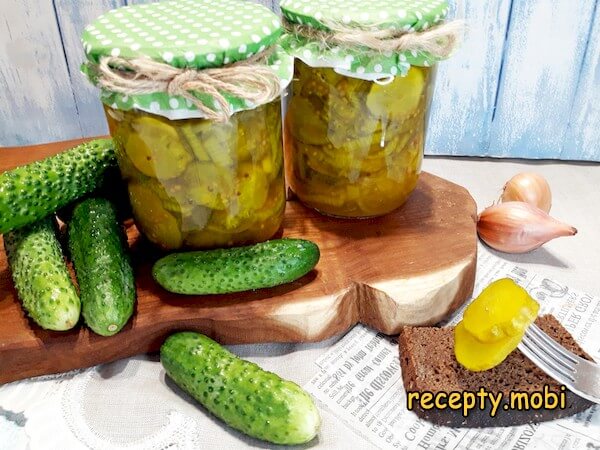
The finished jars store in any kitchen cupboard. Don't worry about the high vinegar content — the long brine-and-marinade process gives a balanced sweet-sour-spicy flavour that's perfect as a sandwich filling, burger topping, or chopped into a quick relish for grilled meats. The pickles peak after 2 weeks in the jar and stay good for a year.
Tips and Tricks
Tip 1. CHOOSE PROPER PICKLING CUCUMBERS. Bumpy, firm, smaller cucumbers (often labelled "pickling" or "Kirby" cucumbers) hold their crunch through the boiling step. Smooth English-style salad cucumbers turn limp and soggy after the marinade boil — they're bred for thin skin and high water content, exactly the wrong properties for pickling. If only smooth cucumbers are available, slice them slightly thicker (7-8 mm instead of 5 mm) to compensate.
Tip 2. THE 2-MINUTE BOIL IS NON-NEGOTIABLE. Less than 2 minutes and the cucumber cell walls don't open enough to absorb the marinade — you get crunchy but bland pickles. More than 2 minutes and they go from crisp to floppy fast, losing the textural snap that defines a good pickle. Set a timer the moment the pot returns to a full boil after the cucumbers go in. For another vinegar-based winter preserve worth comparing, see Pickled Cucumbers for Winter in a Liter Jar with Vinegar.
Tip 3. ADJUST THE MUSTARD AND TURMERIC. The Dijon-and-turmeric profile is American-style; for a more traditional European pickle, swap the Dijon for grainy whole-grain mustard (same quantity) and reduce turmeric to 0.5 tsp. For a spicier kick, add 0.5 tsp of black peppercorns or a small dried chili to each jar before sealing — the heat develops slowly over the first month in the jar.
Tip 4. WAIT TWO WEEKS BEFORE OPENING. Fresh-out-of-the-pot pickles taste mostly of vinegar and salt. The flavours marry and mellow over the first 2 weeks in the sealed jar — sugar absorbs into the cucumber, mustard heat softens, turmeric distributes. Plan production timing accordingly: a jar opened on day 14 is dramatically better than one opened on day 1. For a regional take on cucumber preservation with garlic and herbs, try Georgian-style Cucumbers for Winter.
Frequently Asked Questions
How long do these pickles keep?
Properly sealed jars (vacuum confirmed by the lid not popping when pressed) store at room temperature in a dark cupboard for up to 12 months. Once opened, transfer to the fridge and use within 4-6 weeks — the vacuum seal is broken and shelf life shortens dramatically. Always use a clean fork or spoon to remove pickles; double-dipping with a used utensil introduces bacteria. If you spot any cloudiness in the brine, discoloured cucumbers, or mould, discard the entire jar without tasting.
Can I reduce the sugar?
Yes, but with caveats. The 210 g of sugar is what makes these pickles American-style sweet-sour rather than European savoury-sour. Reducing to 150 g gives a balanced sweet-sour profile; reducing to 100 g gives an essentially savoury pickle with a hint of sweetness. Avoid going below 80 g — the sugar contributes to preservation alongside the vinegar, and below 80 g the pickle's shelf life shortens noticeably. Diabetic-friendly versions can substitute erythritol or stevia at the equivalent sweetness, but the texture will be slightly different.
What can I use instead of Dijon mustard?
Whole-grain mustard, grainy honey-mustard, or English yellow mustard all work as substitutes — same quantity. Each gives a slightly different flavour profile: whole-grain mustard adds visible seeds and a milder heat; honey-mustard accentuates the sweet side; English mustard pushes the heat sharply upward. Avoid prepared yellow ballpark mustard (too vinegary and one-note) and German mustards (too sweet for this preparation). The Dijon-style heat is what balances the sugar.
Can I add other vegetables to the jar?
Absolutely. Common additions: thin-sliced raw carrot rounds, cauliflower florets (blanched 1 minute first), thin slices of red bell pepper, or whole pickling pearl onions. Add them to the cucumber-and-onion mix in step 6 and brine together. Total weight should stay around 950 g (cucumbers + additions + onion) to keep the marinade ratios correct. Avoid soft vegetables like courgette or aubergine — they turn to mush in the boil.