Write a comment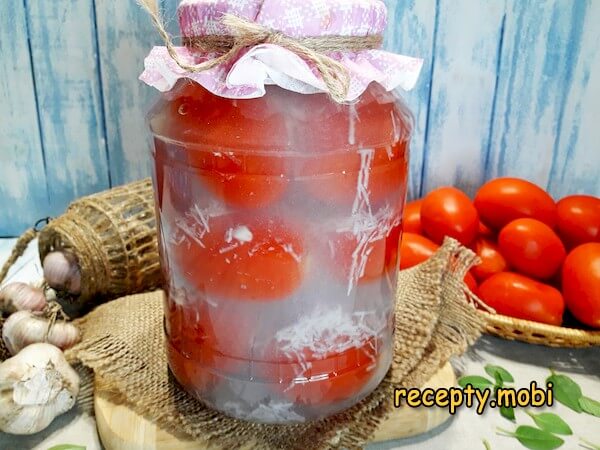
Tomatoes in the Snow with Garlic for Winter
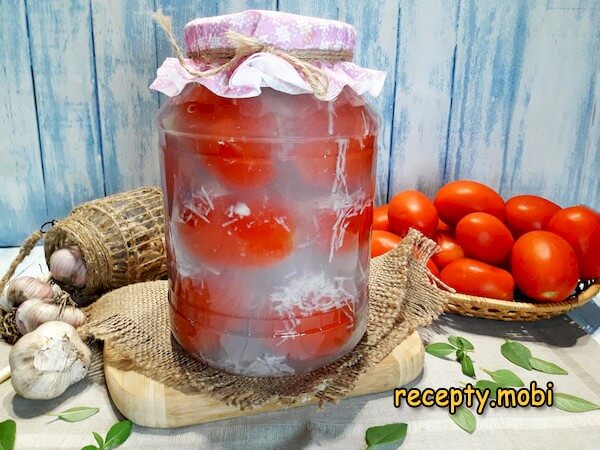
Tomatoes in snow with garlic for winter is the visually striking preserve that earns its fairytale name through finely-grated garlic dispersed across bright red tomatoes — the white garlic shavings look exactly like fresh snowfall on red fruits. The technique is minimalist: no spices except garlic, double-pour brine method, vinegar essence added directly to the jar. The simplicity gives the tomatoes' natural flavour and the garlic's punch room to shine without competing aromatic noise. The result is one of the most beautiful winter jars on the pantry shelf.
The recipe yields 1 jar (1.5 L) — marinade calculation given for 1 L of water (scales easily to any jar size). 35 kcal per 100 g. Time: 40 minutes active + 10 hours blanket-cool.
Ingredients
Show ingredients
- tomatoes – 900 g;
- purified water – 1 l;
- rock salt – 1 tablespoon without a heap;
- white sugar – 5 tablespoons heaping;
- vinegar essence 70% – 1 teaspoon;
- garlic – 1 large head or 1.5 medium heads.
Preparation
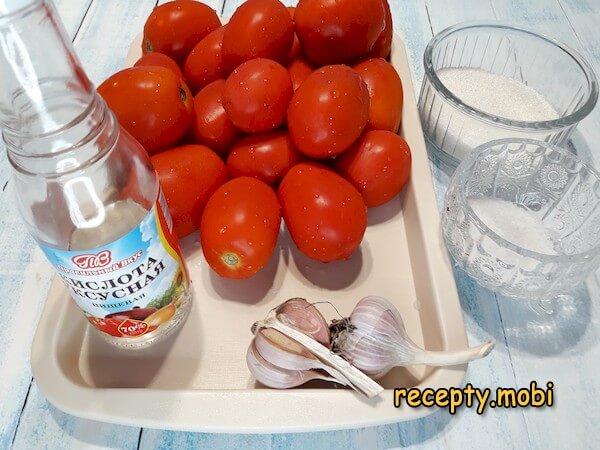
- I prepare the ingredients. Meaty dense tomatoes (Roma/plum varieties) are best — they hold up structurally during the boiling-water pour. Only rock (non-iodised) salt for preservation. Vinegar essence (70%) is concentrated; the 1 tsp ratio is for 1.5 L jar. For 3 L jars, 1 tbsp essence is needed — easy to scale.
- Sterilise the jars and boil the lids in advance. Wash tomatoes and pick same-size fruits for visual uniformity. To prevent skins bursting during the boiling-water pour, I prick a few small holes around each stem with a fork or toothpick.
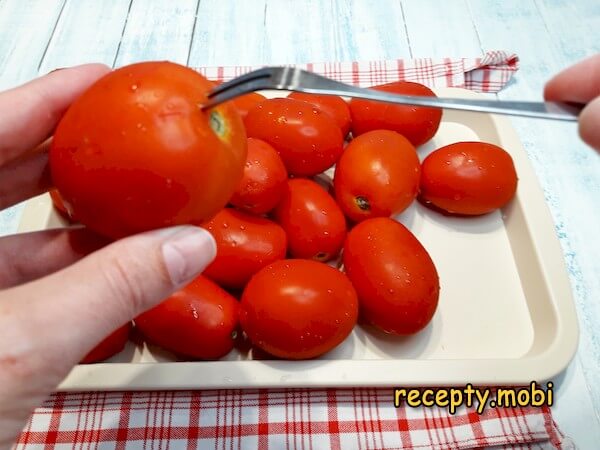
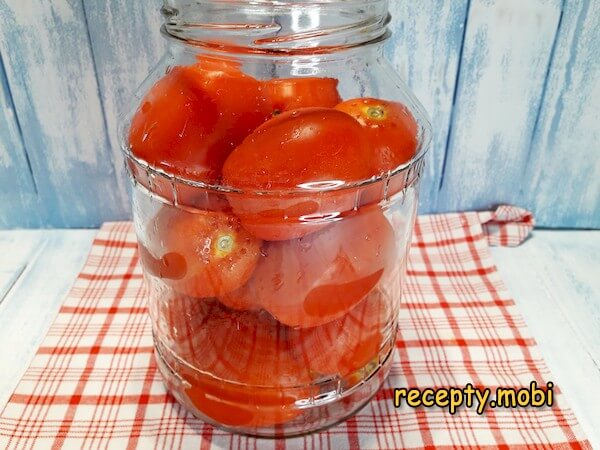
- I pack tomatoes tightly into the jar but never press hard — gentle shaking lets the fruits settle into available spaces naturally.
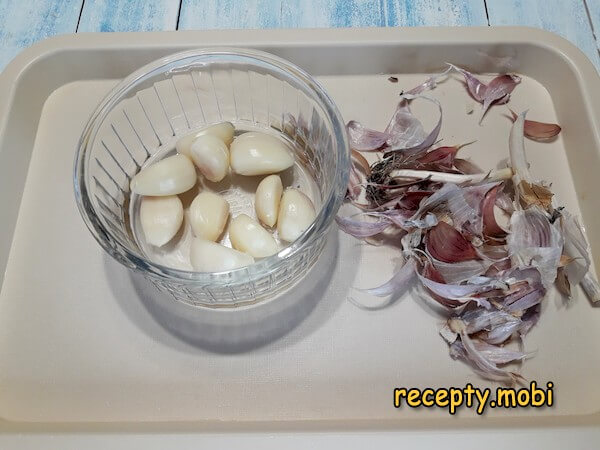
- Garlic peels — every clove fully cleaned of papery husk.
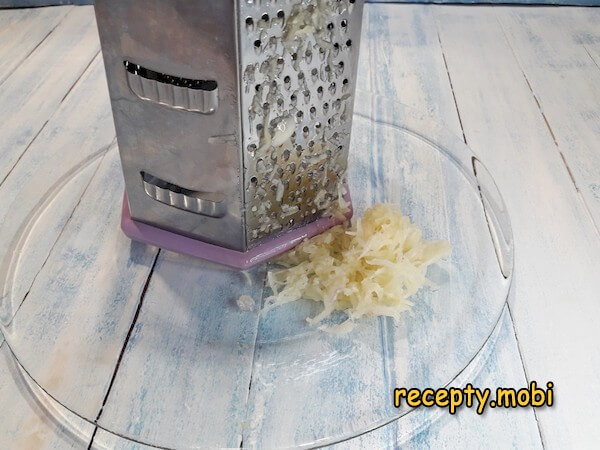
- The garlic grates on a fine grater (Microplane works perfectly). Garlic press also works but grating produces longer shavings that look more dramatically snow-like in the jar.
- The garlic shavings transfer to the jar with tomatoes — the white snow on red fruits is the visual signature.
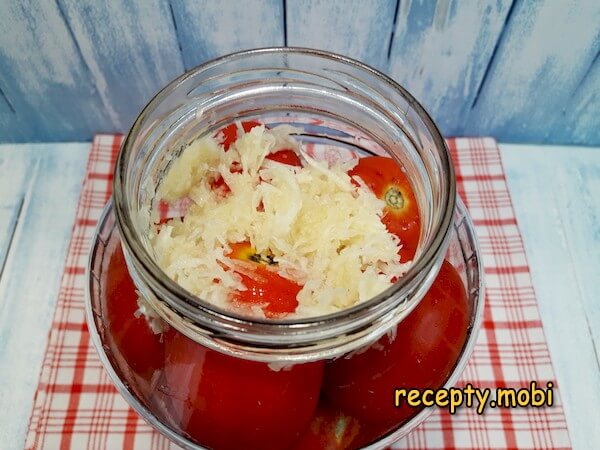
- Clean water boils and pours into the jar — the first hot pour pre-warms the tomatoes.
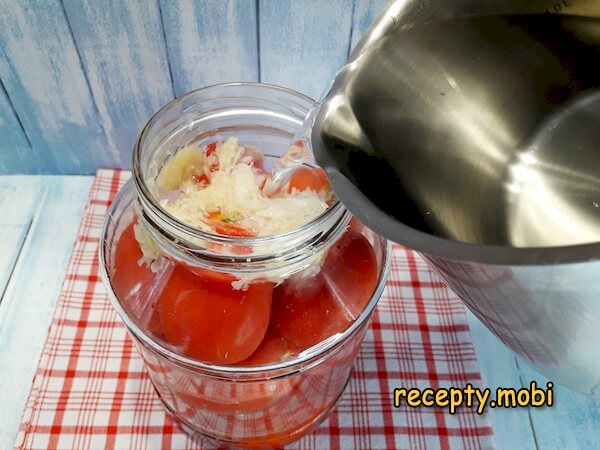
- Lid covers loosely. Tomatoes warm 20-25 minutes — this gentle pre-heat opens the cell walls for marinade absorption.
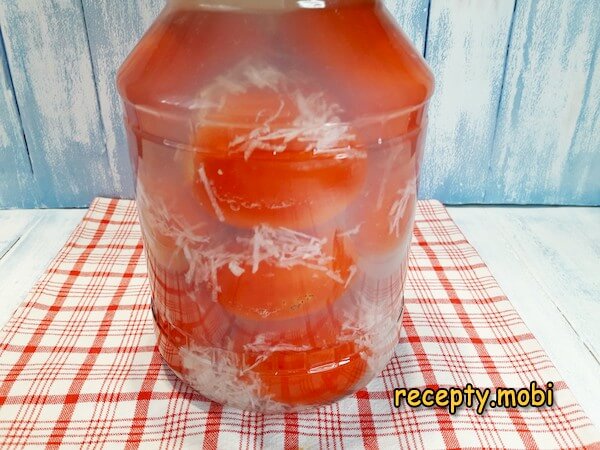
- After 25 minutes, I drain the water back into a saucepan — this becomes the marinade base.
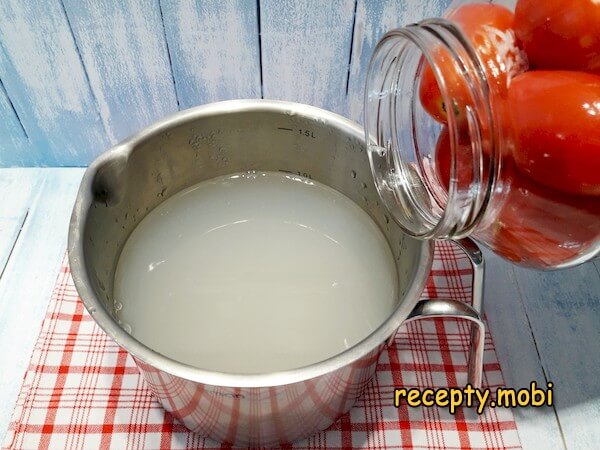
- I top up the drained water with fresh water to reach exactly 1 L (some absorbed into the tomatoes). Salt and sugar dissolve in, mixture boils 30 seconds.
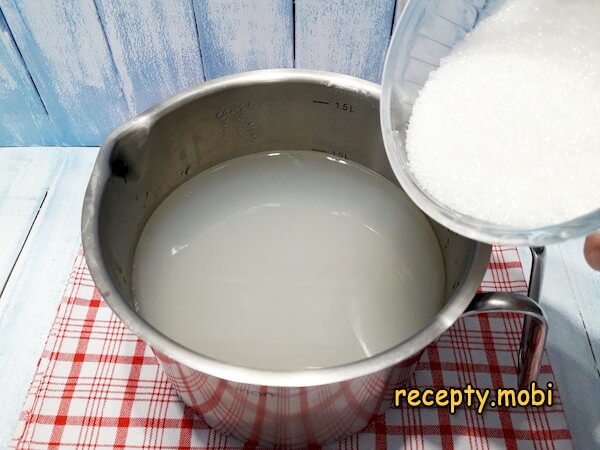
- The hot marinade pours into the jar of tomatoes.
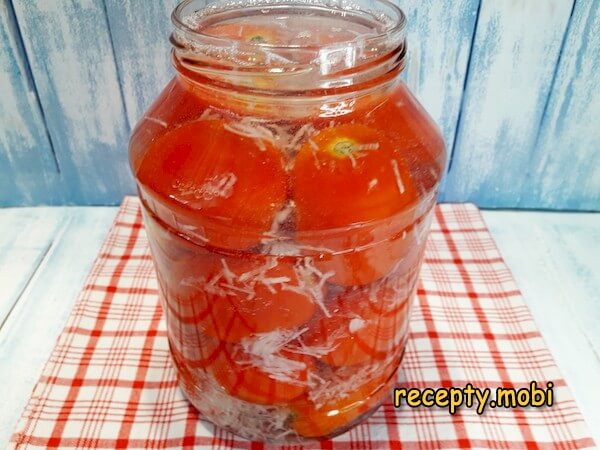
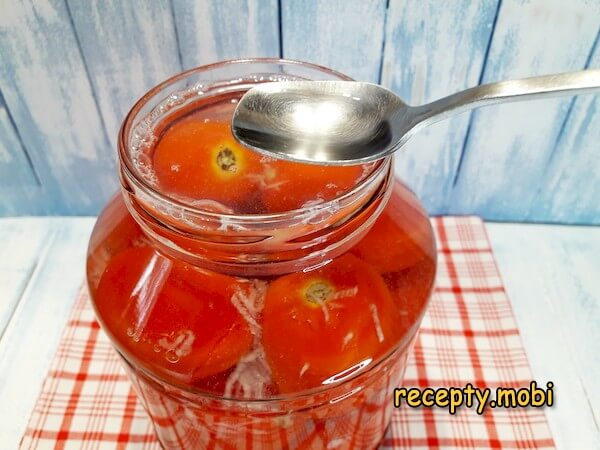
- The 1 tsp vinegar essence (70%) goes directly into the jar last — adding it before the marinade pour would cause excessive splash.
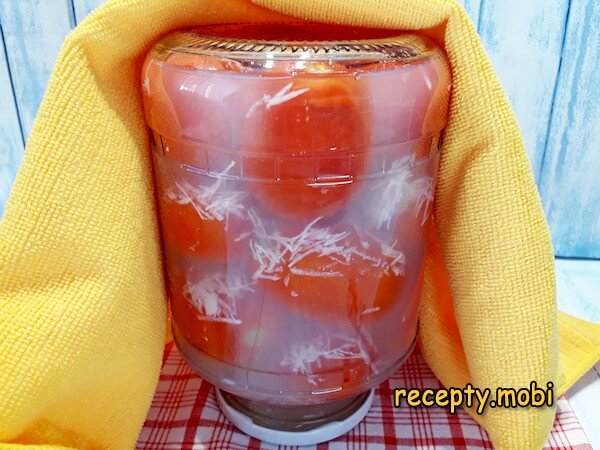
- Lid screws on tight, jar inverts, blanket-wraps for 10+ hours of slow cooling. The slow inverted cool creates a strong vacuum seal without water-bath sterilisation.
Tomatoes in snow with garlic for winter store in a cool dark place. Once opened, the jar disappears almost instantly — these are dangerously addictive tomatoes. The preserve transforms even the simplest meal (boiled potatoes, plain porridge, dry rye bread) into something memorable. The visual presentation alone is worth making them.
Cooking video
Tips and Tricks
Tip 1. THE TOOTHPICK PRICK PREVENTS BURSTING. Step 2's small punctures around each stem aren't decorative — they let steam escape during the hot-water pour. Without the punctures, the tomato skins burst dramatically when boiling water hits them, producing visually unappealing tomatoes with split skins. The punctures are tiny (toothpick-width) and don't show in the finished jar; they just provide steam-release valves during the temperature shock.
Tip 2. THE DOUBLE-POUR METHOD IS THE NO-STERILISATION SECRET. The first water pour (steps 7-9) gently pre-heats the tomatoes; the second hot-marinade pour (step 11) does the seal-creation work. Single-pour methods don't pre-warm the tomatoes, leading to thermal shock that produces softer mushier preserves. The double-pour approach is universal across no-sterilisation tomato recipes — same technique, different seasonings. For another no-sterilisation tomato preserve worth comparing, see Tomatoes with Horseradish and Garlic for Winter.
Tip 3. GRATED GARLIC GIVES THE VISUAL DRAMA. The recipe specifies grating over pressing because grated garlic produces long thin curly shavings that look genuinely snow-like in the jar. Pressed garlic produces a paste that clumps unattractively. The visual aspect of "tomatoes in snow" depends entirely on the grate technique. Use a Microplane or fine box-grater hole; coarser grates produce too-large shreds that don't have the snow effect.
Tip 4. THE 5 TBSP SUGAR IS DELIBERATELY GENEROUS. The recipe's high sugar content (5 heaping tbsp per liter) creates a sweet-and-sour balance that's distinctively Russian-Belarusian. Reducing sugar produces a sharper, more vinegar-forward preserve that loses the recipe's identity. Don't reduce; the sugar is part of what makes this dish addictive. The high acidity of vinegar essence balances the sugar perfectly. For another sliced-style winter tomato preserve worth trying, try Green Tomatoes with Garlic for Winter in Slices.
Frequently Asked Questions
Why is it called "tomatoes in snow"?
The visual presentation creates the snow effect — the white grated garlic shavings disperse evenly across the bright red tomatoes during preservation, looking remarkably like fresh snowfall on red autumn fruits. In Russian-Belarusian winter-preserves tradition, visually evocative names are common ("Goat in the Garden" salad, "Mother-in-law's Tongue" eggplants, etc.) — they're part of the dish's cultural identity. The Russian original "помидоры в снегу" (pomidory v snegu) literally translates as "tomatoes in snow" — a culturally appropriate name for winter food.
Why use vinegar essence instead of regular vinegar?
Vinegar essence (70-80% acetic acid) gives precise pH control with minimal liquid added — 1 tsp essence equals about 50 ml of 9% vinegar in acid content but adds far less liquid to the jar. Less added liquid means more concentrated tomato flavour and better preservation pH. Vinegar essence is widely available in Russian-Eastern European stores and online. Substitute: use 50 ml (about 3.5 tbsp) of 9% vinegar instead of 1 tsp essence — adjust the marinade water down to 950 ml to compensate. The essence approach gives slightly better results.
How long do they keep?
Properly sealed jars at room temperature in a dark cupboard keep 12+ months — until next year's tomato season. Cool basement storage extends to 18 months. Once opened, transfer to fridge and use within 2-3 weeks. The tomato texture stays firm for the first 6 months, then softens gradually. The garlic flavour intensifies over months, then mellows after 6-8 months. Both phases are pleasant. If you spot mould, fizzing, or bulging lids, discard the entire jar.
Can I add other aromatics?
The recipe's appeal is its minimalism — adding more aromatics changes the dish's identity. If you want variation: try adding 2-3 dill umbels (Russian-classic addition), or 1 small bay leaf per jar (subtle aromatic depth). Avoid: cinnamon, allspice, cloves (warm spices that clash with garlic), or fresh herbs (don't preserve well long-term). The pure tomato-garlic-sugar-salt-vinegar profile is what makes this distinct from generic spiced winter tomatoes.