Write a comment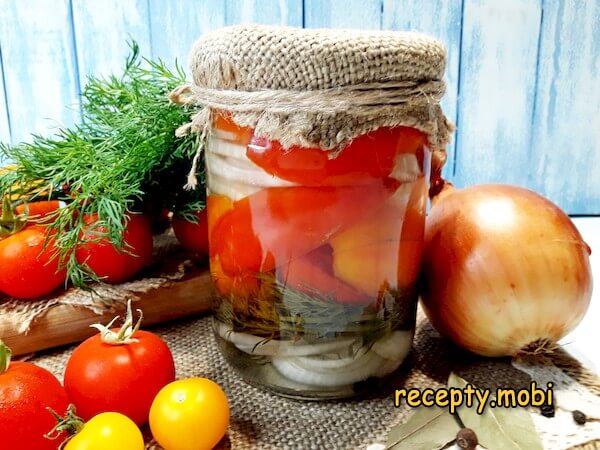
Tomatoes Slices with Onions and Oil for Winter without Sterilization
Sliced tomatoes with onions and oil for winter without sterilization is the summer-bright preserve that captures peak-season tomato flavour for cold months. Dense fleshy tomato varieties (Slivka/Roma) work best — yellow plus red mix gives beautiful colour contrast in the jar. The double-pour brine method (first pour pre-warms, second pour with seasonings creates the seal) bypasses formal water-bath sterilisation while still producing safe shelf-stable preserves.
The recipe yields 2 half-liter jars at 74 kcal per 100 g. Time about 30 minutes active.
Ingredients
Show ingredients
- tomatoes – 500 g;
- onion – 70 g (one large head);
- garlic – 1 clove per jar;
- bay leaf – 1 leaf per jar;
- odorless vegetable oil – 1 tsp per jar;
- allspice – 3-4 pcs;
- black pepper – 6-8 peas;
- fresh dill – bunch;
- purified water – 1 l;
- rock salt – 25 g;
- sugar – 100 g;
- 9% vinegar – 50 ml.
Preparation
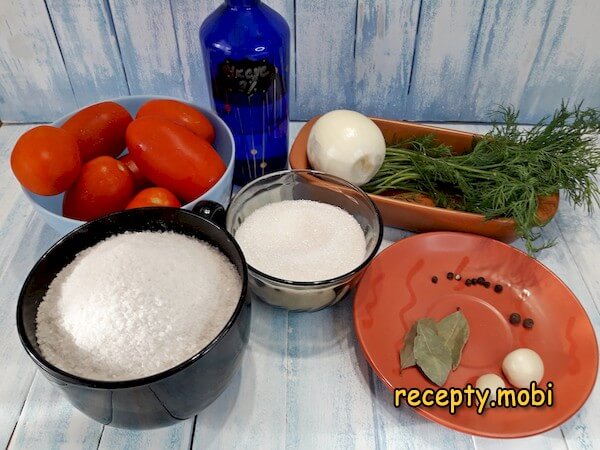
- I prepare the ingredients. The marinade calculation is for 1 liter of water — slightly more than 2 half-liter jars need, but it's safer to err on the side of extra brine. Since this is no-sterilisation, jar cleanliness is critical: wash with baking soda or mustard powder, then sterilise jars and lids by any method.
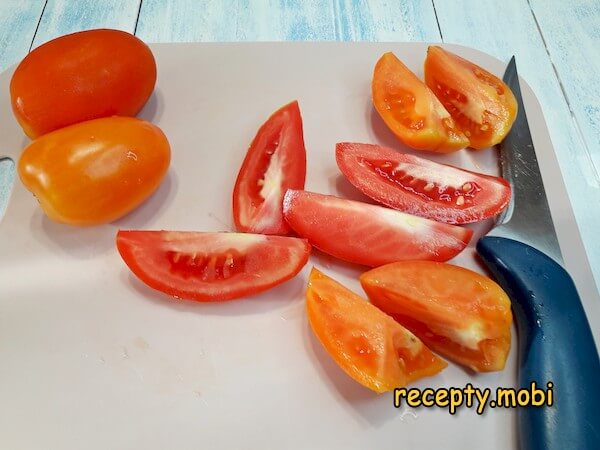
- Wash dense meaty tomatoes, cut out stems, slice into 2 or 4 pieces depending on size — uniform pieces look best in the jar.
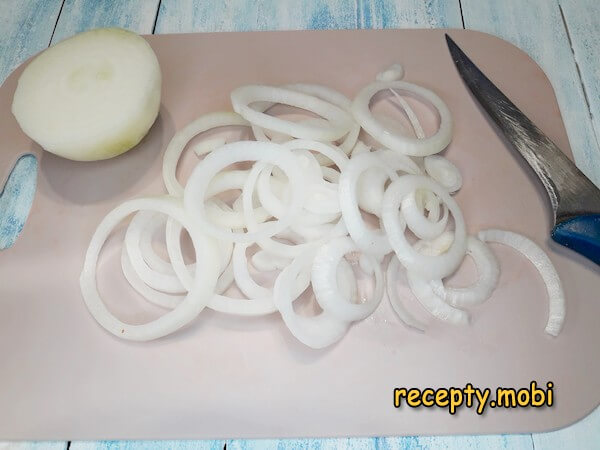
- Onion slices into rings, then I separate the rings into individual circles.
- The jar bottom gets a layer of onion, peppercorns, sliced garlic, and dill. Note: the onion in this preserve emerges very tasty — perfect addition to winter salads as a separate ingredient.
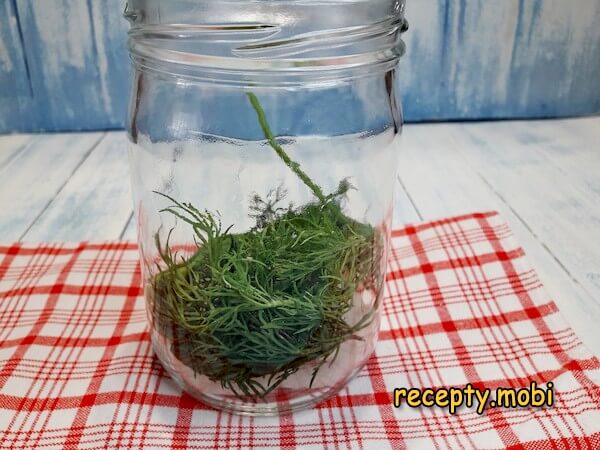
- First tomato layer packs tightly but without crushing — gentle tapping the jar on the table settles them naturally.
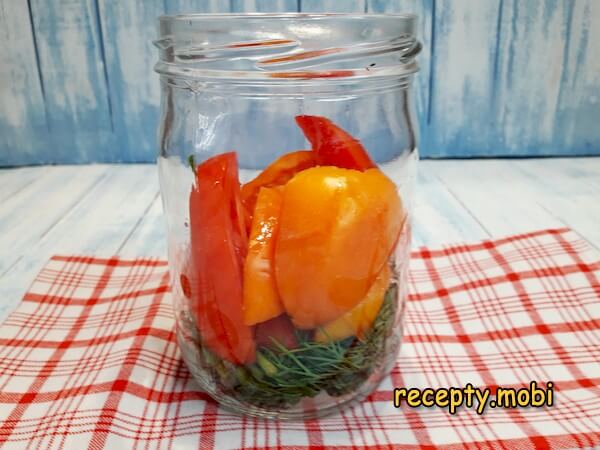
- Second layer of onion + tomato fills the jar to the very top.

- Plain water boils and pours into the filled jars — this first pour pre-warms the contents.
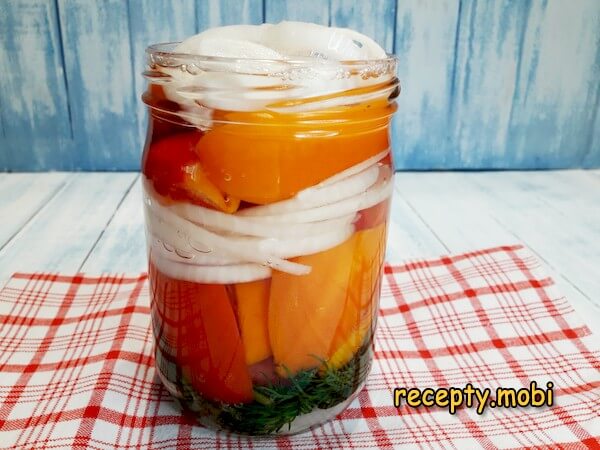
- Lids cover loosely. Wait 15 minutes for the contents to fully heat through.
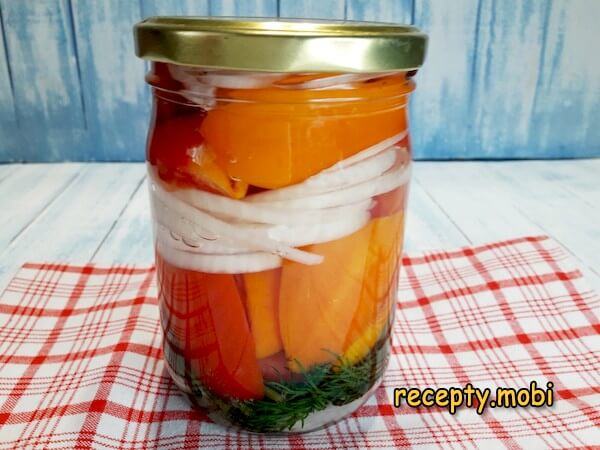
- After 15 minutes, drain the water back into a measuring saucepan — measures the actual marinade volume needed.
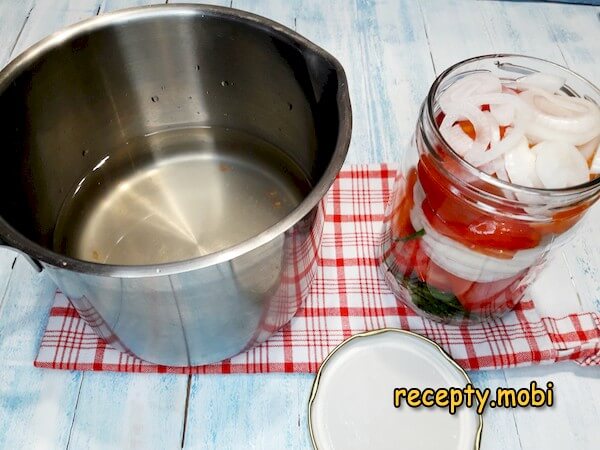
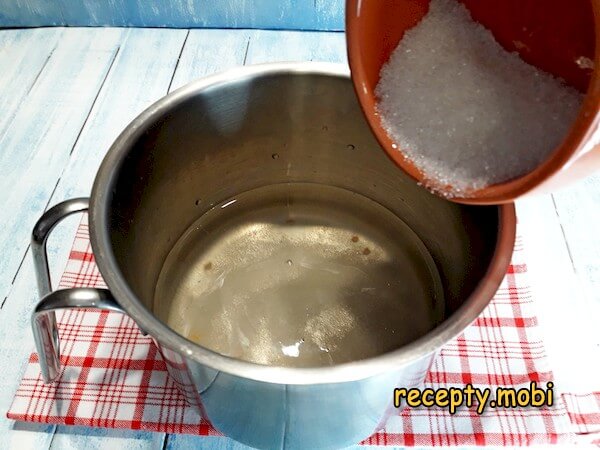
- Salt and sugar dissolve into the drained water (in the proportions for the actual measured volume).
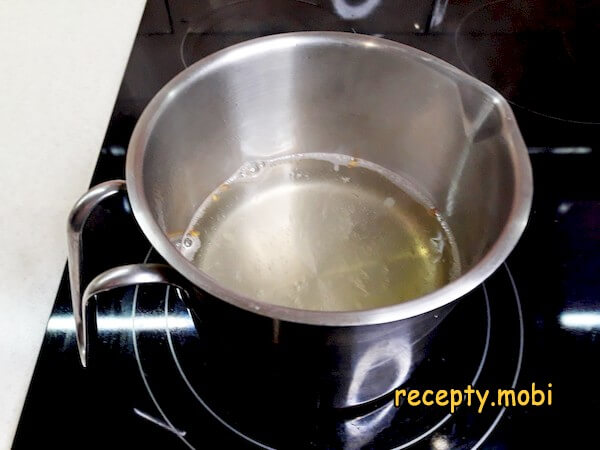
- The marinade boils 2 minutes for full salt-sugar dissolution and minimal sterilisation.
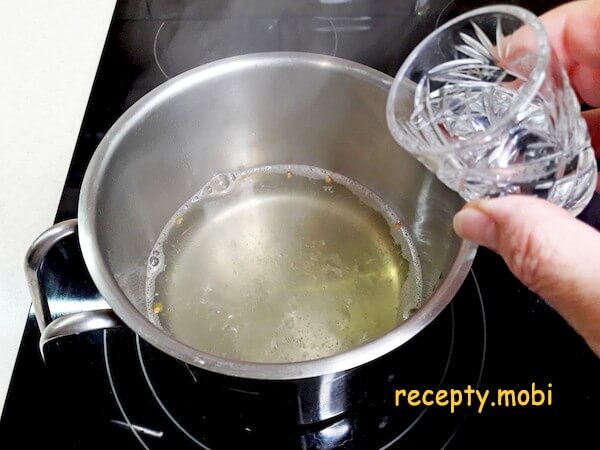
- Vinegar adds at the very end — pot off heat. Late-stage vinegar preserves its acidic punch.
- 1 tsp vegetable oil pours into each half-liter jar (1 tbsp for liter jars). The oil floats on top and creates an oxygen barrier that protects the preserve.
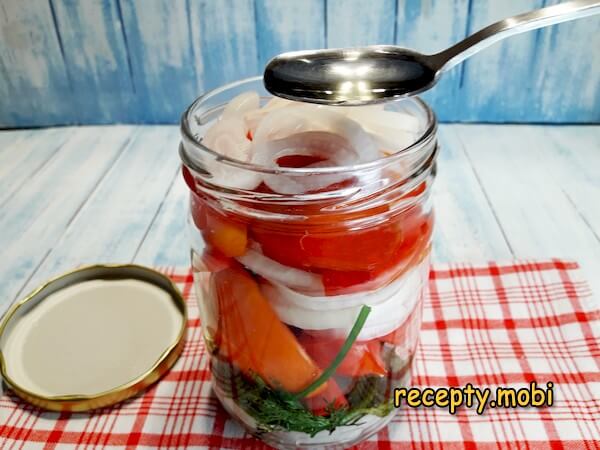
- Marinade pours over the oil to fill jars to the very top.
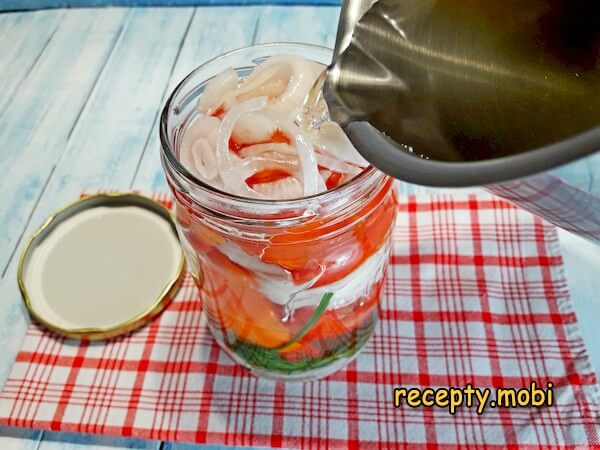
- Lids screw on tight, jars invert.
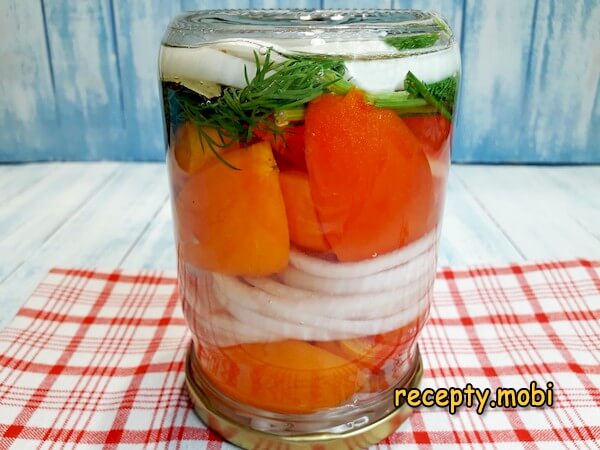
- Wrap inverted jars in a large towel or blanket. Leave until completely cool — at least 8 hours.
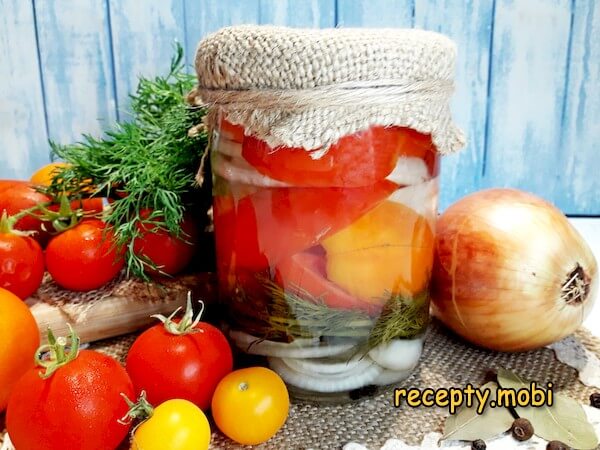
Sliced tomatoes with onions and oil for winter store at room temperature for a year or more. The natural tomato flavour is preserved beautifully — these jars genuinely earn the description "pieces of summer in winter." The tomato pieces, the soaked onion rings, and the spiced marinade are all separately delicious — three preserves in one jar.

Tips and Tricks
Tip 1. THE OIL FLOAT IS A SAFETY MECHANISM. Step 13's oil addition isn't decorative — the floating oil layer creates an oxygen barrier between the marinade and the air, dramatically inhibiting mould and yeast growth at the surface. The 1 tsp per half-liter jar is calibrated to form a thin but complete oil seal. Less oil = incomplete coverage = mould risk. More oil isn't harmful but reduces the marinade volume.
Tip 2. THE 15-MINUTE WARM-UP IS ESSENTIAL. Step 8's pre-heat step gently warms the tomatoes through their cell walls, opening them up for marinade penetration. Skip this step and the tomatoes don't fully infuse with the marinade — they emerge less flavourful. The 15-minute timing is calibrated for 0.5 L jars; larger jars (1 L) need 20 minutes. The pre-warm + drain + boil-back-in approach is universal for no-sterilisation preserves. For another no-sterilisation tomato preserve worth comparing, see Marinated Tomatoes for Winter Without Sterilization (Quick Recipe).
Tip 3. MIXED-COLOUR TOMATOES FOR VISUAL DRAMA. The intro mentions yellow + red as a colour-contrast strategy. Yellow tomatoes (Yellow Plum, Lemon Boy) bring sunshine-bright pops; red tomatoes provide the classic preserve colour. The jar looks like edible art with both colours alternating. Yellow tomatoes have slightly less acidity, so they soften slightly faster — use yellow for the jar bottom (longer marinade exposure helps soften red tomatoes more, balancing texture).
Tip 4. THE TRIPLE-USE JAR. Each jar provides three separate preserves for use in cooking: (1) the tomato pieces — direct serving as zakuska or dicing into salads, (2) the soaked onion rings — fantastic salad addition with their absorbed marinade flavour, (3) the spiced marinade liquid — use as vinaigrette base, drizzle on grilled meat, mix into Bloody Mary cocktails. Don't discard any component when you open the jar. For another caviar-style winter preserve worth trying, try Caviar from Green Tomatoes for Winter Without Sterilization.
Frequently Asked Questions
Why "without sterilization" and is it safe?
"Without sterilisation" means skipping the additional water-bath sterilisation step that fully-sterilised preserves go through. This recipe relies on: pre-sterilised jars and lids, double-pour-with-boiling-water technique (provides heat), salt + vinegar acidic environment (provides chemical preservation), oil floating layer (provides oxygen barrier), inverted-cool slow seal formation (provides vacuum). These layered safety measures combined are sufficient for shelf-stable storage. The result is genuinely safe at room temperature for 12+ months — millions of Russian-Eastern European households make these preserves every autumn.
What tomato varieties work best?
Dense meaty varieties: Roma (Slivka), San Marzano, Plum, Italian Plum, Yellow Plum. Soft juicy tomatoes (Beefsteak, regular salad tomatoes) collapse during the bake-up and produce mushy preserves. Cherry tomatoes can be used WHOLE (don't slice) for a different presentation. Heirloom varieties with high water content should be avoided. The "Slivka" (Russian for "plum") variety mentioned in the recipe is the gold standard — small dense oval tomatoes with low water content.
How long do the jars keep?
Properly sealed at room temperature in a dark cupboard, the jars keep 12-18 months. Cool basement extends to 24 months. Once opened, transfer to fridge and use within 2-3 weeks. The tomato texture stays good for 6 months, then softens gradually. The onion rings actually peak around month 3-4 — fully infused with marinade flavour by then. If you spot mould (the oil seal usually prevents this), bulging lid, or fizzing, discard the entire jar.
Can I substitute the dill with other herbs?
Yes — fresh dill is the Russian classic but variations work. Try: fresh basil (Italian-style, beautiful with tomatoes), fresh tarragon (French-style, more aromatic), fresh thyme (Mediterranean), fresh cilantro (Mexican-Caucasian leaning), or a combination. Dried herbs work but use less (1/3 the volume of fresh equivalents). Avoid: parsley alone (too mild), rosemary (too aggressive), mint (clashes with tomatoes). Fresh dill remains the safest choice for traditional flavour identity.