Write a comment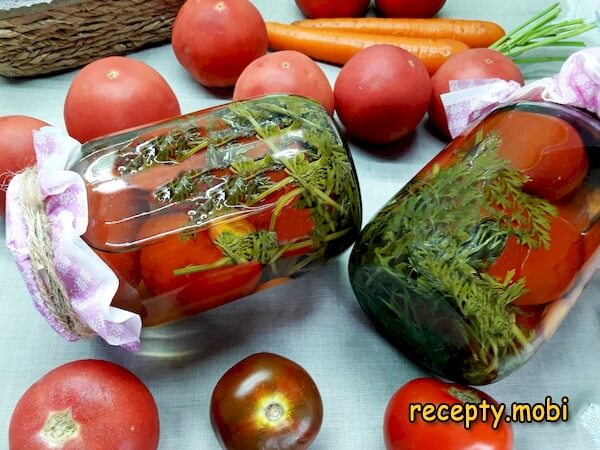
Tomatoes with Carrot Greens for Winter
Tomatoes with Carrot Greens for Winter is the elegant minimalist Russian/Slavic preserve — STUNNING result without ANY traditional spices. NO pepper, NO garlic, NO vinegar. Citric acid creates sour environment; young carrot slices + carrot tops give tomatoes LIGHT HONEY AROMA + sweeter taste. The 60-minute preparation + 12-hour blanket-rest produces 2 jars of 1 L. Stores in regular kitchen cabinet of urban apartment. Open after 4-5 MONTHS — carrot leaves have time to impart all aroma. Sterilize jars + lids first.
Ingredients
Show ingredients
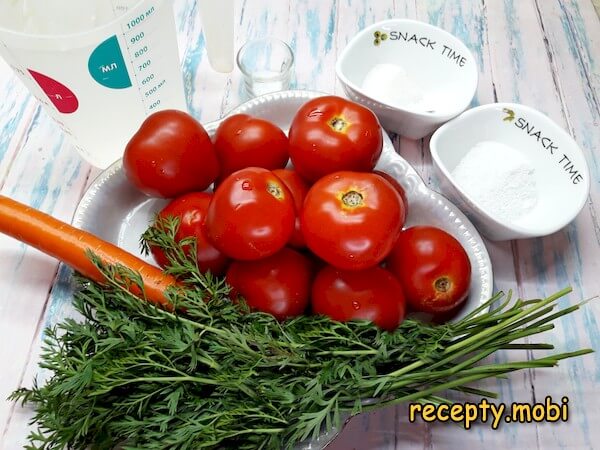
- medium tomatoes – 1 kg;
- filtered water – 1 L;
- young carrot tops – from 3 root vegetables;
- young carrot – 1/2 pc;
- rock salt – 1 tbsp;
- white sugar – 0.5 tbsp;
- citric acid – 1 tsp.
Sterilize jars + metal lids (screw-on or crimped) before starting.
Preparation
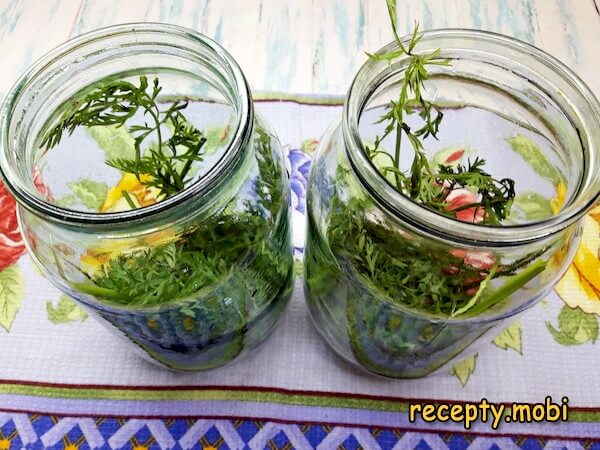
- Wash all ingredients (no need to dry). Lay BOTTOM of jars with carrot TOPS — curl into RING.
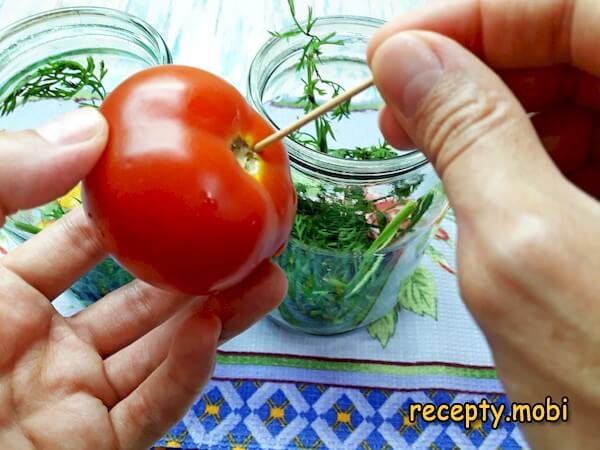
- To prevent tomato SKIN from bursting on contact with boiling water: PIERCE flesh around stem base with toothpick + few more holes on other side.
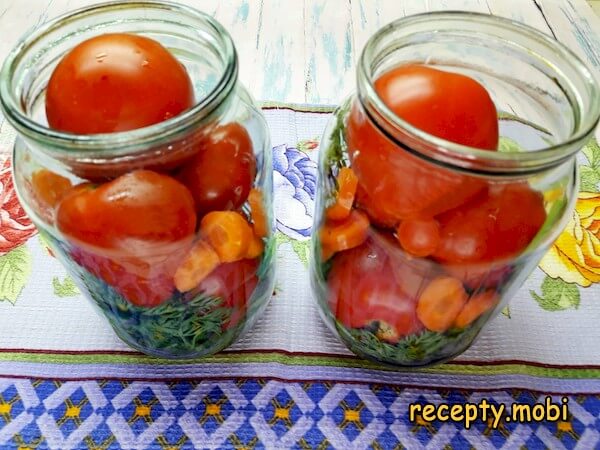
- Pack fruits TIGHTLY into jars with TOPS. Boil water.
- Pour BOILING water; cover jars with lids + towel. Leave tomatoes warming up.
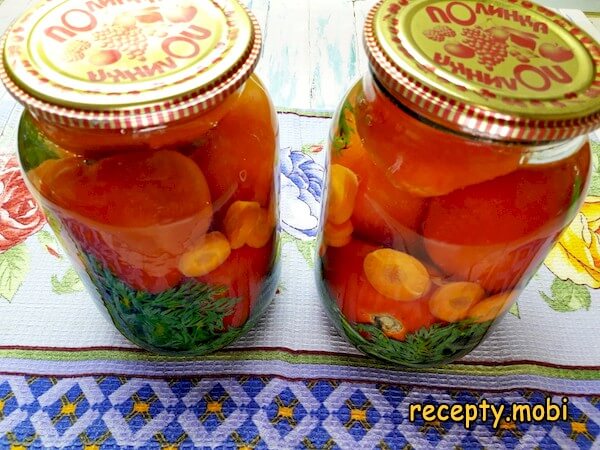
- After 30 MIN: water cools; drain into pot for BRINE-MAKING (can hold tomatoes with palm — jars + water no longer hot). Place on stove. Dissolve SALT + SUGAR + CITRIC ACID directly in pot. Wait for STEADY BOIL.
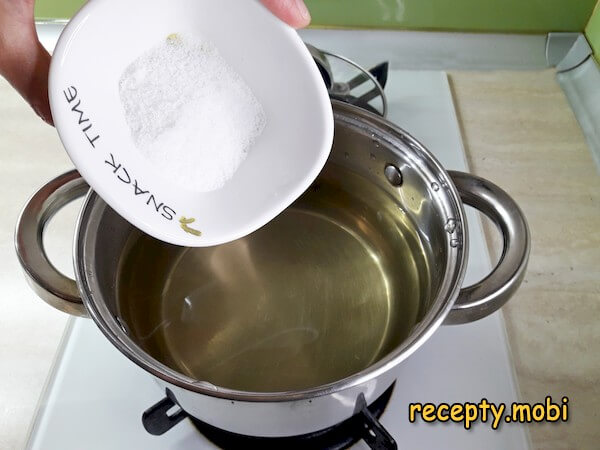
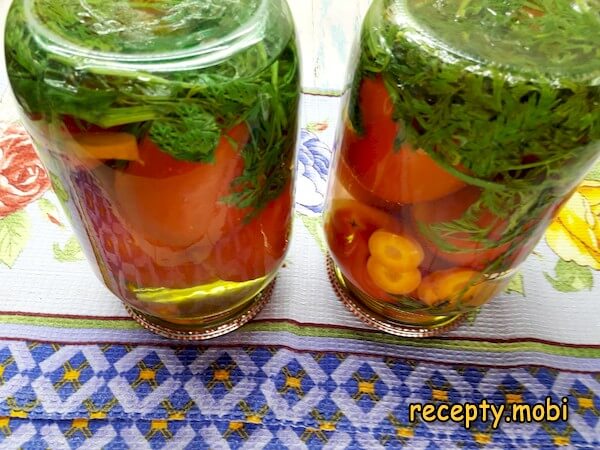
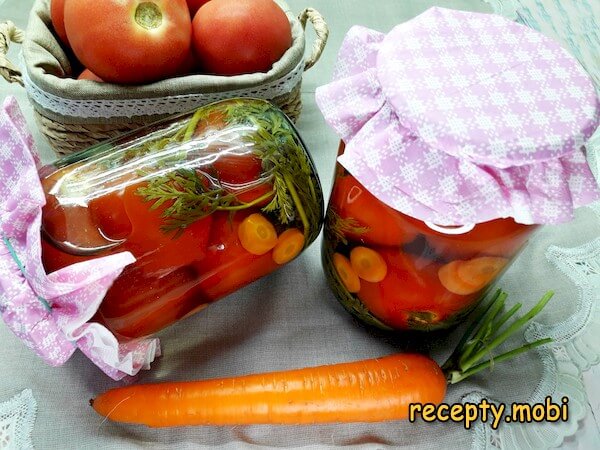
- Pour BRINE over tomatoes. IMMEDIATELY screw on lids. Check seal: turn jar upside down. If nothing leaks: transfer to warm BLANKET/quilt — additional sterilization for seal. Keep in warmth AT LEAST 12 HOURS. Store in kitchen cabinet of urban apartment. Open after 4-5 MONTHS — carrot leaves impart all aroma. Bon appétit!
Tips and Tricks
Tip 1. THE NO-TRADITIONAL-SPICES MINIMALISM. Recipe's "no pepper, no garlic, no vinegar" specification is concept-defining. Standard Russian tomato-pickling: requires pepper + garlic + dill + vinegar = bold-flavored brine. THIS RECIPE'S minimalism: replaces all with carrot-greens + carrot-slices + citric acid = SUBTLE elegant character. The carrot greens (botva): provide LIGHT HONEY AROMA + slightly sweet character. The carrot slices: subtle sweetness. The CITRIC ACID: replaces vinegar for clean acidic preservation without vinegar character. Result: pure tomato-flavor + carrot-aromatic accent + clean acid balance. Same minimalist preserve principle: traditional Russian "tomaty-v-svoyem-soku", French confitures-naturelles. The recipe-canonical character: refined + subtle vs bold-spiced.
Tip 2. THE CARROT-GREENS UNIQUE FLAVOR INPUT. Recipe's "carrot tops give honey aroma" is genuine recipe-defining ingredient. Carrot tops (botva): typically discarded but contain DELICATE CARROT-CELERY-PARSLEY-LIKE aroma + light sweetness. RECIPE INNOVATION: harness this flavor as preservation aromatic. The amount (tops from 3 carrots): subtle background, not dominant. RING ARRANGEMENT (Step 1): visually striking + maximizes flavor contact with tomatoes. Same kitchen-thrift principle: traditional Russian "no-waste" cooking, French farm-to-table preservation. Don't substitute parsley alone — different flavor profile. For another classic Russian/Slavic tomato preserve worth comparing, see Marinated Tomatoes Classic.
Tip 3. THE PIERCED-TOMATO ANTI-BURST TECHNIQUE. Step 2's "pierce flesh around stem + few holes other side" is structural-essential. WHOLE unpierced tomatoes: skin tension during boiling water contact = SKINS BURST + tomatoes split open + ugly ruined preservation. PIERCED tomatoes (3-5 small holes): allow steam + pressure to escape during heating, skins stay INTACT, beautiful preserved tomatoes. The TOOTHPICK preferred (small holes vs knife slits): minimum visible damage. Same pre-pierce technique: traditional Russian "tselyye pomidory" preserves, French confit-de-tomates-entières. Don't skip — burst tomatoes = catastrophic recipe failure.
Tip 4. THE DRAIN-AND-REMAKE-BRINE METHOD. Step 5's "drain water + remake into brine" is recipe-defining technique. WITHOUT this step: salt + sugar + citric acid wouldn't dissolve evenly + initial-pour water wastes its activated heat. WITH drain-and-remake: tomato-released compounds enrich the water (slight tomato character developed during 30-min warming), salt + sugar + acid dissolve perfectly via boiling. The reuse of water: economical + better flavor. Same drain-and-remake principle: traditional Russian "marinady" technique, modern double-pour canning. The 4-5 MONTH WAIT before opening: allows full aroma development from carrot greens. For another classic Russian winter-preserve worth trying, try Cucumbers in Mustard Dressing.
Frequently Asked Questions
Can I use carrot tops from store-bought carrots?
Yes — store-bought carrot tops work IF FRESH + GREEN. RECIPE-CANONICAL: young carrot tops from freshly-pulled carrots (peak flavor + aroma). FARMERS-MARKET preference: carrots-with-tops attached, cut tops same-day. STORE-BOUGHT carrots WITH TOPS attached: increasingly available, work well if leaves still green + bright. AVOID: yellowed/wilted tops (off-flavor), tops with significant brown spots (decomposing). FROZEN tops (rare): work but lose 50% aroma. SUBSTITUTE if unavailable: parsley + dill + celery leaves combined (1 cup chopped) — different flavor but similar function. The TOPS-FROM-3-CARROTS amount is calibrated — don't overdo (becomes overpowering).
Why no vinegar in this recipe?
Citric acid replaces vinegar for several recipe reasons. (1) FLAVOR: vinegar has its own distinctive aromatic character that COMPETES with subtle carrot-greens aroma. CITRIC ACID has neutral character — provides acidity without flavor interference. (2) CLARITY: vinegar makes brine cloudy + slightly yellowish. Citric acid keeps brine CLEAR. (3) PURITY: matches recipe's minimalist "no traditional spices" character. (4) STORAGE: provides equivalent acidic preservation. The 1 tsp citric acid amount: equivalent to ~3 tbsp 9% vinegar acidity. Recipe-canonical: clean-tasting subtle preserve. SUBSTITUTE if no citric acid: 3 tbsp lemon juice (similar but less concentrated).
How long does it really keep?
Properly sealed jars in apartment kitchen cabinet: UP TO 12 MONTHS at peak quality. Months 1-3: tomatoes still firm, carrot-aroma developing. Months 4-5: PEAK FLAVOR — recipe-stated optimal opening time (carrot tops fully impart aroma). Months 6-9: still excellent, increased aroma + slightly softer tomatoes. Months 10-12: still good, more brine-soaked character. Past 12 months at room temp: not recommended. COOL CELLAR (10-15°C): extends quality to 18 months. Once OPENED: refrigerate, consume within 1-2 weeks. Storage tips: dark place ideal, clean dry fork, tight lid. Spoilage signs: bulging lid, fermentation bubbles, off-smell — discard.
What goes best with them?
Russian/Slavic tradition has specific tomato-preserve companions. CLASSIC: alongside boiled potatoes (peak Russian comfort), mashed potatoes, plain rice. WITH MEAT: grilled meats (chicken, pork, beef), kebabs, sausages. WITH BREAD: dark rye (Borodinsky), simple white bread, sourdough. ZAKUSKA: served as cold appetizer with vodka, beer (traditional drinking-snack pairing). SOUPS: chopped fine + added to vegetable soups. EGG DISHES: alongside scrambled eggs, omelets. SALADS: chopped fine + mixed in vegetable salads. The tomatoes are versatile + subtle — pair with anything fatty/rich (cuts richness with acidic refresh). Russian families: opened jar lasts week — eat at multiple meals.