Write a comment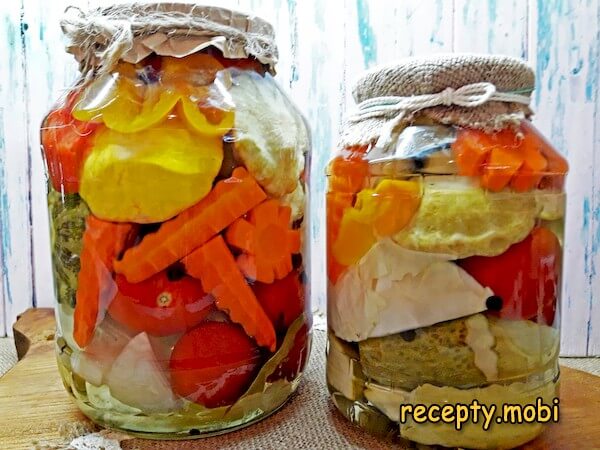
Vegetable Assortment for Winter Without Sterilization
Vegetable Assortment for Winter Without Sterilization is the genius solution to "monotonous-jar-boredom" problem — diverse vegetables packed in one jar (cabbage + peppers + cucumbers + carrots + zucchini + pattypan squash + tomatoes + onion + garlic + herbs). Open ONE jar = full vegetable variety on plate. Two-pour preservation method (no sterilization needed). The 24-hour total elapsed time produces 2 jars (2 L + 1.2 L). Stores 1 year at room temperature in apartment. Perfect for sampling-style winter meals.
Ingredients
Show ingredients
- any cabbage – 1/6 head;
- sweet bell peppers – 2 pcs;
- cucumbers + cornichons – 500 g;
- young carrots – 150 g;
- milk zucchini – 1 pc;
- colored pattypan squash – 500 g;
- small tomatoes – 600 g;
- onion – 100 g;
- garlic – 0.5 head;
- parsley + greens – 1 bunch;
- bay leaf, peppercorns 2 kinds – few each in jar;
- For the brine (per 1 L water): rock salt – 1.5 tbsp;
- white sugar – 3 tbsp;
- 9% vinegar – 50 ml;
- cloves, peppercorns, bay leaves – few each in pot.
Jars + canning lids must be sterilized first.
Preparation
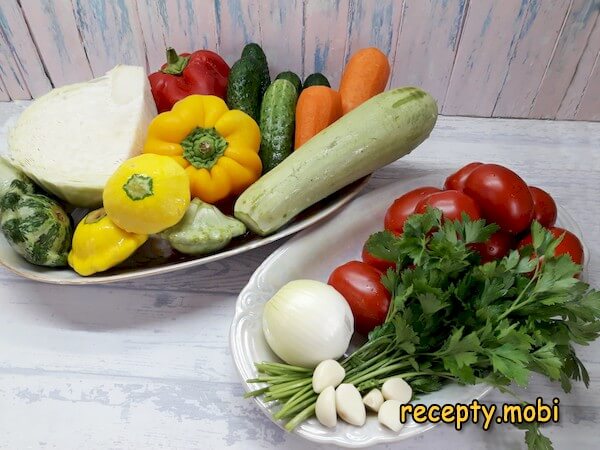
- I prepare the vegetable ingredients for vegetable assortment for winter without sterilization.
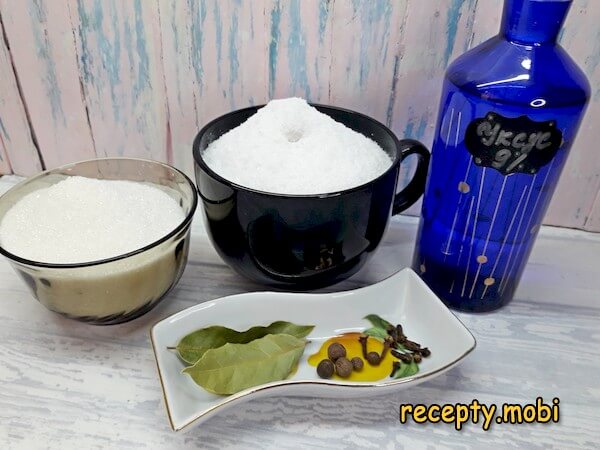
- Also prepare ingredients for BRINE.
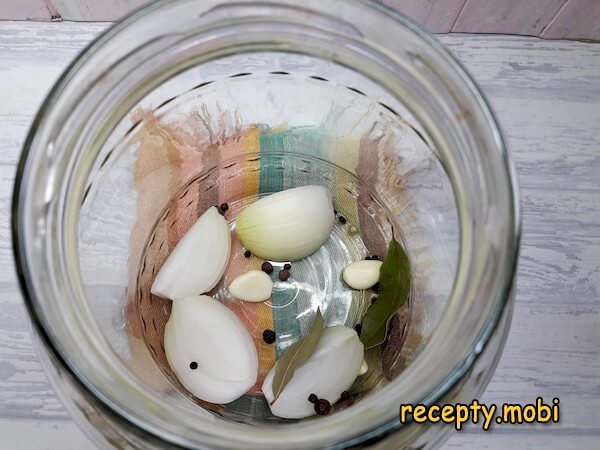
- Heat water to boiling — ~1.5 L for pattypans + carrots (need preliminary thermal treatment). Meanwhile drop quartered ONION + whole GARLIC + bay leaves + peppercorns into jar.
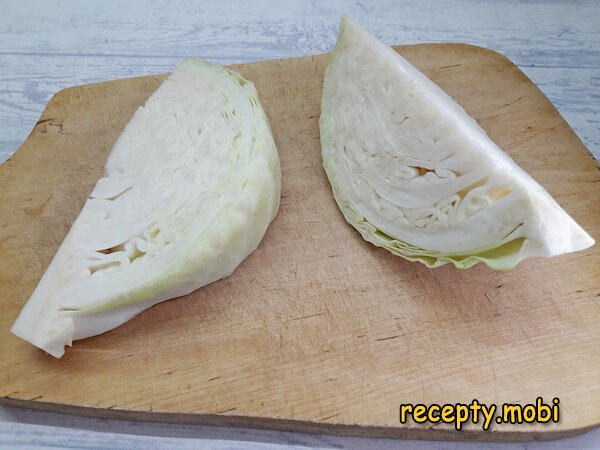
- Divide CABBAGE into small SECTORS — each holding small stump (otherwise leaves crumble).
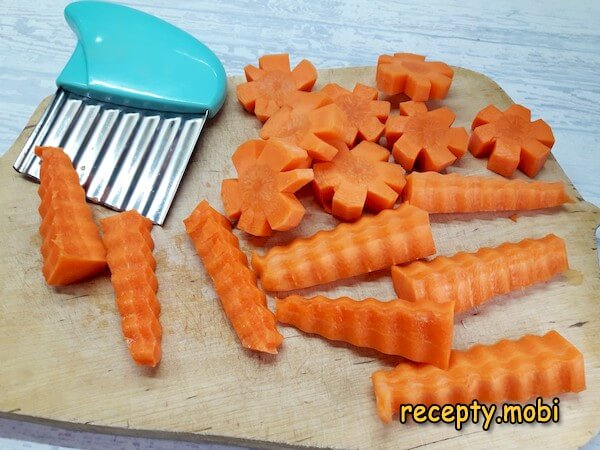
- Cut CARROTS into FANCY shapes — flowers, ribbed sticks.
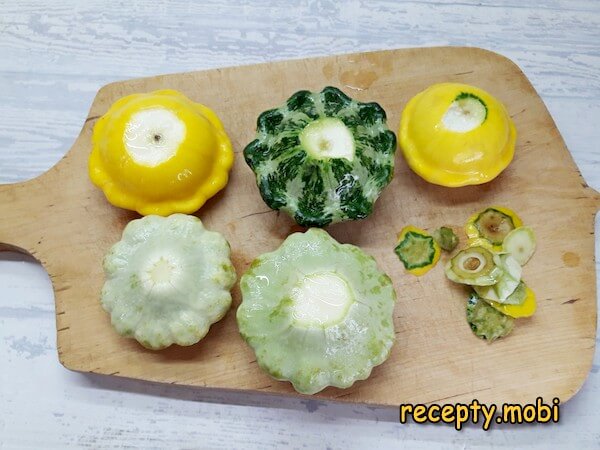
- Trim ENDS of pattypans.
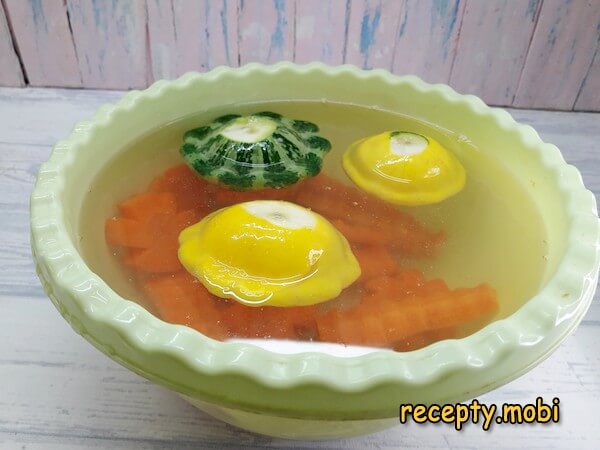
- Place FIRM pattypan varieties (yellow + striped) + CARROTS in deep bowl. Zucchini-colored ones: no extra processing. Pour boiling water; LET SIT 7 minutes.
- Put pot with water (~2.5 L) on fire. Cut ZUCCHINI into RANDOM shapes.
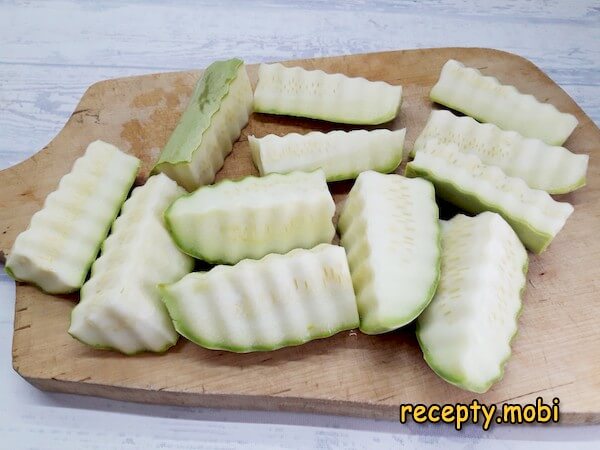
- Prepare colorful PEPPERS.
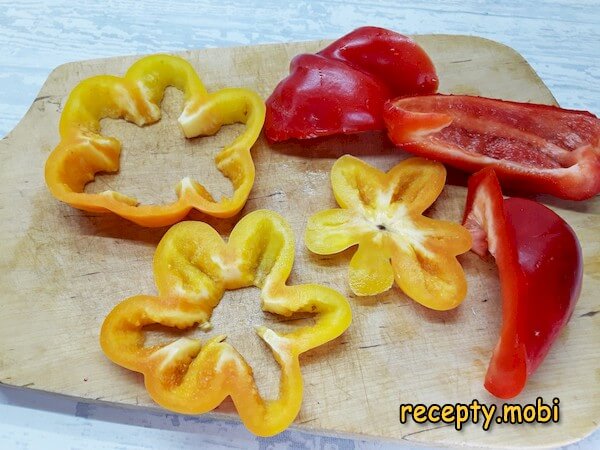
- Cut medium CUCUMBERS in half; cornichons stay WHOLE.
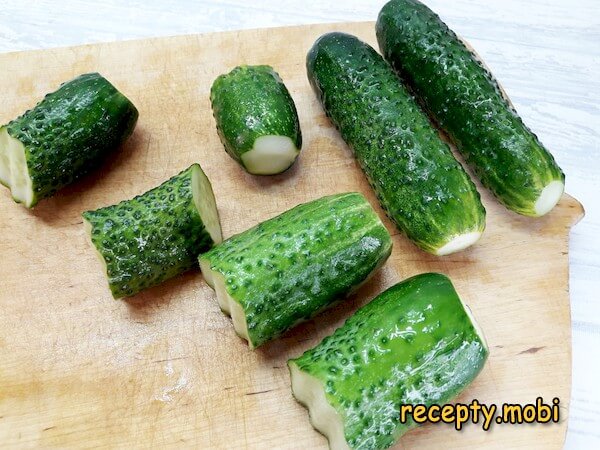
- To prevent TOMATO skin from bursting from hot water: make few PUNCTURES around stem with toothpick.
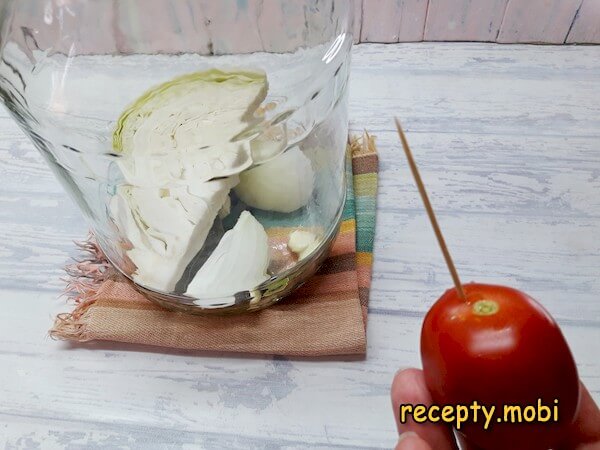
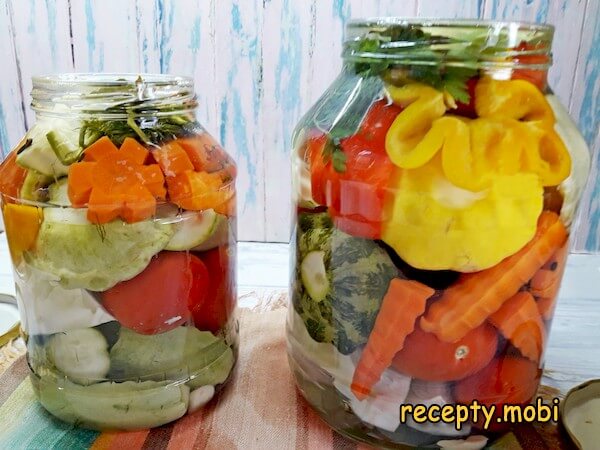
- Load CABBAGE + TOMATOES into jar.
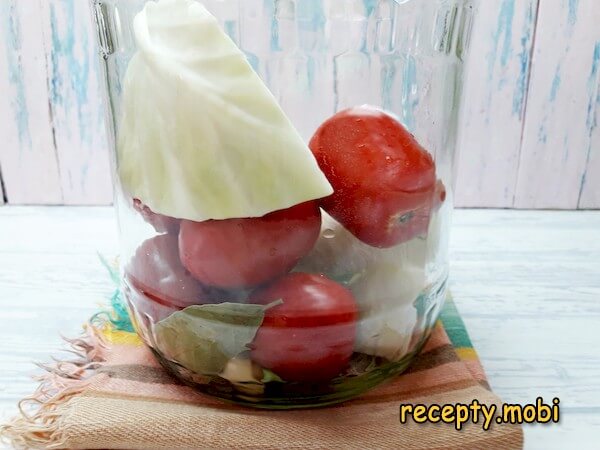
- Add PATTYPANS + CARROTS.
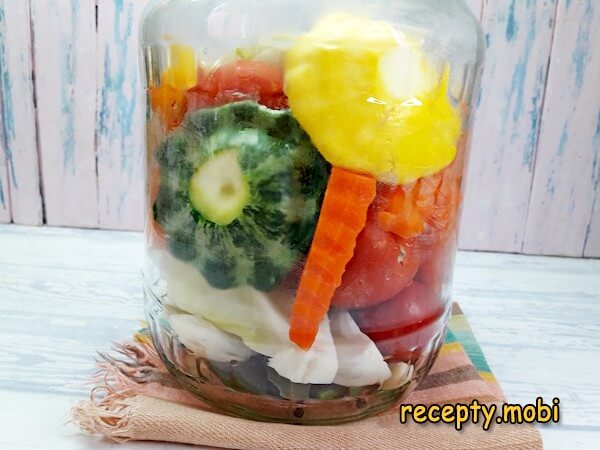
- Line sweet PEPPERS against jar walls.
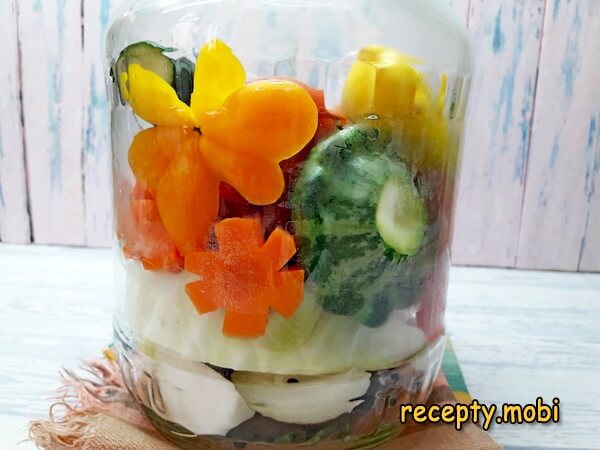
- Load CUCUMBERS.
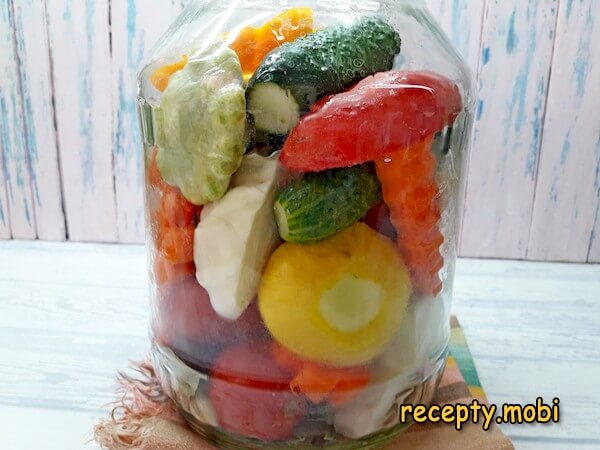
- Fill REMAINING spaces with leftover vegetables.
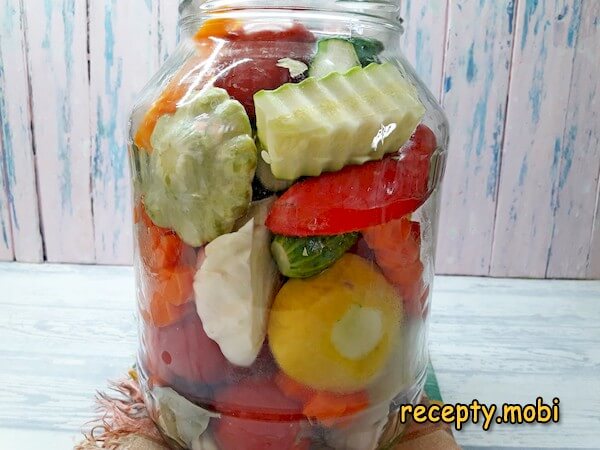
- Fix top with BUNCH of parsley.
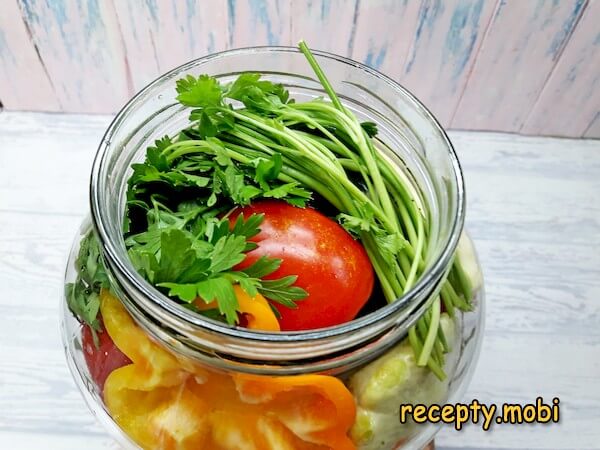
- Pour BOILING water over vegetables FIRST time. Cover with lid; let sit 40 MINUTES.
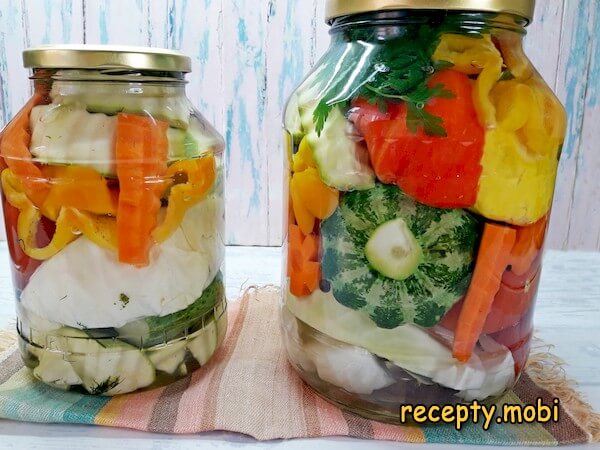
- Drain water — NOT into sink, but into MEASURING CUP (need exact volume). ~2 L for these jars.
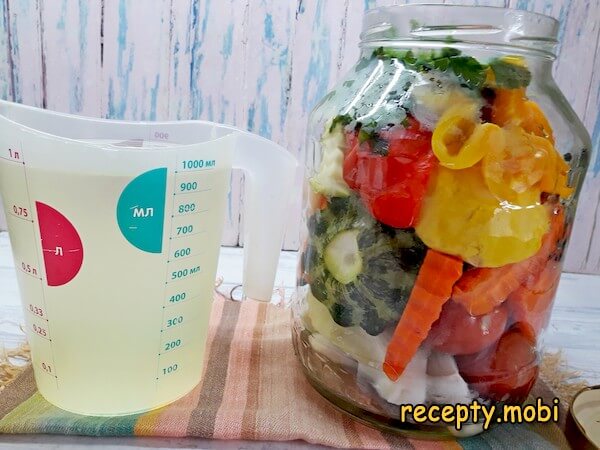
- Boil water SECOND time; pour over vegetables; let sit 30 MINUTES; drain again.
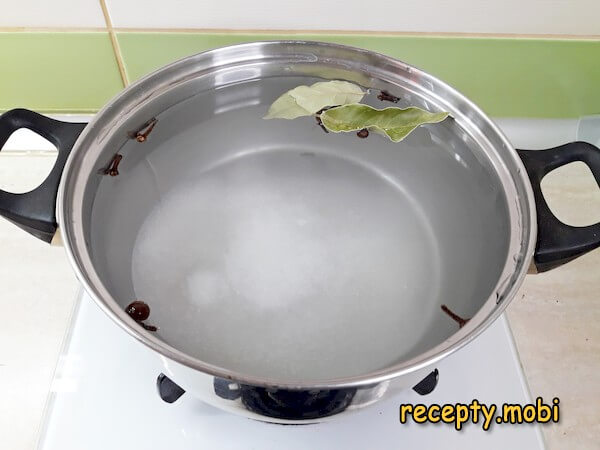
- Meanwhile prepare BRINE from 2 L purified water (this example). Place all specified ingredients EXCEPT vinegar into pot.
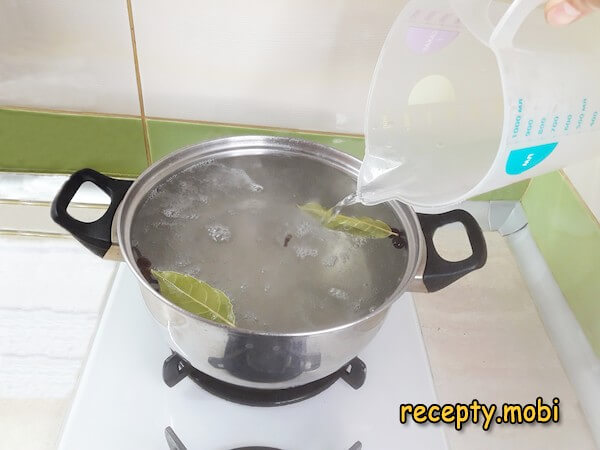
- When mixture boils + dry ingredients dissolve: pour VINEGAR. Boil 1 minute UNDER LID (vinegar vapors don't escape).
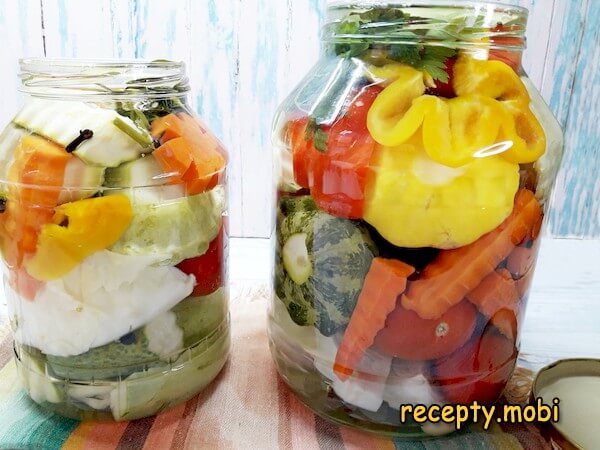
- Pour BRINE over vegetables; evenly distribute spices.
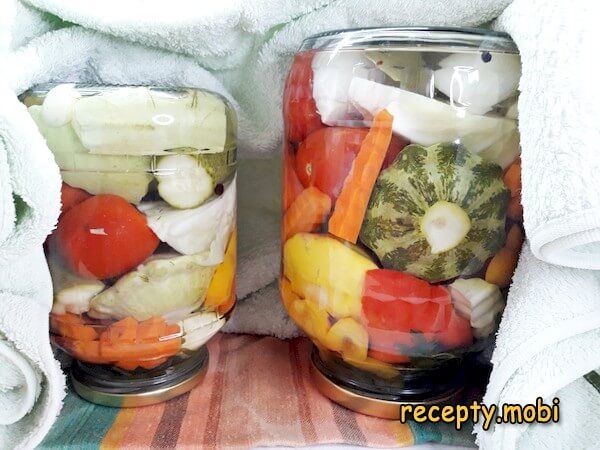
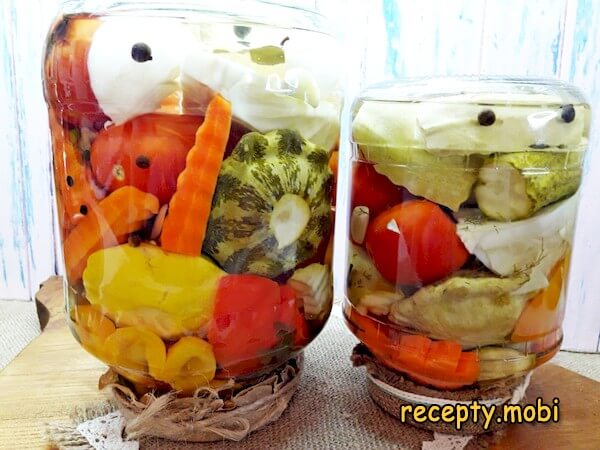
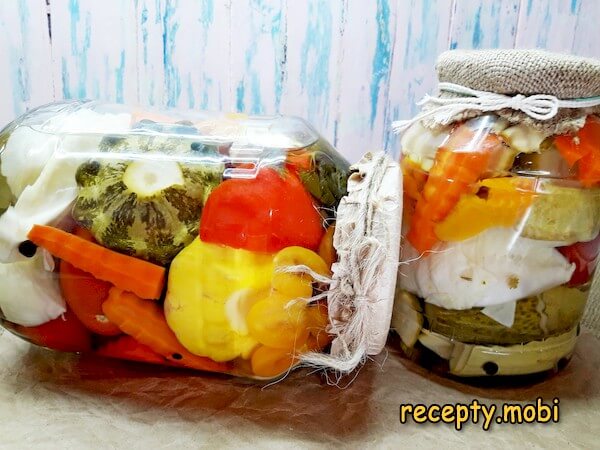
- Screw jars with lids; turn UPSIDE DOWN; verify seal airtightness. Wrap in towel; leave 12-15 HOURS for slow cooling. Colorful + vibrant vegetable assortment for winter without sterilization stores in urban apartment without basement. Guaranteed shelf life: 1 YEAR. One jar satisfies all household desires. Bon appétit!
Tips and Tricks
Tip 1. THE TWO-POUR HOT-WATER METHOD. Steps 18-20's "boiling water → 40 min rest → drain → boil again → pour → 30 min rest → drain" is signature no-sterilization technique. Single-pour method: insufficient sterilization, vegetables can ferment. TWO-POUR method: vegetables receive THERMAL TREATMENT in jars (replaces conventional sterilization), released bacterial population eliminated, jar walls reach proper temperature for sealing. The brine (final pour) provides ongoing preservation. Same multi-pour principle: traditional Russian "trekhlitrovye banki" (3-liter jar) preserves, Eastern European "marinady". The 40+30 min rest periods are calibrated for proper temperature equilibration.
Tip 2. THE PRELIMINARY-BLANCH FOR FIRM VEGETABLES. Step 7's "blanch firm pattypans + carrots 7 min" is texture-essential. UNBLANCHED firm vegetables: don't soften enough during 2-pour treatment, remain raw-crunchy in finished assortment. BLANCHED 7 min: pre-softened to proper texture, integrate with other vegetables. The "zucchini-colored pattypans skip" instruction: softer-tender pattypans need no blanching. CARROTS the firmest member of jar contents: definitely require blanching. Same selective-blanching principle: French canning traditions, Italian sott'aceti preparations. For another classic Soviet-era multi-vegetable preserve worth comparing, see Globe Salad Classic.
Tip 3. THE LAYERED-VEGETABLE-PACKING ORDER. Steps 12-16's specific packing order is structural-essential for visual + functional success. CABBAGE + TOMATOES first (heaviest, settle to bottom). PATTYPANS + CARROTS second (medium-density). PEPPERS along walls third (creates colorful visual lining when viewed through jar). CUCUMBERS fourth (slot into vertical spaces). REMAINING vegetables fifth (fill all gaps for tight packing). Loose packing: vegetables float in brine, ugly presentation. Tight packing: full visual + functional density. Same packing-order principle: Italian sott'aceti, French confits-mixtes. The PARSLEY-on-top (Step 17): keeps everything submerged in brine.
Tip 4. THE 12-15 HOUR THERMAL BATH (LONGER THAN STANDARD). Step 24's "12-15 hours cooling" is extended-thermal-bath for no-sterilization safety. Standard canning thermal bath: 8 hours (with prior in-jar sterilization). NO-STERILIZATION method: extended 12-15 hour cool + 2-pour pre-treatment provides equivalent safety. The longer cooling period: ensures complete pasteurization-by-residual-heat throughout entire jar volume, prevents internal "cold spots" where bacteria could survive. Towel-wrap thickness: thicker = better insulation = safer preservation. For another no-sterilization Russian/Eastern-European preserve worth trying, try Marinated Cucumbers Without Sterilization.
Frequently Asked Questions
Why mix all these vegetables?
Multiple-vegetable principle solves "single-jar-monotony" problem. Single-vegetable jars: open jar = same vegetable for week, becomes boring, refrigerator clutter. ASSORTI jars: open one jar = 5-7 different vegetables on plate, full variety, no leftovers. Soviet-era home-canning tradition specifically developed this approach for apartment storage. Modern equivalents: Italian giardiniera, Spanish escabeche-mixto. The recipe is genuinely practical Soviet kitchen-economy. For BACHELOR cooks: one jar provides week of vegetable diversity. For FAMILIES: variety satisfies different preferences in single serving.
Can I substitute vegetables?
Yes — recipe is flexible by design. SUBSTITUTIONS that work: GREEN BEANS (200 g, blanched 5 min), BROCCOLI/CAULIFLOWER florets (200 g, blanched 3 min), MUSHROOMS (250 g champignons, blanched 5 min), HOT CHILI (1 small for spicy version), DILL stems for fresh-aroma. AVOID: leafy greens (wilt), root vegetables larger than carrots (won't cook through), already-soft vegetables (mushroom older varieties). Basic principle: maintain ~3 kg total vegetable weight + use FIRM-CRUNCHY varieties + blanch firm vegetables before packing. The fancy carrot shapes (Step 5): genuine recipe charm-element, kitchen-craft character.
How long does it really keep?
Properly sealed in apartment temperature: UP TO 12 MONTHS (recipe-stated guarantee). Months 1-3: peak texture (vegetables firm, brine bright). Months 4-8: PEAK FLAVOR (post-canning aging develops complexity). Months 9-12: still excellent, slight softening. Past 12 months at apartment temp: not recommended. COOL CELLAR (10-15°C): extends quality to 18 months. Once OPENED: refrigerate, consume within 2-3 weeks. Storage tips: dark place ideal, clean dry fork between uses, tight lid. Spoilage signs: bulging lid (immediate disposal), fermentation bubbles, off-smell, cloudy brine — discard.
What goes best with it?
Russian/Soviet tradition has specific assortment companions. CLASSIC: alongside boiled potatoes (with butter or sour cream), grilled meats, fish dishes. ZAKUSKA: served as cold appetizer with vodka, beer (traditional drinking-snack pairing). HEARTY: with grilled sausages, pelmeni dumplings, vareniki. BREAD: dark rye bread alongside, sourdough, simple white bread. WARM DISHES: serve cold alongside hot stews, soups, roasts (acidic refresh balances richness). The assortment is fundamentally a side/zakuska — pairs with everything except other strongly-acidic dishes. Holiday tables: arranged on platter as colorful zakuska centerpiece.