Write a comment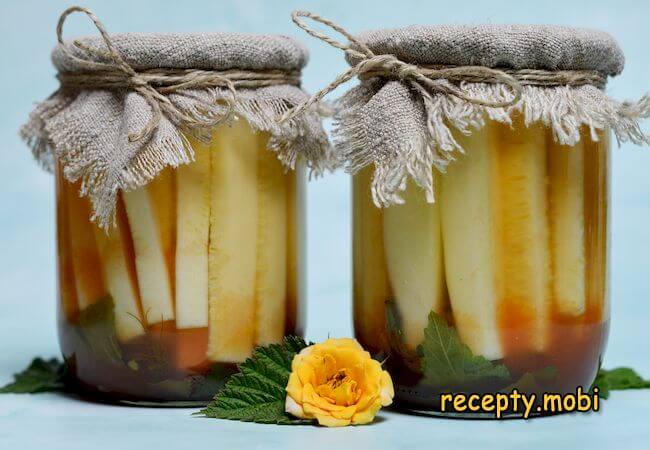
Zucchini with Chili Ketchup for Winter (+Cooking Video)
Zucchini with chili ketchup for winter has been a household staple in many Russian and Eastern European pantries for years. Chili ketchup gives the marinade a spicy sharp edge that the surrounding spice blend complements beautifully, while the pickled zucchini retains a pleasant firmness and even a slight crunch despite the heat treatment. The recipe offers two approved canning paths: classic sterilization in a pot for those who prefer the traditional method, or alternative triple-pouring without sterilization for cooks who prefer a faster approach. Sliced zucchini sticks fit conveniently in half-litre jars and pair beautifully with mashed potatoes, pilaf, or pasta dishes throughout the cold winter season.
Preparation time: 40 minutes.
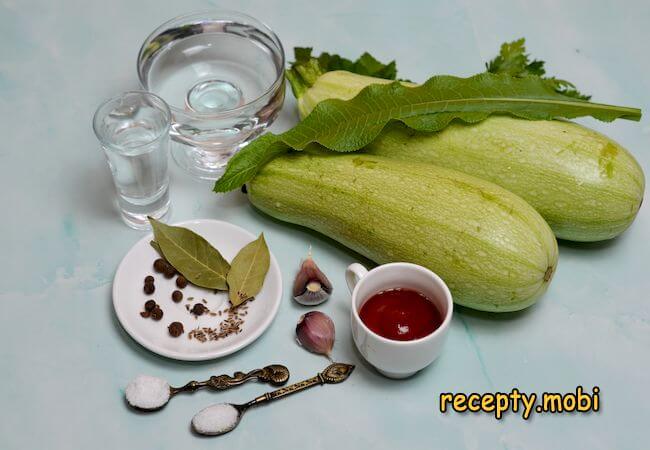
Ingredients
Show ingredients
- zucchini — 1–2 pieces;
- chili ketchup — 2 tbsp;
- sugar — 1 tbsp;
- salt — 1 tsp;
- vinegar 9% — 1 tbsp;
- horseradish leaf — ½ piece;
- dill umbrellas — 2 pieces;
- black currant leaves — 2 pieces;
- garlic — 2 cloves;
- parsley — 4 stems;
- bay leaves — 2 pieces;
- fragrant peppercorns — 4 pieces;
- black peppercorns — 6 pieces.
Preparation
- Choose young zucchini with thin skins and small undeveloped seeds for the best results in this preserve. If only large overripe zucchini is available, cut out and discard the soft seedy core because the seeds soften too aggressively during the heat treatment and produce a mushy unpleasant texture in the finished jar.
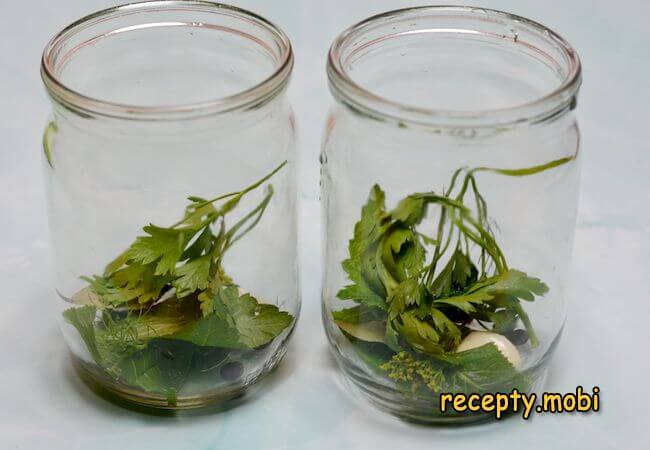
- Take two sterilized half-litre jars. Place a quarter of a horseradish leaf, two parsley stems, a dill umbrella, a bay leaf, a clove of garlic, two fragrant peppercorns, and three black peppercorns at the bottom of each jar. The aromatic foundation flavors every cucumber stick that lands on top of the spice bed during the next step.
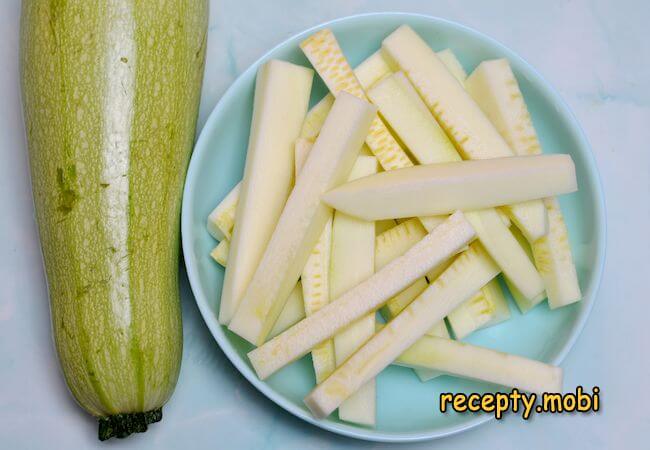
- Clean the zucchini and cut them into long sticks. The optimal thickness is about one centimetre on each side; thicker pieces fail to absorb the marinade properly while thinner pieces turn soft during the brief boiling water treatment.
- Arrange the zucchini sticks vertically in each jar, packing them closely against each other but not pressing them down hard. Tight packing leaves the perfect amount of space for the marinade to surround each stick during the storage period.
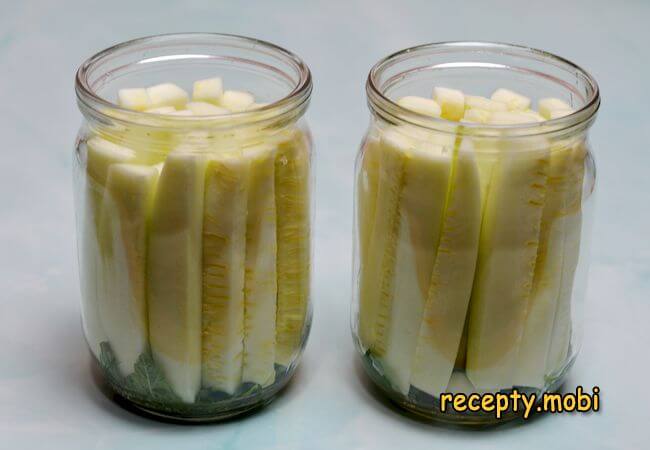
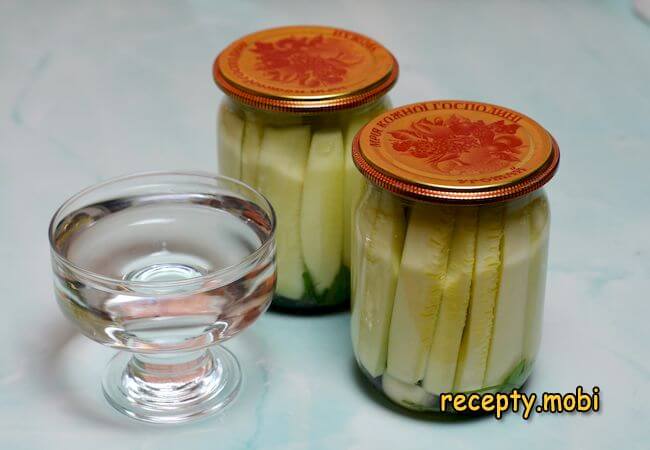
- Pour boiling water over the packed zucchini in each jar. Cover the jars loosely with the lids and let them sit undisturbed for fifteen minutes. The first hot-water bath softens the zucchini slightly and starts the pickling process gently.
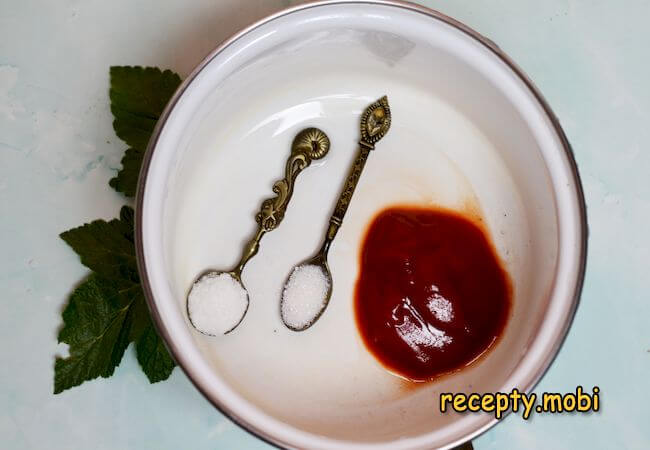
- Take a small saucepan and add the sugar, the salt, and the chili ketchup. Have everything measured and ready for the marinade preparation that follows in the next steps.
- Drain the water from the jars; this water becomes the base for the marinade in the next step. Pour fresh boiling water over the zucchini sticks again, cover with lids, and let sit for ten more minutes. After ten minutes, pour out and discard this second water.

- Now prepare the third pour, which becomes the actual marinade. Combine the drained first-pour water with the salt-sugar-ketchup mixture in the saucepan and bring to a boil. Boil for one to two minutes, then turn off the heat. Pour the vinegar into the bowl with the tomato marinade and mix.

- Immediately pour the hot marinade into the jars over the zucchini sticks. Seal the jars with lids while the marinade and contents are still hot to create the strong vacuum seal essential for safe long-term storage.
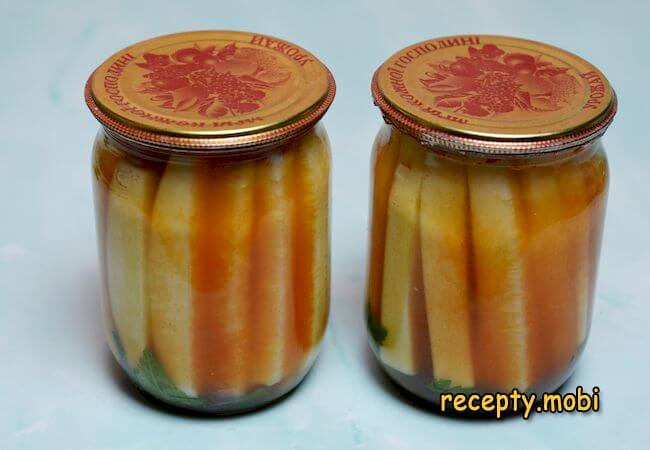
- Turn the sealed jars upside down on a heat-safe surface and wrap them in a heavy blanket or three thick kitchen towels for insulation. Leave the jars inverted in this insulated state for one full day to ensure perfect seals and slow gradual cooling that helps the pickling continue inside the warm jars.
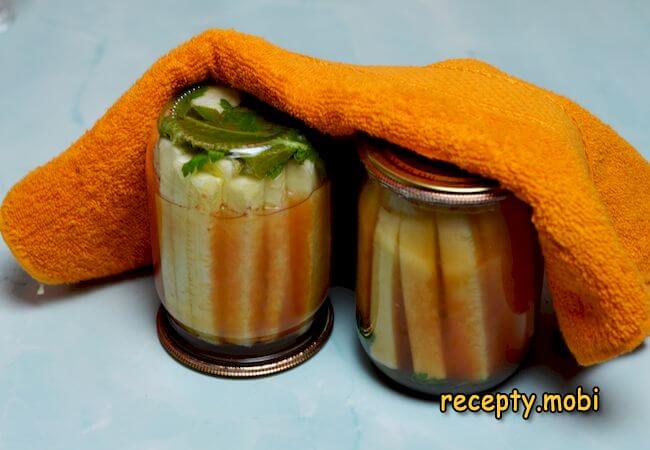
- The vegetable preparation with ketchup stores in a cool dark cellar for up to one year. The absence of formal sterilization is compensated by the sequential triple-pouring method, which heats the contents enough to kill harmful bacteria.
- The alternative second method involves standard sterilization in a pot. Pour boiling water over the jars with zucchini for five minutes, transfer the water to a saucepan and prepare the marinade based on it. Pour the marinade over the zucchini, cover the jars with lids, place the preparations in a pot of warm water (with a towel at the bottom), and sterilize for ten minutes from the moment of clear boiling. The boiling should remain slow and gentle throughout the sterilization period for the best results. Bon appetit alongside good company at the winter table.
Tips and Tricks
Tip 1. Choose young zucchini with thin skins and small seeds for the crispest finished pickles. Old overripe zucchini softens too much during the hot-water treatment and produces a mushy disappointing result. The thumb test works perfectly: the skin should resist gentle thumb pressure and feel firm rather than yielding. Look for zucchini between fifteen and twenty centimetres long for the most reliable quality across the batch.
Tip 2. Use only non-iodized salt for any home-canning project. Iodized table salt clouds the brine permanently and can leave a faintly bitter aftertaste in the finished pickles. Look for kosher salt, pickling salt, or coarse sea salt without anti-caking additives. Pair this preserve with the related crumbly pilaf with chicken for a complete winter dinner.
Tip 3. Wrap the inverted jars in a heavy blanket for the full twenty-four hours, never less. The slow cooling under insulation creates the strong vacuum seal that keeps the contents safe through months of cellar storage. Rushing this step risks weak seals that allow air back into the jar and spoil the contents within weeks. The patient overnight wait is essential for any home preserve and should not be skipped.
Tip 4. Choose a quality chili ketchup with real chili peppers and minimal artificial preservatives for the best flavor. Cheap supermarket chili ketchup often contains more sugar and food coloring than actual chili, producing a sweet flat marinade rather than the bright spicy version this recipe needs. Look for ketchup with chili peppers listed in the top three ingredients on the label. Pair the finished zucchini with hearty Bolognese pasta.
Frequently Asked Questions
How long does the canned zucchini keep on the shelf?
Properly canned and sealed zucchini with chili ketchup keeps for up to one year in a cool dark cellar or pantry shelf without significant loss of flavor or color. After one year, the texture starts to soften noticeably and the color may fade, though the preserve remains safe for another six months. Always check the seal before opening: a properly sealed jar shows a slightly concave lid that does not pop when pressed. Once opened, refrigerate and use within two weeks. Always use clean utensils when scooping out portions to prevent contamination.
Can I substitute the chili ketchup with another sauce?
Yes, several alternatives work well in this preserve. Sriracha mixed with regular tomato ketchup produces a similar spicy-sweet character with even more pronounced heat for diners who enjoy fiery food. Tomato sauce with a teaspoon of red pepper flakes added produces a milder version suitable for diners with sensitivity to heat. Adjika or harissa paste mixed with tomato sauce creates a Mediterranean-style version with complex spice depth. Whatever sauce you choose, maintain the same volume to preserve the marinade balance for safe acidity and proper preservation.
Can I make this preserve without sterilizing the jars?
The triple-pouring method described in the recipe substitutes for formal sterilization and produces safe long-term storage when followed faithfully. The key is the three separate hot-water exposures, each of which heats the contents enough to kill harmful bacteria. For extra safety, the recipe also describes a second method with formal ten-minute pot sterilization for cooks who prefer the traditional approach. Both methods produce safe preserves; the triple-pouring approach simply takes less active attention while delivering equally reliable results in the cellar.
What can I serve alongside zucchini with chili ketchup?
The spicy preserved zucchini pairs beautifully with several classic dishes. Mashed potatoes with butter and dill create a perfect simple winter meal alongside the bright preserve. Grilled meats (pork chops, chicken thighs, beef sausages) benefit from the fresh acidic contrast. Pasta dishes (especially with creamy sauces) welcome the zucchini as a side that brightens the rich main course. For drinks, chilled vodka or a crisp lager pair traditionally with these spicy preserves at any winter table. Cold cuts and crusty bread make a quick lunch platter centered around the preserved zucchini.