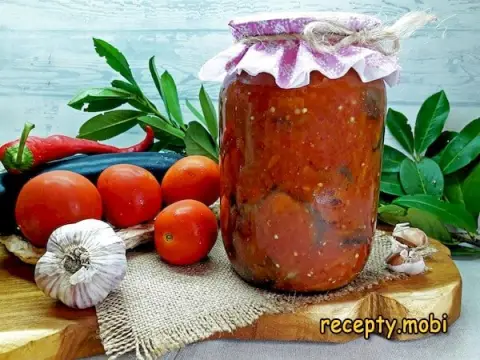
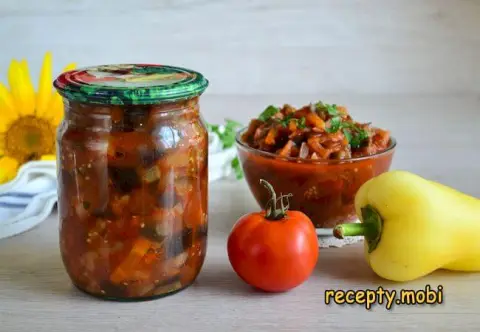
avg —
Eggplant Salad for Winter "4x4"

Instructions
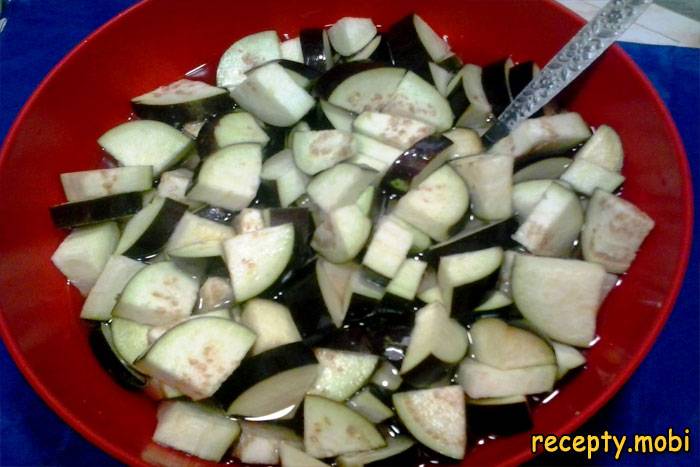
I prepare the aubergines. From the washed fruits I cut off the stem and slice them into rounds about 1 cm thick, then divide each round into four parts. I soak them in salted water (1 tablespoon of salt per litre of water) for 30 minutes to remove the bitterness – the salt draws the solanine out of the flesh. Young aubergines need not be soaked, but I do it just in case.
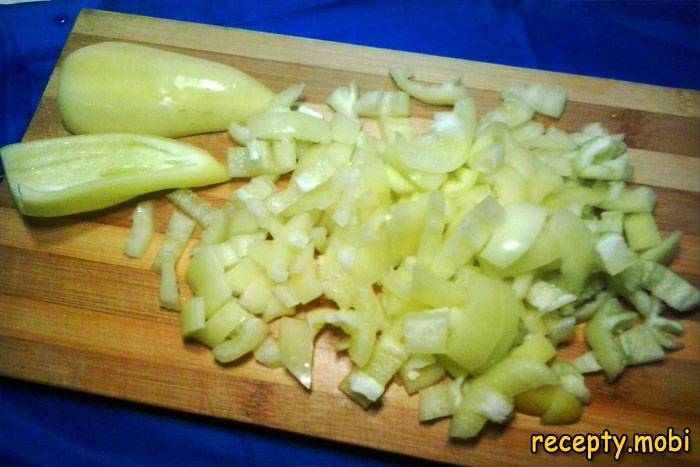
I cut the sweet pepper, cleaned of seeds and stem, into medium slices 1-1.5 cm thick. Pieces that are too small will fall apart in the finished preserve, while pieces that are too large will not soak up the marinade.
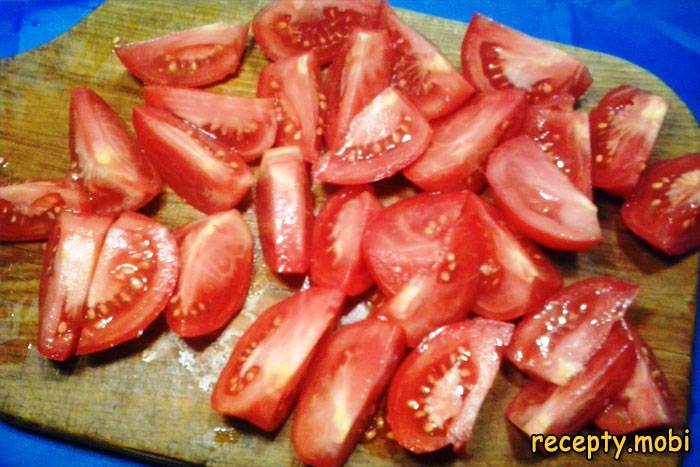
From the tomatoes I remove the spot where the stem attaches and cut them into 6-8 wedges. I take meaty varieties such as plum or "lady's fingers" – they hold their shape during cooking.
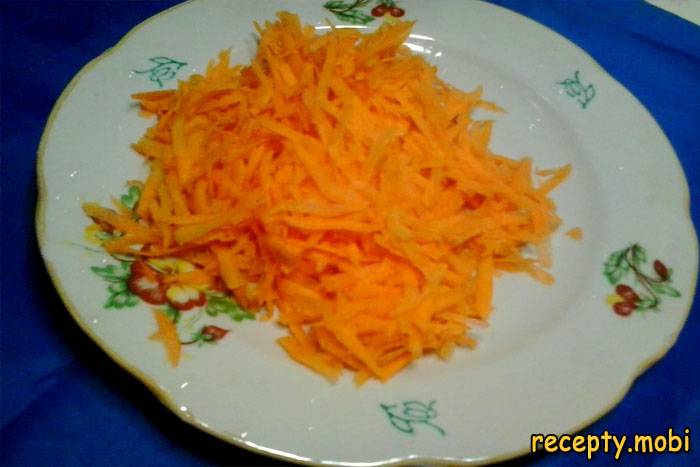
I grate the carrot on a medium grater or shred it into fine strips with a knife. The carrot adds sweetness and a pretty orange accent to the finished preserve.
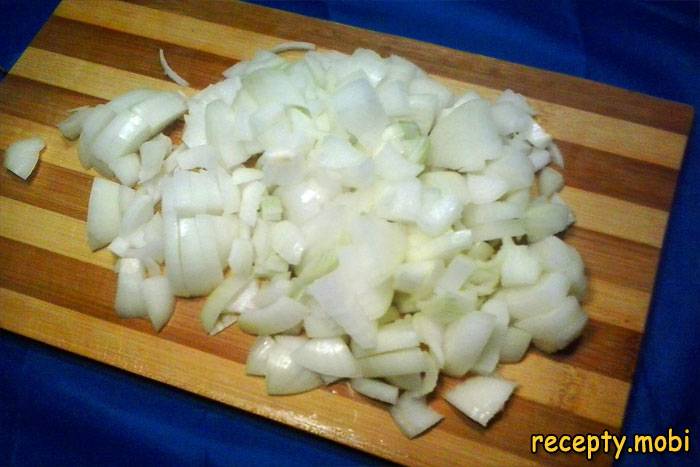
I cut the onion into quarter rings or small slices 5-7 mm. The onion can also be cut into thin half-rings if you prefer a more "uniform" texture in the finished salad.
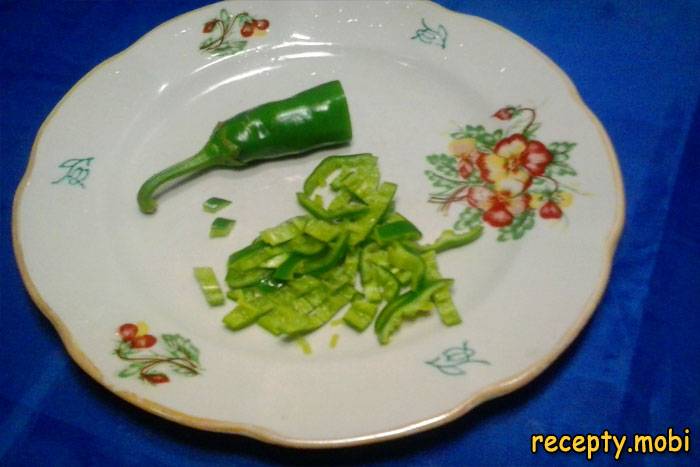
I cut the hot pepper into thin strips, having first removed the seeds. I adjust the amount of hot pepper to taste – half a pepper for a family version, a whole one for a spicy one. The seeds give a sharp bitterness, so be sure to remove them.
I put all the vegetables into a suitable heavy-bottomed pot. I mix the spices with the salt and sugar, add the oil and half a glass of water. I pour the dressing over the salad and leave it for 10 minutes so that the vegetables start to release their juice.
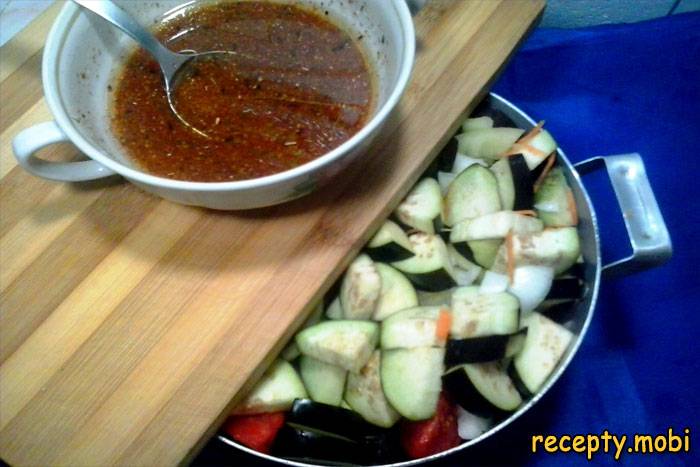
Over low heat I bring the vegetable mixture to a boil. I simmer it, stirring carefully now and then, for 20 minutes. During this time the vegetables warm through, soften and release enough juice for the marinade. Stir gently so as not to damage the pieces.
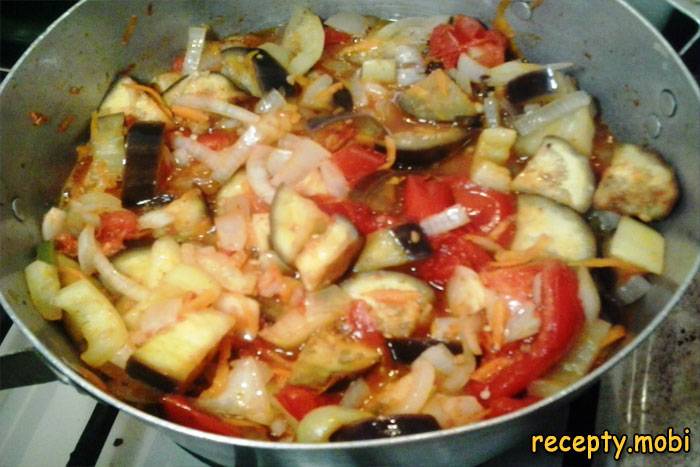
I pack the hot vegetables with the marinade into steamed 0.5 l jars. Into each jar I pour a tablespoon of 9% vinegar – it works as a natural preservative and ensures long storage.
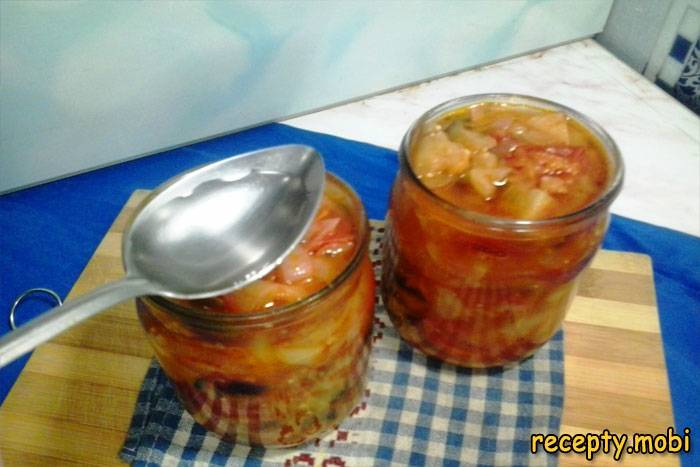
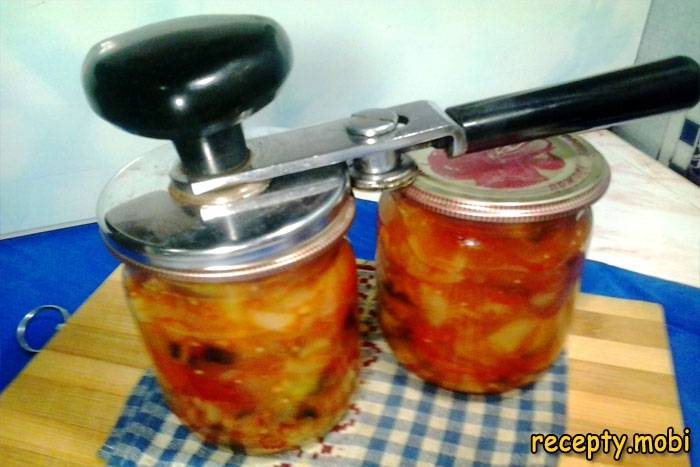
I quickly seal the salad with sterilised lids. I turn the jars upside down, cover them with a blanket and leave them until completely cool – this creates a vacuum. Once cooled, I move them to the pantry for storage.


Tips
- 1
Soak the aubergines in salted water for 30 minutes – this removes the bitterness and makes them more tender in the finished preserve.
- 2
Stir the mixture gently while it cooks – vigorous stirring turns the vegetables to mush, whereas they should stay as whole, attractive pieces.
- 3
Adjust the amount of hot pepper to taste – from half a pepper for children to a whole one for a spicy version. A similar principle applies in aubergine "mother-in-law's tongue".
- 4
Store in a cool, dark place for up to a year – a temperature of 5-15 °C is ideal for keeping the flavour for a long time.
FAQ
Why is the salad called "4x4"? +
In the original recipe you take 4 pieces each of 4 main vegetables of the same size – aubergines, onions, tomatoes and sweet peppers. Hence the name, which is easy to remember. In my version I have added carrot and hot pepper for a richer flavour, but the basic "4x4" concept is kept. This recipe apparently came to us from Soviet times, when home cooks needed simple "formulas" to remember. Now the recipe has been adapted to modern proportions in grams for greater accuracy.
Do the aubergines have to be soaked? +
Yes, this removes the bitterness from the fruits, especially ripe and large ones. Thirty minutes in salted water (one tablespoon of salt per one litre of water) is enough. Young, small aubergines with thin skin need not be soaked – the bitterness in them is minimal. An alternative method: sprinkle the sliced aubergines with salt for 20 minutes, then rinse off the salt and juice. Be sure to squeeze out the water before using – excess moisture will make the preserve watery. Without soaking, the finished salad may taste unpleasantly bitter.
How long does the salad keep in the jars? +
In properly sealed, sterilised jars in a cool, dark place (cellar, pantry) at a temperature of 5-15 °C – up to a year without loss of quality. In the second year the flavour holds up, but the pieces of vegetables may soften. After opening, keep the jar in the refrigerator for up to a week and use it quickly. Signs of spoilage: a bulging lid, cloudiness, mould or fermentation – throw such a jar away, do not try to use it. Following the sterilisation method is the key to long storage.
- Comment
or post as a guest
Be the first to comment.