avg —
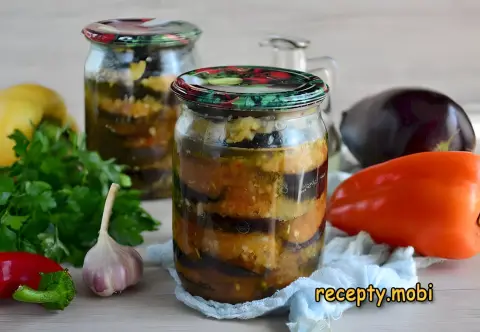
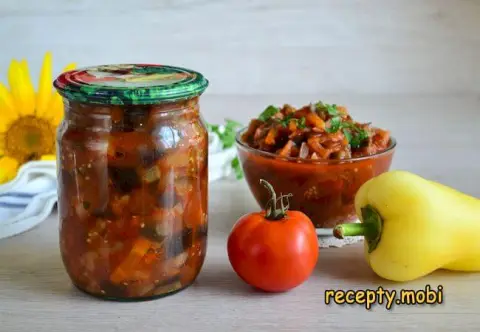
Globe Salad for Winter

Instructions
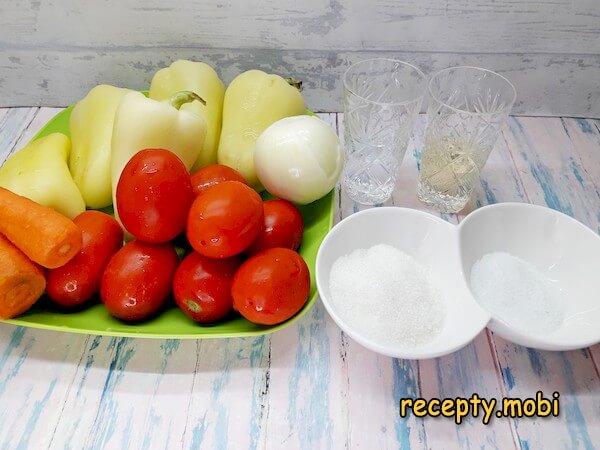
I prepare the listed ingredients.
The tomatoes need to be turned into tomato juice, so first I cut them into pieces that are easy to grind.
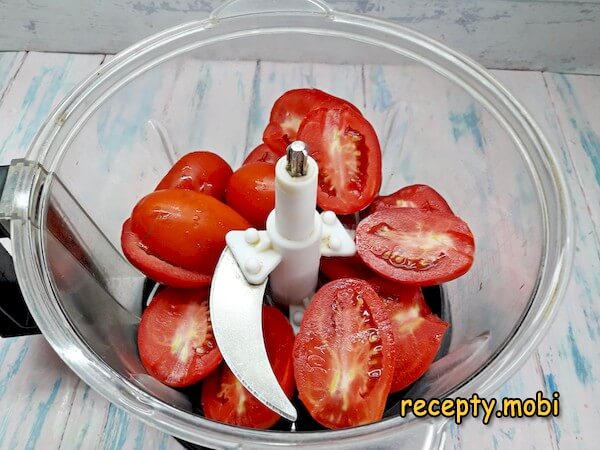
I grind the tomatoes in a food processor or another chopper. If the tomato skins are broken down well by the blades, literally to dust, there is no need to remove the skin.

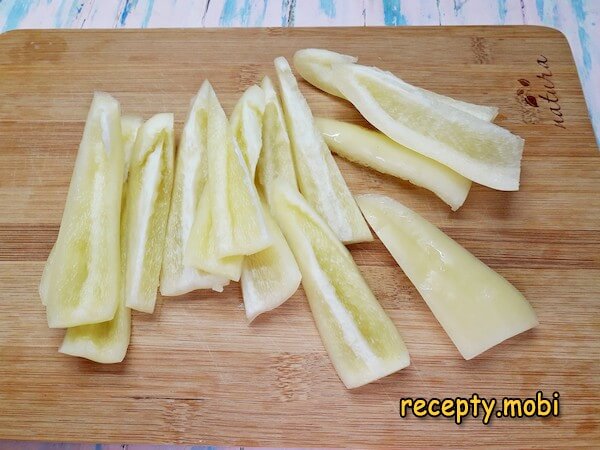
I cut the seed boxes out of the peppers. I rinse the pods to remove any leftover seeds and cut them into elongated triangles.
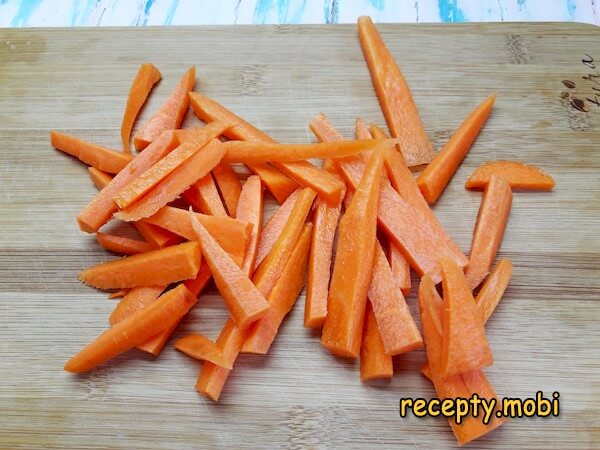
I chop the carrot into strips.
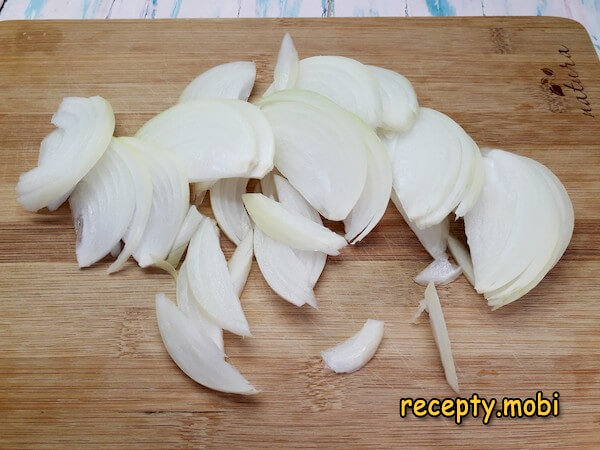
I shred the onion.
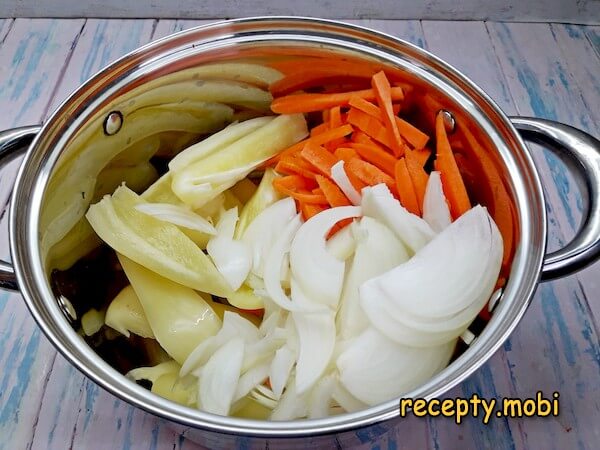
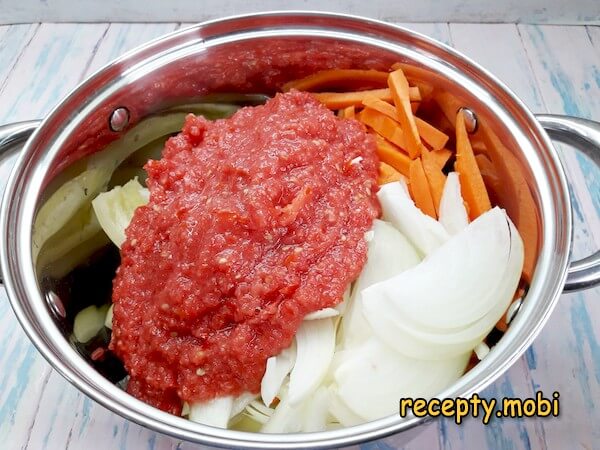
I put the chopped vegetables into a pot.
I pour the tomato over them.
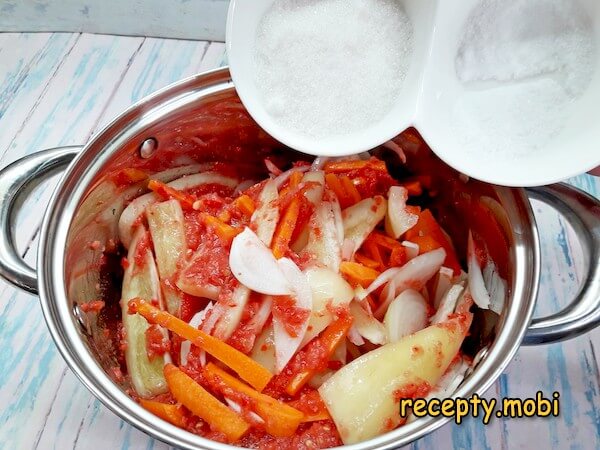
I season with salt and sugar.
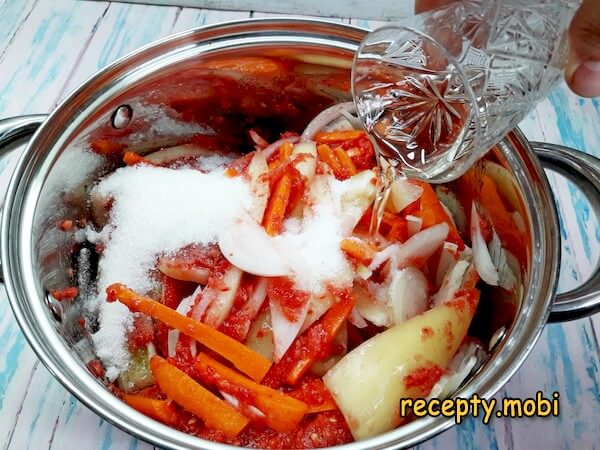
I pour in the oil right away.
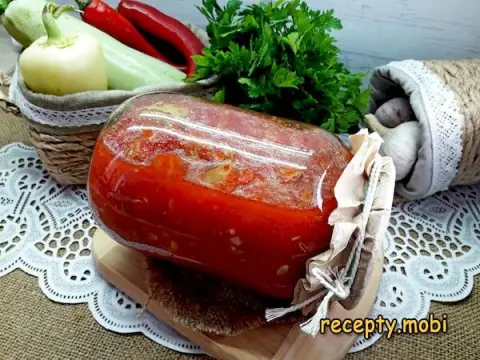
I spoon the mixture into the jars.
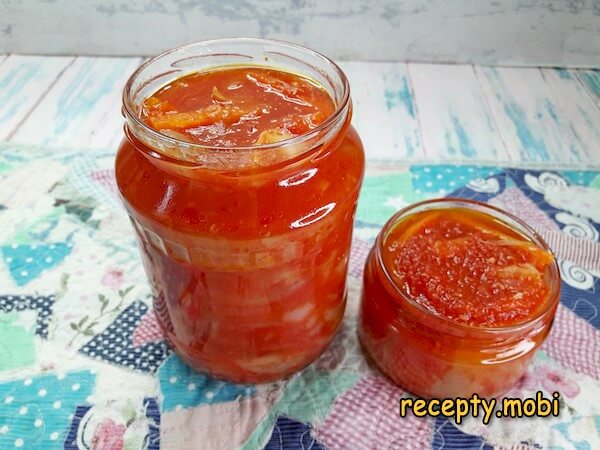
I screw on the caps – twist-off ones or sealed with a canning machine. I turn the sealed jars upside down onto the lids and wrap them in a large terry towel. The jars should stand in this warm bath for 8 hours.
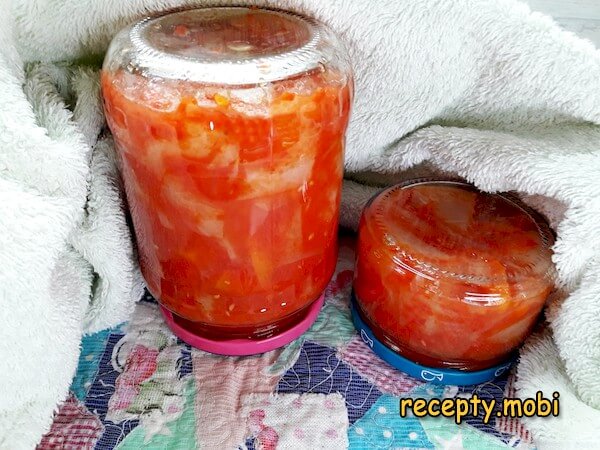
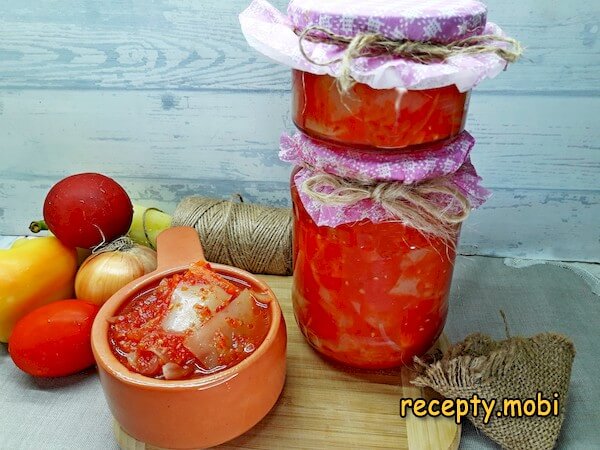
You can put the Globe salad for winter in a dark place, even at room temperature, but away from heating appliances. It can be stored for a year, and six months longer in a cool place. The salad's bright colour and rich taste will please the family through autumn and winter, as it brightens up even the simplest side dish.


Tips
- 1
Grind with a chopper – the "secret" to the skins. A good chopper breaks the skins down to crumbs, so there is no need to blanch.
- 2
Elongated triangles – the "secret" of presentation. Peppers cut into triangles look attractive in the jar.
- 3
Vinegar 3 minutes before the end, under the lid – the "secret" of aroma. Without the lid, the vinegar escapes. Three minutes is enough for preserving.
- 4
Eight hours under a blanket – the "secret" of storage. The extra pasteurisation gives a shelf life of up to 1.5 years in a cool place. The same principle works for other kinds of vegetable salads for winter.
FAQ
Which tomatoes should I choose? +
Ideally, meaty sweet varieties (Bull's Heart, Pink Giant, San Marzano) – they give a thick tomato base and a rich taste. Alternatives: "Slivka" (elongated, meaty) or "Mikado" (premium). Choose fresh, firm tomatoes with no green patches. Ripe ones should be as soft and fragrant as possible. Not suitable: "Cherry" (too little flesh), green ones (sour), or overripe, rotten ones. Seed brands like "Gavrish", "Poisk" and "Aelita" are reliable. For a "premium" version, use farm-grown ground tomatoes. Any shape will do (it does not matter for grinding). Greenhouse tomatoes will also work.
What can I use instead of sweet pepper? +
Alternatives: red bell pepper (400 g – the classic), yellow pepper (400 g – for looks), orange (400 g – unusual), green (200 g plus 200 g red – a mix), or a mix of colours (100 g of each – the most colourful). Not suitable: thin-walled hot pepper (it would spoil the taste) or bitter pepper (it would break the balance). Fresh ground pepper is the "premium" option. Greenhouse pepper will also work. Seed brands like "California Wonder", "Gift of Moldova" and "Bogatyr" are reliable. For a "premium" version, use a mix of 3–4 colours. For an "economy" version, use only green.
How long does the salad keep? +
In sterile, sealed jars at room temperature – up to 1 year. In a cool cellar – up to 1.5 years. Once opened, in the fridge – 5–7 days. Label the jars with the canning date. If a lid bulges, do not open it – throw it out. Do not store in the sun – the colour will fade. It is best used within the first 8–10 months. Use 0.5–0.7 l jars – they are easier to open. Take the salad out 15–20 minutes before serving (cold "mutes" the flavours). Without the 8 hours under a blanket, cut the shelf life to 6 months. Do not leave an open jar at room temperature for longer than 2 hours.
What should I serve the salad with? +
It works as a stand-alone appetiser with hot meat dishes. Serve it with fried or boiled potatoes. With steak, kebabs or lamb ribs – a "hearty" pairing. With pelmeni and vareniki – a "winter" pairing. With a shot of cold vodka – a "Russian" pairing. With a rice side dish or buckwheat. With pilaf or fried rice. With boiled chicken or turkey. With fried fish. With light beer – a "bar" pairing. For a "family lunch" – with mashed potatoes and meat. With cheese and olives – a "Mediterranean" pairing. With a bowl of borscht as an appetiser. With meat pies. It is a versatile preserve for winter meals.
- Comment
or post as a guest
Be the first to comment.