avg —
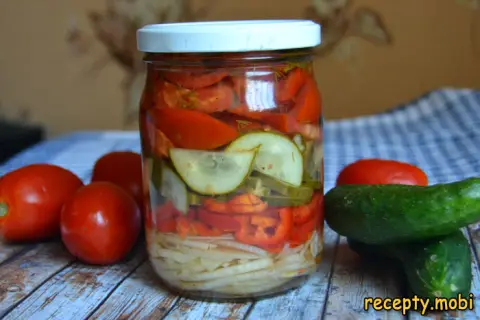
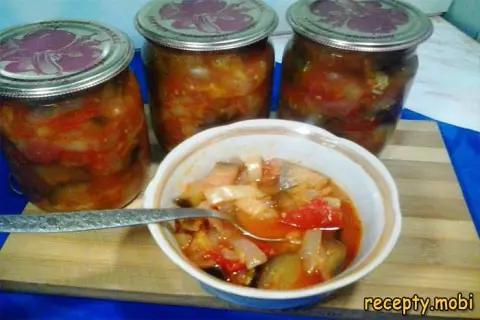
Kuban Salad for Winter

Instructions
I prepare all the necessary ingredients. I rinse all the vegetables, peel the carrots and onion, and remove the seeds and inner ribs from the bell pepper.
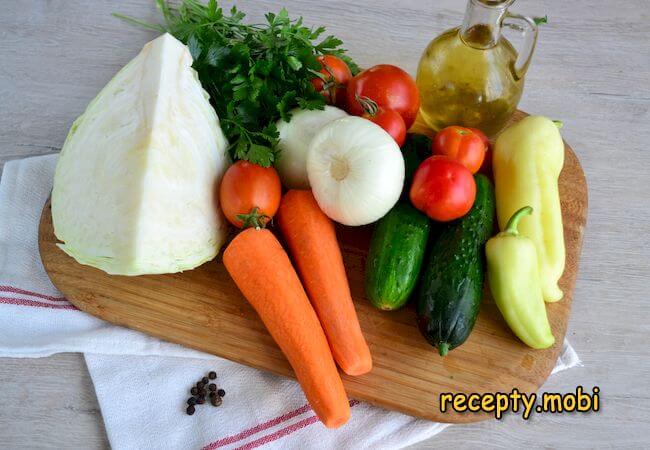
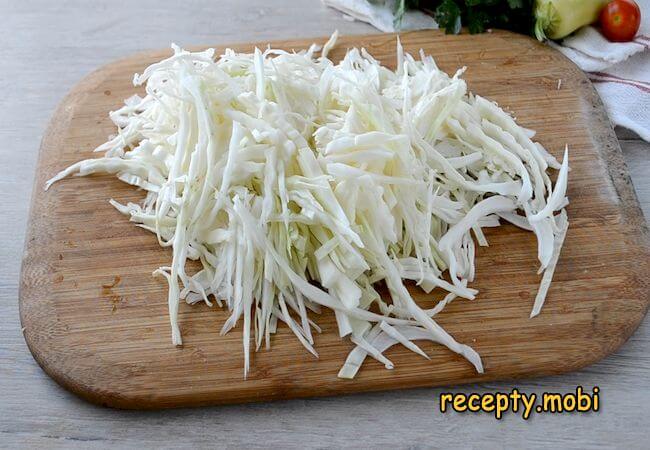
First of all I shred the cabbage – it needs the most time to release its juice. You can shred it with a knife or with a special cabbage-shredding grater.
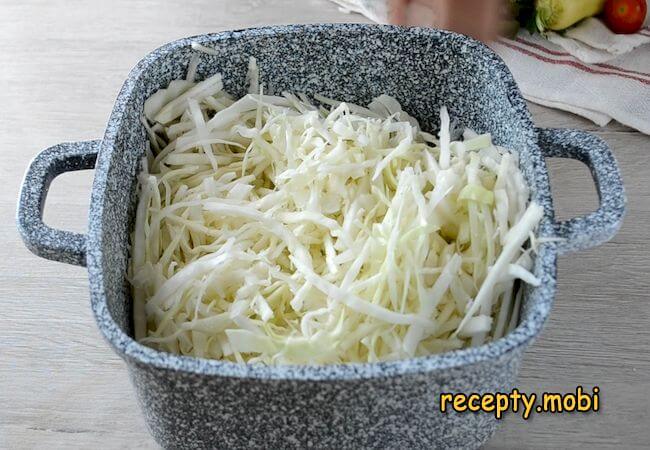
I move the cabbage into the pot in which I will cook the salad. I add half of the listed amount of salt (0.5 tbsp) and mix it with my hands, squeezing the cabbage firmly – so that it starts to release juice.
I slice the onion into half-rings.
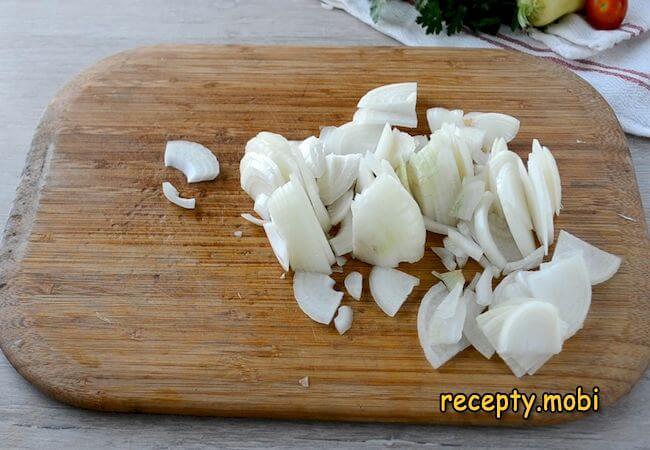
I cut the carrots into thin short matchsticks or grate them on a Korean-carrot grater.
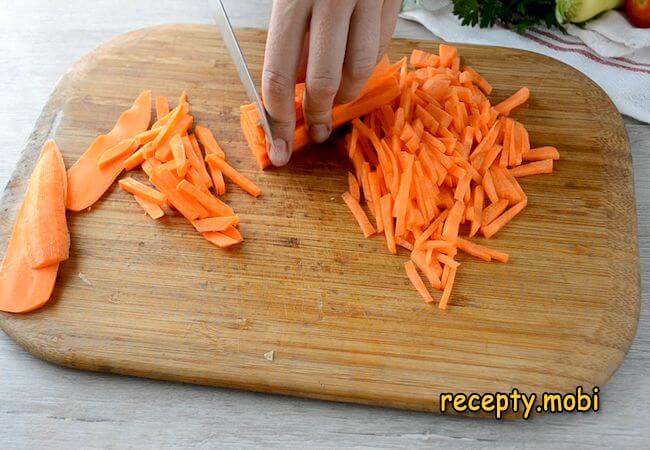
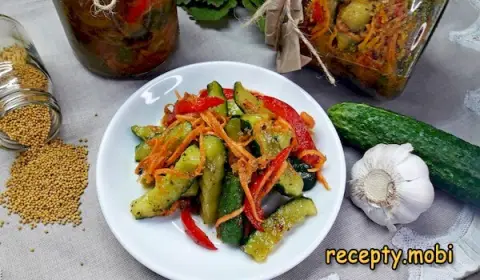
I slice the cucumbers into thin rounds, about 3 mm thick.
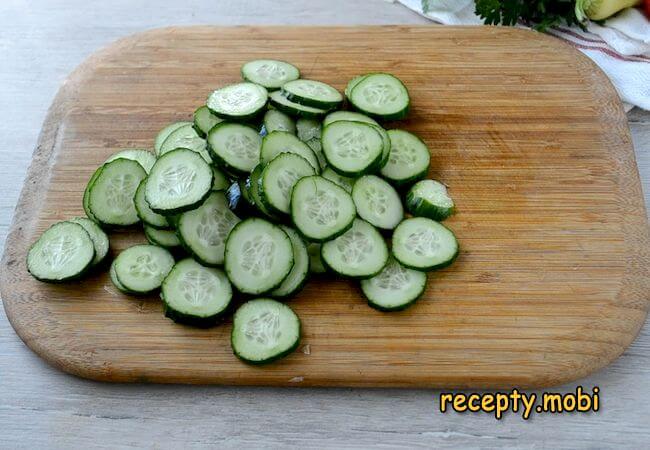
I cut the bell pepper into fine strips.
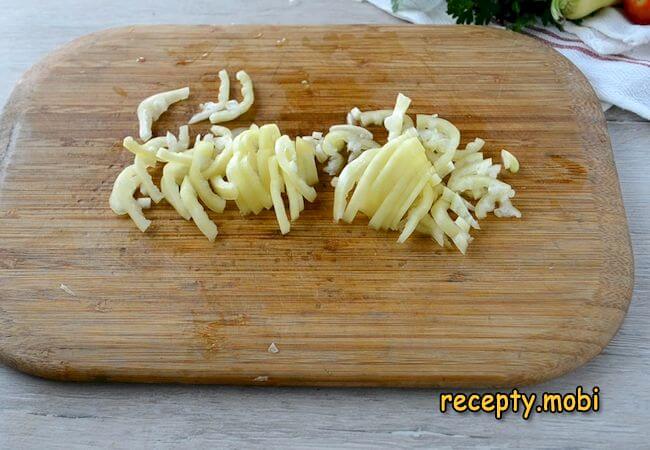
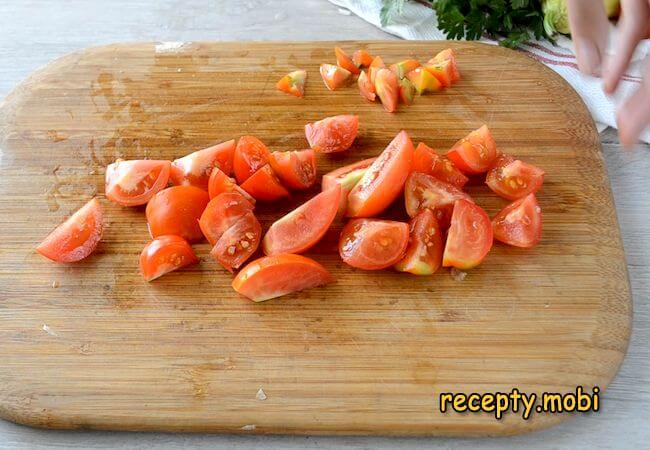
I cut the tomatoes into medium-sized pieces, removing the stem areas. I try to choose tomatoes that are not too soft – so that during cooking the pieces hold their shape rather than turning into mush.
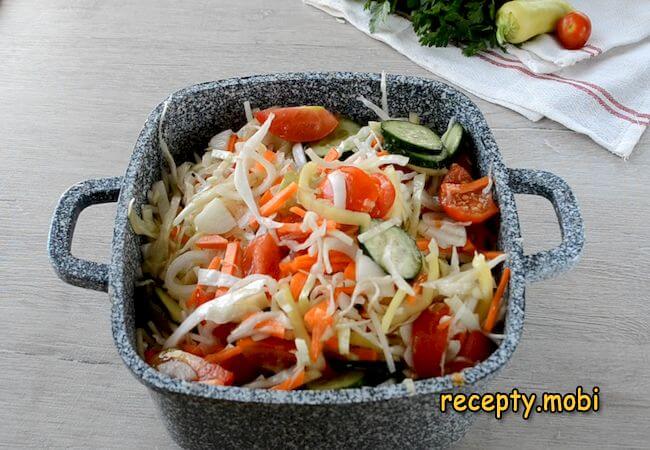
I add all the prepared vegetables to the pot with the cabbage, then add another 0.5 tbsp of salt, 2 tbsp of sugar, the sunflower oil, the vinegar and the peppercorns. I mix everything well and leave it for 1–2 hours – so the vegetables release their juice and soak up the aromas.
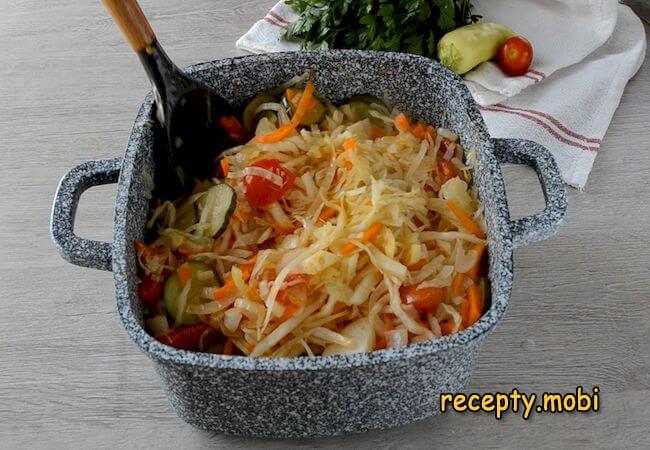
Then I put the pot of salad over medium heat and bring it to a boil. After it boils, simmer for 8–10 minutes and take it off the heat.
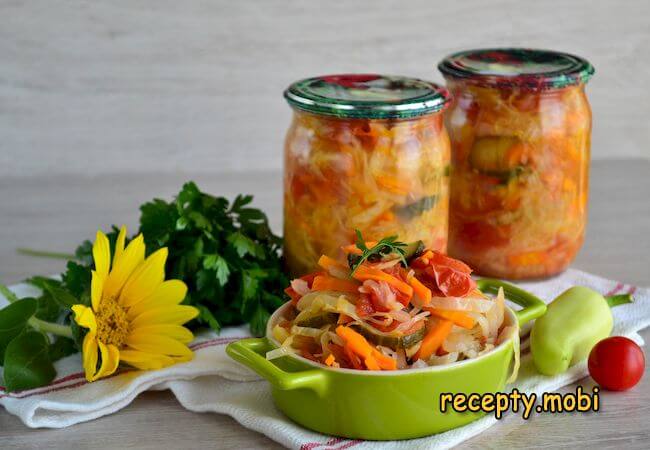
While hot, I seal the salad into sterilized jars. Kuban Salad for winter prepared this way keeps well in the cellar.


Tips
- 1
SHRED THE CABBAGE FIRST and SALT it – it needs the most time to release its juice. Without this the salad will be “dry”.
- 2
LET THE VEGETABLES STAND for 1–2 hours before cooking – during this time they will exchange flavours, and the salt will “draw out” the excess liquid.
- 3
COOK FOR ONLY 8–10 MINUTES after boiling – any longer and the vegetables will “boil down” into mush and lose their texture.
- 4
CHOOSE firm, fleshy TOMATOES – soft varieties will “fall apart” and turn the salad into puree. The same principle works in other vegetable salads for winter.
Video

FAQ
Can it be made without sterilization? +
In this recipe, sterilizing the jars is essential, but sterilizing the salad itself in the pot is not. The “hot-fill” method works: the hot salad is placed into a sterile jar and sealed straight away. The temperature of the salad (90–100 °C) plus the vinegar in the mix ensure it keeps. If you want “double insurance”, sterilize the filled jars for another 5–7 minutes in a pot of water before sealing. For long storage (more than 6 months) this is not required – the vinegar and heat-processing are enough.
Which cabbage is best? +
White cabbage of mid-late varieties (Slava, Valentina, Kharkivska Zymova) – dense heads with juicy leaves. Young early cabbage is not suitable – it is too tender and will “go to mush”. Chinese cabbage and savoy cabbage are also unsuitable – they have a different structure. Fermented cabbage cannot be used – it has a different taste. The ideal for Kuban Salad is the autumn harvest of September–October. Fresh from the garden is always better than shop-bought – fewer nitrates and more flavour.
How long does the salad keep? +
In a cellar or cool pantry (10–15 °C) – 12–18 months. At room temperature – 8–10 months. Once opened – 5–7 days in the fridge. Kuban Salad is one of the most “hardy” winter salads – the vinegar and oil plus heat-processing give an excellent result. Signs of spoilage: a bulging lid, cloudy brine, a sour smell – throw such a salad away. It is normal for the vegetables to settle a little to the bottom and to release additional juice.
Can the proportions of the vegetables be changed? +
Yes, the recipe is flexible. The base (500 g cabbage + oil + vinegar + salt + sugar) should stay the same. The other vegetables can be varied: more carrots – a brighter colour and sweeter taste, more pepper – a richer aroma, more cucumbers – crunchier, more tomatoes – more juice and softer. The total weight of the other vegetables (cucumbers + tomatoes + carrots + onion + pepper) is about 1.5 kg. If you increase it, recalculate the proportions of salt and vinegar. Do not add: potatoes (they will fall apart), beetroot (it will dye everything pink), or other starchy vegetables.
- Comment
or post as a guest
Be the first to comment.