avg —
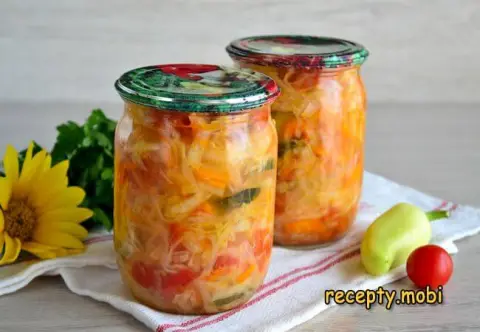
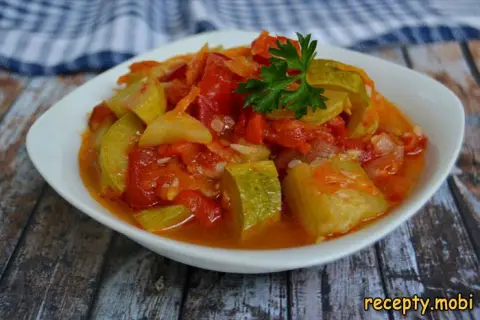
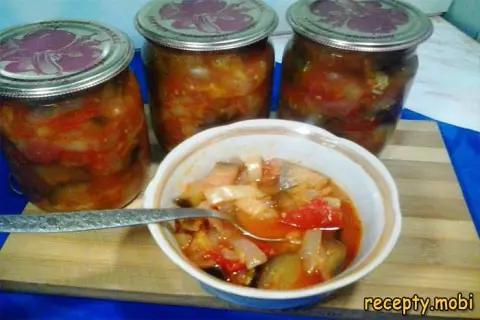
Tomato, Cucumber, and Bell Pepper Salad for Winter

Instructions
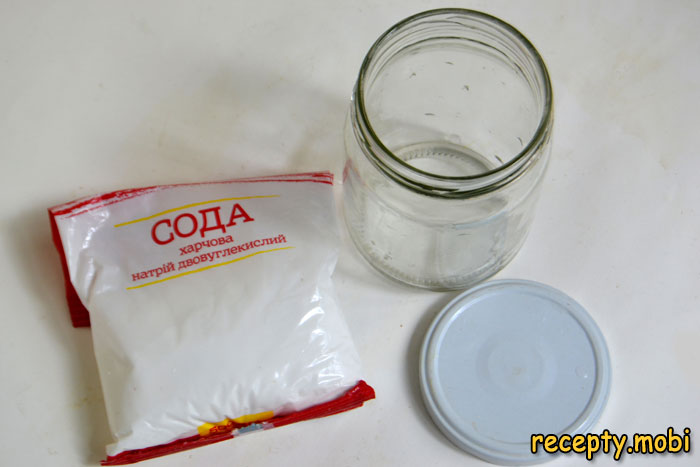
I sterilise 0.5-litre jars and metal lids for 15 minutes in the oven at 120 °C, or for 10 minutes over the steam of boiling water. Sterile containers are critical for long storage of the preserve – bacteria left on non-sterile surfaces can cause fermentation and spoil the salad.
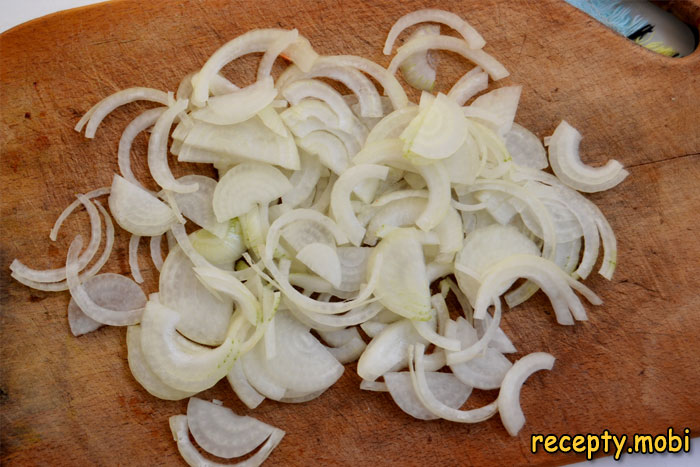
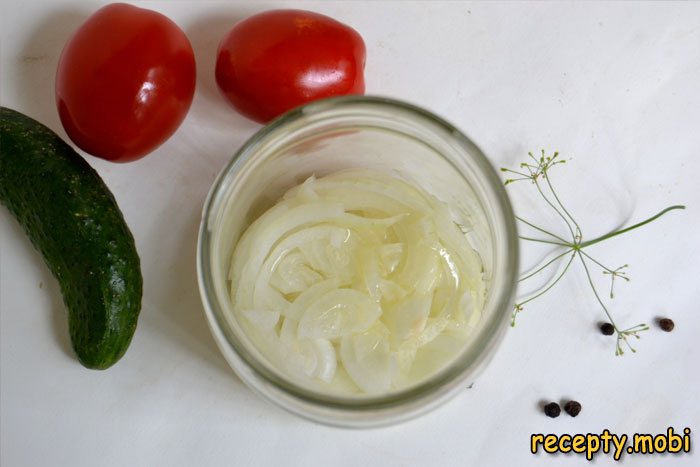
I slice the onion into thin half-rings, 3–4 mm thick.
I lay the onion as the first layer on the bottom of the sterilised jar together with the vegetable oil. The onion on the bottom is a "cushion" that soaks up the oil and gives a flavour base to the whole salad. The thin half-rings spread out evenly.
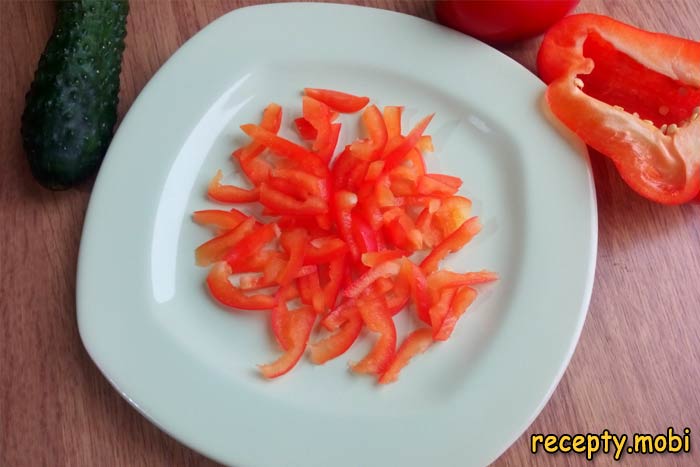
I cut the bell pepper into thin strips about 1 cm wide. I take red or yellow pepper for the brightest colour. You can use green, but it will give the preserve a less attractive look. Remove the seeds thoroughly.
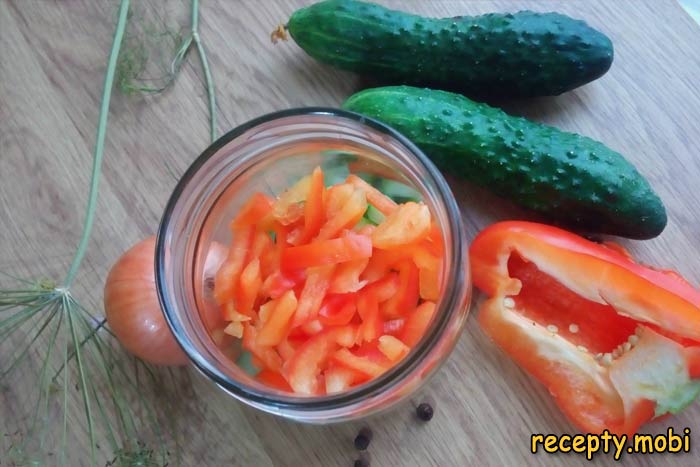
I add the pepper to the jar as the second layer, on top of the onion.
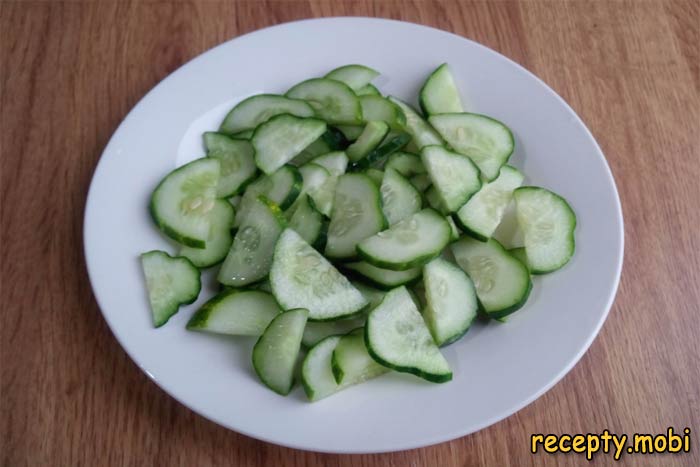
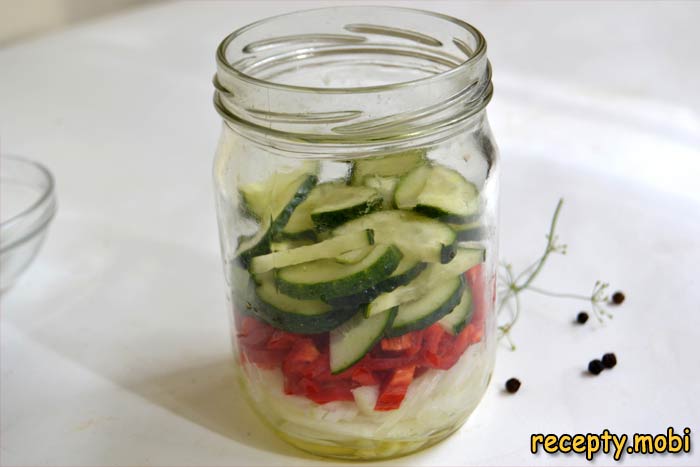
I slice the fresh cucumbers into thin half-rings, 3–5 mm thick. Choose firm cucumbers with thin skin – soft or overripe ones will not stay crunchy after sterilisation. Thick-skinned cucumbers with large seeds are better peeled first.
I add the cucumbers as the next layer, on top of the pepper.
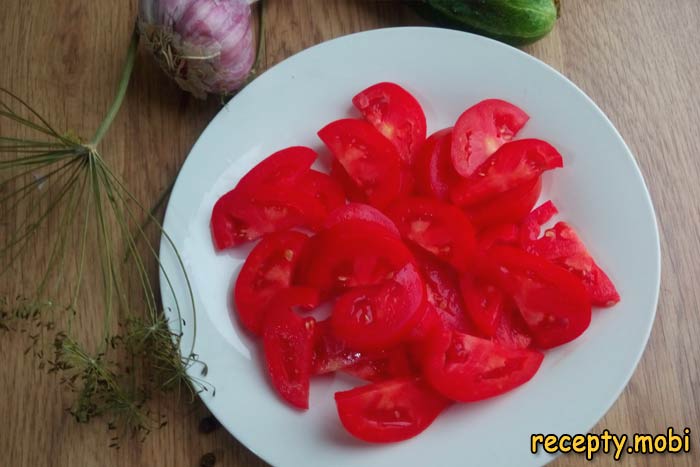
I slice meaty tomatoes into pieces 5–7 mm thick. I take firm varieties such as "Slivka", "Bull's Heart" or "Rio Grande" – they will not fall apart during sterilisation. Watery varieties turn to "purée" and spoil the texture of the salad.
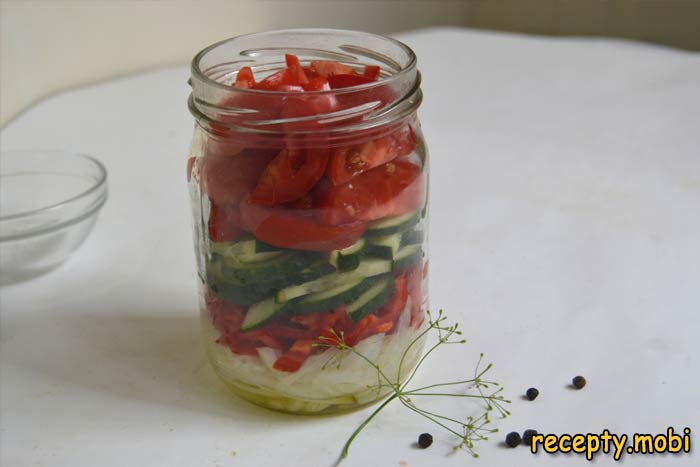
I add the tomatoes to the jar as the top layer.
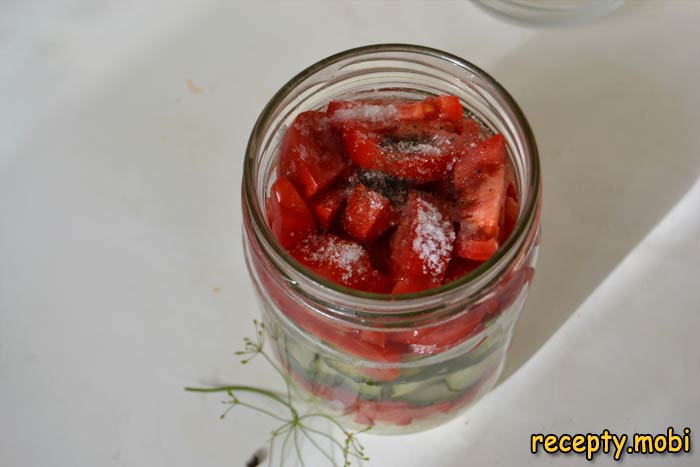
I add salt, sugar, vinegar, black peppercorns (5 pcs), an umbrella of fresh dill and a couple of garlic cloves to the jar. This combination of spices is a classic of Russian preserving. I slice the garlic, and put the dill umbrella in whole – it gives the characteristic aroma.
I pour boiling water into the jar to about 1 cm below the rim. Not filling it right to the top is critical: during sterilisation the liquid expands, and if the jar is filled to the brim the lid may pop off or the jar may crack. Leave some space to spare.
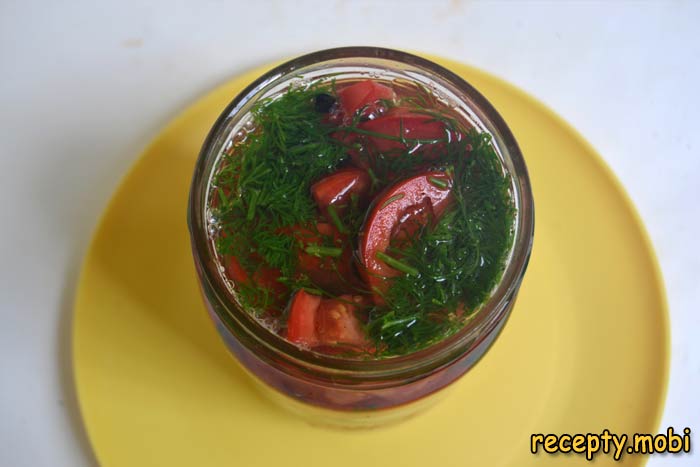
I sterilise the jar – a 0.5-litre jar for 10 minutes, a 1-litre jar for 15 minutes – in a pot of hot water (the water temperature should match the temperature inside the jar so the glass does not crack from the difference). Be sure to place a cloth on the bottom of the pot – it protects the jars from direct contact with the scorching base.
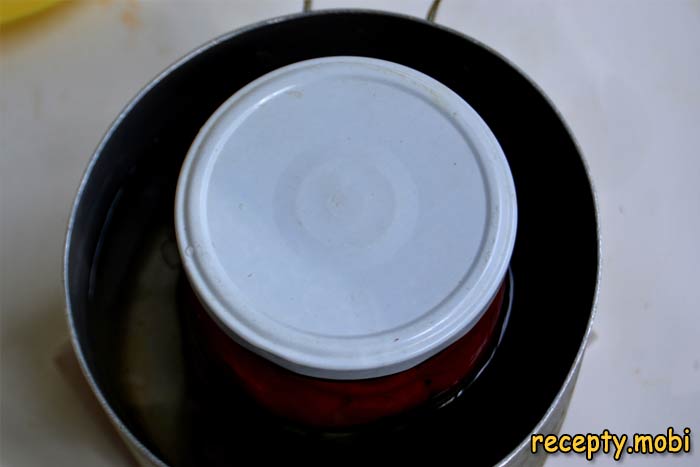
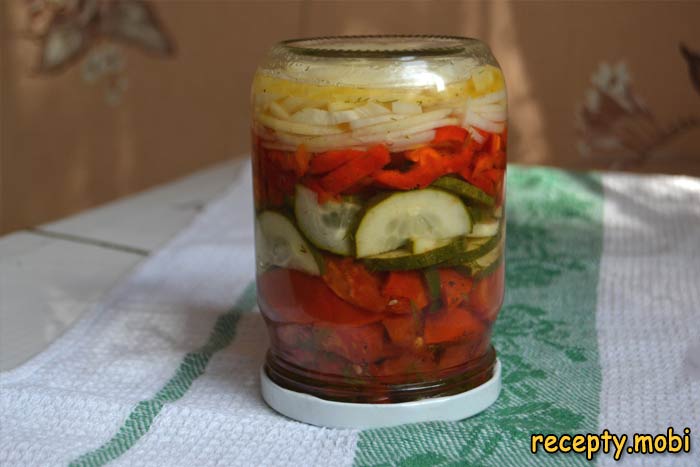
I seal the jars with sterile lids, turn them upside down to check the seal, and wrap them in a blanket for 12 hours until completely cool. Slow cooling creates extra vacuum and ensures a reliable seal.


Tips
- 1
Use red or orange bell pepper for a bright finished preserve. Green pepper gives a less attractive look.
- 2
Choose meaty, firm tomato varieties – they hold their shape during sterilisation. Watery ones will fall apart into "purée".
- 3
Store in a dark, cool place for up to a year – light destroys the colour and the vitamins. I use a similar principle for my lecho from bell peppers.
- 4
You can add grated carrot (50 g) for extra colour variety and sweetness – the vegetable complements the basic set perfectly.
FAQ
Can I make the salad without sterilisation? +
You can, but the shelf life will be much shorter – instead of a year it will be only 2–3 months at most. Without sterilisation, store the preserve only in the refrigerator. An alternative to classic sterilisation is a double hot fill: pour over boiling water, leave for 15 minutes, drain, boil again, pour back and seal. This method works but gives a less reliable result. For guaranteed long storage, sterilisation is essential.
How long does the finished salad keep in jars? +
In a cool dark place (cellar, pantry) at a temperature of 5–15 °C – up to 1 year without loss of quality. In the second year the flavour holds, but the vegetables may become softer. After opening a jar, store it in the refrigerator for up to a week and use it quickly. Signs of spoilage: a bulging lid, cloudy brine, mould on the surface, a sour fermentation smell – throw such jars away, do not try to use them.
Can I scale the recipe up proportionally? +
Yes, easily – all the ingredients scale proportionally. For a 1-litre jar: 6 tomatoes, 2–4 cucumbers, 2 peppers, 2 onions, and so on. The sterilisation time increases accordingly: 0.5 l – 10 min, 1 l – 15 min, 1.5 l – 20 min, 2 l – 25 min, 3 l – 30 min. For large batches it is more convenient to make several small 0.5-litre jars – once opened, such a jar is eaten in 2–3 days rather than standing for a week in the refrigerator.
What other vegetables can I add to this salad? +
Classic additions: grated carrot (gives sweetness and bright colour), sliced courgettes or zucchini (a summer variation), finely shredded white cabbage, celery for a piquant note. For spicy versions: add 1–2 rings of hot chilli pepper or a tablespoon of adjika. For a Mediterranean character, use basil instead of dill. Experiment with small batches – you will find your own perfect combination for the family table.
- Comment
or post as a guest
Be the first to comment.