avg —
Zucchini Yurcha for Winter

Instructions
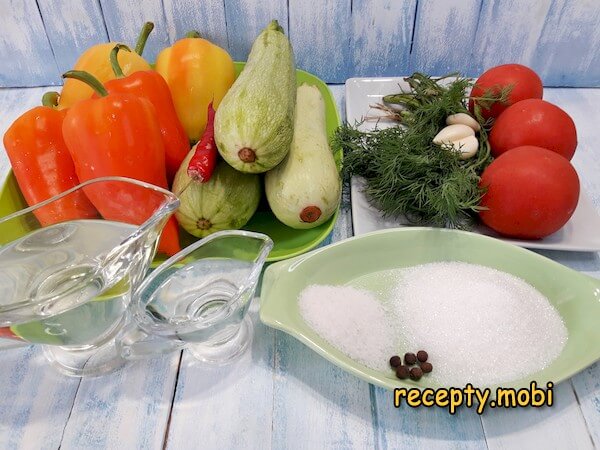
I prepare the ingredients for the zucchini yurcha. Both young and older zucchini work – with older ones you just need to peel off the skin and remove the seeds along with the soft segment, because the skin of overgrown vegetables toughens and the seeds turn hard and spoil the texture of the finished stew. I add hot pepper to taste.
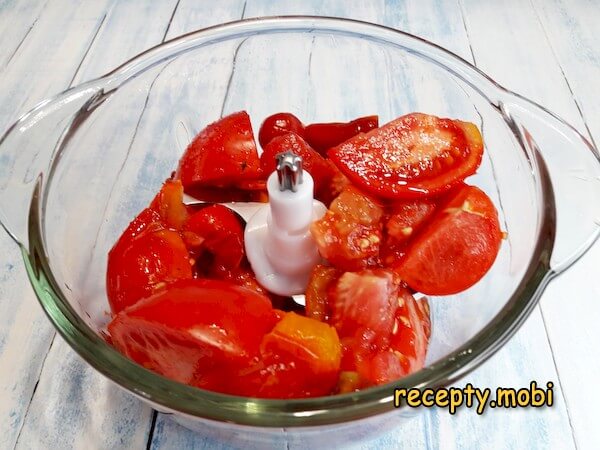
I cut the tomatoes into chunks, removing the stems, and load them into a blender or meat grinder – whole tomatoes will not pass through the grinder evenly.
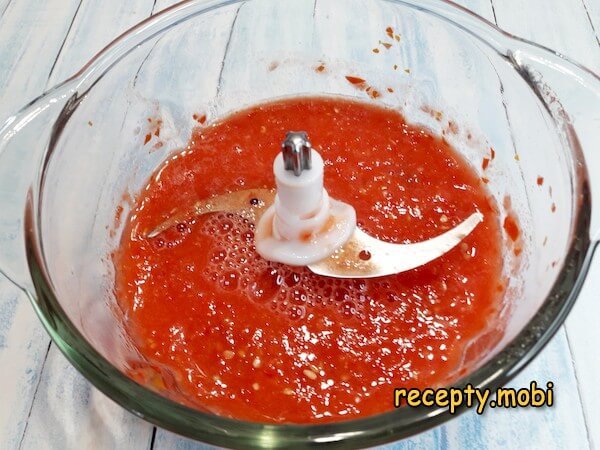
I grind the tomatoes to a smooth purée – this is what becomes the base of the sauce in which the rest of the vegetables will simmer.
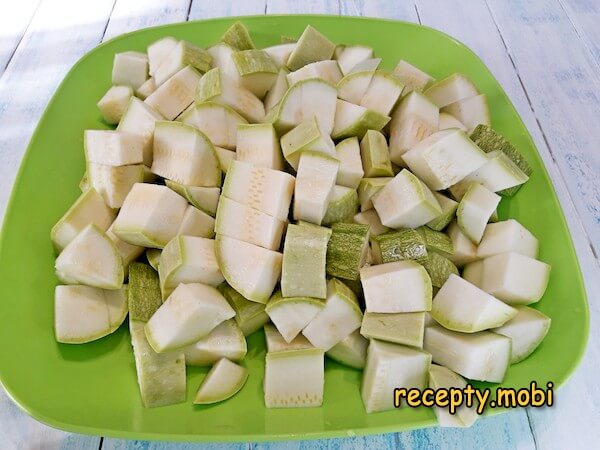
I cut the zucchini into 1.5 by 1.5 cm cubes – this size has time to soften within half an hour but does not fall apart into mush.
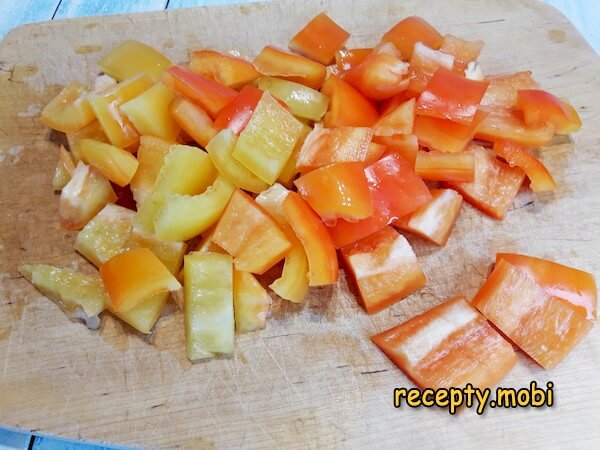
I cut the bell pepper to roughly the same size after cleaning out the core – pieces of an equal size cook evenly. If I wish, I use hot pepper, chopping it into small pieces.
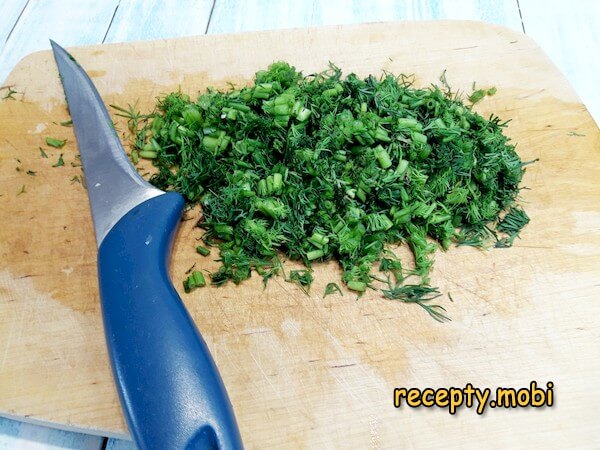
I finely chop the fresh herbs – chopping them small releases the most aroma into the sauce.
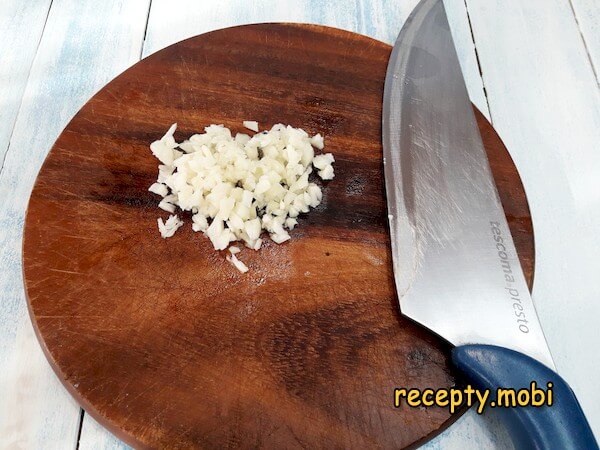
I mince the garlic with a knife – with a knife, not a press: a press squeezes out the bitter juice that spoils the flavour, whereas knife-cut pieces release their aroma gradually.
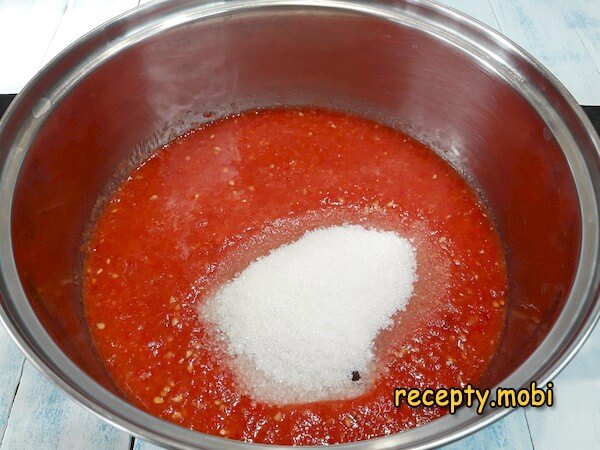
I pour the tomato into the pot and add the salt, sugar, and peppercorns – the salt draws the juice out of the vegetables, and the sugar balances the acidity of the tomatoes.
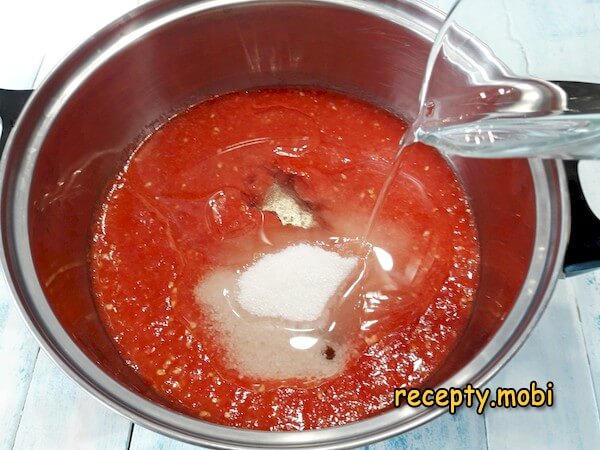
I pour in the vegetable oil – it gives a natural marinated quality and forms a thin film over the finished preserve in the jar, protecting it from the air.
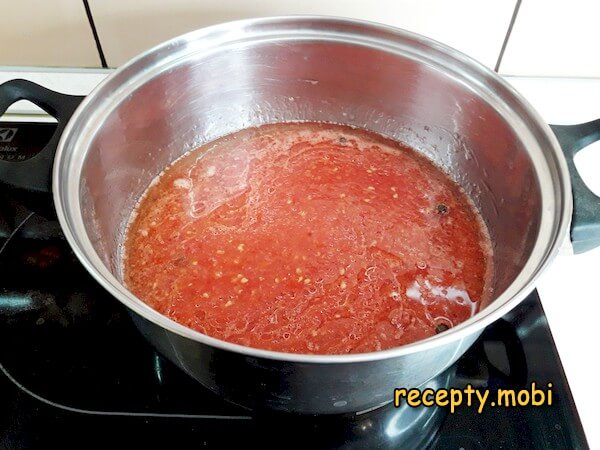
I stir everything together, put it on the heat, and bring it to a boil. A vigorous boil is needed to pasteurise the tomato base.
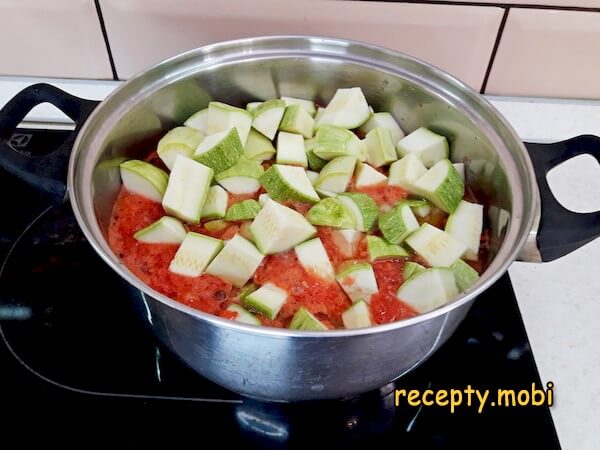
The moment it starts to boil, I add all the zucchini – the hot environment immediately starts the softening process, so the zucchini has no time to turn pale and keeps its firmness.
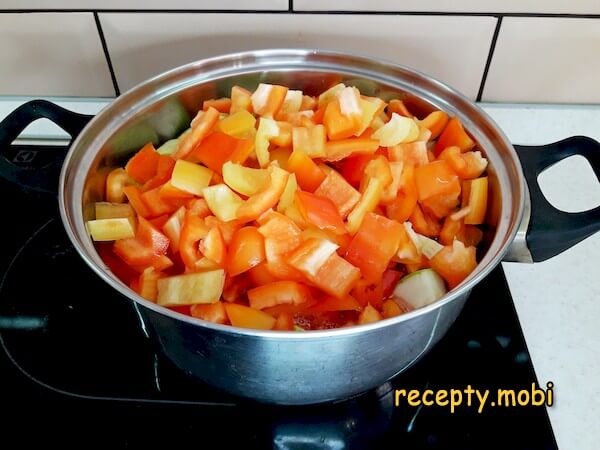
The sweet and hot pepper go in next – they are firmer than the zucchini and need the same amount of time to cook through.
Let the whole mixture boil over high heat for half an hour – nothing will burn, the main thing is to remember to stir the bubbling mass from time to time. During this time I wash and sterilise the glass jars and lids.
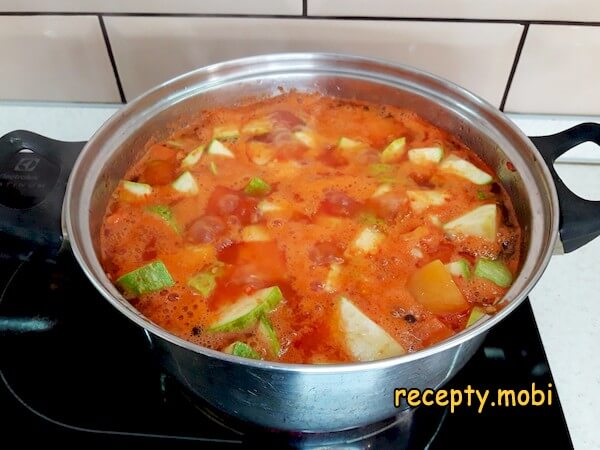
After the stated time, the volume of the preserve will have noticeably reduced – the vegetables have released their water and the mass has become denser. I add the chopped herbs and garlic to the pot – they should go into the finished dish right at the end to keep their aroma.
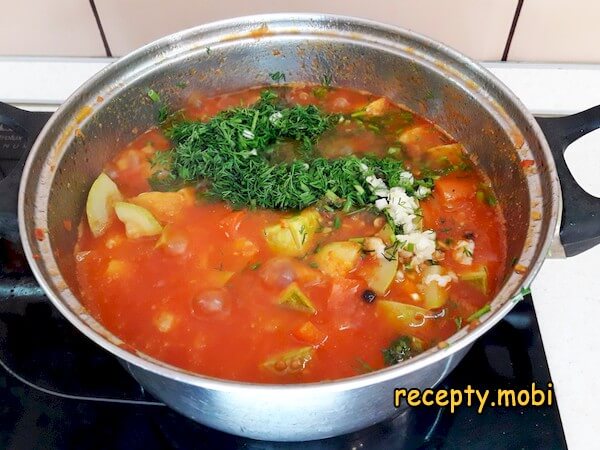
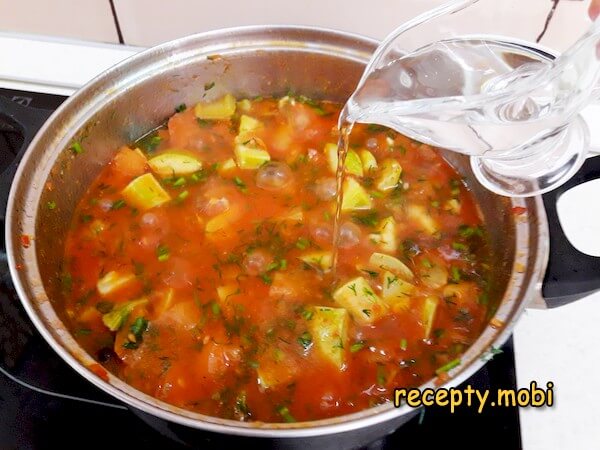
I pour in the vinegar, stir the mixture, and simmer it for another 10 minutes – the vinegar goes in right at the end so that the acid does not boil away during the half hour of cooking the main mass.
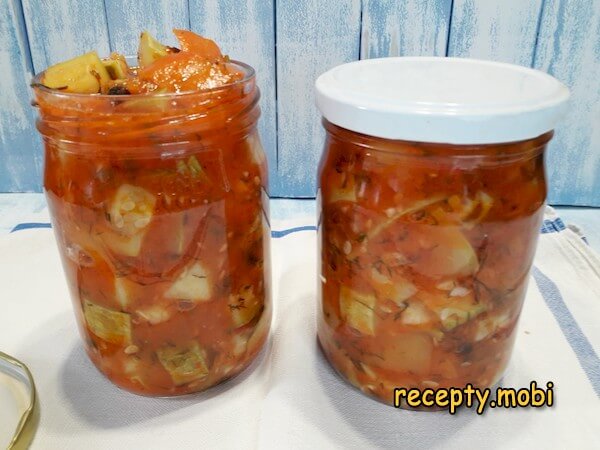
I fill the jars to the very top with the vegetable mixture – the least possible layer of air means the best keeping quality. I screw the lids on.
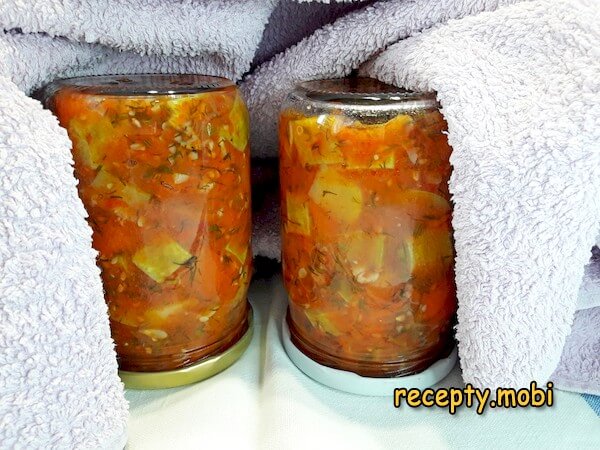
I turn the jars upside down – this sterilises the lid and the neck and checks the seal of the seam. I wrap them in a warm blanket and leave them until completely cool – slow cooling under a blanket works like a mini autoclave.
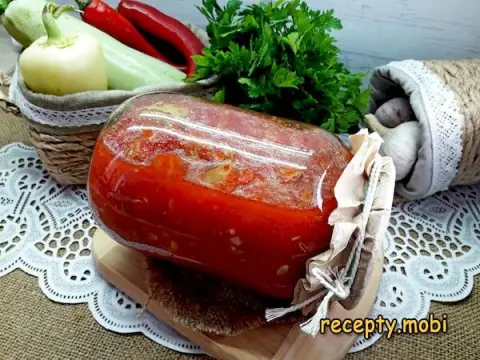
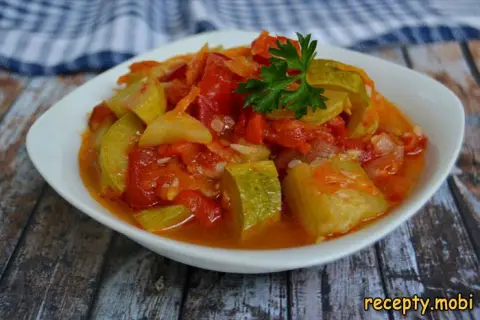
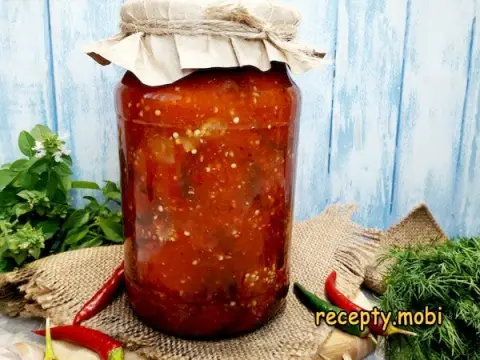
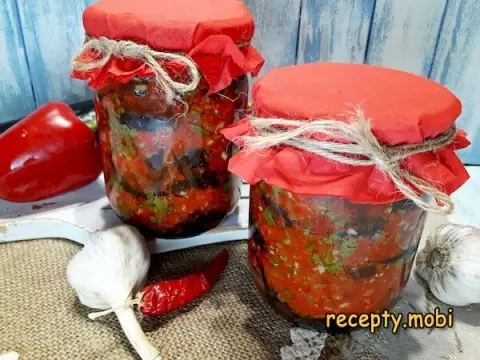
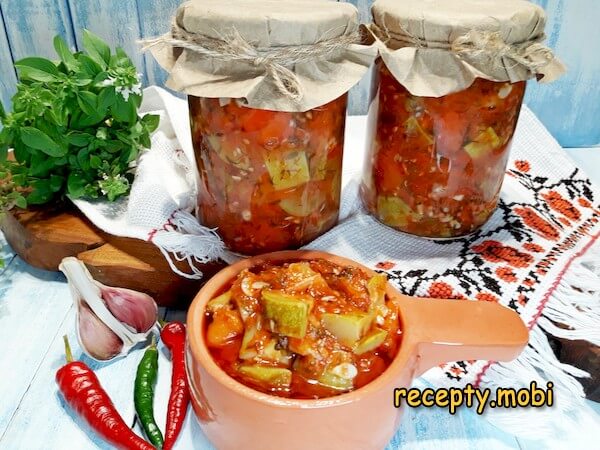
The zucchini yurcha for winter is ready. Store it in a dark, cool place, where it will keep safely until next year's harvest. This appetiser can be served with meat, potatoes, or American-style mac and cheese. Even the most ordinary dish will take on new colours and be filled with wonderful flavour thanks to this stew.


Tips
- 1
THE SAME 1.5 CM CUBE is the secret to even cooking. Zucchini in large pieces will not have time to soften, while small ones will fall apart. A 1.5 × 1.5 cm cube is the ideal size for half an hour of cooking.
- 2
VINEGAR AT THE END is the secret to the strength of the preservative. Vinegar added to the tomato and boiled for half an hour evaporates. Pouring it in 10 minutes before the end keeps all the acetic acid intact and working for preservation. The same trick works in Mother-in-law's Tongue from Zucchini for the Winter.
- 3
GARLIC WITH A KNIFE is the secret against bitterness. A press squeezes out the bitter juice from the garlic, which shows up in the finished dish after 2–3 months of storage. Knife-cut pieces release their aroma gently and without bitterness.
- 4
HERBS AND GARLIC RIGHT AT THE END is the secret to aroma. Fresh herbs and garlic added at the start cook for half an hour and lose up to 70% of their aroma. Added at the end for 10 minutes, the aroma is preserved and the preserve smells of fresh herbs even in winter.
FAQ
Which zucchini are best for yurcha for winter? +
The classic choice is young zucchini of varieties such as "Zucchini," "Black Beauty," or "Belogor" (1 kg, up to 25 cm long, with thin skin and small seeds). Alternatives: yellow zucchini "Zolotinka" (a premium option, brighter in the jar), pattypan squash (more tender, a premium variant), or overgrown zucchini (a budget option, but you need to peel the skin and remove the seeds with the flesh). Do not use: shrivelled or spotted zucchini – they will give a stale taste to the finished preserve. Ideal is zucchini picked fresh from the garden on the morning of the same day. Older zucchini in reserve is better used for stew or vegetable caviar than for yurcha.
Can I replace the tomatoes with tomato paste? +
You can, but the flavour will change noticeably. Substitution: 4 tablespoons of good-quality tomato paste plus 350 ml of water is roughly the equivalent of 400 g of fresh tomatoes. It is better to take paste in glass jars rather than tubes, without starch or thickeners. Premium options: "Pomidorka," "Kubanproduct," "Glavproduct." Fresh tomatoes give a meaty, juicy base with a slight tang and a characteristic graininess; paste gives a smooth, even sauce without character. Whenever possible it is always worth choosing fresh tomatoes in season – the flavour of the yurcha comes out authentic.
How long does zucchini yurcha keep? +
In a cool pantry (8–15°C) – up to 1.5 years without loss of quality. In an ordinary kitchen cupboard at room temperature – up to 1 year. Once the jar is opened – 5–7 days in the fridge under a lid. Signs of spoilage: a bulging lid, cloudy sauce with bubbles of fermentation, a sour or rotten smell, or mould on the surface – I throw such a jar away. A properly made yurcha only becomes richer with age – the garlic and spices distribute more deeply through the vegetables, and the tomato turns darker. After 1–2 months of storage the flavour is at its most balanced.
What to serve zucchini yurcha for winter with? +
It is a universal side dish for many meals. The classics – with fried or boiled potatoes, buckwheat, rice, or pearl barley. With meat: with fried pork, braised beef, boiled chicken, or grilled kebabs. With fish: with fried river fish or boiled sea fish. With homemade-style pasta: spaghetti with butter and cheese. With bread: rye bread with butter and yurcha on top as a spread. For a festive table: in a separate bowl with herbs and a slice of lemon. With alcohol: with vodka, dark beer, or Georgian "Saperavi" wine. It is universal – an appetiser, a side dish, and a sauce-spread all at once.
- Comment
or post as a guest
Be the first to comment.