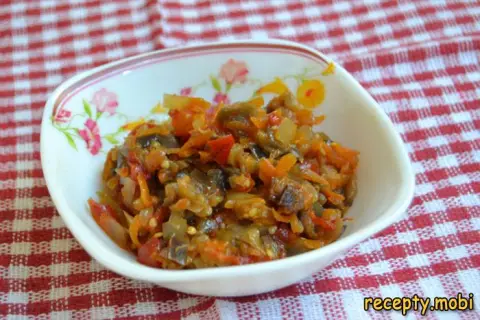
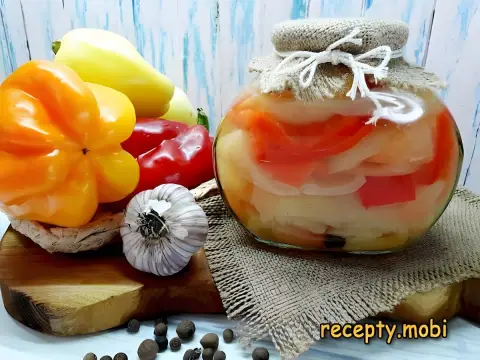
avg —
Bell Pepper and Tomato Lecho without Vinegar

Instructions
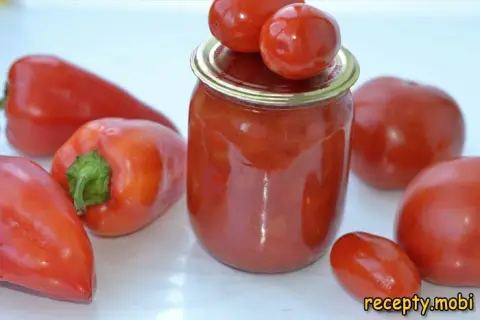
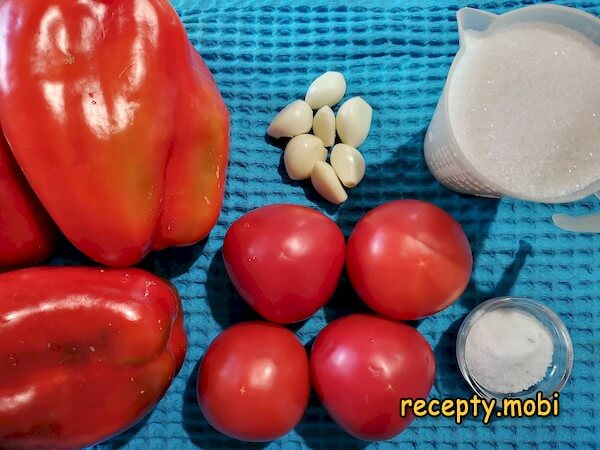
I get ready the ingredients needed for making the lecho from bell peppers with tomatoes for winter.
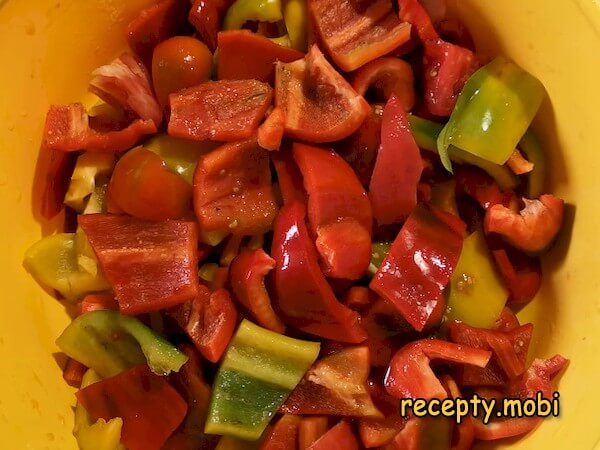
I clear the peppers of their seeds and stems, rinse, dry and cut them into small strips.
I cut the tomatoes into wedges, having removed the stem ends first.
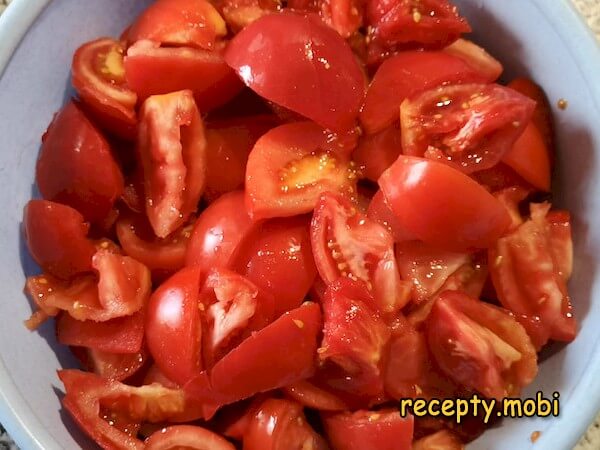
I tip half of the prepared tomatoes into a deep pot.
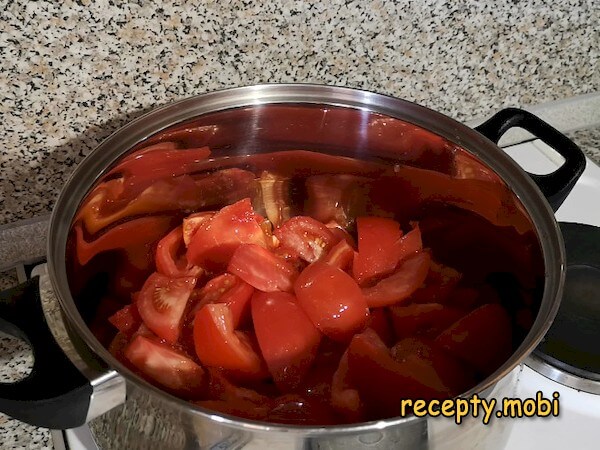
I add all the prepared bell peppers to the tomatoes and set the pot on the heat.
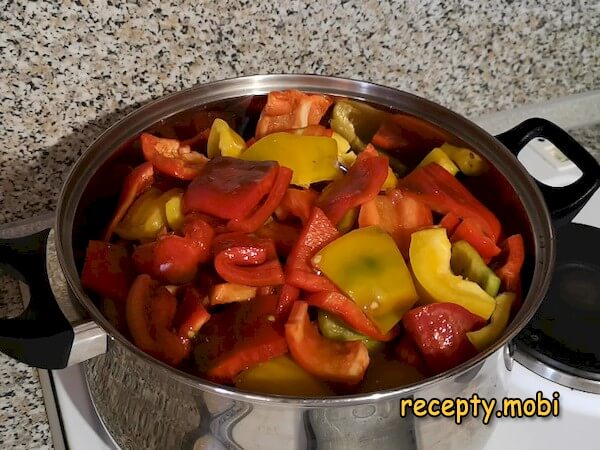
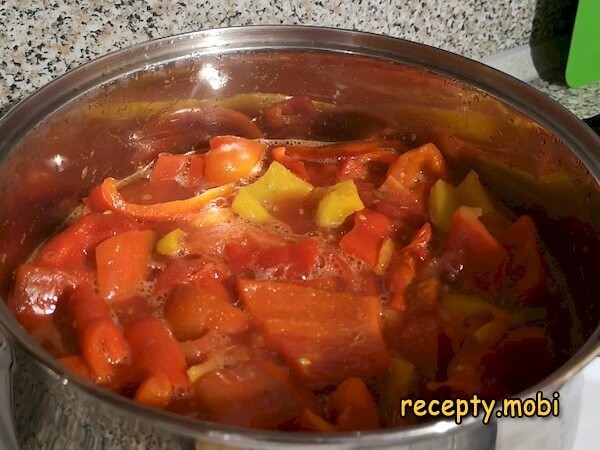
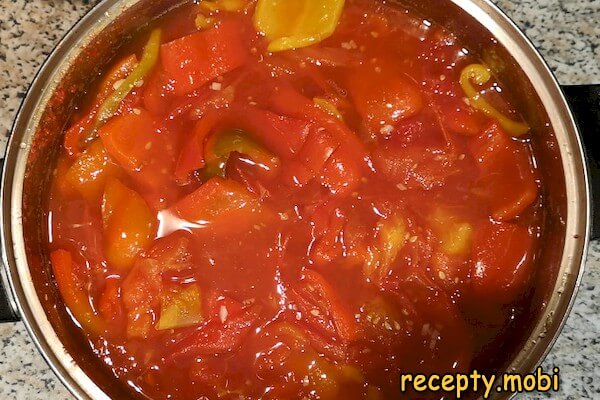
Stirring now and then, I bring the mixture to a boil. Once it boils, I lower the heat to just below medium and simmer the vegetables for about 10-15 minutes.
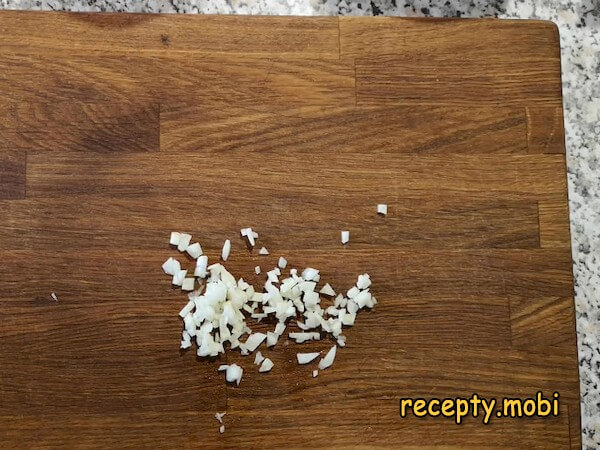
While the lecho cooks, I prepare the garlic: I cut it into small cubes.
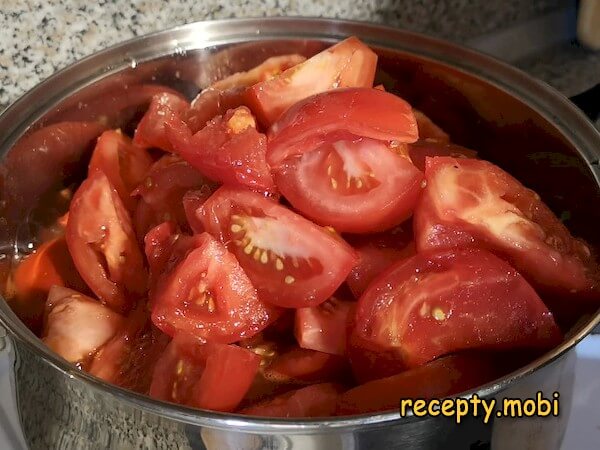
Next I add the remaining tomatoes to the pot. Over medium heat, stirring occasionally, I bring it to a boil.
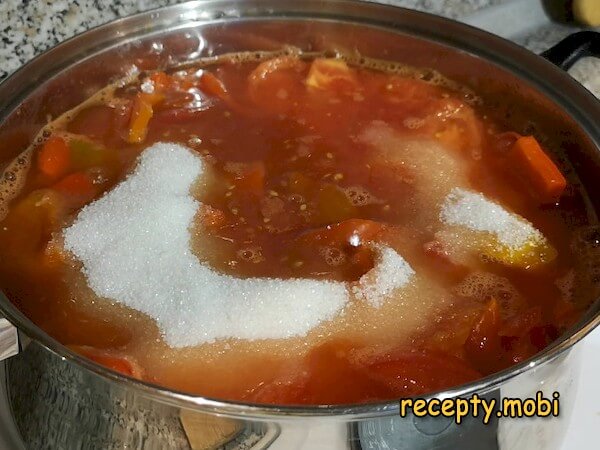
Once it boils, I add the salt and the sugar. I stir and cook for another 20 minutes.
After twenty minutes I add the garlic, stir everything together and carry on cooking for another 10 minutes.
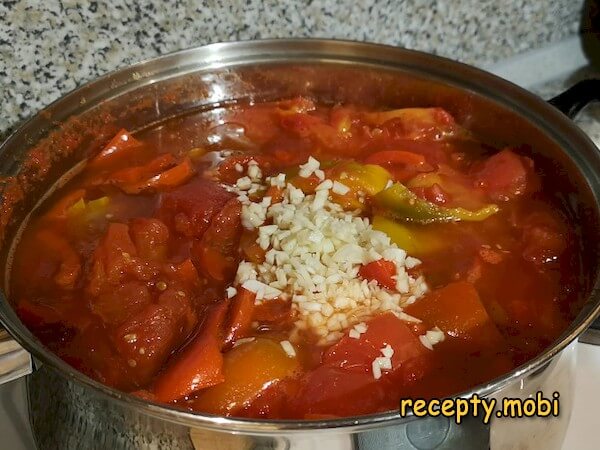
I take the lecho off the heat.
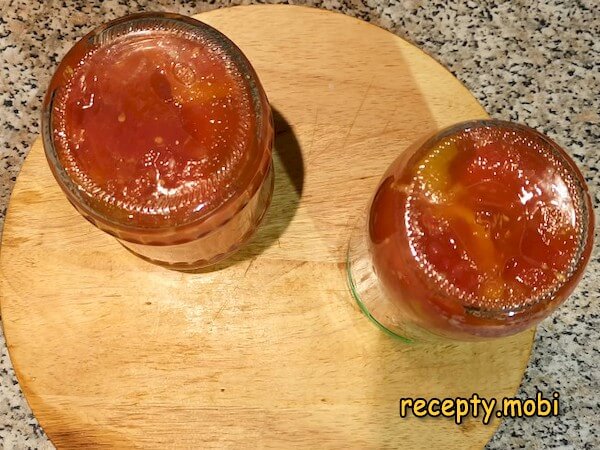
I fill the prepared jars with lecho right up to the rim of the neck. I screw on the lids and turn the jars upside down. I leave the jars to cool completely at room temperature.


Tips
- 1
TOMATOES IN TWO STAGES - the "secret" of the texture. The first half gives a liquid base, the second half gives meaty pieces.
- 2
WITHOUT VINEGAR: clean taste. Vinegar is not needed for the flavour here, and that is the whole point of this recipe. For shelf storage, though, the acidity of the tomatoes alone is not enough: bell pepper is a low acid vegetable and it raises the pH of the mix. If you want the jars to sit in a cupboard, add citric acid, which leaves no vinegary taste. Dose and process are in the storage and safety section.
- 3
GARLIC AT THE END - the "secret" of the aroma. Added for the last 10 minutes of cooking, the garlic aroma is preserved and does not "burn off".
- 4
MEATY TOMATOES - the "secret" of thickness. Varieties such as Bull's Heart give a thick filling. The same principle works in other kinds of lecho without vinegar.
Comparison of preserving methods
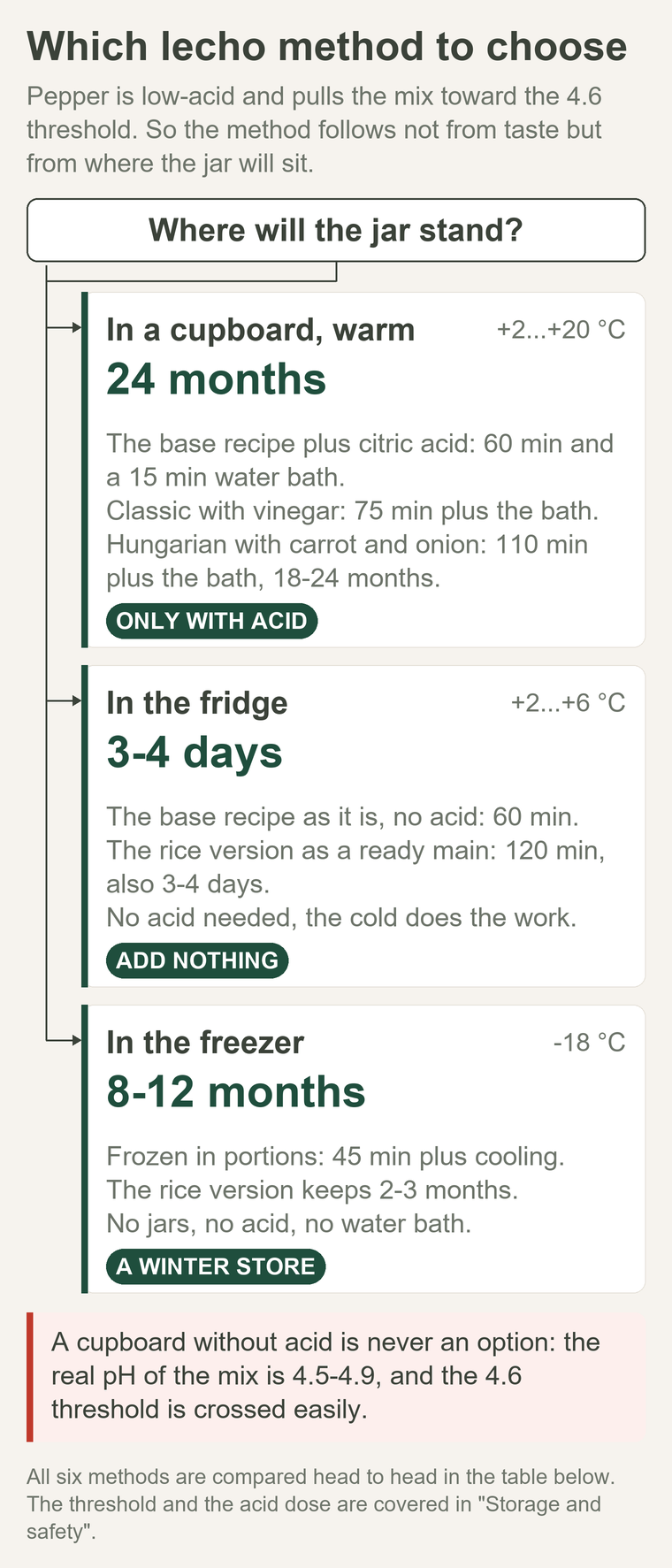
The recipe on this page runs without vinegar, and that gives it the cleanest flavour of the lot: tomatoes, peppers, garlic, nothing else crowding in. A mix like that has two workable routes, and the choice is yours. First: stir citric acid in at the end of cooking and process the jars in a boiling water bath. The taste stays exactly the same, nothing smells of vinegar, and the jars sit happily in a city apartment cupboard for two years. Second: add nothing at all, in which case the lecho keeps a few days in the fridge or goes into the freezer in single portions. Alongside those sit four neighbouring versions for other situations: the classic with vinegar, a thick Hungarian base with carrot and onion, a rice version that eats like a full meal, and a freezer batch. Everything is lined up side by side below so you can choose by the storage you actually have, not by the prettiest photo.
| Method | Time | Shelf life | Who it suits |
|---|---|---|---|
| Base recipe plus citric acid | 60 min plus a 15 min boiling water bath | 24 months at +2...+20 C | Anyone who wants sealed jars in an apartment cupboard. Same flavour as the original, no vinegar: 12 g of acid across the batch disappears behind 250 g of sugar. |
| Base recipe as written, no acid | 60 min | Fridge at +2...+6 C for up to 3-4 days, or freezer at -18 C for 8-12 months | Anyone who refuses to put a single thing in the pot beyond the ingredient list. Eat it now, or portion it into the freezer. |
| Classic with vinegar | 75 min plus a 15 min boiling water bath | 24 months at +2...+20 C | An apartment with no cellar: cupboard, pantry, top shelf. Sharper than the original, and the vinegar edge fades after 3-4 weeks of resting. |
| Hungarian style with carrot and onion | 110 min plus a 15 min boiling water bath | 18-24 months at +2...+18 C | When you want a thick vegetable base for meat, fried eggs or potatoes. Carrot and onion push the pH of the mix up, so acid is not optional here. |
| With rice | 120 min | 3-4 days in the fridge, 2-3 months in the freezer | Anyone who wants a finished meal rather than a side dish. Rice and starch block heat from reaching the centre of the jar, so this one stays in the cold. |
| For the freezer | 45 min plus cooling | 8-12 months at -18 C | You have freezer space. No jars, no acid, no water bath at all. |
Variations
Classic lecho with vinegar
For anyone without a cellar, whose jars have to keep in the apartment: in a cupboard, or under the bed. Vinegar drops the pH below 4.6, the threshold under which C. botulinum cannot grow, and it works hand in hand with the water bath: neither step works without the other. The flavour comes out a touch sharper than the original, and the vinegar edge fades after 3-4 weeks of resting.
Ingredients:
- Bell peppers, 1.5 kg trimmed weight (roughly 1.9 kg whole)
- Meaty tomatoes, 3 kg
- Sugar, 250 g (1 cup)
- Non-iodised coarse salt, 30 g (1 heaped tbsp)
- Garlic, 25 g (6-7 cloves)
- Refined sunflower oil, 100 ml
- 9% vinegar, 200 ml (or 26 ml of 70% vinegar concentrate plus 174 ml of water). If you only have 5% vinegar, use 360 ml and cut the water elsewhere.
- Wash the peppers, cut out the stem and the seed ribs, and slice into strips 1-1.5 cm wide. Wash the tomatoes, cut out the pale core where the stem attached, and cut into 2-3 cm wedges. Leave the skins on, they break down during cooking.
- Put half the tomatoes (1.5 kg) into a heavy-bottomed pot, set over medium heat and bring to a boil over 10-12 minutes, stirring for the first 3 minutes. Once the tomatoes release their juice they stop catching.
- Add all of the pepper, wait for the pot to return to a boil, then simmer for 12-15 minutes at a gentle bubble (around 98 C) with the lid ajar.
- Add the second half of the tomatoes and the 100 ml of oil, bring back to a boil, then pour in the 30 g of salt and 250 g of sugar and stir until fully dissolved. Cook for 20 minutes.
- Add the garlic through a press and cook for another 8 minutes.
- Pour in the 200 ml of vinegar, stir, cook for exactly 3 minutes and take the pot off the heat. Boiling it longer gains you nothing: acetic acid partly escapes with the steam, and you lose the very thing you added it for.
- Sterilise 0.5 L jars: 15 minutes in the oven at 120-130 C, or 10-15 minutes over steam. Boil the lids for 5 minutes. Use 0.5 L jars specifically, because no validated processing time exists for 0.7-0.8 L jars.
- Ladle the lecho in boiling hot, no cooler than 95 C, leaving 1-1.5 cm of headspace. Wipe the jar rim with a cloth dipped in boiling water and tighten the lids firmly, without wrestling them.
- Stand the jars on a rack in a pot of hot water so the water covers the lids by 2-3 cm, bring to a boil and process for 15 minutes from the moment it boils (at 300-900 m: 20 minutes, at 900-1800 m: 25 minutes). Lift them out onto a towel and let them cool without flipping or wrapping them.
Storage: 200 ml of 9% vinegar per batch works out to roughly 4.5 g of acetic acid per litre of finished product, which is enough to take the pH safely below 4.6. A dark dry spot, +2...+20 C, 24 months. Direct sunlight bleaches the pepper within a couple of months, so a cupboard beats a windowsill. If you own a calibrated pH meter, open one jar from the batch a day later and measure the cooled product, aiming for 4.2 or lower: that is a margin for error, not a compulsory ritual. Once opened, a jar keeps for up to 5 days in the fridge.
Hungarian lecho with carrot and onion
For anyone who wants a thick vegetable base for meat, fried eggs or potatoes rather than a salad-style preserve. Carrot brings sweetness and body, onion brings depth, paprika brings colour. The tomatoes go in as a puree here, so there are no tomato pieces in the finished lecho, only pepper in a thick sauce.
Ingredients:
- Bell pepper, 1.5 kg trimmed weight
- Tomatoes, 3 kg
- Carrot, 500 g trimmed weight
- Onion, 500 g trimmed weight
- Refined sunflower oil, 150 ml
- Sugar, 150 g
- Non-iodised coarse salt, 35 g
- Garlic, 25 g
- Sweet ground paprika, 10 g
- Ground black pepper, 3 g
- Vinegar 9%, 220 ml
- Grate the carrot on the coarse side of a box grater or cut it into 3 mm matchsticks. Slice the onion into 4-5 mm half-moons. Cut the pepper into 1.5 cm strips. Run the tomatoes through a mincer or blitz them to a puree.
- Heat the 150 ml of oil to 150 C in a Dutch oven or other heavy-based pot (a dropped scrap of onion should sizzle at once) and fry the onion for 6-7 minutes until translucent. Do not let it colour, or you get a burnt bitterness that only grows over the winter.
- Add the carrot and fry for another 8-10 minutes over medium heat, stirring every 2 minutes. The carrot should soften and bleed its orange colour into the oil.
- Pull the pot off the heat for 1 minute, add the 10 g of paprika and stir it through. Paprika scorches above 140 C and turns bitter instantly, which is why it only ever goes into a pot that is off the burner.
- Pour in the tomato puree, return to the heat, bring to a boil over 12-15 minutes and cook at a gentle bubble for 20 minutes, uncovered.
- Add the pepper, 35 g of salt, 150 g of sugar and 3 g of black pepper. Cook for 25 minutes. The pepper should turn soft but still hold its strip shape.
- Add the garlic through a press and cook for 5 minutes. Pour in the 220 ml of vinegar, cook for 3 minutes and take the pot off the heat. The acidity is clearly noticeable here, and that is the price of shelf storage; the 150 g of sugar softens it part way.
- Ladle it in boiling hot, no cooler than 95 C, into sterile 0.5 L jars, leaving 1-1.5 cm of headspace, wipe the rims and tighten the lids. Stand them on a rack in a pot of hot water covering the lids by 2-3 cm and process for 15 minutes from the moment it boils (at 300-900 m: 20 minutes, at 900-1800 m: 25 minutes). Cool on a towel without flipping them.
Storage: carrot (pH 5.9-6.4) and onion (pH 5.3-5.8) drag the pH of the mix upward, so the 220 ml of vinegar here is not a flavour choice: it works out to about 4.4 g of acid per litre. Low-acid vegetables make up 46% of this batch against 34% in the base recipe, so this is not the version to cut the vinegar in. A dark spot, +2...+18 C, 18-24 months. If you own a pH meter, measure the cooled product and aim for 4.2 or lower. Once opened, up to 5 days in the fridge; the oil will set into a cap on top, which is normal.
Lecho with rice
For anyone who wants to pull a container out of the fridge and have a finished meal rather than something to serve beside one. Reheat it, crack in an egg or stir in some tinned meat, and dinner is done. One caveat up front: this version is made 3-4 days ahead or frozen, and it does not go into a jar for the winter. The reason is technical, so read the storage note before you start cutting peppers.
Ingredients:
- Bell pepper, 1.5 kg trimmed weight
- Tomatoes, 3 kg
- Short-grain rice, 300 g dry
- Onion, 500 g trimmed weight
- Carrot, 500 g trimmed weight
- Refined sunflower oil, 200 ml
- Sugar, 100 g
- Non-iodised coarse salt, 40 g
- Garlic, 20 g
- Vinegar 9%, 100 ml (here it works for flavour, not for storage)
- Rinse the rice through 5-6 changes of water until the water runs clear, then boil it in 700 ml of water for 7-8 minutes from the moment it comes to a boil, until half-cooked: the grain still has a white core. Drain in a sieve and rinse under cold water. The starch has to go, otherwise the lecho turns into one solid gluey mass.
- Slice the onion into 5 mm half-moons, grate the carrot on the coarse side, cut the pepper into 1.5 cm strips and run the tomatoes through a mincer.
- Heat the 200 ml of oil to 150 C in a heavy-based pot, fry the onion for 6 minutes, add the carrot and fry for another 10 minutes over medium heat.
- Pour in the tomato puree, bring to a boil over 12-15 minutes and cook for 15 minutes.
- Add the pepper, 40 g of salt and 100 g of sugar, and cook at a gentle bubble for 20 minutes.
- Stir in the rice, drop the heat to its lowest setting and cook for 15 minutes, stirring every 2 minutes and always dragging the spatula across the bottom. A thick starchy mass catches in seconds, and the whole pot will taste burnt.
- Add the garlic, 3 minutes, pour in the 100 ml of vinegar, another 3 minutes, then off the heat.
- Set the pot in a sink of cold water and ice and chill it to 20 C over 30-40 minutes, stirring. Pack into single-serving containers and refrigerate. Some of it can go into the freezer, with 2-3 cm of headspace left at the top.
Storage: it all comes down to starch. NCHFP does not allow home canning of anything containing rice, flour, starch or pasta: starch blocks heat from reaching the centre of the jar, and the real temperature inside cannot be predicted for a boiling water bath or for a pressure canner. Rice also pushes the pH of the mix up (cooked grain sits at 6.0-6.7), and 100 ml of vinegar across this volume does not move the acidity in any meaningful way. So there is exactly one route here: the fridge at +2...+6 C for 3-4 days, or portioned into the freezer for 2-3 months at -18 C. Containers and jars like these do not belong in a pantry, on a balcony or in a cupboard. Before serving, heat it to a boil and boil for 10 minutes.
Lecho for the freezer
For anyone with a free freezer and no appetite for fussing with jars, and for anyone who cannot eat vinegar for health reasons. The simplest method of all: bacteria do not grow at -18 C, so the botulism question is settled by physics rather than by the recipe. Salt and sugar are dialled back here, and they work purely for flavour.
Ingredients:
- Bell pepper, 1.5 kg trimmed weight
- Tomatoes, 3 kg
- Sugar, 120 g
- Non-iodised coarse salt, 20 g
- Garlic, 25 g (not for the pot; it goes in when you reheat the lecho in winter)
- Cut the pepper into strips 2 cm wide, slightly chunkier than usual. Freezing softens pepper, and a thin strip thaws out limp and shapeless. Cut the tomatoes into 2-3 cm wedges.
- Bring half the tomatoes to a boil over 10-12 minutes, add the pepper and cook for 10 minutes. That is 5 minutes less than for canning: the pepper should stay slightly springy, and it will finish cooking when you reheat it in winter.
- Add the second half of the tomatoes, bring back to a boil, pour in the 20 g of salt and 120 g of sugar, and cook for 15 minutes. Total cooking time is shorter here because the goal is to protect the texture.
- Take the pot off the heat, set it in a sink of cold water and ice, and chill to 20 C over 30-40 minutes, stirring. Do not leave the pot cooling on the stove for 4 hours: the +20...+50 C range is precisely where bacteria multiply fastest.
- Move the pot to the fridge for 1-2 hours and bring it down to +4 C. Only cold food goes into a freezer; anything warm raises the compartment temperature and starts thawing the bags next to it.
- Pack into 0.5 L containers or zip-lock bags in single portions, leaving 2-3 cm of headspace. Volume grows by roughly 9% on freezing, and a container filled to the lid will crack.
- Write the date on with a marker. Freeze at -18 C. If your freezer has a fast-freeze setting (-24...-30 C), run it for 4 hours: smaller ice crystals do less damage to the pepper cells, and there is less water after thawing.
- Keep garlic out of the freezer, because it turns musty once thawed. In winter, press a clove straight into the pan as you reheat the lecho; the aroma beats anything in a sealed jar.
Storage: 8-12 months at -18 C or colder. In the freezer compartment of an old fridge (-12 C) that drops to 3-4 months. Thaw in the fridge for 8-10 hours, or drop the frozen block straight into a covered pan over low heat for 12-15 minutes. Never refreeze: water leaks out of the ruptured cells, and instead of lecho you get tomato slop with shreds of pepper in it. After thawing, keep it in the fridge and eat within 2 days.
Storage and safety
This section is worth reading all the way through even if you know the recipe by heart. Any conversation about lecho without vinegar tends to end with "tomatoes are acidic, that is enough". The maths does not support that, and what follows is the breakdown with numbers, plus a solution that leaves the flavour untouched.
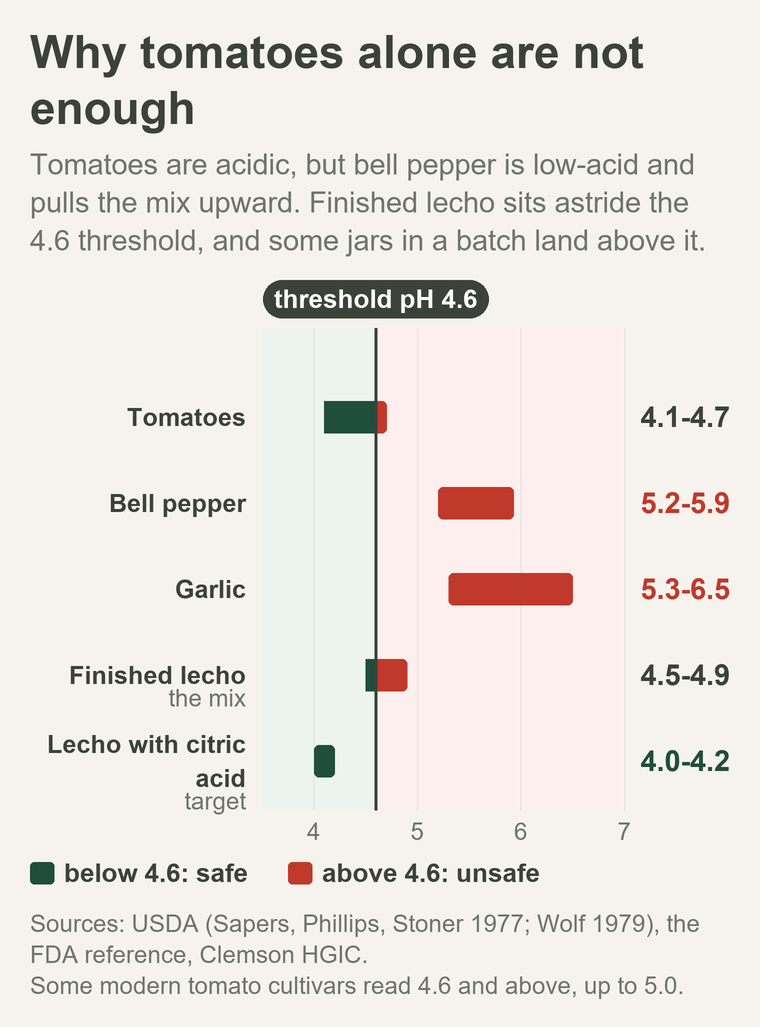
All home preserving splits along one acidity line: pH 4.6. Below that, Clostridium botulinum spores do not germinate and produce no toxin, and a boiling water bath at 100 C is enough. Above 4.6 the food counts as low-acid: the spores are heat resistant, 100 C does nothing to them, and you need a pressure canner at 116-121 C. Those spores germinate without oxygen, which makes a hermetically sealed jar a comfortable home for them. Toxin forms after 3-4 days of growth.
Now for our vegetables. Fresh tomatoes come in at pH 4.1-4.7 in large-scale USDA measurements: 58 varieties and roughly 350 cultivars in Sapers, Phillips and Stoner (1977), 107 varieties in Wolf (1979). The top of that range is already past the threshold. Clemson HGIC adds that some modern varieties read 4.6 and higher, up to 5.0. And the decisive fact: variety has almost nothing to do with it, because ripeness and spoilage are what raise the pH. Ripe soft tomatoes, the exact ones that get cut into wedges for lecho, sit at the top of the range. That is why USDA dropped the "tomatoes are naturally acidic enough" line back in 1988, after the Penn State research, and has required acidification of all tomatoes without exception ever since.
Then there is the pepper. Bell pepper reads pH 5.20-5.93 in the FDA reference tables, garlic 5.3-6.5. Both are low-acid. This recipe puts 1.5 kg of pepper against 3 kg of tomatoes, so pepper is about a third of the vegetable weight, with garlic on top. Pepper works against you twice over: it dilutes the tomato acid and it contributes buffering capacity of its own, which resists acidification. The realistic result for this mix: pH 4.5-4.9. The 4.6 threshold is crossed easily, and some jars in the batch end up on the wrong side of it.
Long cooking does not change that arithmetic. Boiling at 100 C kills mould, yeast and vegetative bacterial cells, but not spores. Worse, it drives the oxygen out of the mix and clears away competing microflora, and then the sealed lid completes the oxygen-free environment those spores have been waiting for. A lid that has pulled in tells you there is a vacuum, not that the jar is safe.
And now the good news that all of this was written for. You can drop the pH without vinegar. Citric acid is not vinegar: it takes the pH down to where it needs to be without contributing any vinegar smell or vinegar taste, unlike table vinegar and lemon juice. On top of that the recipe carries 250 g of sugar, and USDA specifically recommends sugar for exactly this reason, to round off the tartness that acidification brings. What comes out tastes identical, and the name "lecho without vinegar" stays honest: there really is no vinegar in the jar.
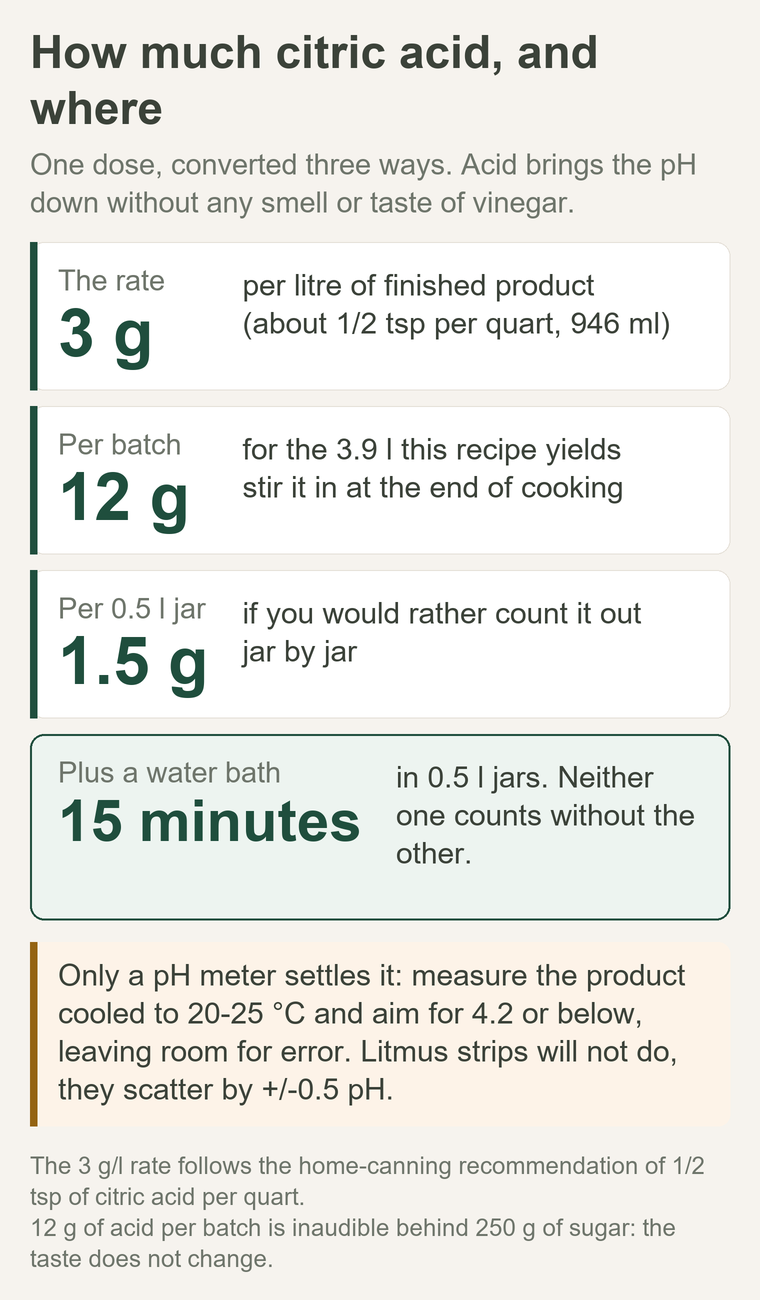
The dose is specific. The USDA rule for tomatoes is 1/2 tsp of citric acid per quart (946 ml), which is about 3 g per litre. For our 3.9 L yield that comes to roughly 12 g, about 2.5 level tsp. Per 0.5 L jar that is 1.5 g, roughly a third of a level teaspoon. A spoon is a blunt instrument here: if you have a kitchen scale accurate to 0.1 g, measure by weight. There are two ways to add it: stir it into the pot right at the end of cooking until fully dissolved, or drop the dry acid straight into each jar before you fill it. The second is more precise per jar, the first is easier.
Once acidified, the water bath is mandatory; neither step works without the other. Ladle the lecho in boiling hot, no cooler than 95 C, into sterile 0.5 L jars, leaving 1-1.5 cm of headspace, wipe the rims and tighten the lids. Stand the jars on a rack in a pot of hot water so the water covers the lids by 2-3 cm, bring it to a boil and hold for 15 minutes from the moment it boils (at 300-900 m: 20 minutes, at 900-1800 m: 25 minutes). Lift them out and cool on a towel without flipping or wrapping them. After that the jars go in the cupboard: +2...+20 C, 24 months.
And an honest caveat. This exact formulation, with its 1.5 kg of pepper and its garlic, has never been lab tested, and there are no tested tables written for it. The 3 g per litre dose is taken from the USDA rule for tomatoes. Anyone with a calibrated pH meter can close the question entirely: measure the product once it has cooled to 20-25 C and aim for 4.2 or lower, the way commercial producers do, leaving a margin for error. That is extra insurance, not a requirement for a home kitchen. Litmus strips are no good for this check: an error of plus or minus 0.5 pH at a 4.6 threshold is far too wide, and in a dark tomato mixture the colour cannot be read anyway.
If you would rather not add acid at all, the second route is no worse. Cook it exactly as written and do not seal it: chill the mix to 20 C in a sink of iced water, pack it into containers and keep it in the fridge at +2...+6 C for up to 3-4 days. Anything extra goes to the freezer for 8-12 months at -18 C, with the flavour and proportions fully intact and no equipment needed. This is exactly what Clemson HGIC recommends for family recipes built on low-acid vegetables: refrigerate or freeze.
Important: hot-filling a jar, flipping it upside down and burying it under a blanket is not heat processing, it is a seal test. A tight seam does not kill spores, and 70-80 C under a quilt certainly does not. So the base recipe without acid does not get sealed in a jar and stored at room temperature, and a cellar at +8 C does not qualify either: non-proteolytic Clostridium botulinum grows from +3.3 C. A sealed jar in the cupboard means acid plus a water bath. Without acid there are two routes: the fridge or the freezer.
Tip: check the seal a day after canning, not by eye in the first hour. A cooled lid should be curved inward and should not click when you press it with a finger; tapped with a spoon it rings clear, while a dull sound means air inside. There should be no seepage and no sticky traces under the rim.
Tip: label every jar with the date and the method: with vinegar, with citric acid, no acid. Six months on you will not remember which jar can sit in the cupboard and which one belongs in the fridge, and mixing up those two categories is an unpleasant mistake.
Signs of a spoiled jar: a swollen or domed lid, cloudy liquid, a chain of bubbles running along the glass, sticky seepage under the rim, mould (white fuzz, grey-green or black patches), a sour or alcoholic smell, a spray when you open it, a broken vacuum. The rule is simple: if in doubt, throw it out without tasting. Botulinum toxin changes nothing about the look, taste or smell of the food, so your senses are no help here. The disposal routine that every block below refers back to: do not open a swollen jar in a living space; put the whole jar into a pot of water, boil it covered for 30 minutes, then pour the contents down the drain, wash the jar with baking soda and throw the lid away. Never give any of it to animals.
| Method | Where to store it | Shelf life |
|---|---|---|
| Base recipe plus citric acid at 3 g per litre (about 12 g per batch) and a 15 min water bath in 0.5 L jars | A dark dry spot out of direct sun, +2...+20 C: cupboard, pantry, top shelf | 24 months |
| Base recipe as written, no acid, jars not sealed | Fridge at +2...+6 C, in a container or a covered jar | 3-4 days |
| Base recipe as written, no acid, into the freezer | Freezer at -18 C or colder, in 300-400 g portions | 8-12 months |
| With 200 ml of vinegar per batch, 15 min water bath in 0.5 L jars | Cupboard, pantry, top shelf, +2...+20 C, out of direct sun | 24 months |
| With carrot and onion, 220 ml of vinegar, 15 min water bath in 0.5 L jars | A dark spot, +2...+18 C | 18-24 months |
| With rice (starch stops heat reaching the centre of the jar, so cold storage only) | Fridge at +2...+6 C or freezer at -18 C | 3-4 days in the fridge, 2-3 months in the freezer |
| Frozen | Freezer at -18 C or colder | 8-12 months |
| Frozen in an old freezer compartment (-12 C) | The freezer compartment of a fridge | 3-4 months |
| An opened jar of any version | Fridge, 0...+6 C, covered | 4-5 days |
| Thawed lecho | Fridge, 0...+6 C, never refrozen | 2 days |
Troubleshooting: common problems and fixes
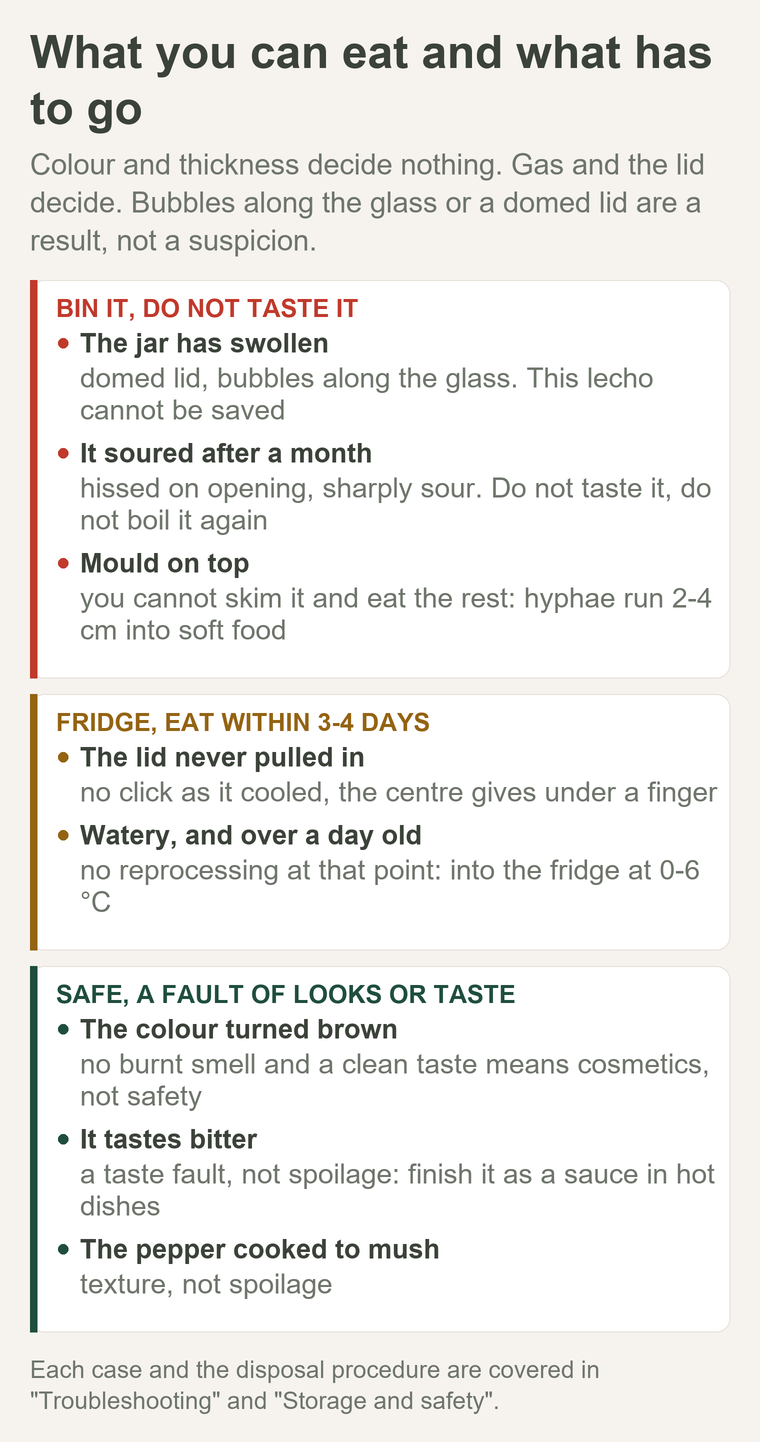
The jar has swollen: the lid is domed, bubbles run along the sides, the liquid has gone cloudy
Live yeast, lactic acid bacteria or clostridial spores got into the jar and were handed the conditions to grow. The usual entry points: the jars were rinsed with boiling water instead of getting 15 minutes over steam or 15 minutes in a 120-130 C oven, the mix was ladled in at 80-85 C instead of the required 95 C, or there is a chip or crack on the rim. More often, though, the reason is simpler: no acid was added, the water bath was skipped, and the jar went into the cupboard. The realistic pH of this mix (1.5 kg of pepper to 3 kg of tomatoes) is 4.5-4.9, the 4.6 threshold is crossed easily, and the microbes feed on the 250 g of sugar in the recipe, give off gas, break the vacuum and push the lid outward. What to do: do not open it, do not sniff it, do not taste it, not even a drop. Swelling means active gas-producing spoilage, and Clostridium botulinum above pH 4.6 produces toxin with no swelling, no smell and no change in flavour, so your senses tell you nothing in either direction. Dispose of it by the routine in the "Storage and safety" section. Go through the whole batch: any jar with a bulging lid, a chain of bubbles along the glass or sticky seepage under the rim goes the same way. Lecho like this cannot be rescued. For the next batch: 12 g of citric acid for a 3.9 L yield plus a 15 minute water bath, and the cupboard is back on the table.
The lecho is watery: the vegetables float in thin liquid and the sauce runs off the spoon instead of coating the pepper
You used salad-type tomatoes with loose watery flesh, which run 93-94% water against 88-90% for plum types. The second cause: total boiling time came in under the stated 45 minutes, or the pot sat under a lid and all the steam condensed straight back in. Sugar (250 g) and salt osmotically pull juice out of the pepper, so the volume of liquid in the pot rises rather than falls. What to do: while it is still cooking, take the lid off, let it bubble briskly and reduce it for another 15-20 minutes. Judge it by what you see rather than by the timer: drag a spatula across the bottom and the track should close over in 2-3 seconds rather than instantly. You can also ladle out 300-400 ml of liquid, reduce it by half separately and return it to the pot. If it is already in jars but less than 24 hours have passed and the jars were kept cold: open them, drain off the excess juice, return the mix to the pot, boil it for 15 minutes and then follow the rules of your chosen route, which means either acid plus a water bath, or the fridge. Thickness has no bearing on storage at all: a jar with no acid stays a fridge jar no matter how far you reduce it, while an acidified jar that went through the bath sits in the cupboard whether it is thick or thin. If the jars are more than a day old, do not rework them: put the contents in the fridge (0-6 C) and eat within 3-4 days. Watery lecho is not dangerous in itself, it is a texture problem.
The pepper cooked to mush: no strips left, the mix looks like a uniform puree
In the base recipe the pepper goes in with the first load and spends around 45 minutes at a boil (10-15 plus 20 plus 10). Thick-walled pepper takes that in stride, thin-walled pepper does not: below a 4 mm wall the cell walls break down by the 25 minute mark. Two more factors finish the job: cutting into 3-4 mm strips, and frequent stirring, because hot pepper breaks against the spoon on its own without any pressure. What to do: there is no restoring the cut in a finished batch, mush will not reassemble into strips, but the product is edible and safe and works as a pasta sauce, a base for gravy, or a stir-in for borscht or soup. Next time, buy pepper with walls 6 mm or thicker (any blocky bell sold for stuffing; the squat, ribbed types work best), cut it into strips 10-12 mm wide rather than thinner, and stir with a wooden spatula no more than once every 5-7 minutes, lifting the mix up from the bottom instead of chasing it around the pot. Thick-walled pepper in the first load comes through 45 minutes of boiling soft but intact.
The colour turned brown: you wanted red-orange and got dirty brown
Three real sources. First: cooking in aluminium or untinned cast iron, where the tomato acid reacts with the metal and throws a grey-brown cast. Second: 250 g of sugar settled on a thin base and hit 160-170 C in spots, kicking off caramelisation and the Maillard reaction, whose products stain the whole batch. Third: the produce itself, since overripe tomatoes with brown shoulders and green or under-coloured peppers give you a muddy colour before the pot even goes on. What to do: cook only in stainless steel or chip-free enamel with a base 4-6 mm thick. Add the sugar and salt to a boiling mix and stir for 1-2 minutes until fully dissolved so no crystals settle on the bottom. Once the sugar is in, keep the heat below medium so the boil stays even and never turns into violent spitting. Buy fully coloured fruit. A batch that has already gone brown is still fine to eat: if there is no burnt smell and the flavour is clean, this is cosmetic and has nothing to do with safety. If bitterness came along with the colour, it caught on the bottom, so read the bitterness entry.
The lecho soured after a month: the jar hissed as it opened, the taste is sharply sour, it smells of home brew or sauerkraut, and yet the lid was flat
Lactic acid bacteria and wild yeast survived the filling and worked away quietly for a month. The causes are the same: token sterilising of the jars, a fill that was not hot enough, no water bath after sealing, and above all a plan that relied on tomato acid alone. The real pH of finished pepper and tomato lecho lands in the 4.5-4.9 range, and at that level nothing holds the microflora back. Storage above +20 C (a kitchen cupboard, a pantry next to the stove) speeds it up several times over. What to do: throw it away, do not taste it and do not try to boil it back to life. Fermentation tells you the microflora lived in that jar for a month, and part of that activity consumes acid and raises the pH, which builds exactly the environment C. botulinum wants, and that one you cannot catch by taste or smell. Dispose of it by the routine in the "Storage and safety" section. To stop it happening again, run the next batch by one of two routes: 12 g of citric acid per 3.9 L plus a 15 minute water bath in 0.5 L jars, which earns the cupboard at +2...+20 C, or no acid at all and into the fridge for 3-4 days or the freezer. Anyone with a calibrated pH meter can also measure the mix once it has cooled to 20-25 C and aim for 4.2 or lower. Strips, including narrow-range ones, are not a tool here: an error of plus or minus 0.5 pH at a 4.6 threshold is unacceptable, and in a dark tomato mixture the colour cannot be read at all.
The lid never pulled in: no click as it cooled, the centre flexes under a finger, there is no vacuum
Small details are what ruin a seal. A drop of lecho or a seed on the rim under the gasket, a chip in the glass, a dried-out ring or a reused warped lid, a badly adjusted jar sealer, an under-tightened twist-off lid. Separately: the mix was ladled in at 80-85 C instead of 95 C, so there was too little steam inside, no vacuum formed as it cooled, and the lid stayed flat even with a technically sound seam. What to do: the clock starts at the moment of sealing, and the window is 24 hours. If you catch it within the first day, return the contents to the pot, boil for 10-15 minutes, wipe the jar rim bone dry with a clean cloth dipped in boiling water, fill a freshly sterilised jar under a new lid to within 1-1.5 cm of the top, and repeat the 15 minute water bath, then follow the rules of your route: a jar with vinegar or citric acid goes back to the cupboard after the bath, while the base recipe without acid goes only to the fridge or the freezer after reboiling. A simpler option for a single jar: do not redo it at all, just put it in the fridge and eat it within 3-4 days. If a jar has stood without a vacuum for more than a day at room temperature, throw it out: air has been getting in, and a sweet warm mix is a ready-made growth medium.
The lecho tastes bitter
There are four sources, and they produce different kinds of bitterness. Sugar caught on the bottom (250 g on a thin base caramelises and turns bitter at 160-170 C) gives a bitterness with a scorched edge. Garlic added earlier than the final 10 minutes and boiled for 30-40 minutes gives a harsh sulphurous bitterness. Sprouted garlic with a green shoot inside the clove is bitter on its own, because the shoot concentrates bitter compounds. Underripe green pepper and seeds left in with the white ribs give an even vegetal bitterness right through the batch. What to do: diagnose first, by scooping from the surface and tasting, then taking a separate spoonful from the bottom. Bitter only near the bottom means it caught: transfer the mix into another pot immediately without scraping or stirring in the scorched layer, because losing 10-15% of the volume is cheaper than ruining the whole batch. Bitterness that is even throughout means the garlic or the produce is to blame, and in a finished batch there is no fixing it: piling in more sugar to mask it is pointless and only makes the flavour cloyingly bitter. Lecho like this is safe, it is a flavour defect rather than spoilage, and you can finish it off as a sauce in hot dishes where the bitterness disappears. For the next batch: cut the green shoot out of every clove, clean the pepper of seeds and ribs completely, buy only evenly coloured fruit with no green shoulders, and add the garlic strictly in the last 10 minutes.
Mould on top: white fuzz, grey-green or black patches under the lid
Moulds are aerobic and grow wherever there is air. So either the jar never held its vacuum or the lid is weeping slightly along the seam. The second entry point: you underfilled it, the air gap came out larger than 1.5-2 cm, and there were enough spores in that air. The third: spores landed on the rim during filling, or survived on jars that were sterilised half-heartedly. What to do: throw the entire jar away. Skimming off the top layer and eating the rest is not an option, because this is not cheese or jam: the hyphae push 2-4 cm into a soft product and are invisible, and the mycotoxins (patulin, in the case of Penicillium) dissolve in the liquid phase and spread through the whole jar. A separate reason not to gamble: mould consumes acid and pushes the pH above 4.6, which means conditions for botulism are appearing in that very jar. The order of operations: dispose of it by the routine in the "Storage and safety" section, then boil the jar for 15-30 minutes or throw it out, throw the lid away, and wash your hands and the sink. Hold the rest of the batch up to the light, paying particular attention to foam and film near the surface.
Video

FAQ
Which pepper should I choose? +
Ideal is meaty, sweet, field-grown pepper (California Wonder, Bogatyr, Podarok Moldovy). Alternatives: red (the classic), yellow (for looks), orange (something unusual), or a mix of colours. A fresh pepper is firm, glossy, with no dents or spots. A large size is best (meaty walls of 5-7 mm). Not suitable: small thin-walled peppers (little flesh), limp or over-ripe ones. For a "premium" option, choose large farm-grown bell peppers. Greenhouse peppers have thinner walls, so go for field-grown ones. A mix of colours makes the jar look attractive.
What can I use instead of tomatoes? +
Alternatives: tomato paste (500 g + 1.5 L water - the "budget" option), tinned tomatoes in their own juice (3 kg), or tomato purée (3 kg). Fresh sweet varieties (Bull's Heart, Pink Giant, San Marzano) are the "premium" option. Do not use green tomatoes (sour) or unripe ones (no aroma). For a "spicy" version, add 1 chilli pepper (without seeds). For the "classic", use only sweet red varieties. For "premium", use farm-grown field tomatoes.
How long does the lecho keep? +
It depends on whether you added citric acid. With citric acid and a boiling water bath: up to 24 months in a dark, dry place at +2...+20 C. Without added acid the jars are not kept warm: refrigerate at +2...+6 C for 3 to 4 days, or freeze at -18 C for 8 to 12 months. Once opened, in the fridge for 5 days. Write the canning date on the jars. If a lid bulges, do not open it; throw it away. Do not store in sunlight, or the colour will "fade". Without vinegar the storage is more "temperamental" - use strictly sterile jars. It is best used within the first 6-8 months. Seal it in 0.5-0.8 L jars, which are more convenient to open. Before serving, take it out 15-20 minutes ahead (cold "mutes" the flavours).
What goes with lecho? +
A standalone appetiser - on bread with butter. With boiled potatoes (the classic). With pasta and spaghetti - instead of a sauce. With rice or buckwheat - a "lean lunch". With meat, whether fried, braised or baked. With grilled or boiled fish. With fried eggs or an omelette - "breakfast". On sandwiches with herbs and cheese. With pelmeni and vareniki. With boiled chicken. With a shot of cold vodka - the "Russian" way to serve it. For a "family dinner" - with mashed potato and cutlets. A universal vegetable preserve for everyday meals and celebrations alike.
Why is there no vinegar in this lecho recipe, and is that safe? +
The vinegar is missing for the sake of flavour: tomatoes, pepper and garlic ring clean without a sour note over the top. From there the only question is where the jar is headed. The mix does not carry much acid of its own: pepper is low-acid (pH 5.20-5.93), tomatoes read 4.1-4.7 in USDA measurements, and together they land at 4.5-4.9, which means the 4.6 botulism threshold is crossed easily. Boiling at 100 C kills mould and yeast but not spores, and sugar and salt at these levels do nothing for storage. Hence the two routes. If you want sealed jars in the cupboard: add 12 g of citric acid for the 3.9 L yield (about 2.5 level tsp, or 1.5 g, roughly a third of a level teaspoon, straight into each 0.5 L jar) and give them a 15 minute water bath. Citric acid contributes no vinegar smell and no vinegar taste, and 250 g of sugar hides it, so the flavour stays true to the original. If you would rather add nothing: the fridge at +2...+6 C for 3-4 days, or the freezer for 8-12 months. The numbers behind all this are in the "Storage and safety" section.
Do jars for lecho need sterilising, and how do you do it properly? +
Wash the jars with baking soda and heat them: 15 minutes in the oven at 120-130 C for 0.5 L and 20-25 minutes for litre jars, and they have to go into a cold oven or they will crack. Over steam, 10-15 minutes is enough, and the lids get boiled separately for 5 minutes. Keep the distinction clear in your head: a sterile jar means a clean jar, not processed food. Ladling in a boiling mix, no cooler than 95 C, to a hot jar does not kill spores, and neither does 70-80 C under a blanket: flipping the jar only tests the seal. What works is the two-step pairing: citric acid takes the pH below 4.6, and a 15 minute water bath handles the rest. Then the jar honestly earns two years in the cupboard.
Can I cut the sugar in lecho, or leave it out entirely? +
250 g against 4.5 kg of vegetables is 5.5% of the batch, which works out to about 6 g of sugar per 100 g of finished lecho, half of what shop-bought ketchup carries. The amount of sugar has no effect on storage, it is pure flavour: acid is what holds the pH. But if you are canning the citric acid version, the sugar is working for you, because it is what hides the tartness, and USDA recommends it for exactly that. You can go down to 150 g, though the flavour turns noticeably sharper. Below 100 g the lecho goes flat and sour and stops tasting like itself. Above 300 g there is no point: it turns cloying and starts caramelising on the bottom of the pot.
Can I make lecho with peppers that have gone limp or bruised? +
Pepper that has simply gone limp and a bit soft, but is clean when you cut into it, goes in without a second thought: it cooks for 45 minutes in lecho anyway, and firmness is not wanted there. Trim off a bruised side and carry on with the recipe. Pepper with wet rot, dark patches, slime at the stem or traces of mould is a different story and cannot be saved by trimming: the hyphae run 2-4 cm into the flesh and are invisible, and spoilage raises the pH, pushing the mix further still from the 4.6 threshold. Same goes for the tomatoes: overripe, soft ones with brown shoulders sit at the top of the range, and it is ripeness and spoilage, more than variety, that drive the pH up. The rule is simple: only fruit you would happily eat raw goes into the pot.
How do I scale the lecho proportions down to a single 0.5 litre jar? +
The full batch (1.5 kg of pepper plus 3 kg of tomatoes) yields 3.9 L, so the conversion factor for a 0.5 L jar is 7.8: divide any line on the list by that. It is easier to remember the ratio itself: pepper to tomatoes 1:2, sugar 5.5% of the total vegetable weight, salt 0.67%. That formula scales the recipe to any volume, right up to 10 kg. Citric acid is not calculated that way: its dose is tied to the volume of finished product rather than the weight of vegetables, at 3 g per litre, which is 1.5 g (roughly a third of a teaspoon) per 0.5 L jar and about 12 g for the whole batch.
Can I freeze lecho for the winter instead of canning it? +
Yes, and it is the second standard route for the base recipe: bacteria do not grow at -18 C, so the acidity question answers itself. The procedure is laid out in the "Lecho for the freezer" section: chill the mix fast in a sink of iced water to 20 C over 30-40 minutes, then bring it to +4 C in the fridge and only then move it to the freezer. It must not cool for 4 hours on the stove, because +20...+50 C is the best zone bacteria could ask for. Pack it in 300-400 g portions with 2-3 cm of headspace for expansion, and it keeps for 8-12 months. You can cut the sugar to 100-120 g in this case, since it is only there for flavour. One downside: after thawing the pepper is softer and the sauce is thinner, so give the lecho 5 minutes in an uncovered pan.
How do I make lecho in a multicooker, and on which setting? +
Use "Stew" or the manual setting, but the whole batch will not fit: 4.5 kg of vegetables will not go into a 5 L bowl, so cook it in two batches or halve the recipe. The key adjustment: leave the lid open for the last 15 minutes, otherwise condensation runs back in and the lecho comes out watery. A multicooker cannot manage a rolling boil, so everything reduces 10-15 minutes slower than on the stove. The setting has no bearing on storage: this is 95-98 C and no higher, and spores are indifferent to that temperature. The rules are the same as on the stove: for the cupboard you need 12 g of citric acid and a 15 minute water bath, and without acid the jars go to the fridge or the freezer.
How many calories are in lecho, and can I eat it on a diet? +
100 g of the base lecho carries about 42 kcal, and no fat at all, because there is no oil in the base recipe. The other versions do contain fat and you have to count it: the vinegar one (100 ml of oil), the Hungarian one (150 ml) and the rice one (200 ml) come to 2-5 g of fat per 100 g. Roughly 25 of those base 42 kcal come from sugar: 250 g across a 3.9 kg yield. Salt works out to about 0.8 g per 100 g (30 g across 3.9 kg), so if you have high blood pressure count it against the daily 5 g limit. A 150 g serving is 63 kcal and about 9 g of sugar, roughly half an apple. Citric acid adds no calories.
How is lecho different from ajika and pepper sauté (sote)? +
Lecho is Hungarian: broad strips of pepper in tomato sauce, mild and slightly sweet, with no hot pepper in it whatsoever. Ajika is a hot condiment, everything ground to a uniform paste, built on chilli with garlic and spices, and you eat it by the teaspoon rather than the tablespoon. Sote, the Eastern European vegetable sauté, is built on a completely different principle: the vegetables (pepper, aubergine, onion, carrot) are fried in oil first, which is why it runs 8-12 g of fat per 100 g against zero in the base oil-free lecho (2-5 g in the versions with oil). The quick test: visible strips of pepper in sauce means lecho, a uniform fiery paste means ajika, oil and aubergine means sote.
- Comment
or post as a guest
Be the first to comment.